How to Answer a Call and Win More Moving Jobs

That ringing phone isn’t just an interruption. It's a direct shot at revenue. For small and mid-sized moving companies, mastering how to answer a call isn’t about etiquette; it’s about having a playbook that turns every inbound lead into a booked job. In a competitive local market, a missed call is a lost job—the first company to answer professionally almost always wins the business.
The Real Cost of a Missed Call in the Moving Business
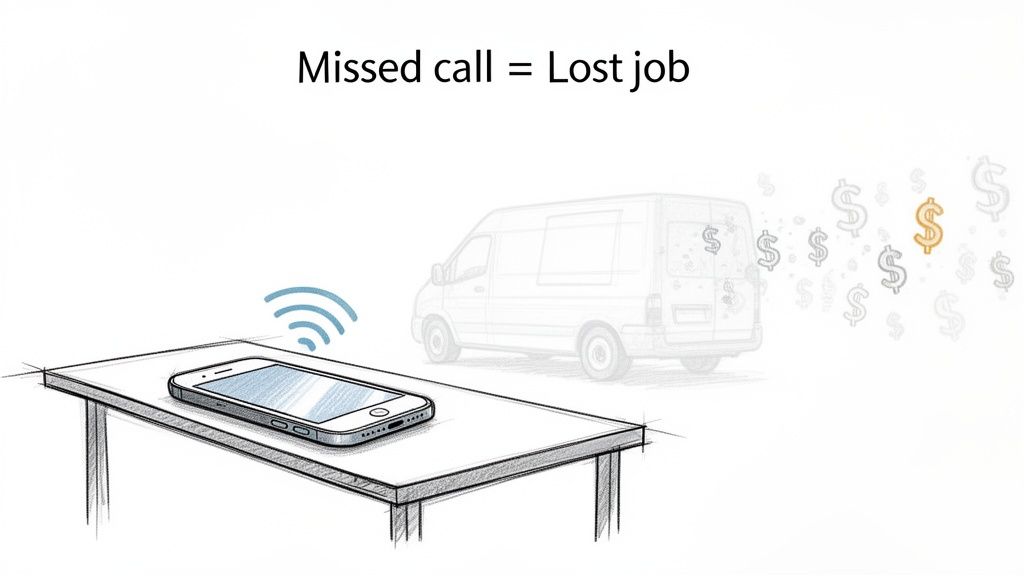
Picture this: it’s peak season, your crews are out on jobs, and you’re driving between sites. A call comes in from a high-value lead looking for a 4-bedroom move, but you can’t get to it. That wasn't just a missed call. That was a potential multi-thousand-dollar job that just vanished. In this business, customers don't wait. They just call the next mover on their list.
This isn't just a hunch; it’s a huge revenue leak for movers. An incredible 62% of calls to small businesses go straight to voicemail or are ignored. Meanwhile, customers are anything but patient—77% of them expect someone to answer the phone immediately.
Key Takeaway: A missed call isn't just a missed opportunity. It's revenue you just handed directly to your competition. The person who just called you is already on the phone with another mover.
This guide treats your phone like what it really is: your single most powerful sales tool. We'll walk through how to turn every ring into a booked move, transforming your biggest operational bottleneck into a competitive advantage. From the first "hello" to the final confirmation, a polished process builds the trust you need to win the job.
This is especially true for moving companies with 1–20 trucks, where every single job impacts the bottom line. The difference between a profitable month and a loss can be just a handful of extra bookings. It’s why so many owners are exploring smarter ways to handle their phones. The best answering service for small business operations leverage technology to fill these gaps, ensuring you never lose a lead again, even after hours or during a seasonal spike.
Nail Your First Impression with the Perfect Opening Script
The first ten seconds of a phone call tell a customer everything they need to know. It’s the difference between sounding like a professional, organized moving company and a couple of guys with a rented truck.
When that phone rings, the person on the other end is listening for one thing: confidence. A rushed “Hello?” or a mumbled “Movers?” screams disorganization and can lose you the job before you even get to the quote.
This is why every single person who answers your phone needs a script. Not to sound like a robot, but to start every conversation from a position of control and professionalism.
Instead of leaving it to chance, drill this line into your team:
"Thank you for calling [Your Moving Company], this is [Your Name]. How can I help with your move today?"
This isn't just polite—it's strategic. It instantly confirms they’ve called the right place. It puts a human name to the voice, building immediate trust. And most importantly, it gets straight to the point: you're here to solve their problem.
Call Opening Do's and Don'ts for Movers
How you answer the phone is a direct investment in your booking rate. A small tweak can make a huge difference in how customers perceive your business. To really dig into this, check out our full guide for a winning call-in script that helps you book more jobs without feeling like a call center.
For a quick gut-check, here’s a look at what separates a professional opening from the common mistakes that are costing you leads.
| Do This | Don't Do This | Why It Matters for Your Moving Business |
|---|---|---|
| State your company name and your name. ("Thank you for calling Precision Movers, this is John.") | Answer with a generic "Hello?" or "Moving." | This immediately signals professionalism and confirms they've called the right company, building instant trust. |
| Use an energetic and friendly tone. | Sound rushed, tired, or annoyed. | Your tone sets the mood. A positive, welcoming voice makes customers feel valued and confident in your service, especially during a stressful move. |
| Ask an open-ended, helpful question. ("How can I help you with your move today?") | Say "Yeah, what do you need?" | This invites them to share their needs and shows you're focused on helping them right away, not just giving a price. |
| Answer within three rings. | Let it ring endlessly or go straight to voicemail. | Speed is everything. Answering quickly shows you're responsive and eager for their business, preventing them from calling a competitor. |
Mastering these simple habits ensures that from the moment a customer calls, you're the company they want to hire. It’s the first, and easiest, step to booking more moving jobs.
Gathering the Right Details for an Accurate Quote
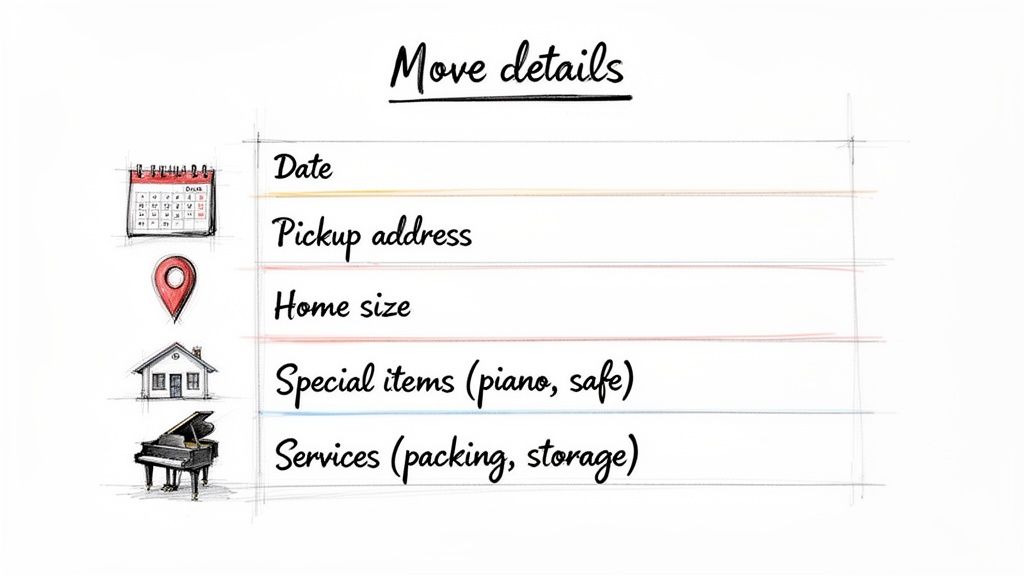
Picking up the phone with a professional greeting is just the start. The real test is what happens next. This is the moment where you either win the job with sharp, confident questions or lose the customer to confusion and hesitation.
Every detail you miss on this first call creates friction and operational headaches. It leads to frustrating follow-up calls that make your entire operation look amateur. Get it wrong, and you're either under-quoting and eating the cost, or over-quoting and watching a good lead walk away.
Having a system isn’t about being robotic; it's about being thorough. It ensures you get what you need in one conversation. A huge part of that is knowing how to take better phone call notes so nothing gets lost between the call and the quote.
Break down your questions into three buckets to keep the call flowing naturally and ensure you don’t forget something critical.
The Logistics of the Move
First, you need the non-negotiables—the framework of the job.
- Pickup and Drop-off Addresses: Get the full addresses, including zip codes. This is everything for calculating travel time and mileage. A different zip code can completely change your estimate.
- Move Date: Ask for their ideal date, but also find out, "How flexible is that date?" A customer who can move mid-week has more negotiating power than someone who needs the last Saturday in June.
- Property Types: This is where so many quotes go wrong. Are you moving from a third-floor walk-up to a single-family home with a long driveway? Ask about stairs, long carries, and elevator access. These directly impact labor hours and crew fatigue.
The Scope of Their Stuff
Next, get a clear picture of what you’re actually moving. This determines truck size, crew needs, and equipment.
- Home Size: The number of bedrooms is a good start, but it's just that—a start. Dig deeper: "Is it a lightly furnished 2-bedroom apartment or is it packed to the brim?"
- Specialty Items: You must ask about these directly. "Any pianos, gun safes, large-screen TVs, oversized refrigerators, or valuable antiques we need to be aware of?" These require special planning, equipment, and sometimes different pricing.
- Hidden Inventory: Garages, basements, and sheds are the black holes of moving quotes. Always ask, "Is there anything in a garage, attic, basement, or outdoor shed that needs to go?" You'd be amazed what people forget to mention.
The Services They Need
This is where you can turn a standard job into a more profitable one.
- Packing: Find out where they stand. "Are you planning on doing the packing yourself, or would you like help? We can do a full pack or just handle fragile items like the kitchen."
- Storage: Is there a gap between when they move out and when they can move in? Ask if they'll need short-term or long-term storage solutions.
- Supplies: Are they buying boxes, tape, and packing paper from you, or will they be sourcing their own?
After you have the details, ask the one question that reveals their true motivation: "What's most important to you when choosing a mover?"
Their answer tells you whether to focus on your careful handling of family heirlooms, your all-inclusive pricing, or your reputation for being fast and efficient.
Pro Tip: This structured questioning is exactly what an AI receptionist can be trained to handle perfectly, every single time. Imagine every after-hours or overflow call being answered with this level of detail, 24/7. The system asks the right questions, guaranteeing a complete lead profile is in your inbox, ready for you to quote first thing in the morning.
Overcoming Price Objections and Closing the Deal
You've answered the phone professionally, asked all the right questions, and delivered a confident quote. Then you hear it: "That's a bit more than I was expecting," or the classic, "Okay, thanks, I need to get a few more quotes."
This is the moment where most moving jobs are won or lost. Your first instinct might be to slash your price, but that’s a race to the bottom that kills your profit margins and cheapens your service.
Don't do it.
Pivot from Price to Value
When a customer gets hung up on price, your job is to reframe the conversation. Instead of getting defensive, pivot back to the value and peace of mind you're selling.
Try saying something like this:
"I completely understand. When you're getting quotes, it’s really important to know exactly what’s included. Our price is all-inclusive, covering everything from start to finish—furniture padding, disassembly and reassembly of beds, and full value protection. We never have hidden fees for things like stairs or long carries, which many other movers charge for on move day."
This simple script is powerful. It shows you hear their concern, educates them on what a quality move involves, and plants a seed of doubt about cheaper competitors who tack on extra fees later.
Overcoming Hesitation with a Soft Close
What if the objection isn’t price, but hesitation? The customer wants to "think about it" or "check with their spouse." This is common, especially during the busy season.
Don't just let them hang up. Create a little urgency without being pushy. A good soft closing technique is your best friend.
Here’s an approach that works:
- Acknowledge Their Need: "Of course, I understand you need to discuss it. Picking the right mover is a big decision."
- Introduce Scarcity: "Just so you know, our schedule for that week is filling up quickly, especially for weekend dates."
- Offer a No-Risk Solution: "What I can do is pencil you in for that date. It doesn't lock you into anything, but it holds your spot on our calendar for 24 hours while you decide. Would that be helpful?"
This soft close is a game-changer. It's not a hard sell; it's a helpful offer. You’re taking the risk off their plate and making it much easier for them to say "yes" later. Our guide on how to close the sale in the moving industry dives deeper into these tactics.
Having the right response is a massive advantage. We know 82% of buyers are open to meetings from phone outreach, making a strong approach on these inbound calls critical. Top-performing sales teams see 36% higher conversion rates by personalizing responses and focusing on value. You can find more data on effective outreach over at leadsatscale.com.
A confident, prepared response builds trust and is often the final piece to booking more jobs, even in a crowded market.
Securing the Job: Your Follow-Up System is Your Closing Tool
That verbal "yes" on the phone feels great, but the job isn't yours until the customer has a confirmation in hand. The seconds after you hang up are just as important as the call itself for locking in the job and stopping a customer from shopping around.
Your competition is still using scribbled notes and a "we'll get to it" mentality. A professional, immediate follow-up makes your company look organized and reliable, killing buyer's remorse before it starts. This isn’t about a complex system; it’s a simple, repeatable process for every call.
The Immediate Confirmation
As soon as you hang up, send a confirmation. Not an hour later. Now. Speed is professionalism.
Your follow-up—whether it's an email or a text—should always include:
- A quick summary of the move: Date, time, addresses, and estimated hours.
- The confirmed quote: Put the price in writing to eliminate any confusion.
- A clear next step: Tell them exactly what to do to finalize everything. "Click here to pay your deposit" or "Reply 'CONFIRMED' to lock in your spot."
This one action turns a verbal promise into a documented booking and drastically cuts down the odds they’ll call other movers. To make this process seamless, it’s worth learning how to Track Action Items so no lead ever slips through the cracks.
The goal is to move them from a maybe to a definite, just like this:
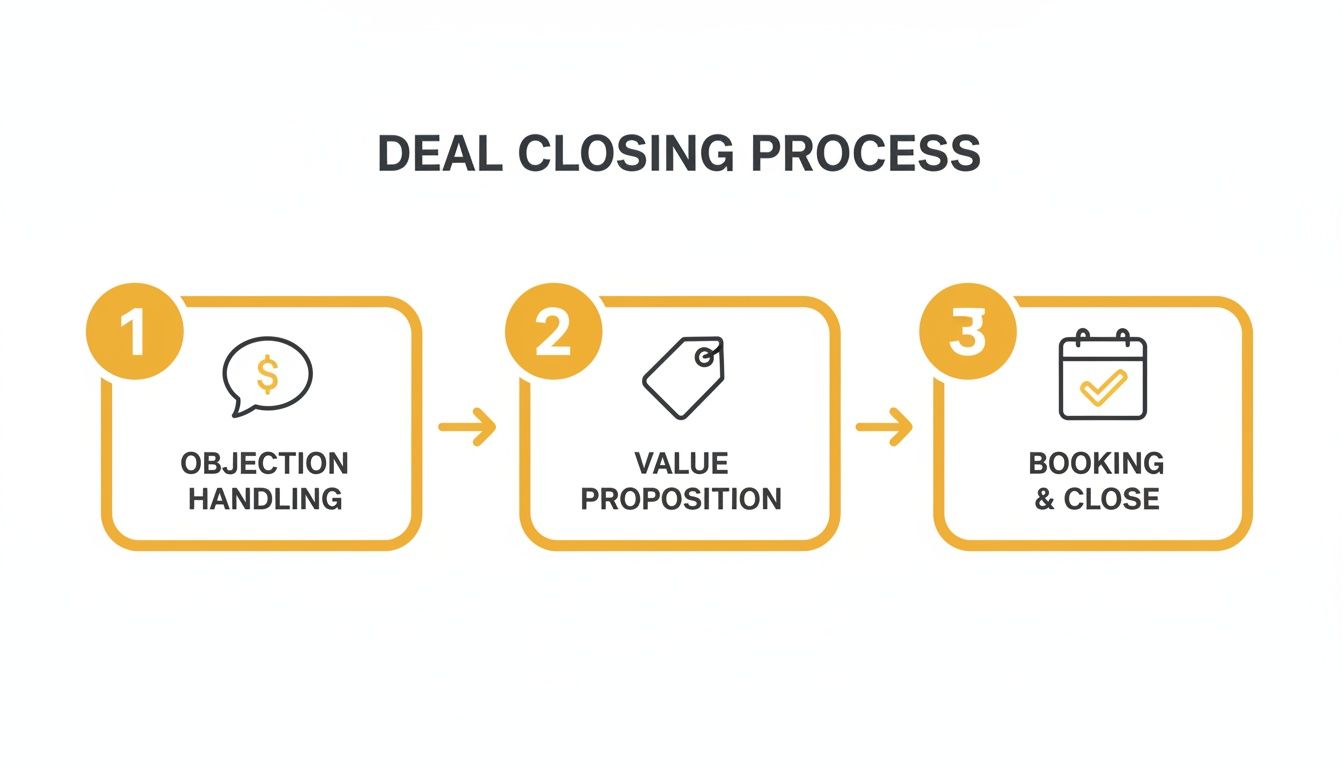
Once you handle their concerns and show your value, the final booking and confirmation are what make the job stick.
Using Automation to Lock In Every Job
This is where technology can completely change the game for a small moving business. Manually sending confirmations takes time you don't have, especially when you're slammed. And human error is a real risk—a wrong date or address can turn move day into a disaster.
An AI receptionist can handle this entire workflow for you. The second a call ends, it can fire off a perfect confirmation text and email with all the correct details and a link to book.
This doesn't just save you time; it makes your customer experience incredibly polished. The best systems can even integrate with your calendar, automatically adding the job to your schedule once the customer confirms.
It’s a hands-off process that turns every "yes" on the phone into a guaranteed, booked job on your schedule. No more phone tag, no more manual entry, no more lost revenue.
How to Train Your Team to Book More Jobs
If you have more than one person answering your phones—a dispatcher, an office manager, or part-time help—consistency is everything. One bad call can cost you a high-value job. The good news is, turning your team into booking machines doesn't have to be complicated. It just needs to be consistent.
The goal is to get everyone answering the phone with the same confidence you would. The easiest way is with a simple, one-page "Phone Answering Cheat Sheet."
The One-Page Cheat Sheet
Forget a massive training manual nobody will read. This is a quick-reference guide that lives right by the phone, ensuring every call is handled perfectly. It only needs to cover three things:
- The Opening Script: The exact words to use when greeting every caller. (e.g., "Thanks for calling [Your Moving Company], this is [Name]. How can I help you with your move today?")
- Key Qualifying Questions: A simple checklist of the must-ask questions—addresses, move date, home size, specialty items, and so on.
- Common Objection Responses: Pre-written, battle-tested answers for when a customer says, "Your price is too high," or "I need to think about it."
This cheat sheet means even a new hire can sound like a seasoned pro on their first call. It eliminates guesswork and standardizes your customer experience, which is how you build a brand people trust.
Speed Is Your Biggest Weapon
Beyond the script, the single most important thing to drill into your team is speed. Every ring is money flying out the window. Set a non-negotiable rule: answer every call within three rings.
This isn't just polite; it’s about winning the job before your competitor picks up. The data doesn't lie: the ideal Average Speed of Answer (ASA) is under 30 seconds. You can find plenty of call center statistics that prove a fast, professional answer is directly tied to happier customers and more booked jobs.
But here’s the hard truth: your team can be perfectly trained, but they still can't answer the phone when they're already on another call, out to lunch, or gone for the day. During your busy season, even your best people get stretched thin.
This is where a 24/7 call answering solution stops being a "nice-to-have" and becomes your most reliable team member. An AI receptionist never needs training, never has a bad day, and follows your script perfectly, every single time. It guarantees that even when your office is a madhouse, every single lead gets captured, qualified, and is ready for you to close.
Your Questions About Answering Calls, Answered
I talk to moving company owners every day. After a while, you start to hear the same questions pop up again and again—usually centered around that constantly ringing phone.
Here are the big ones, with some straight-shooting answers based on what I’ve seen work.
What Is the Single Biggest Mistake Movers Make on the Phone?
It’s not your pricing or your quoting process. The single biggest mistake movers make on the phone is not answering it in the first place.
When a customer is ready to book, they aren’t leaving a message and patiently waiting. They’re running down a list of local movers they found on Google. If they hit your voicemail, they just dial the next name on that list.
Every missed call is a job handed directly to your competitor. The second biggest mistake? Failing to get all the key details on that first call, which leads to messy back-and-forth and makes you look disorganized.
How Can I Handle Calls When My Crew Is on a Job?
This is the classic dilemma every growing moving company faces. Your team is busy making money, but that means nobody's free to answer the phone to book more money-making jobs.
A professional voicemail promising a call back within a specific window—say, one hour—is a decent temporary patch.
But the real, long-term fix is a system that answers every single call, 24/7, no matter what. An AI receptionist can capture all the lead's details and even pre-qualify the job for you. It’s a safety net that ensures you never miss a lead just because you were on-site, especially during your busiest months.
It means no opportunity falls through the cracks, ever.
Should I Text Customers Back If I Miss Their Call?
Yes. Immediately. An instant text message is your best shot at salvaging a missed call before that customer books with someone else.
A simple, automated text can keep a hot lead from going cold until you can personally get on the phone.
Try sending something like this the moment you miss a call:
“Hi, this is [Your Name] from [Your Moving Company]. Saw I just missed your call. I'm with a customer at the moment but will call you back in 15 minutes. Or feel free to share your move details here if that's easier.”
This one small action tells the customer you're on top of it and you care. It dramatically boosts the odds of turning that missed call into a booked job.
Ready to stop losing jobs to voicemail and make every call a revenue opportunity? MoveJoy provides a 24/7 AI Receptionist that answers every call, qualifies every lead, and books jobs directly into your calendar. Learn how you can capture 100% of your inbound leads.