Your Guide to Virtual Customer Service for Moving Companies

Every moving company owner knows the feeling. You're on a job site, wrestling a sofa through a doorway, and your business line rings. Or it's 9 PM, you’re finally home, and a call comes through. That missed call isn't just a notification on your screen; it's a potential job and a few thousand in revenue walking right over to your competitor.
This is the exact problem that customer service virtual solutions solve. Think of it as a dedicated, 24/7 receptionist for your moving business who never gets tired, never takes a lunch break, and never misses a call.
Unlocking Growth With Virtual Customer Service
For a small or mid-sized moving company, the biggest thing killing your growth probably isn't a lack of leads—it's the inability to capture every single one of them. When a customer decides it's time to move, they act fast. The first mover to answer the phone and give them a clear next step is almost always the one who wins the job.
Sending a potential customer to voicemail is the same as handing them the phone number of your biggest local competitor. It’s a dead end. Speed to lead is everything in this business.
This is where a virtual customer service solution completely changes the game. It’s not about replacing your team; it’s about making them more efficient. By automating that first point of contact, you ensure no opportunity slips through the cracks, especially during the chaos of peak season or after your office has closed for the night.
From Missed Calls to Booked Jobs
So, what does this actually look like in your day-to-day operations? An AI-powered virtual agent instantly answers every single call. Instead of a frustrated customer hanging up and dialing the next mover on their list, they get a professional, helpful interaction that moves them forward.
- 24/7 Availability: It captures leads from people calling at 9 PM on a Tuesday or 7 AM on a Sunday—times when your office staff is off the clock.
- Instant Lead Capture: It gathers all the critical details you need for a quote, like their name, phone number, move size (e.g., number of bedrooms), and the dates they're looking at.
- Seamless Scheduling: It can plug directly into your calendar to book a quoting appointment right there on the call, killing the endless game of phone tag before it even starts.
This immediate, decisive action builds trust and momentum. The customer feels taken care of from the very first second, which dramatically increases the odds they’ll book with you instead of continuing to shop around.
The Technology Behind the Solution
This isn't some futuristic concept; it’s a practical tool built on technology that's already here. Much of this magic happens thanks to modern cloud-based phone systems that allow for smart call routing and integrations with other software. To really see why this is so effective, it helps to understand What is a cloud phone system and how does it work.
The simple truth for local movers is that speed and availability win jobs. A virtual agent guarantees you are always the fastest and most available option, turning every incoming call into a real opportunity to book a move.
The Real Cost Of A Missed Call Versus The ROI Of A Virtual Agent
Let’s get practical and talk numbers—the language every business owner understands. How many calls did you miss last week during the busy season? Five? Ten? Maybe more when your crew is stretched thin and your office manager is handling three things at once.
It’s easy to shrug that off. But let’s do some quick math. If a typical local move brings in $1,500, and you miss just five calls a week, you're leaving $7,500 in potential revenue on the table. Every. Single. Week. That’s the real, tangible cost of sending a ready-to-book customer to voicemail. It’s not just a missed opportunity; it’s a direct hit to your bottom line.
Shifting From Expense To Revenue Engine
It's natural to see new technology as just another business expense. But a virtual customer service solution isn't a cost center—it's a powerful revenue-generating engine that works tirelessly for your moving company. The return on investment (ROI) isn't abstract; it's immediate and measurable.
The reality for most local movers is that one single booked job, which would have otherwise been lost to voicemail, often covers the entire monthly cost of an AI-powered receptionist. Everything it books after that first job is pure profit you wouldn't have captured otherwise. You can see the math for yourself by exploring the real cost of missing just 4 calls per week.
A virtual agent isn’t an expense you have to justify; it’s a tool that pays for itself by plugging the biggest leak in your sales funnel—unanswered phone calls.
This infographic breaks down what really happens when a customer's call goes unanswered. It's not a pretty picture for your business.
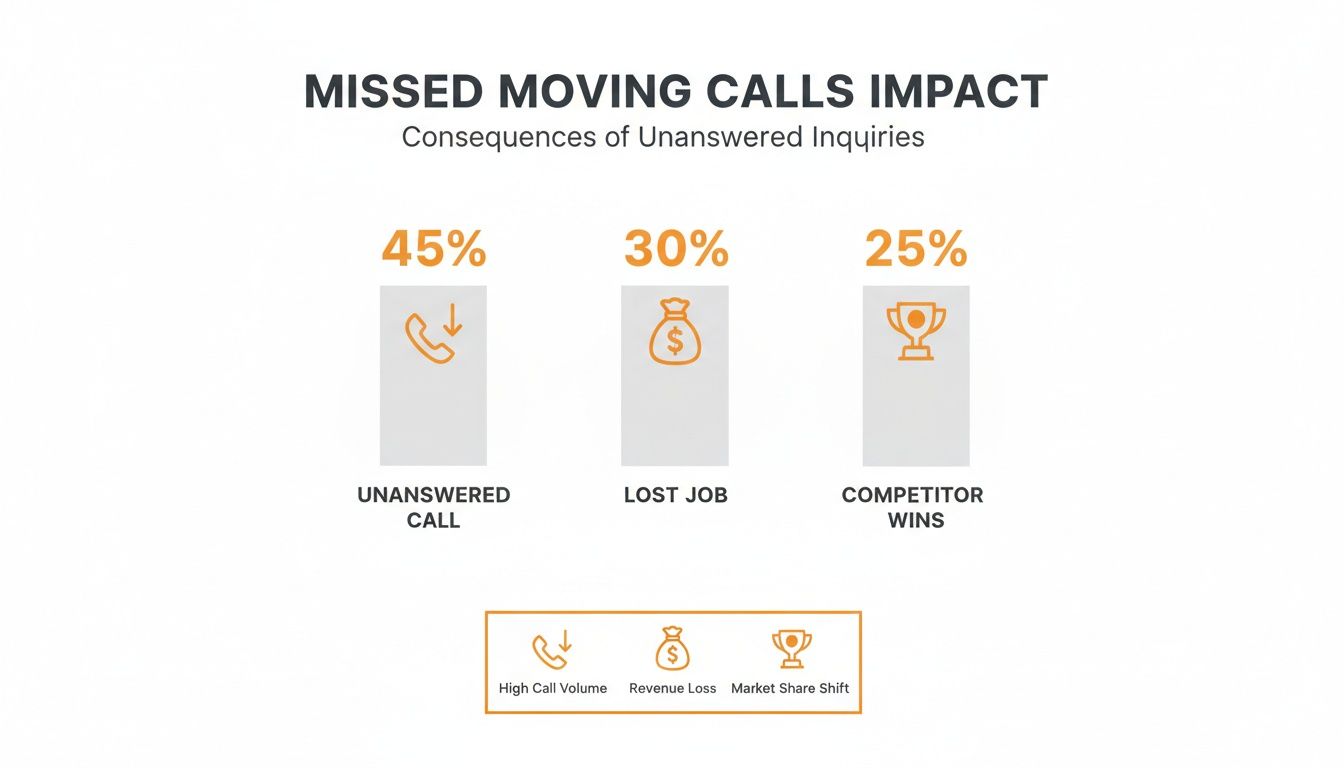
As you can see, a missed call rarely results in a patient voicemail. It almost always sends that customer—and their money—straight to your competition.
Manual vs Virtual Call Handling: The Financial Impact
To really understand the financial swing, it helps to see a side-by-side comparison. One path is reactive and capped by human limitations; the other is proactive and works 24/7 to grow your business.
| Metric | Traditional Manual Answering | Virtual Customer Service |
|---|---|---|
| Availability | 8-10 hours/day, 5 days/week | 24/7/365, including nights & weekends |
| Response Time | Varies (often >60 seconds) | Instant (under 2 seconds) |
| Lead Capture Rate | Limited by staff availability | Captures 100% of inbound calls |
| Cost to Staff | $40k-$60k/year (salary + benefits) | $1,800-$6,000/year (subscription) |
| Lost Revenue | High (missed calls after hours & during busy times) | Minimal (virtually eliminates missed calls) |
The numbers don't lie. Sticking with a purely manual system means you're actively choosing to leave money on the table every single day.
The Financial Power Of Automation
The financial benefits here aren't just for big corporations. For a moving business, this translates into real, tangible results you'll see in your bank account:
- Higher Booking Rates: By giving every caller an instant, professional response 24/7, you capture leads before they even have a chance to call another mover.
- Reduced Labor Costs: An AI receptionist handles the repetitive grind of lead intake and scheduling. This frees up your human staff to focus on high-value tasks like complex quotes and final confirmations.
- Increased Revenue Per Job: With a healthier pipeline full of qualified leads, you can be more selective. You start focusing on the most profitable jobs instead of just taking whatever comes your way to fill the schedule.
Ultimately, investing in a virtual agent is a strategic decision to stop losing the revenue you're already working hard to generate. It’s an automated system designed to ensure that during your busiest seasons—or in the middle of the night—your moving company is always open for business and ready to book the next job.
How a Virtual Agent Actually Catches and Books a Moving Lead
Seeing the potential ROI is one thing; understanding how the technology works in the real world is another. So how does a virtual agent actually take a random phone call and turn it into a booked job on your schedule?
This isn't just about answering the phone—that’s what voicemail is for. This is about taking control of the conversation and moving a caller from a curious window shopper to a confirmed appointment. In the moving business, the first company to give a caller a clear next step usually wins. A virtual agent is built to do just that, instantly.
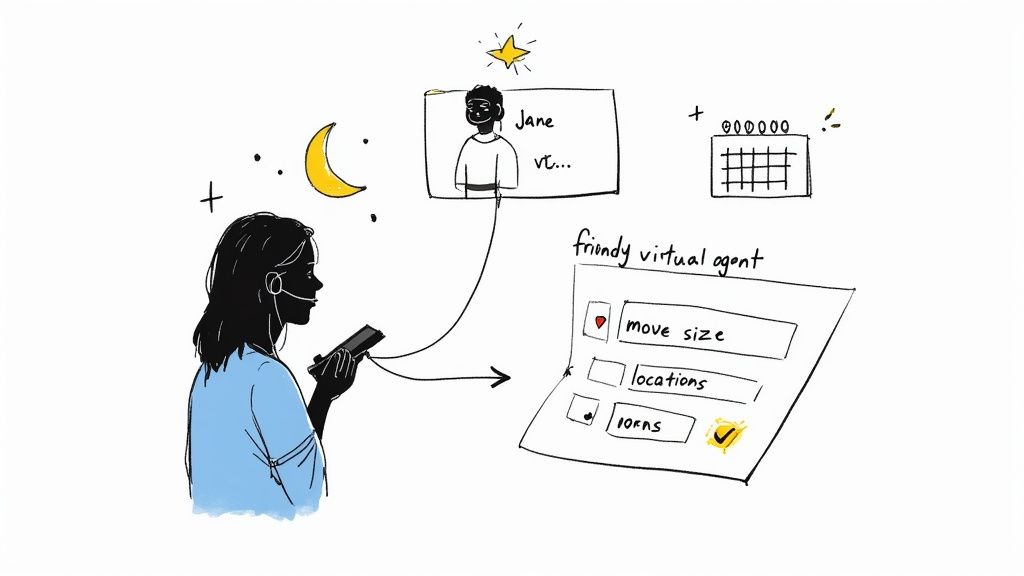
Real-World Scenario: Jane Calls After Hours
Picture this: It's 8:30 PM on a Wednesday. Jane just got word she has to move in three weeks. Like most people, she starts looking for movers after her own workday ends. She finds your company on Google and dials your number.
Without a virtual agent, that call rings a few times and dumps into voicemail. Jane sighs, hangs up, and immediately calls the next mover on her list—your competitor. You just lost a lead you never even knew you had.
Now, let's run that back, but this time with an AI virtual agent on the job.
Jane calls, and instead of a beep, she’s greeted by a professional, human-sounding voice. The whole interaction is designed to feel fast, easy, and reassuring.
Step 1: The Instant Answer and Quick Qualification
The virtual agent picks up in under two seconds. It introduces itself and gets right to the point, asking for the essential details needed for an estimate:
- "Thanks for calling. To get started, could I get your name and the best number to reach you?"
- "Great, and what’s the address you’re moving from and where are you moving to?"
- "And to get a sense of the size, is it a one-bedroom apartment, a two-bedroom house, or something else?"
This isn't a robotic interrogation. It’s a quick, conversational exchange that captures the info you need while your crews are home with their families.
From Information to Action
Getting their details is just step one. The real game-changer is turning that info into a scheduled appointment, right then and there. No more phone tag the next morning.
Step 2: Answering the Basic Questions
Jane is smart. She has a couple of standard questions. "Are you guys licensed and insured?" she asks. The agent, trained on your company’s specific info, answers immediately: "Yes, we are fully licensed and insured for your peace of mind." This simple, instant answer builds trust and clears a common hurdle.
Step 3: The Seamless Calendar Integration
This is where the magic happens. The virtual agent doesn’t just take a message; it books the next step.
"I have all the basic details I need. The next step is to schedule a brief call with one of our moving coordinators to give you an accurate quote. I see we have availability tomorrow at 10:15 AM or 2:30 PM. Does either of those times work for you?"
The system is plugged directly into your company’s scheduling software (like Google Calendar). It sees your team's actual availability in real-time and offers up specific, open slots. Jane picks 10:15 AM.
The agent books the appointment on the spot. A confirmation text immediately goes out to Jane, and the appointment pops up on your office manager's calendar.
When your team walks in the next morning, a qualified lead is already on the books, ready for a quote. Jane feels taken care of, so she stops calling other movers. You just captured her business in your sleep, all because you had a system ready to give her the instant, professional response customers expect.
Key Features To Look For In A Mover-Focused Virtual Solution
Not all virtual customer service tools are created equal. A generic AI built for a tech startup or e-commerce shop will completely miss the mark for a moving company. The rhythm of your business is unique—quoting jobs based on bedrooms, checking crew availability, dealing with long carries—and you need a tool that gets it.
Choosing the right virtual agent isn’t about finding the fanciest tech. It's about finding automation that understands the moving business and is built to do one thing: book more jobs. A generic AI won't know the difference between a studio apartment and a four-bedroom house with a piano. A mover-focused one will.
True 24/7 Availability, Not Just Office Hours
Most of your customers are planning their moves when your office is closed—evenings, weekends, holidays. The number one feature you need is true 24/7/365 availability. This means the system doesn't just take a message after 5 PM. It actively works to capture the lead, gather all the move details, and book a quoting appointment, no matter when the call comes in.
This one feature plugs the biggest revenue leak most moving companies have. Instead of starting your day with a long list of voicemails, you wake up to confirmed appointments already sitting on your calendar.
Mover-Specific Lead Qualification
Your quoting process lives and dies on the details. Any virtual solution you use has to ask the right questions to qualify a lead properly.
Look for a system that’s been trained to capture the specific info movers need:
- Move Size: Is it a 2-bedroom apartment or a 5-bedroom house? Any special items?
- Property Details: Are there flights of stairs, long carries from the truck, or an elevator involved?
- Logistics: The classic "moving from" and "moving to" addresses.
- Timeline: When does the customer want to move?
Without this, you’ve just got a glorified answering service that hands your sales team half-baked leads. It creates more work, not less.
Seamless and Real-Time Calendar Integration
This is an absolute deal-breaker. The virtual agent’s main job is to turn a phone call into a booked appointment without you lifting a finger. The best systems integrate directly and in real-time with the calendar you already use, like Google Calendar.
The goal is simple: eliminate double-bookings and kill the endless game of phone tag. A great virtual agent sees your team's real availability and offers specific, bookable time slots to the customer right there on the call.
It should automatically drop the appointment onto your calendar and fire off a confirmation to the customer. This single feature transforms your lead capture from a slow, manual chore into an instant, automated win.
Automated Quote and Follow-Up Capabilities
What happens if a customer isn't quite ready to book an appointment? The conversation shouldn't just die. A smart virtual solution will have automated follow-ups built right in. This could be as simple as sending a text message with a link to your online booking form or scheduling a follow-up call.
This keeps your company top-of-mind and gives leads an easy way to get back in touch when they're ready. It's an automated safety net that stops leads from going cold. On top of that, it's crucial that your system handles information securely. Understanding what a secure virtual terminal is is part of this, as protecting customer data during the booking process builds trust from the very first call.
To put it all together, here’s a quick checklist of what really matters when you're evaluating a virtual customer service tool for your moving company.
Essential Virtual Customer Service Features for Movers
| Feature | Why It's Critical for Movers | Business Impact |
|---|---|---|
| 24/7/365 Call Answering | Customers plan moves after hours. If you don't answer, a competitor will. | Captures leads you'd otherwise miss, booking jobs while you sleep. |
| Moving Industry Logic | Needs to understand terms like "long carry," "3-bedroom," and "COI." | Gathers accurate details for precise quotes, saving your team time. |
| Real-Time Calendar Sync | Prevents double-bookings and eliminates manual scheduling. | Automates appointment setting, reduces admin work, and speeds up booking. |
| Automated Follow-Ups | Not every caller is ready to book instantly. Nurturing is key. | Recovers hesitant leads and increases overall booking conversion rates. |
| CRM Integration | Pushes lead data directly into the system your team already uses. | Eliminates manual data entry and keeps all customer info in one place. |
| Secure Information Handling | Customers share sensitive address and payment info. Trust is essential. | Protects your reputation and provides peace of mind for your customers. |
Finding a tool with these specific features means you’re not just buying software; you’re investing in a system designed to grow your moving business.
How to Get Started Without Disrupting Your Operations
The idea of adding new tech can feel like a headache you don't have time for. You're busy managing crews, trucks, and a dozen customer calls. The last thing you need is a complicated system that messes with the workflow you’ve spent years getting right.
But modern virtual customer service isn’t built for tech wizards. It’s designed for busy moving company owners. The whole point is to make it a “plug-and-play” solution that makes your life easier, not harder.
Getting started is usually as simple as forwarding your unanswered or busy calls to a new phone number. That’s it. No need to rip out your existing phone system or retrain your entire team on a new process.
Making it Work with the Tools You Already Use
A common fear is that new software will force you to ditch the tools you already know and trust. A good virtual agent does the exact opposite—it makes them better. The most important connection here is your calendar.
These systems are built to hook directly into the tools you probably use every day, like Google Calendar. During a quick setup, you just grant the virtual agent permission to see your availability for quoting appointments.
- No More Double-Booking: The AI looks at your live schedule and only offers appointment times that are actually free.
- Automatic Scheduling: When a customer books a slot, the appointment pops up on your calendar automatically, packed with all the lead's details.
- Instant Alerts: You and your team get notified right away, just like you’d entered the appointment yourself.
This seamless hookup means you can start turning missed calls into booked jobs almost immediately, with zero disruption to your daily operations.
Why This Matters to Your Customers
This isn't just about making things smoother on your end; it’s about meeting customers where they are. The demand for instant, on-demand service is no longer a trend—it's the standard. Today, AI is reshaping customer expectations in every industry, including moving.
People prefer a fast, efficient experience. Instead of sitting on hold or waiting for a callback, they get an immediate answer that moves their planning forward. This creates a powerful first impression that your company is professional, organized, and respects their time.
The right automation is invisible to your daily operations but transformative for your bottom line. It works in the background to ensure that no matter how busy you are on a job, your business is always open and ready to book the next one.
This approach lets your crew focus on what they do best—providing a five-star moving experience—while the automation handles the tedious but critical job of capturing and scheduling every single lead. It’s about adding a powerful new capability without adding any complexity.
Stop Losing Jobs To Voicemail And Start Growing With Automation
Every missed call is more than a minor hiccup—it's revenue walking right out the door to your competition. We've shown how a virtual agent plugs that leak, ensuring every person who calls your moving company gets an immediate, professional response, 24/7. This isn't a futuristic idea anymore. It's a practical tool that gives small and mid-sized movers a serious competitive edge, right now.
The technology works by giving potential customers the instant answer they now expect. It takes them from a quick question to a booked quoting appointment in one conversation, ending the game of phone tag that gives your competitors the opening to swoop in and steal your job.
The New Question For Growing Movers
For a moving company owner trying to grow, the question isn't "How can my team answer every single call?" anymore. It needs to be, "How can I automate call answering to book more jobs?"
That simple shift in thinking is the first step toward building a smarter, more profitable, and scalable business. It flips your phone line from being a source of stress and missed revenue into a machine that reliably generates opportunities.
Every call your virtual agent books is a job you likely would have lost to voicemail. The system pays for itself by fixing the single biggest leak in your sales funnel.
By bringing in automation, you stop letting voicemail steal your best moving leads and start turning every ring into a real opportunity. It’s a strategic move that frees up your team to focus on what they do best—giving customers a great experience on moving day—while your lead pipeline fills itself up in the background.
Common Questions from Moving Company Owners
Bringing new technology into your operations always raises a few questions. Here are the most common ones we hear from movers, answered directly.
Will My Customers Know They’re Talking to an AI?
Yes, and that's a good thing. Today's AI voice assistants don't try to trick anyone. They sound natural and conversational, but their goal isn't to pretend to be human—it's to be incredibly efficient.
Think about it this way: what’s a better first impression? An instant answer from a professional system that books their quote on the spot, or the guaranteed frustration of hitting a voicemail box? The AI gets the job done fast, which tells customers your business is professional and responsive.
How Much Technical Skill Do I Need to Set This Up?
Basically, none. If you can forward a phone number, you can set this up. Systems built specifically for movers are designed for owners who are busy running crews, not messing with complicated software.
The whole process is usually a quick onboarding call where you forward your business number for when calls are missed or the line is busy. It hooks up to tools like Google Calendar automatically. You don't need an IT degree to make it work.
The best kind of automation is the kind you don't have to think about. A good system should be live and catching leads within a day, not holding you up for weeks.
What Happens If a Customer Has a Really Complex Question?
The AI is an expert at the front-line tasks. It's trained to gather all the lead info, answer common questions like "are you insured?", and get appointments booked right into your calendar. That covers 90% of inbound calls.
But what if a caller asks about moving a grand piano down a spiral staircase or has a complicated, multi-stop commercial job? The system is smart enough to know its limits. It will either escalate the call to a live person on your team right then and there or take a detailed message so you can follow up immediately. No lead ever gets dropped.
Will This Work With the Moving Software I Already Use?
Absolutely. Most virtual customer service tools are built to play nicely with what you already have. The most critical piece is integrating with your calendar to schedule quotes in real-time. That’s the core function that kills phone tag and prevents you from getting double-booked.
While some systems offer deeper integrations with specific moving CRMs, the main goal is to add a powerful lead-capture layer without forcing you to rip out the tools you rely on every day. It’s about making your current setup better, not overhauling it.
Ready to see how an AI-powered receptionist can stop you from losing jobs to voicemail and start booking more moves automatically? Learn how MoveJoy provides a 24/7 virtual customer service solution built specifically for the moving industry.