Top Moving Leads Companies: Guide to Boosting ROI

Stop Buying Leads. Start Building a Revenue Engine.
It's the middle of peak season. Trucks are out, dispatch is slammed, your office staff is juggling confirmations and quote requests, and somehow the calendar still has holes. That's when most owners make the same move. They buy more leads.
Sometimes that works. A lot of times it doesn't. Paid leads can help, but they also expose every weakness in your intake process. If your team misses the first call, follows up late, gives a vague estimate, or lets the prospect sit overnight, you didn't really buy opportunity. You bought friction.
That's the lens for this guide. These moving leads companies can absolutely help fill your pipeline, but the best operators don't treat lead buying as the whole strategy. They treat it as one input in a revenue system that also includes local visibility, referrals, fast response, accurate quoting, and after-hours capture. If you need to improve your marketing leads, start there.
Table of Contents
- 1. MoveJoy
- 2. Moving.com
- 3. Movers.com
- 4. moveBuddha
- 5. Move.org
- 6. Unpakt
- 7. MovingLeads.com
- 8. Network Leads
- 9. QualityMovingLeads.com
- 10. HireAHelper
- Top 10 Moving Leads Companies Comparison
- Beyond Leads Build Your Unfair Advantage
1. MoveJoy
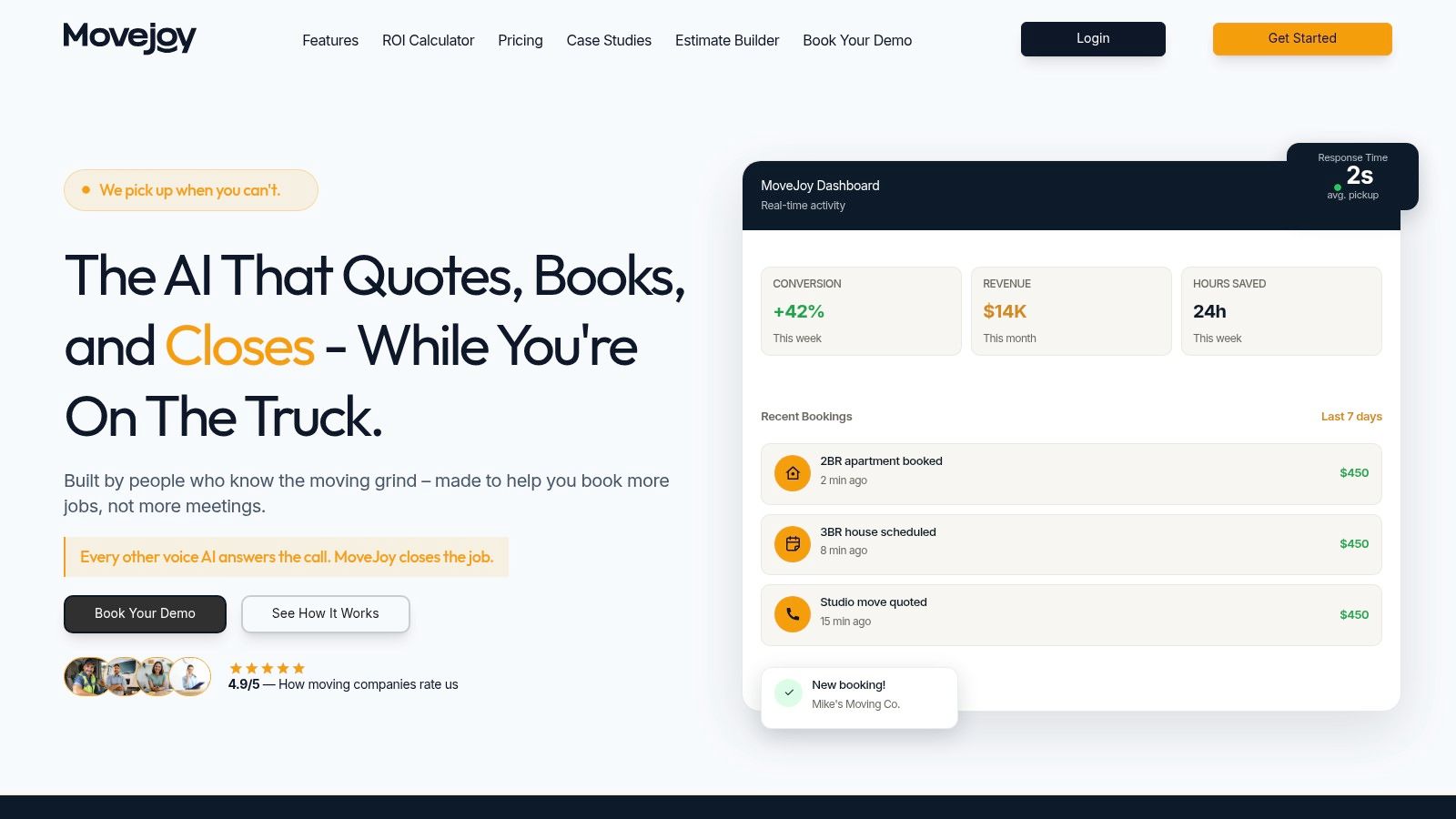
A common week in a 5 to 20 truck operation looks like this. The phones light up Monday morning, the coordinator is buried in active jobs, the owner is pricing a commercial move, and two good inbound calls hit voicemail. You did not have a lead problem in that moment. You had a conversion problem.
That is the lane MoveJoy is built for. Instead of selling another batch of names and numbers, it focuses on the part of the revenue chain where moving companies lose booked work. The system answers inbound calls 24/7, qualifies the customer, prices the job from your rate card, and sends the booking into tools like SmartMoving, Supermove, MoveitPro, or Google Calendar.
That makes it a different kind of buy than a standard lead source. If you are comparing options, treat it less like a marketplace and more like intake infrastructure. For a closer look at that model, MoveJoy has a guide on moving leads for moving companies.
Why it stands out
Generic answering tools rarely fail on simple calls. They fail on the calls that decide your week. A customer mentions a third-floor walk-up, a long carry, a storage stop, or a pricing setup that changes by service type, and the script falls apart.
MoveJoy's edge is that it is built around moving-specific quoting and intake instead of basic message capture.
Practical rule: If the tool cannot qualify and quote the move with enough accuracy to keep the job alive, it is not protecting revenue. It is just logging missed opportunities.
Speed also matters here. SmartMoving notes in its guide that high-intent shoppers often choose directly from Google Maps, and those calls cool off fast if nobody responds right away. The after-hours problem is especially expensive because moving shoppers do not always call during office hours.
Best fit
MoveJoy fits operators who already generate demand but lose jobs between the first ring and the final booking. That usually shows up in companies where dispatch, sales, and ownership are sharing the same phone burden, especially during peak season.
The upside is straightforward:
- Strong on quoting: It uses your pricing structure instead of stopping at basic intake.
- Strong on workflow: Booking details can move into the systems your office already uses.
- Strong after hours: Nights, weekends, and overflow calls do not have to die in voicemail.
- Watch edge cases: Large commercial moves, unusual access issues, and specialty jobs may still need a human check.
- Confirm plan details: Subscription terms, integrations, and usage fees should be verified directly with the company.
2. Moving.com
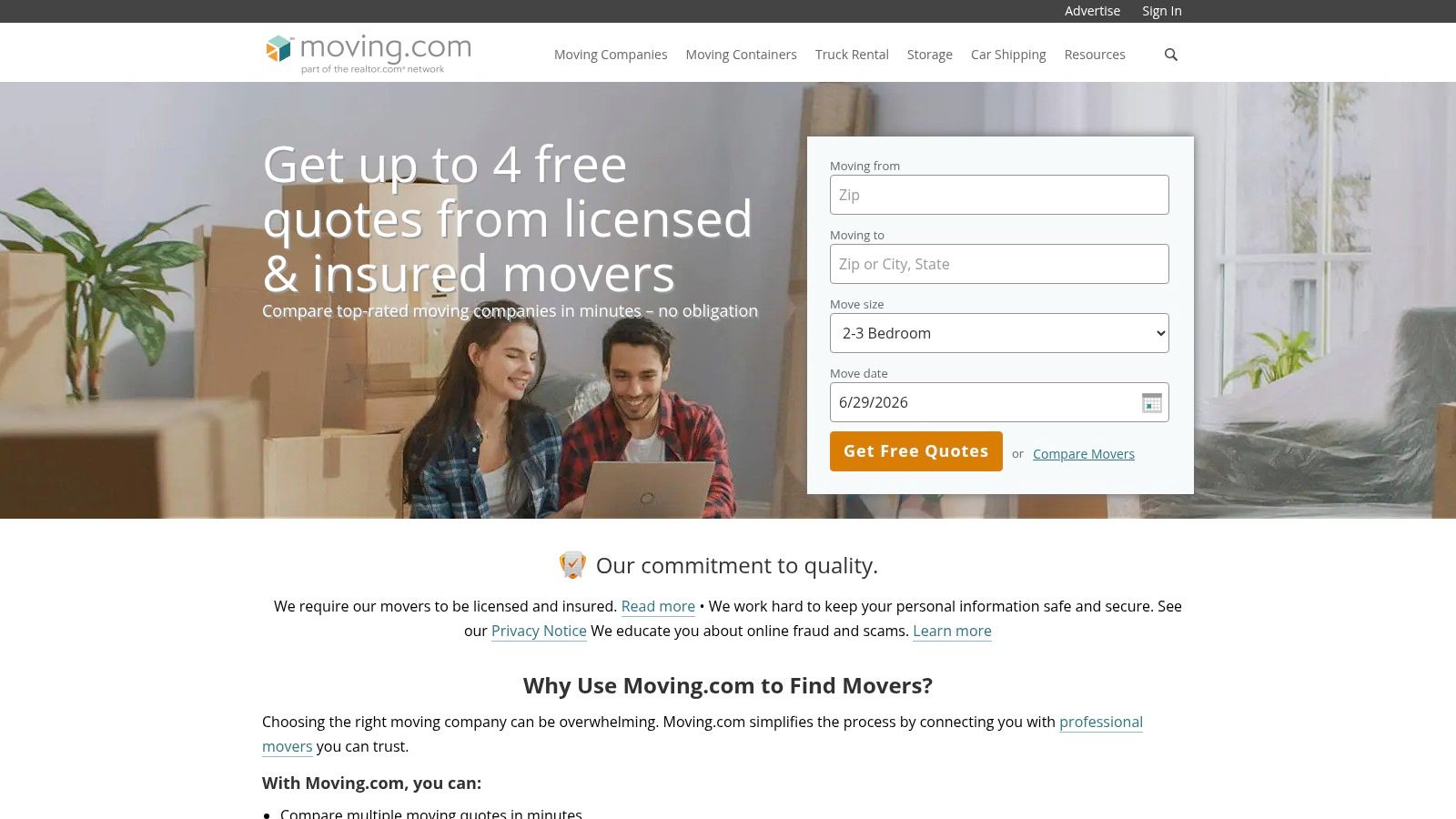
Moving.com has been around long enough that most operators have either tried it, priced it, or competed against someone who has. That familiarity is a plus. Consumers know the brand, and that tends to support a steady stream of quote requests.
The trade-off is competition inside the lead itself. When a consumer fills out a broad quote request on a marketplace model, your sales process has to be sharp. Not decent. Sharp. If your office waits, another mover gets first real contact and sets the tone.
What operators should know
Many companies often confuse lead volume with lead quality. A known platform can send demand, but it won't fix a weak close rate. If your team can't call fast, ask the right questions, and move the prospect toward a deposit, you'll feel like the platform is underperforming when intake discipline is the issue.
Supermove's industry survey found that 68.6% of companies said word-of-mouth drives the highest-quality leads. That's a useful benchmark when evaluating any marketplace. If a paid source doesn't approach the trust and intent you get from referrals, you need to be brutally selective about how much budget it gets.
A practical use for Moving.com is as one channel inside a broader mix. Don't build your whole pipeline on it. Use it to supplement local demand, then track which zip codes, move types, and seasons produce profitable jobs.
Paid leads are easiest to buy when the calendar feels thin. They're hardest to afford when your office treats every inquiry the same.
If your team struggles with the handoff from first contact to booked move, it helps to study the full prospect-to-customer path for movers before adding more paid volume.
3. Movers.com
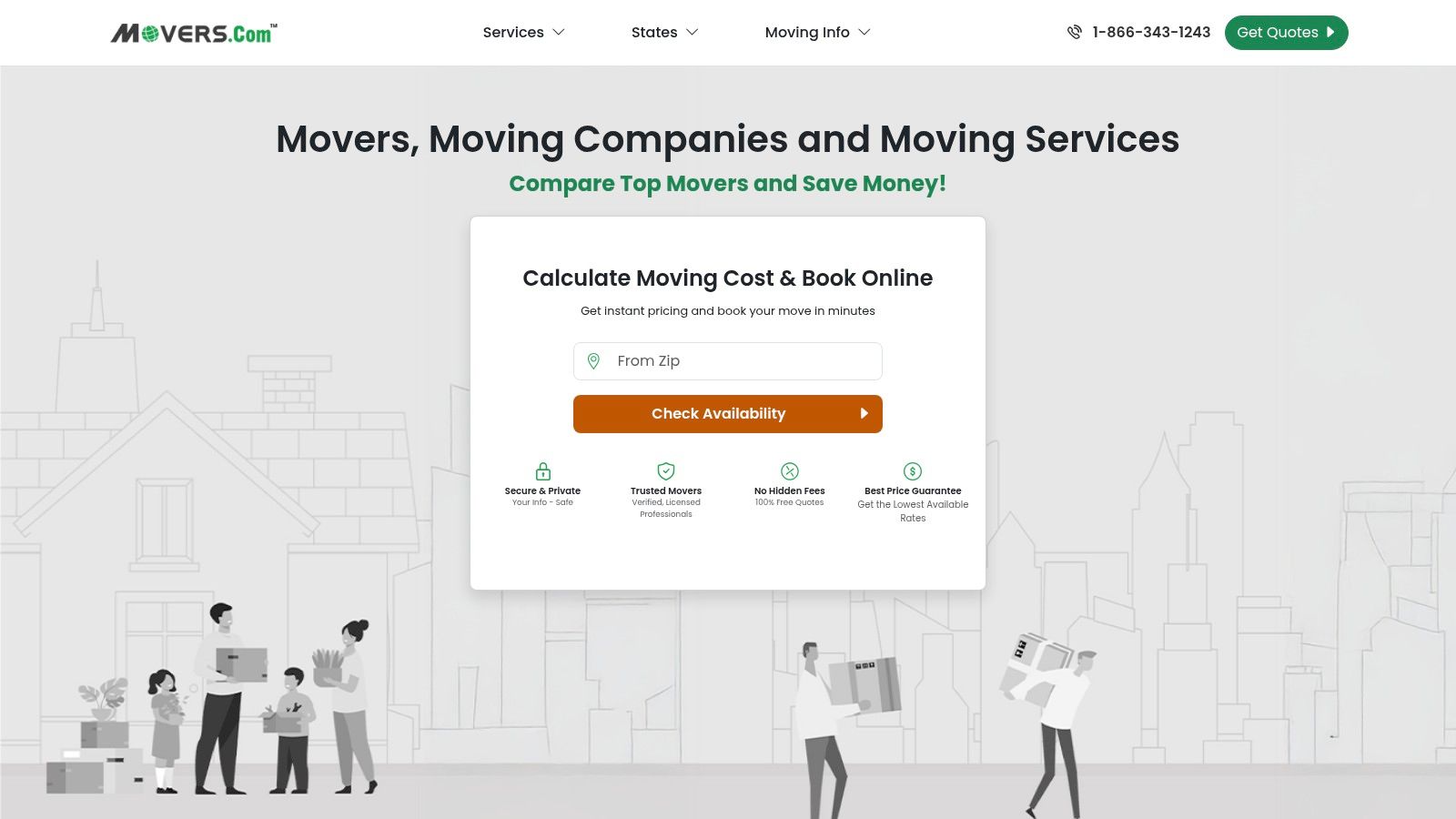
Movers.com sits in a familiar category for this industry. It's both a consumer resource and a mover marketplace, which means it can support visibility as well as inquiry flow. That combination can help smaller regional brands borrow trust from an established destination site.
For a 5 to 20 truck operator, the primary appeal is targeting. If you can filter by geography and service line, you have a chance to avoid some of the random, low-fit inquiries that waste office time.
Where it helps and where it leaks
The upside is reach. The downside is that broad marketplaces often create a race. Shared-lead dynamics push your office into speed mode, and speed without process creates bad estimates, bad-fit jobs, and low-margin bookings.
That's why I wouldn't judge a source like this by lead count alone. I'd judge it by whether your team can work the lead properly inside your actual operation.
- Good use case: Filling schedule gaps in lanes or service areas you already understand.
- Bad use case: Buying volume because revenue is soft, without fixing response time or quote consistency first.
- Best operational pairing: A CRM process that tags every inquiry by source, move type, and outcome.
The moving industry is large, but it's also fragmented. IBISWorld estimates the U.S. moving-services industry at $25.7 billion in 2026 across 9,430 businesses. In a fragmented market like that, small process gains matter. One office that answers fast and qualifies properly will outperform another office buying the same leads and fumbling the first call.
4. moveBuddha
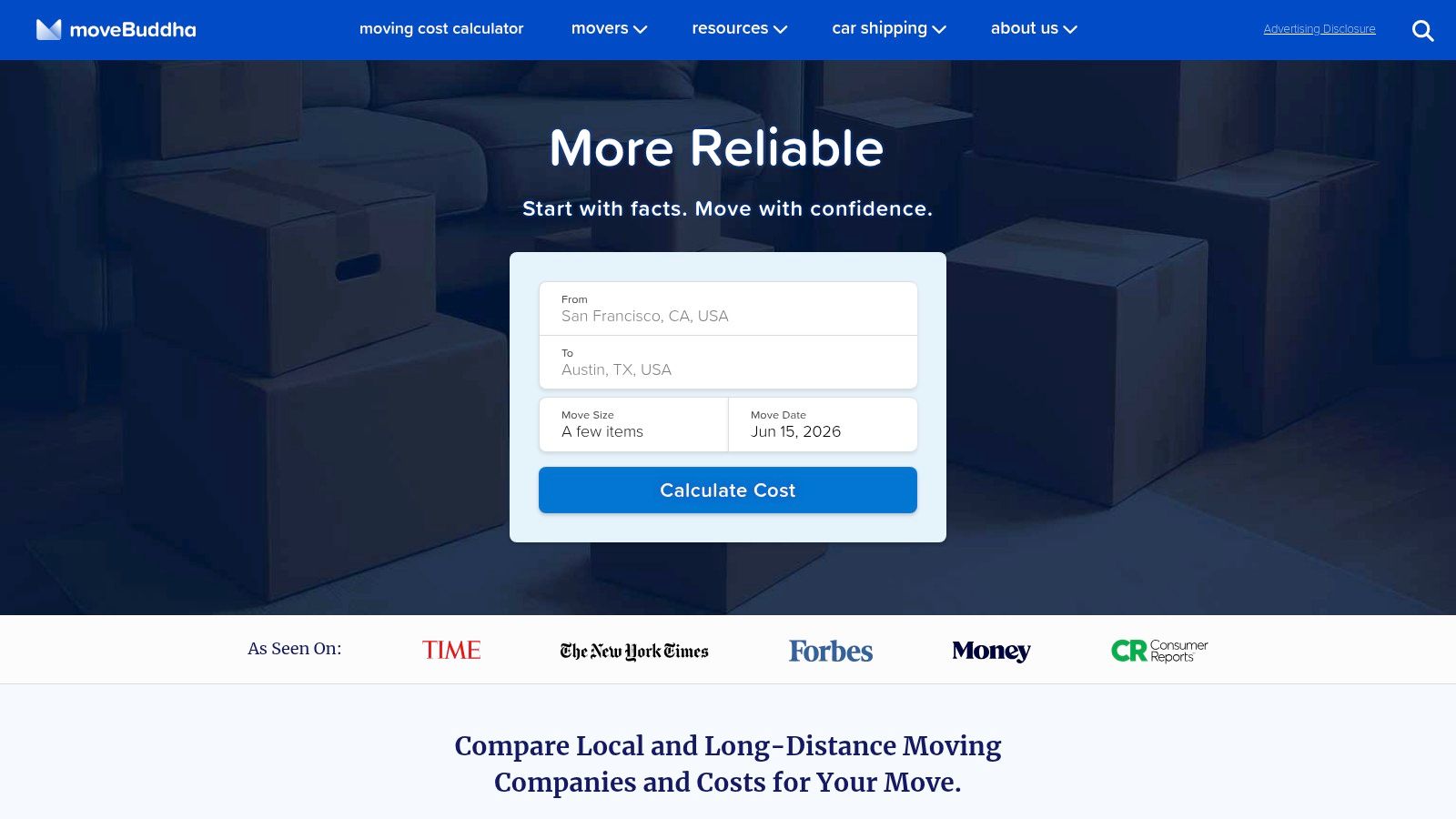
moveBuddha is different from a pure lead broker. It leans on editorial trust, mover vetting, and consumer education. That matters because shoppers who come through an education-first path usually behave differently from shoppers blasting quote forms across multiple sites.
These prospects often arrive further along in the decision process. They've been comparing companies, reading explanations, and narrowing options. That doesn't guarantee a close, but it can reduce some of the chaos you get from raw marketplace leads.
Why the referral quality can be better
Trust lowers friction in moving. People are handing over their household goods, timing, and a stressful life event. If they discover you through a platform that screens movers and frames the choice carefully, the conversation starts warmer.
That's why content-driven referral channels can outperform on quality even if they don't always win on volume. For the right operator, fewer better-fit opportunities beat a flood of low-intent inquiries every time.
The best lead isn't the one that arrives cheapest. It's the one your team can quote confidently, schedule cleanly, and service profitably.
The caution is fit. moveBuddha isn't a plug-and-play pay-per-lead machine for every mover in every market. Partnership alignment matters, brand presentation matters, and market coverage matters. If your operation has strong reviews, clear service standards, and you want better-positioned referral traffic, it's worth exploring. If you're looking for instant volume tomorrow morning, look elsewhere.
5. Move.org
Move.org works more like a trust and media channel than a traditional moving lead vendor. That distinction matters because many movers lump all third-party demand into one bucket. They shouldn't.
When a prospect comes through editorial rankings, reviews, and educational content, the buyer usually has more context. They may still shop around, but they're not always starting from zero. That can make the sales call cleaner, especially for interstate or more research-heavy jobs.
Best use case
Move.org is best for movers that present well. If your brand has solid reviews, clear service lines, and a professional sales process, content-driven partnerships can send warmer opportunities than commodity lead lists.
This kind of channel usually isn't ideal for operators who want a simple button to buy volume. It's better for companies that understand positioning and can convert trust into bookings.
A few ways to consider this:
- Best for reputation-led operators: Strong review profile and strong phone handling.
- Less ideal for weak intake teams: If your quoting is inconsistent, warmer referrals won't save you.
- Useful for lane focus: Especially if you want to be known for a specific type of move rather than everything for everyone.
For owners evaluating moving leads companies, this is an important category to include. Not every lead source should be judged by how many names it sends. Some should be judged by how much selling work they remove before the phone even rings.
6. Unpakt
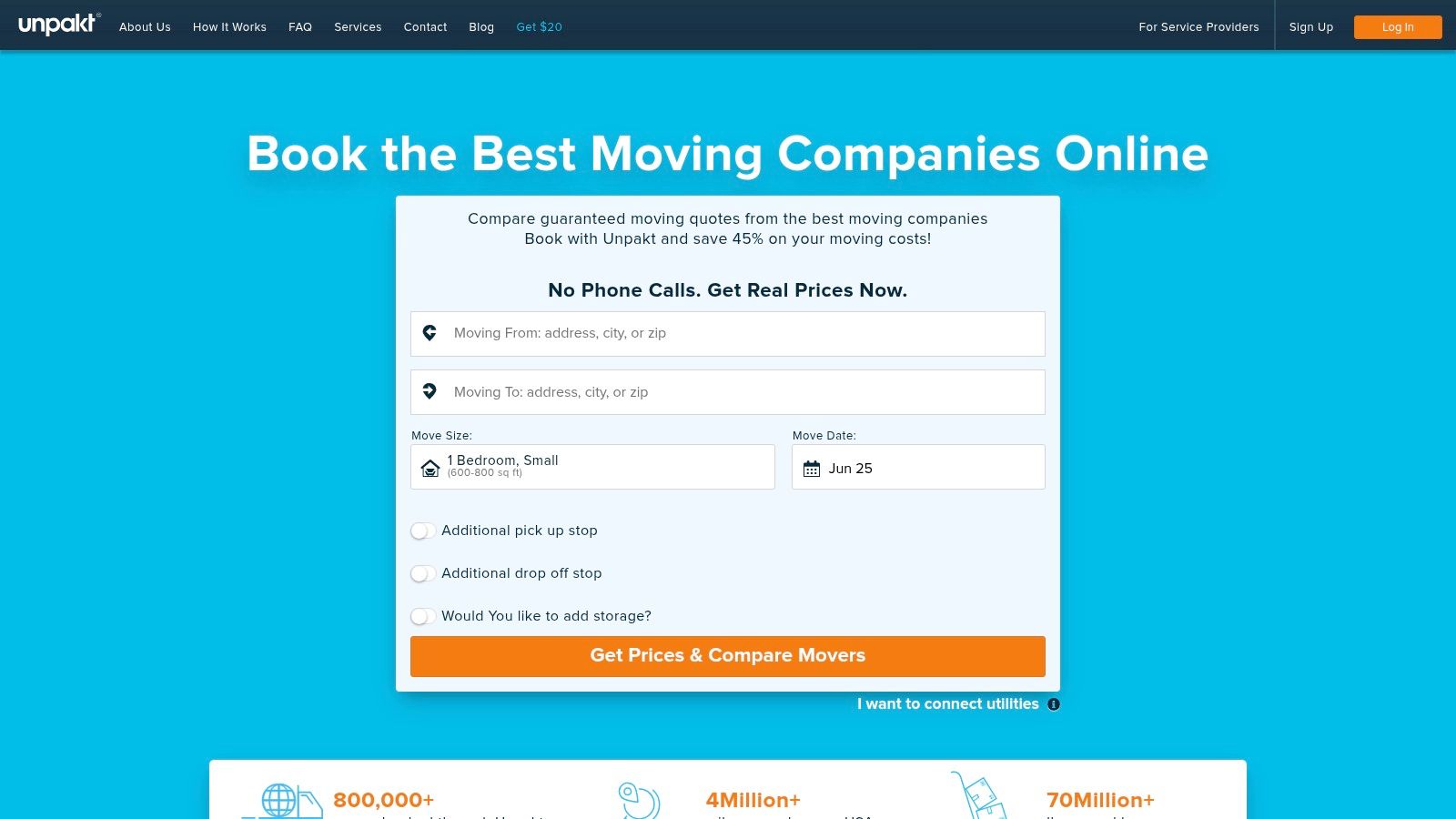
Unpakt gets attention because it pushes beyond raw lead delivery and closer to booked-job intent. For operators tired of chasing weak inquiries, that model is appealing.
I like this type of channel for one reason. It forces owners to think in bookings, not just leads. Too many moving companies celebrate inquiry volume while the office burns hours on callbacks, incomplete inventories, and no-response prospects.
Why booked-job channels matter
Lead buying economics in this category can get ugly fast. One industry guide reports shared moving leads at about $12 to $22 per inquiry, while broader benchmarks put lead prices at $30 to $120 with close rates of 8% to 15% and effective CAC of $300 to $1,000 per booked job. Those numbers are exactly why booked-job or near-booked channels deserve attention.
If a platform reduces the amount of chasing, requoting, and dead-end follow-up your office does, the value isn't just marketing. It's labor efficiency.
Here's the catch. Marketplace coverage can vary by market, and not every operator will get the same demand quality. Before you rely on a booked-job platform, test how well it matches your service area, average ticket, and crew mix.
- Good fit: Movers that want higher-intent digital demand without building everything from scratch.
- Watch closely: Whether the jobs align with your profitable service profile.
- Measure weekly: Show rate, booked revenue, cancellation patterns, and operational friction.
7. MovingLeads.com

MovingLeads.com plays a different game. Instead of waiting for consumers to request moving quotes, it focuses on homeowner data tied to listings and pending sales. That gives movers an early shot at people who are likely to need service before they hit the usual aggregator funnel.
For some operators, that timing is the whole advantage. If your team is good at outreach and follow-up, getting in front of households earlier can be far more valuable than showing up late in a shared-lead dogpile.
The timing advantage
Early-intent data sounds great on paper, but it only works if you have a real process. These aren't always hand-raisers asking for a quote today. They may be planning, comparing, or still figuring out dates. That means your follow-up system matters more than the lead source itself.
This is also where owners need to get honest about cost per booked job, not cost per contact. A lead can be cheap and still be expensive if your office spends too much time chasing it. If you want a clean framework for that math, review this guide on calculating cost per lead for movers.
The strongest use case is seasonal control. You can scale outreach up when peak demand is building and pull back when capacity is tight. That flexibility is useful for local movers who want more say over pipeline timing instead of reacting to whatever lead marketplaces send them.
8. Network Leads
Network Leads is one of the more practical options for movers who want control levers. Shared versus exclusive options, lead caps, and dispute handling all matter when you're trying to keep marketing spend from drifting out of control.
That structure doesn't guarantee quality, but it does give operators more ways to manage risk. In busy metros especially, bad data and duplicate inquiries can turn a lead buy into a fast lesson.
Where it fits operationally
One underserved issue in this category is filtration. Existing industry commentary often pushes volume, but rarely deals directly with how many purchased leads are unqualified, duplicate, or fake. The same industry angle also notes that decreasing lead volume is the biggest challenge for many movers, which often distracts them from the deeper problem of lead quality and filtration.
That's why dispute policies and workflow tools matter. They don't solve bad traffic, but they can reduce waste if your team uses them properly.
Bad leads don't just waste marketing dollars. They burn dispatcher time, clog callback queues, and make your office slower on the real opportunities.
I'd look at Network Leads if you want a testable paid-lead channel with some operational guardrails. I wouldn't use it as an excuse to avoid fixing speed-to-lead and qualification standards inside the office.
9. QualityMovingLeads.com
QualityMovingLeads.com is the kind of vendor many movers use when they want to test paid demand without getting boxed into a long commitment. Month-to-month flexibility and instant lead delivery can be useful when peak season shows up faster than expected.
That flexibility is the main selling point. If your board is thin and you need another source in rotation, simple setup matters.
Good for testing, not for blind scaling
The trap is assuming easy onboarding means easy profit. It doesn't. Flexible terms are great, but they can encourage lazy evaluation. Owners sign up, let leads hit the office, then make a gut call on whether the source “worked.”
Don't do that. Run a short test with hard criteria:
- Track contact speed: How fast did your team respond?
- Track quote quality: Did the office gather enough detail to price confidently?
- Track booking outcome: Not just appointments set, but booked and serviceable jobs.
- Track season and geography: Metro and timing can change everything.
This kind of source is useful as a pressure valve. It can help when your core channels soften or when you want another stream without a long setup process. Just don't confuse accessibility with strategic fit.
10. HireAHelper
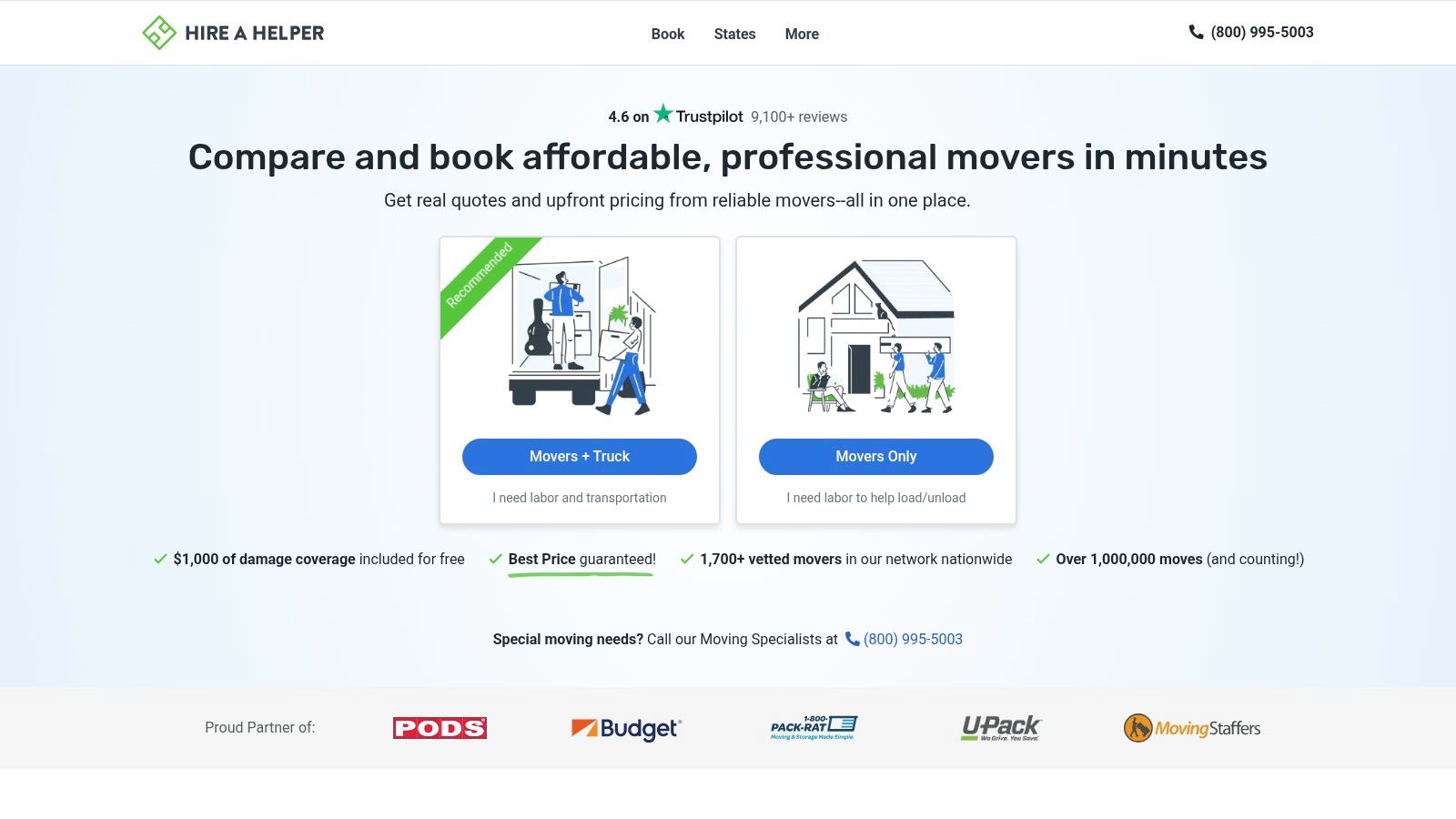
HireAHelper is worth including because not every mover should chase the same type of demand. If your company handles labor-only moves, loading and unloading, or hybrid services, this platform can be a cleaner fit than general moving lead marketplaces.
That matters operationally. A labor-focused booked-job channel can fill crew time that would otherwise sit idle, especially when full-service demand gets lumpy.
Strong channel for labor-heavy operators
This isn't the best fit for every full-service mover. If your model depends on larger, higher-complexity jobs with in-home estimating and custom pricing, labor marketplace demand may not line up with your best-margin work.
But for companies that want a balanced mix, it can be effective. The platform format also shifts some of the burden away from raw lead chasing and toward profile quality, service execution, and reviews.
The broader lesson is simple. The best moving leads companies aren't always the ones sending traditional leads. Sometimes the better channel is the one delivering demand that already matches your service design.
Top 10 Moving Leads Companies Comparison
| Product | Core offering | Quality & ROI (★) | Price & Value (💰) | Target (👥) | Unique selling point (✨) |
|---|---|---|---|---|---|
| MoveJoy 🏆 | 24/7 AI call-answering (~2s), qualifies leads, quotes from your rate card, auto-books to CRM/calendar | ★4.9/5 · ~95% quote accuracy · ROI often from 1 recovered booking | 💰 $149–$499/mo (tiered; confirm per-minute fees) | 👥 Independent US movers with 1–20 trucks | ✨ Industry-trained quoting + 24/7 automated booking; native SmartMoving/Supermove/MoveitPro/Google Calendar integrations |
| Moving.com | Consumer request routing to movers (routes to up to 4 providers) | ★ Established volume & brand recognition | 💰 Variable, contact sales | 👥 Movers seeking steady consumer lead volume | ✨ Reach via Realtor.com ecosystem |
| Movers.com | Marketplace + advertising, partner profiles and verification badges | ★ Steady year-round flow for many markets | 💰 Custom quotes via sales | 👥 Movers wanting branding & segmented leads | ✨ Partner profiles & verification badges to boost conversions |
| moveBuddha | Editorial guides & vetted recommendations driving referrals | ★ Warmer, higher-quality referrals from trust signals | 💰 Partnership/advertising, inquire | 👥 Movers prioritizing quality and consumer trust | ✨ Editorial rankings & deep vetting for warmer leads |
| Move.org | Content-driven guides and partnership lead programs (interstate focus) | ★ High consumer trust; content-driven intent | 💰 Partnership-based pricing, inquire | 👥 Movers handling interstate or high-intent moves | ✨ National editorial reach and partner amplification |
| Unpakt | Pre-screened mover marketplace with instant online booking (booked jobs) | ★ Booked jobs = higher-intent work, less chasing | 💰 Commission/terms vary by market | 👥 Movers who prefer booked jobs over raw leads | ✨ Sends booked jobs (not just leads); mover verification |
| MovingLeads.com | Early pre-mover (new listing/pending) data; digital feeds & direct-mail options | ★ Timing advantage for early outreach | 💰 Quote-based; contact sales | 👥 Movers targeting homeowners listing/selling early | ✨ Exclusive early-window leads + postcard/mail campaigns |
| Network Leads | Real-time shared or exclusive leads + dispute/credit policies and CRM workflows | ★ Transparent credits & conversion tooling | 💰 Public baseline for shared leads; custom for exclusive | 👥 Movers wanting volume control & risk protection | ✨ Dispute/credit policy + integrated follow-up workflows |
| QualityMovingLeads.com | Instant lead delivery with web lead manager; month-to-month flexibility | ★ Simple setup for peak-season bursts | 💰 Contact for pricing; month-to-month terms | 👥 Movers testing channels or needing flexible volume | ✨ No long-term lock-in; instant delivery |
| HireAHelper | National labor-only marketplace delivering booked labor jobs and profiles | ★ Booked labor jobs with strong review infrastructure | 💰 Commission/fee terms disclosed on onboarding | 👥 Providers of moving labor or hybrid services | ✨ Platform-booked labor jobs; Porch integration and review system |
Beyond Leads Build Your Unfair Advantage
Friday at 6:40 p.m., your coordinator has gone home, two estimators are still on the road, and the phone rings with a family that needs a quote before they book someone else. If that call goes to voicemail, the lead source does not matter. You already paid to create demand. Now you are losing it at intake.
That is the mistake I see over and over with 5 to 20 truck movers. Owners spend weeks comparing lead vendors, then ignore the part of the system that converts inquiries into deposits. A lead company can send traffic, forms, and phone calls. It cannot fix a slow callback process, weak phone coverage, inconsistent quoting, or an office team buried in dispatch and customer service.
Lead buying should sit inside a revenue system, not act as the system.
The right way to evaluate any provider on this list is simple. Measure what happens after the lead arrives. How fast did your team respond? How many contacts turned into live conversations? How many of those conversations got quoted correctly? How many quotes became booked jobs at an acceptable margin? If you cannot answer those questions, you do not have a lead problem yet. You have a tracking and conversion problem.
The trade-offs are real. Shared leads can fill the board, but they often create price-shopping and extra admin work. Marketplace jobs can come in with stronger intent, but fees and platform rules cut into margin. Early-stage homeowner data gives your sales team more time to work, but only if someone follows up with discipline. Every channel has a place. The wrong channel for your operation is the one that keeps your office busy without keeping your trucks profitable.
A lot of revenue leaks out before a rep ever gives a serious quote. Missed calls after hours. Web forms that sit until morning. Overflow periods where staff picks up, takes a message, and never gets back fast enough. Generic answering services help with coverage, but they usually stop at message taking. Generic AI phone tools answer faster, but if they cannot handle inventory, access issues, travel time, stair fees, long carries, shuttle situations, valuation options, or local pricing logic, they create bad estimates and angry customers.
For moving companies, intake quality affects operations as much as sales. Bad information at the front end leads to underquoted jobs, blown schedules, crew frustration, and claims problems. Good intake protects margin before the truck ever rolls.
A practical setup for a 5 to 20 truck company usually has three parts:
- Protect inbound demand you already earned from local SEO, referrals, repeat customers, and branded search.
- Test purchased lead channels carefully, with clear limits on cost per booked job and gross margin.
- Put a front-end intake process in place that answers, qualifies, and pushes real prospects toward booking when your office is busy or closed.
MoveJoy fits into that third layer. As noted earlier, it is not another lead source. It helps moving companies recover missed opportunities, handle after-hours inquiries, and keep quoting momentum when the office cannot keep up.
If more leads are coming in but booked revenue is flat, buying another lead package usually is not the first fix. Tighten response time. Clean up quoting. Recover missed calls. Then scale the channels that produce profitable work.