
It is 7:12 PM in July. One truck is still unloading. Your dispatcher has gone home. You are finally sitting down to eat, and the phone rings with a new moving lead.
If nobody answers, that caller does not care that your day started at 6 AM. They call the next mover.
That is the core problem with moving company quoting software. It is not just about building estimates faster. It is about what happens in the first few minutes after a prospect decides to move. If your process depends on handwritten notes, callbacks, and “I’ll send that quote later tonight,” you are leaking revenue when your schedule is already packed and your stress is already high.
Most owners with 1 to 20 trucks feel this in the same places. Nights. Weekends. Lunch rush. Busy season. The gap between finishing the current job and getting back to the office. The lead comes in, but nobody prices it cleanly, follows up fast enough, or gets it onto the calendar before the shopper moves on.
The painful part is that the lead was not bad. The process was.
A lot of movers try to solve this with voicemail, a call center, or a generic bot. That only fixes one piece of the problem. The true win is not answering a call. The true win is quoting the move accurately and getting the job booked while the customer is still ready to act. That is the difference between admin noise and booked revenue.
Introduction Cost of a Missed Call After 5 PM
A missed evening call hits harder in this business than in most service categories. Moving customers are often shopping under pressure. They need a date, a price range, and enough confidence to stop calling around.
For a small operator, after-hours leads are where the strain shows up fastest. The owner is driving, unloading, doing payroll, or trying to have one quiet hour with family. The phone rings anyway. If it goes to voicemail, the customer usually does not wait.
What the owner feels versus what the customer needs
From the owner side, the thought process is familiar:
- I will call them back later: Later often means after the customer has already spoken to two other movers.
- I just need someone to answer the phone: Answering helps, but it does not price stairs, long carry, packing, storage, or hourly versus flat-rate logic.
- We can quote it tomorrow morning: Tomorrow is often too late during peak demand.
From the customer side, the need is simple. They want a usable quote and a clear next step.
Practical takeaway: The first company that can give a confident, believable quote usually controls the conversation.
That is why so many owners end up looking for something beyond a basic answering setup. If your current process still breaks down after hours, a system built for 24/7 call handling for moving leads starts to make sense only when it can do more than capture a name and number.
The hidden cost is operational, not just emotional
Manual intake creates two problems at once. First, you lose jobs that should have been bookable. Second, your office becomes a cleanup crew for unfinished conversations.
That means:
- Dispatch gets interrupted by callbacks and missing job details.
- Sales follow-up gets sloppy because notes are incomplete.
- Owners carry the mental load of remembering who called, who got quoted, and who still needs a reply.
Good moving company quoting software changes that front-end handoff. It turns an incoming lead into structured information, a usable quote, and ideally a booked job instead of another item on your late-night to-do list.
What Is Moving Company Quoting Software Anyway
A lot of movers still think quoting software is just a digital estimate form. It is not.
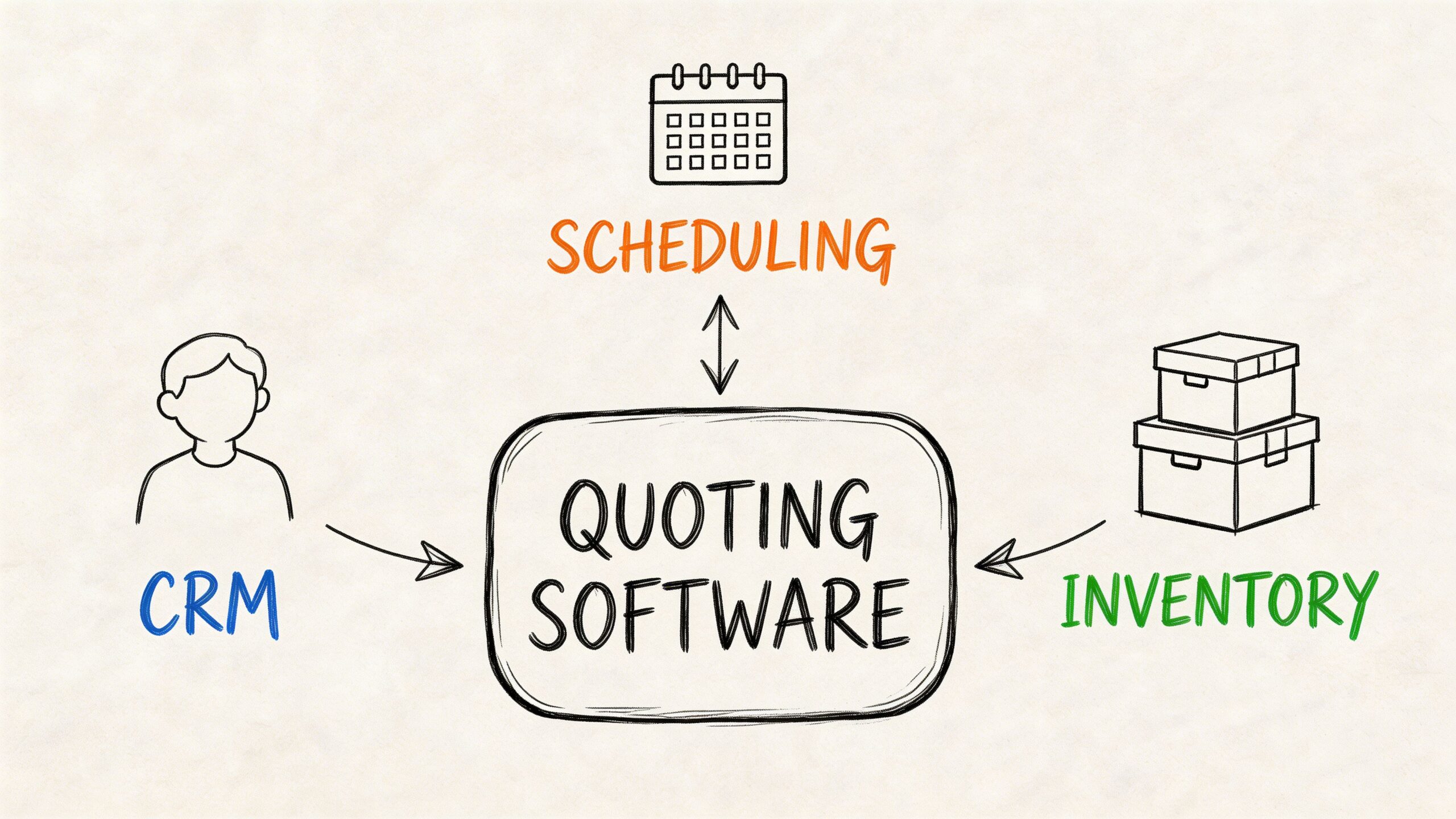
Modern moving company quoting software is the front-end operating layer that connects lead intake, pricing logic, scheduling, follow-up, and customer records. It should know how your company prices work, not just store contact information.
What it replaces
If you are still using notebooks, spreadsheet tabs, text messages, and memory, the software is replacing several fragile steps at once:
- Handwritten intake notes
- Manual math on hourly or flat-rate jobs
- Separate follow-up reminders
- Calendar guesswork
- Double entry into CRM or dispatch tools
That is why the category has become standard. The moving industry reached near-universal software adoption, with 95% of companies using moving-specific tools as of 2025, and over half using integrated quoting and CRM systems, according to Supermove’s software guide. The same source notes that a $500 per month baseline equals $6,000 per year, or 0.4% of $1.5M annual revenue.
For owners who still view software as overhead, that number matters. The bigger cost is usually staying manual too long.
What good software should do
A strong setup does more than create a PDF quote. It should handle the workflow around the quote.
A practical checklist looks like this:
Capture lead details clearly
Move date, origin, destination, home size, access issues, services needed, and timing.Apply your rate card consistently
That includes labor structure, trip fees, stair charges, long carry, packing, storage, or other rules your team already uses.Push information into the next system
If the quote lives in one place and dispatch lives somewhere else, your team will retype data and make mistakes.Trigger follow-up without owner babysitting
Unbooked estimates should not sit untouched.Support speed without sacrificing trust
Fast quotes only help if they are believable and aligned with what your crews can deliver.
For companies still building their process, even a simple moving company estimate template helps standardize intake. But templates are only the starting point. They do not solve after-hours response, CRM sync, or automatic booking.
What quoting software is not
It is not just accounting software. It is not just a dispatch board. It is not just a chatbot. And it is definitely not “good enough” because someone in the office can send estimates when they get a chance.
If the tool cannot connect your pricing logic to your workflow, it creates more office work instead of less.
Why Accurate Quoting Is Your New Competitive Advantage
The mover who responds first has an advantage. The mover who responds first with a quote that makes sense has a much bigger one.
That distinction matters because shoppers can tell when a price is generic. If your team throws out a rough number without accounting for access, services, or move complexity, the customer either loses confidence or says yes to a job that will become a margin problem later.
Accuracy changes the value of the job
Specialized quoting tools do more than speed up paperwork. According to QuoteIQ’s CRM data for movers, companies using specialized quoting software report 30-50% higher average move values than companies using flat-rate or manual methods.
That makes sense in the field. Accurate quoting exposes scope.
A labor-only move can become a larger, better-fit job when the estimate properly includes:
- Packing needs
- Storage
- White-glove handling
- Access charges
- Travel and logistics
That is not upselling for the sake of it. It is quoting the move the customer is buying.
Speed matters because moving customers shop fast
The same QuoteIQ source says that responding within 5 minutes instead of 5 hours can double or triple lead conversion odds, and can add at least 3 extra booked jobs per month at an average of $2,200 each, equal to $79,200 in annual revenue.
The point is not the software itself. The point is what faster quoting does operationally. It keeps the prospect in your lane before they keep dialing.
Key takeaway: A fast wrong quote creates disputes. A slow accurate quote loses the shopper. The goal is fast and accurate at the same time.
Why generic quoting loses trust
Owners often underestimate how quickly trust breaks when the quote sounds improvised.
Customers ask questions like:
- What about the third-floor walkup?
- How do you price a long carry?
- Is packing included?
- Is this hourly or flat?
- What happens if the inventory changes?
If your intake process cannot answer those cleanly, you force the customer to keep shopping. Good moving company quoting software turns your pricing rules into a repeatable sales process. It helps the office sound consistent whether the lead comes in at 10 AM or after dinner.
That consistency is a competitive advantage because most smaller movers still quote unevenly. One person includes travel. Another forgets stairs. Someone else promises a number and “fixes it later.” Customers feel that uncertainty immediately.
The key difference is lead capture versus job conversion
A lot of tools can capture a lead. Fewer tools can move the conversation all the way to a usable quote. Even fewer can get the job onto the calendar without a bunch of handoffs.
For growing movers, that front-end gap is where booked revenue gets won or lost.
Comparing Quoting Solutions A Mover’s Guide for 2026
Most moving company owners do not need more features. They need fewer handoffs between the first phone call and a booked job.
The easiest way to compare tools is by the job they perform in your business. Some run operations well. Some answer phones. Some try to do both. The trade-off is usually in the quoting logic.
| Option | Good fit for | Strengths | Main weakness |
|---|---|---|---|
| All-in-one moving CRM | Movers that want dispatch, scheduling, invoicing, and sales in one system | Strong back-office control, built for movers, solid workflows after lead entry | Front-end intake can still depend on staff availability |
| Generic answering tools or horizontal voice bots | Movers trying to stop calls from going to voicemail | They can answer every call and capture basic info | They usually cannot apply moving-specific rate logic or book accurately |
| Purpose-built quoting and booking engine | Movers focused on after-hours capture and faster quote-to-book flow | Connects call, quote, and booking around the actual rate card | Must integrate cleanly with the rest of your stack |
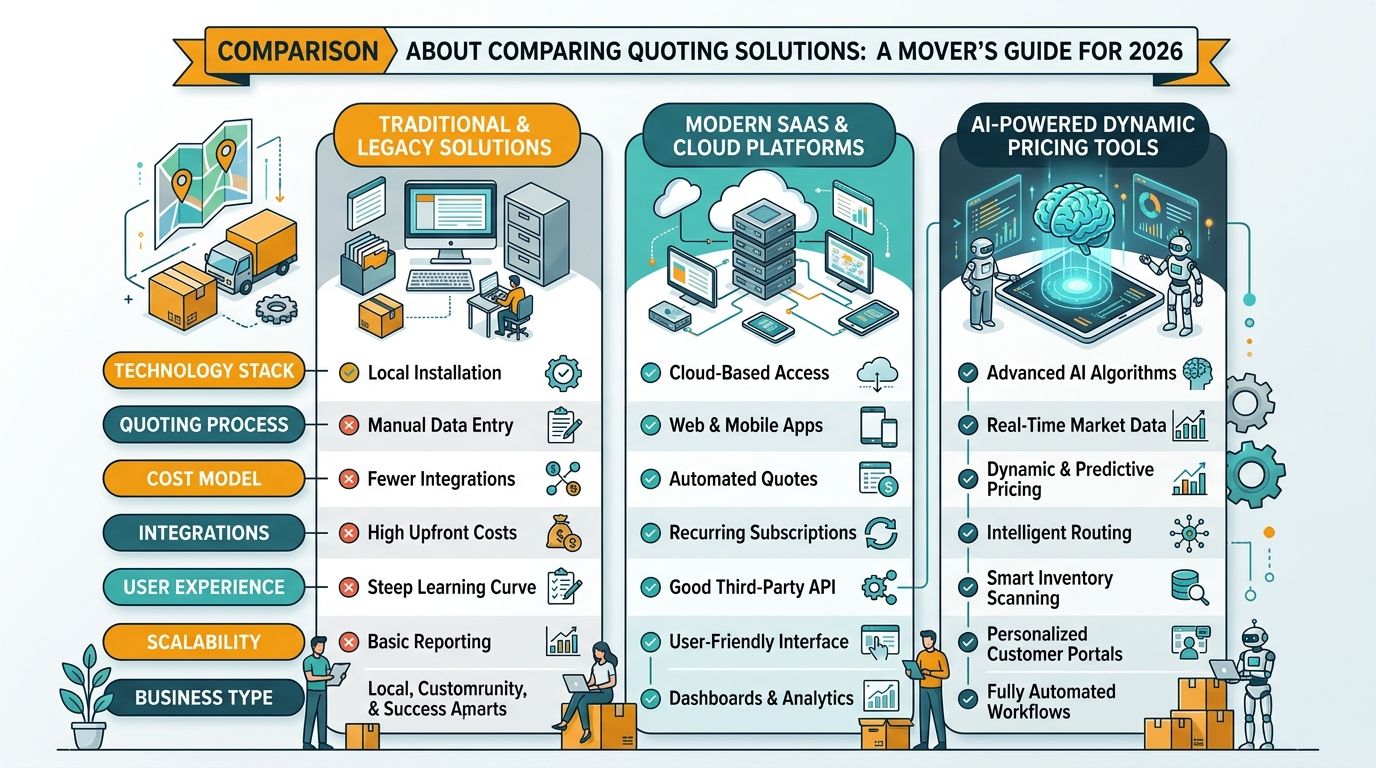
All-in-one CRM platforms
For many operators, these platforms are often the starting point. These systems centralize dispatch, lead management, invoicing, job status, and office workflows.
In 2026 benchmarks, SmartMoving scored 9.7/10 and MoveitPro scored 9.2/10, with both offering automated quoting tied to dispatch and scheduling, according to Gitnux’s moving software benchmark roundup.
That matters if you are trying to run a cleaner office. These platforms are strong once the lead is already inside the system.
Where they help most
- Sales pipeline visibility
- Dispatch coordination
- Job records and invoicing
- Standardized estimating workflows
Where the gap still shows up
The same benchmark notes that they lack native AI voice quoting for 24/7 intake. For a 1 to 20 truck mover, that means the software can be strong after someone enters the lead, but weak at the exact moment a prospect first calls.
If your staff misses the call, the CRM does not solve that by itself.
Generic tools that answer but do not close
This category includes call centers, receptionist services, and broad AI tools built for many industries.
They can help with coverage. They usually cannot handle the quoting logic that makes moving different from plumbing, med spas, or real estate offices.
The issue is not intelligence in the abstract. The problem is moving-specific pricing. A useful quote may need to account for:
- Stairs
- Long carry
- Hourly versus flat-rate structure
- Packing scope
- Truck count
- Date and availability constraints
When a tool cannot handle that, it creates a delay. The customer gets a message taken, not a job booked.
Operator tip: If a vendor says “we capture the lead and your team follows up later,” ask yourself whether that fixes your nights and weekends.
Purpose-built revenue engines
This is the category that closes the gap between answering and booking. The tool needs to understand a mover’s rate card, ask the right follow-up questions, and push the result into the system you already use.
One option in this lane is MoveJoy, which is built around moving company rate cards and variables like stairs, long carry, and hourly versus flat pricing. It is designed to quote on the call and book directly into systems such as SmartMoving, Supermove, MoveitPro, or a calendar, rather than stopping at lead capture. If you want a broader view of the software market, this guide to the best software for moving companies is a useful reference point.
What to compare in this category
Do not get stuck on broad feature counts. Compare these instead:
| Evaluation point | Why it matters |
|---|---|
| Rate card compatibility | If the tool cannot follow your pricing logic, your quotes will drift |
| Intake depth | It should gather enough detail to quote, not just enough to call back |
| Booking workflow | The handoff into CRM or calendar should be automatic |
| Follow-up handling | Unbooked estimates should not disappear |
| Usability for small teams | Owners with a lean office cannot babysit another dashboard |
Which category is right for you
If your office already runs well but lead intake breaks after hours, the front-end quoting gap is the priority.
If your current problem is total back-office chaos, an all-in-one CRM may be the foundation you need first.
If you are considering generic answering support, be honest about the limitation. Taking messages is useful. It is not the same as pricing the move and putting the job on the board.
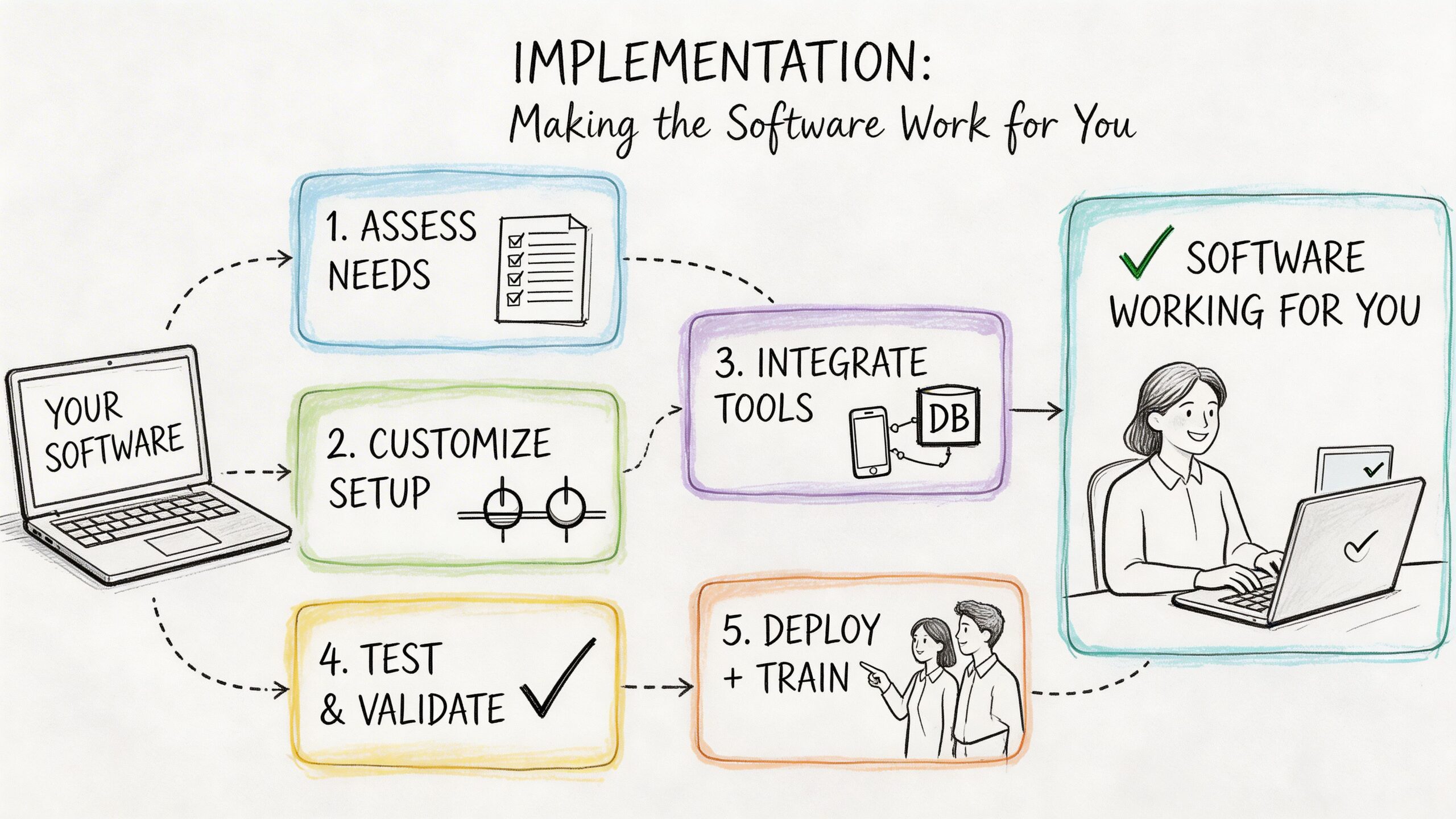
Implementation Making the Software Work for You
Most owners do not need a complicated rollout. They need a setup that respects how the business already runs.
The software should fit your rate card, your job types, and your existing tools. If it requires constant workarounds, your team will stop trusting it.
Start with the pricing logic
Before you connect anything, clean up the quoting rules you already use.
Write down:
- Hourly versus flat-rate conditions
- Minimums
- Travel charges
- Stair fees
- Long carry rules
- Packing and storage add-ons
- Date or season exceptions
Many implementations go wrong here. The software is not the primary problem. The company never documented its pricing logic, so staff members keep quoting from memory.
Connect the booking destination
Once the rate card is clear, decide where a booked job should land.
For small movers, that may be a calendar. For larger operators, it is usually the CRM or dispatch platform. The key is avoiding re-entry. Integration problems with niche CRMs like SmartMoving and Supermove are a real hurdle for small movers, because weak sync creates manual entry errors and lost bookings during peak periods, as noted in Moverbase’s feature overview.
If your process still requires someone to copy call details from one system to another, you have not solved the front-end leak.
A simple rollout plan
A practical implementation usually looks like this:
Map your quote inputs
Decide which questions the tool must ask every lead.Load your pricing rules
Keep them realistic. Do not overcomplicate edge cases on day one.Set the booking handoff
Choose CRM, dispatch tool, or calendar.Test real-world scenarios
Run local moves, apartment moves, packing jobs, and awkward access cases.Watch the first week closely
Review calls, quotes, and booked jobs to tighten the workflow.
Practical tip: Test your hardest common job type first, not your easiest one. If the software handles the messy quote, it will handle the simple one.
Keep the office involved
Implementation works better when sales and dispatch both review the flow. Sales cares about quote speed and clarity. Dispatch cares about whether the booked job is operationally real.
When both sides agree on the handoff, the system starts feeling like relief instead of another tool to manage.
The Two Biggest Quoting Pitfalls and How to Avoid Them
Most bad software decisions in moving happen because owners buy coverage instead of conversion.
They want fewer missed calls. That is reasonable. But they end up choosing tools that answer the phone without doing the hard part of the job.
Pitfall one using generic voice tools for moving quotes
Generic AI voice products tend to sound impressive in demos because they can hold a conversation. That does not mean they can quote a move.
The major failure point is industry logic. The high failure rate of generic AI voice tools for phone-based quoting is tied to their lack of moving-specific logic for things like 2-bedroom walkups or stair charges, which leaves movers exposed to $50K to $150K in annual revenue loss from missed after-hours and peak-season calls, according to QuickMove’s discussion of online quote workflows.
That matches what operators see on the ground. The caller says “third-floor walkup with a long carry and partial packing,” and the tool either gives a vague answer or asks irrelevant questions.
How to avoid it
Ask vendors to show you these scenarios live:
- Apartment with stairs
- Long carry
- Local hourly move
- Flat-rate job
- Packing added mid-call
If they cannot handle those without confusion, they are not quoting software for movers. They are just call handling.
Pitfall two paying for message taking instead of booking
Human answering services have a place. They are usually polite, consistent, and better than voicemail. But they create a handoff right where speed matters most.
The caller gets, “Someone from the office will call you back.” That may sound fine internally. To the shopper, it means the process is still incomplete.
The usual problems look like this:
- The customer keeps shopping while your office is closed.
- Your callback lacks context because the intake notes are thin.
- The quote gets delayed until someone is free to calculate it.
- No one owns the follow-up if the day gets busy.
What works better in practice
The right approach depends on where your leak is.
If the problem is only daytime workload, stronger internal quoting discipline may be enough. But if the primary loss happens after hours, during peak call volume, or when the owner is on a truck, then the front-end system has to do more than answer.
Rule of thumb: If the tool cannot produce a usable quote or create a booking path, it is not solving your biggest revenue problem.
A mover does not need another inbox of leads that still require manual rescue. They need a process that gets the customer from inquiry to decision before momentum disappears.
How to Evaluate Vendors and Calculate Your ROI
Software buying gets easier when you stop asking, “What features does it have?” and start asking, “What work will it remove from my week, and how many jobs will it help me book?”
That keeps you focused on business outcomes instead of demo theater.
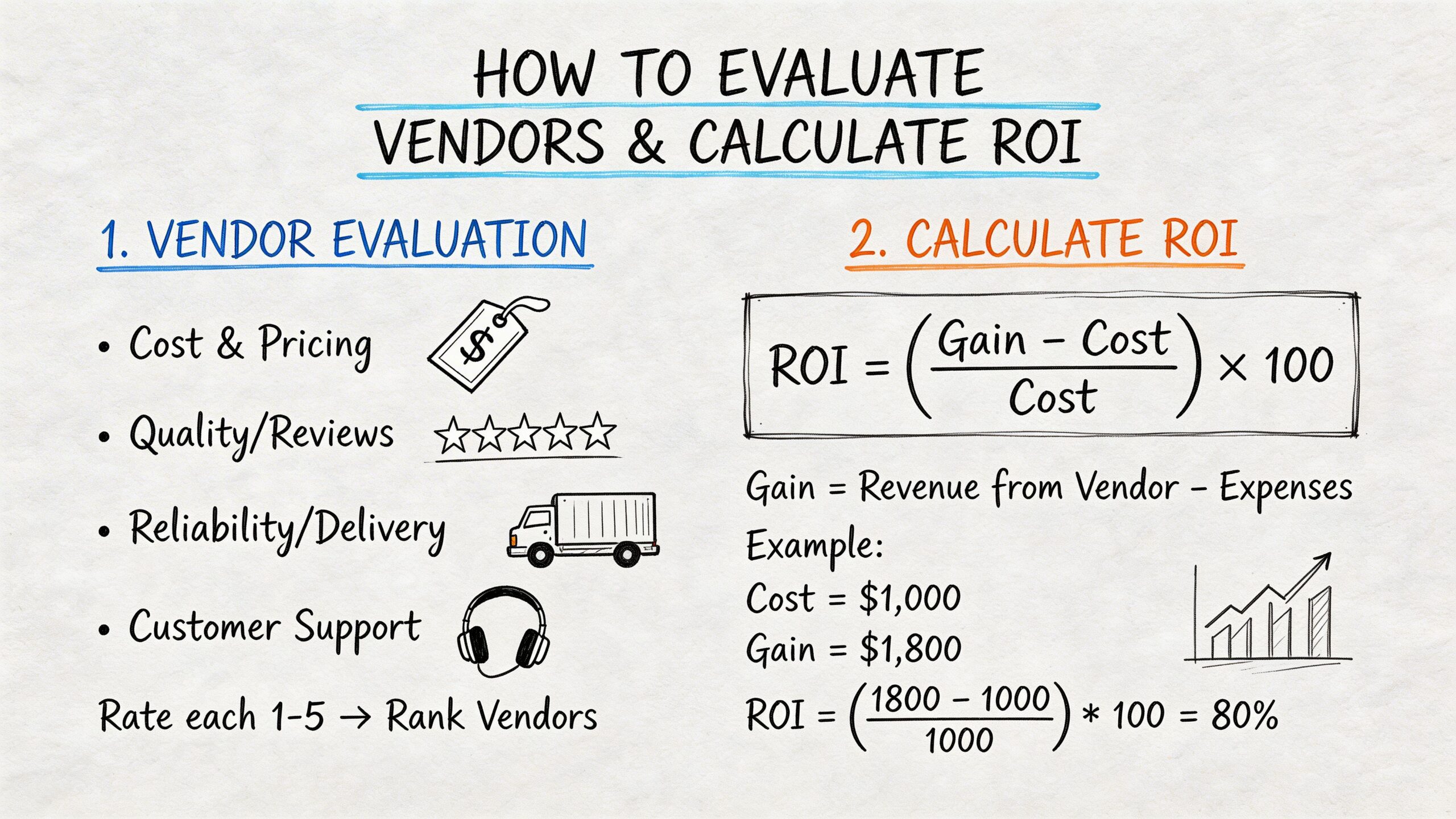
Questions to ask every vendor
Use the demo to pressure-test the workflow, not just the interface.
Ask questions like:
Can the system follow our actual rate card?
Make them explain stairs, long carry, hourly jobs, and flat-rate jobs.What happens after the quote is generated?
Does it book directly, create a task, or just store the lead?Which systems does it sync with natively?
If your team has to retype data, expect errors.How does follow-up work on unbooked estimates?
Quotes without follow-up often fade away.What does setup require from our office?
Small movers do not have spare admin hours to burn.
A back-of-the-napkin ROI method
You do not need fancy forecasting. Use your own numbers.
Start with:
- Missed calls or unworked leads per week
- Your normal booking rate on qualified leads
- Your average move value
Then ask one practical question. If better quoting and faster response recover even a small number of those lost opportunities, what does that equal monthly?
Use this logic:
- missed opportunities
- multiplied by your likely close rate
- multiplied by your average job value
That gives you a working estimate of recoverable revenue.
If you also want to tighten your marketing math, this guide on how to calculate cost per acquisition is useful because it helps connect lead volume, spend, and closed jobs. That matters when you are deciding whether software is fixing intake or just masking poor lead quality.
What good ROI looks like for a mover
A good purchase usually does at least two of these things at once:
| Outcome | Why it matters |
|---|---|
| Recover more bookable leads | Revenue grows without adding trucks first |
| Reduce owner interruption | Nights and weekends become less chaotic |
| Improve quote consistency | Fewer pricing mistakes and cleaner expectations |
| Eliminate admin re-entry | Office staff spend less time copying data |
| Tighten follow-up | More estimates get worked until they close or clearly die |
Do not forget the stress test
Before you sign, ask yourself one blunt question. Will this tool still work on your busiest Friday when nobody has time to babysit it?
That is the standard that matters for a moving company. Not the polished demo. Not the feature sheet. The ultimate test is whether it helps a tired office move faster without creating new cleanup work.
Conclusion Stop Answering Calls Start Booking Jobs
The moving companies that improve bookings do not just answer faster. They quote faster, quote cleaner, and remove friction between the first call and the calendar.
That is why moving company quoting software matters so much now. It is not another nice-to-have office tool. It is the system that determines whether a lead becomes a job or turns into a voicemail, a sticky note, and a callback that happens too late.
What works
The pattern is straightforward:
- Manual quoting breaks under volume
- Message-taking alone does not close jobs
- Generic tools miss moving-specific pricing details
- Integrated quoting and booking workflows reduce leakage
For 1 to 20 truck operators, the best setup is usually the one that matches your pricing logic, connects to your CRM or calendar, and handles the front-end work consistently when your team is busy.
What to do next
If you are evaluating your current process, start with three questions:
- How many leads hit voicemail or wait for callbacks?
- How often does your team re-enter quote details into another system?
- Can a customer get a reliable quote when your office is closed?
Those answers will tell you where your revenue leak is.
Your quoting process also sits next to your trust-building process. Once your intake and booking flow is tighter, small improvements like stronger social proof have more impact. If you are working on conversion from another angle too, this article on how a review widget can increase bookings is worth reading because reviews often help the customer say yes once the quote is in front of them.
The key shift for movers is simple. Stop treating the first call like a message-taking event. Treat it like the beginning of the sale. The companies that do that well book more jobs, protect margins better, and take a lot of pressure off the owner.
If you want to see what that looks like in practice, explore MoveJoy. It is built around the gap most movers still have at the front end: turning inbound calls into accurate quotes and booked jobs instead of just captured leads.