How to Qualify Leads and Book More Moving Jobs
We’ve all been there. You spend 20 minutes on the phone with a potential customer, carefully explaining your services and gathering details for their move. You craft a perfect, detailed quote and send it over, feeling good.
Then… crickets.
The problem probably isn't your pricing. It’s the lead. Chasing every single person who fills out your web form or calls for a price feels productive, but it’s a fast track to burnout and lost revenue, especially for a small to mid-sized moving company.
Stop Wasting Time on Unqualified Moving Leads
Wasting time on bad leads is a silent profit killer for any moving company. This constant chase after "tire-kickers"—people who are just shopping for the absolute lowest price with zero intent to book—drains your most valuable resources.
- Your Time: Every minute your team spends with a tire-kicker is a minute you can’t give to a serious customer who’s actually ready to schedule their move.
- Your Money: What’s the point of spending thousands on ads if they only bring in people who will never convert into a booked job?
- Your Opportunity: While you’re tied up on a dead-end call, a genuinely great lead might be calling your competitor—the one who answered the phone right away. Missed calls equal lost revenue.
The True Cost of a Bad Lead
This problem gets ten times worse during your busy season. When the phone is ringing off the hook from May to September, the ability to instantly spot and prioritize high-value leads becomes your biggest competitive advantage. If your team is buried under a pile of quotes for people who were never going to book anyway, you are actively losing money.
The big shift isn't about getting more leads. It's about getting the right leads. This is how you scale your moving business. It’s about filling your calendar with profitable jobs, not just endless inquiries.
This isn't about working harder; it’s about working smarter. A solid lead qualification process is the secret to boosting your booking rate and revenue without spending another dime on marketing.
By putting a simple, consistent system in place, you make sure your team’s energy is spent where it counts: on customers who are serious about hiring you. And if you can automate those first few qualifying questions with an AI receptionist, you gain an even bigger edge, making sure no lead—good or bad—slips through the cracks, even after hours.
How to Spot a High-Quality Moving Lead (And Stop Wasting Time)
Let's be honest. Not every phone call or web form submission is a real opportunity. Many of them are just "tire-kickers"—people shopping around with no real intention of booking. If your team treats every single inquiry the same, you're wasting a ton of time and energy on conversations that go nowhere.
Qualifying leads shouldn't be complicated. You just need a simple way to separate the hot leads from the time-wasters. For moving company owners, the best tool for this is a four-point checklist called BANT.
It stands for:
- Budget
- Authority
- Need
- Timeline
Think of it as a mental checklist for every call. It turns a rambling conversation into a quick, focused mission to find out one thing: is this person ready to book? This is how you ensure your team spends their valuable time on leads that actually turn into jobs.
If you really want to go deep on this, there are great resources out there to help you master lead qualification and apply these ideas to your entire sales process.
This simple flow chart shows you exactly what I mean. An inquiry comes in, you run it through the BANT filter, and only the good ones get booked.
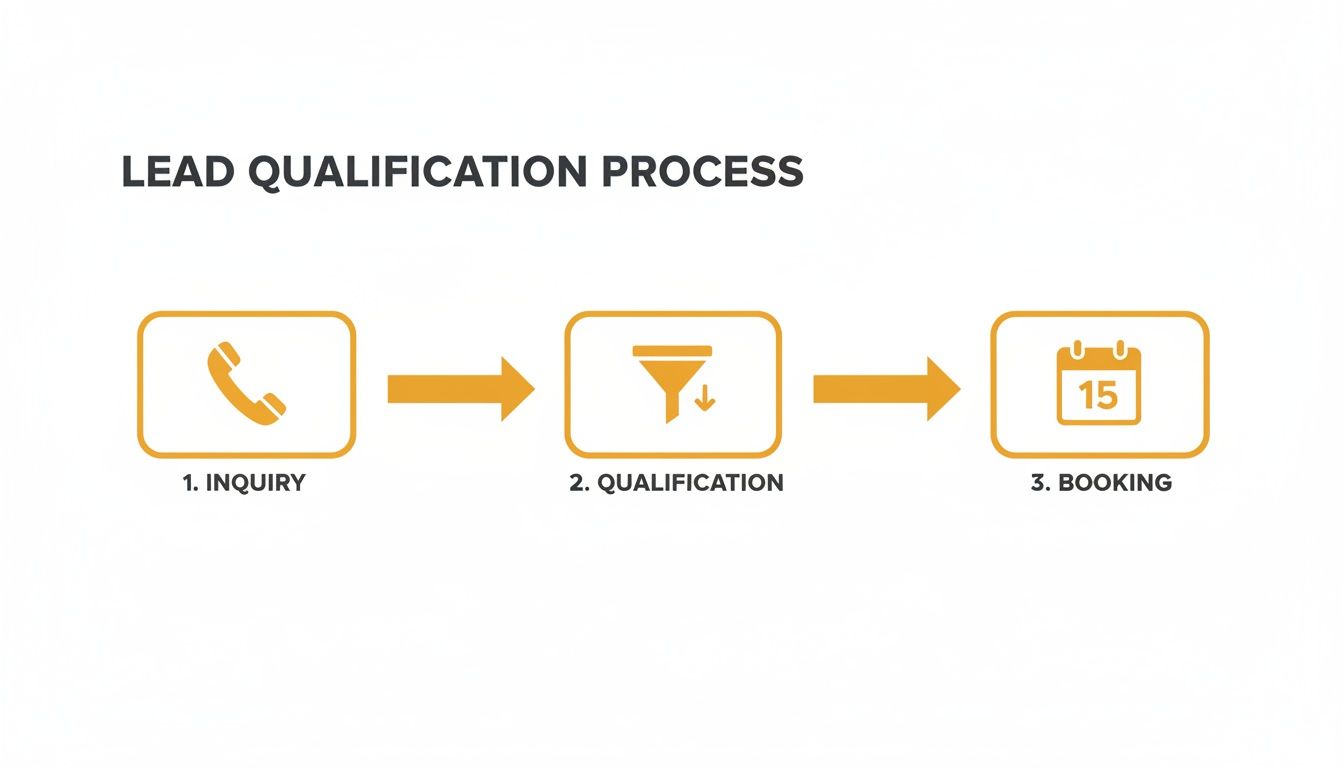
As you can see, qualification is the bridge between someone showing interest and actually committing. It weeds out the noise so you can focus on what matters for booking more moving jobs.
What BANT Looks Like for a Moving Company
So, what do these four letters actually mean when you're on the phone with a potential customer? Let's break it down into practical questions for your moving business operations.
Budget
This is about finding out if their expectations match reality. We've all had that call—someone wants a full-service, cross-country move but has the budget for a small local job. You need to gently figure out if they can afford your services without scaring them away.
- Ask: "To make sure we're on the right track, do you have a budget in mind for your move?" or "Are you familiar with typical moving costs for a job of this size?"
Authority
Simple question: are you talking to the person who can actually say "yes" and sign the contract? It’s a huge time-waster to spend 30 minutes building the perfect quote for a college student whose parents are paying for the move.
- Ask: "Are you the one making the final decision on which moving company to hire?"
Need
What’s the real reason they're moving? Is it a new job, a house closing, or an expiring lease? Understanding their "why" tells you how urgent their situation is. A customer with a hard closing date is a much hotter lead than someone who’s “just thinking about moving.”
- Ask: "What's prompting the move? Is there a specific deadline you're working against?"
Timeline
This is all about the "when." Do they have a firm move date? A customer who needs to move next Friday is a highly qualified lead. Someone who says, "sometime in the next six months," is a lower priority. You can nurture them over time, but they don't need your immediate attention.
- Ask: "What is your ideal move date?" or "How flexible is your move date?"
BANT isn't a rigid script. It's a guide. When a lead checks all four boxes—they’ve got the budget, the authority, a real need, and a clear timeline—you’ve got a hot lead. Drop what you’re doing and focus on closing that job.
This approach stops your team from chasing dead-end leads. It’s absolutely critical during the busy season when every minute counts and you can't afford to waste a single phone call. Automation can handle this initial screening 24/7, ensuring your team only talks to people who are serious, motivated, and ready to book.
The Right Questions to Ask on Calls and Texts
Knowing what to ask is half the battle. The right questions don't just tell you if a lead is a good fit; they build trust by proving you're a pro who knows the ins and outs of a move. Forget generic sales scripts. Your questions should be a surgical tool to get the information you need quickly.
Your goal isn’t to have a long, drawn-out conversation. It's to be efficient. When someone calls, you need to get the key facts quickly and professionally to provide an accurate quote.
Key Questions for a Phone Call
When a lead is on the phone, your team needs a go-to list of questions. Here’s what you should be asking to get a clear picture, fast.
- Move Size & Scope: Start with the basics. "To get started, are we looking at a 2-bedroom apartment or a 4-bedroom house with a garage?" This simple question immediately helps you visualize the scale of the job.
- Specialty Items: Uncover the tricky stuff early. "Do you have any particularly heavy or bulky items we should know about, like a piano, a gun safe, or a large sectional sofa?" This tells you about potential challenges and, just as importantly, pricing adjustments.
- Logistics & Access: This is where so many jobs go sideways. Ask, "Will there be any issues with parking a 26-foot truck at either location? Are there any long walks or several flights of stairs involved?" This is non-negotiable for scheduling the right crew and equipment.
These questions position you as a knowledgeable operator, not just someone throwing out a price. For more ideas on building out your process, it can be helpful to look at comprehensive lead qualification checklists, even if they're from a different industry. The principles are the same.
Re-Engaging Leads with SMS
But what happens with the calls that go straight to voicemail during a busy day? This is where automated SMS becomes your secret weapon for revenue recovery. The moment a call is missed, a text can fire off and re-engage that lead instantly.
A missed call doesn't have to be a lost job. An immediate, smart text message can recover that revenue by starting the qualification process for you, even when you're on another job.
Here’s a simple but incredibly effective SMS template:
"Hi [Name], this is [Your Name] from [Moving Company]. Sorry I missed your call! To get you a quick quote, can you reply with your origin and destination zip codes and the size of your home (e.g., 2-bed apt)? Thanks!"
This single text does three things: it captures the lead, gathers the most critical info, and buys you time to follow up with a real quote later. It's a simple piece of automation that stops leads from immediately dialing your competitor.
To see more examples, you can check out our detailed guide on crafting the perfect moving company call-in script.
Why Speed and Automation Win Moving Jobs
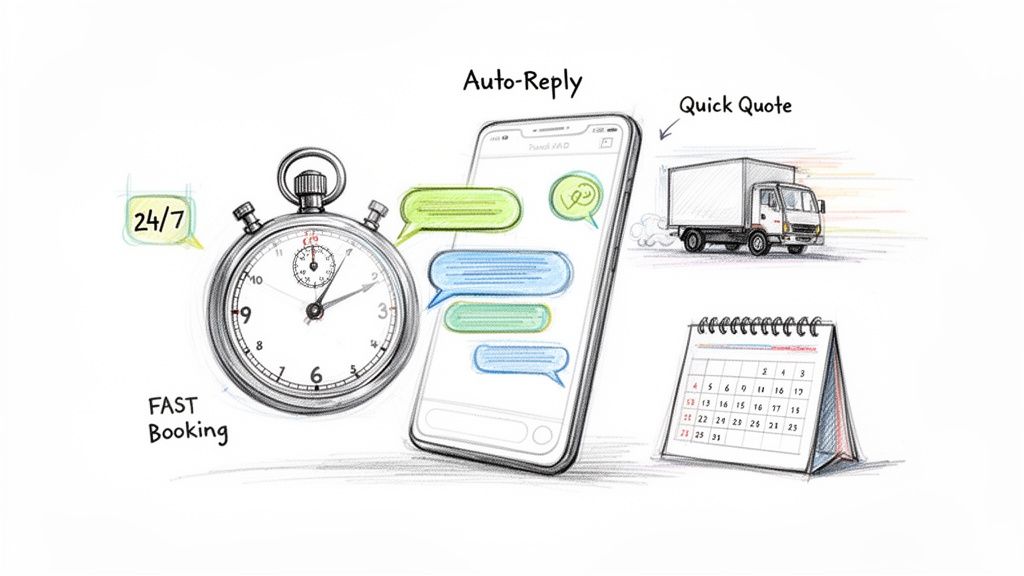
In the moving business, there’s one rule that trumps all others: the first company to give a confident answer usually gets the job. It’s that simple. When a customer decides they need a mover, they’re not sitting around waiting. They’re calling multiple companies, and they almost always book with the first one that picks up the phone and sounds like they know what they’re doing.
This is exactly where manual follow-up falls apart. If you're the one answering the phone, and you're out on a job or it's 8 p.m. on a Tuesday, every call you miss is a job you’re personally handing to your competitor. It’s even worse during the busy season when you physically can’t keep up with the phone ringing off the hook.
Today’s customers expect an answer now. A delay of even a few minutes, let alone an hour, can mean the difference between a booked job and a lost lead. That’s why figuring out how to qualify leads fast isn't just a good idea—it’s a survival tactic.
The Unfair Advantage of an Automated Front Office
This is where automation becomes your secret weapon. Imagine a system that answers every single call, 24/7, without fail. I’m not talking about a clunky voicemail box or a hit-or-miss answering service that costs a fortune. I’m talking about a system built to act as your perfect receptionist.
This kind of technology does a lot more than just answer the phone. It can:
- Ask your key qualifying questions on autopilot, gathering all the essential details you need.
- Instantly text the customer a link to your online booking page or a quick summary of their conversation.
- Capture every lead's information without you lifting a finger, even when you're on a job or asleep.
This isn't just about catching missed calls. It’s about engaging and qualifying every single person the moment they reach out, stopping them from just calling the next mover on their Google search list.
The reality is, speed is everything. Responding to a web lead within five minutes makes you 9 times more likely to convert them. This isn't hype. It’s what happens when you turn a raw inquiry into a qualified lead before your competitors even know they exist.
This approach gives you a massive advantage over the guys still running their business with a notepad and a prayer. While they're scrambling to call back a list of scribbled-down numbers, your system is already filtering leads, gathering info, and pushing serious customers toward a booking.
From a Missed Call to a Booked Job
Think about how this works in the real world. A potential customer calls while you’re busy directing your crew on-site. Instead of getting your voicemail, they’re greeted professionally by an AI receptionist and their needs are assessed right away. If they're a hot lead ready to book, the system can even transfer the call directly to your cell—a process known as a warm transfer. You can find out more about the benefits of a warm transfer and how it works in our guide.
For everyone else, the system gathers their information and sends it to you. So instead of a list of random missed calls, you get a prioritized list of pre-qualified leads just waiting for a final quote. This is how you stop losing 3–7 jobs a month to your voicemail and start booking more work without having to hire more people.
Turning Qualified Leads into Booked Jobs
Knowing who’s a good lead is a great start, but a qualified lead doesn’t pay the bills. You need a dead-simple way to turn those high-intent inquiries into actual booked jobs on your calendar. This is where you separate the "maybe later" tire-kickers from the "book it now" customers who are ready to give you their credit card.
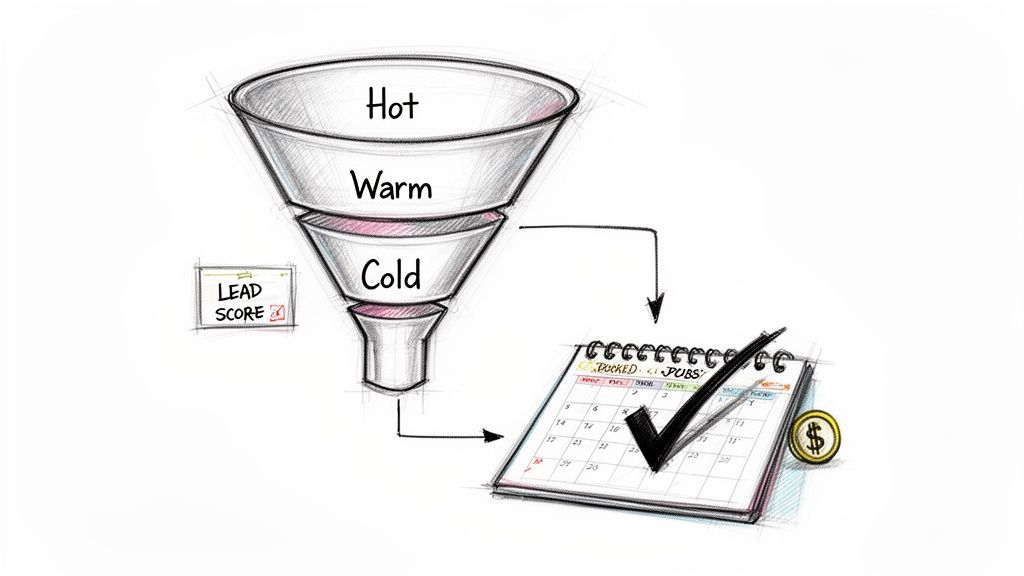
The best way to do this is with a basic lead scoring system. Think of it like a triage nurse in an emergency room. You don't treat every patient the same. You figure out who needs help right now. For your business, this means categorizing leads based on the BANT criteria you've already gathered.
Hot, Warm, Cold: A Simple Scoring System for Movers
You don't need some complicated, expensive software for this. Just start by bucketing every new lead into one of three simple categories. It's a game-changer for moving company operations.
- Hot Leads: These are your slam dunks. They have a firm move date within the next 30 days, a realistic budget, and you're talking directly to the decision-maker. These leads get your immediate, full attention. No delays.
- Warm Leads: These prospects are serious, but maybe their timeline is a bit flexible—like "sometime in the next 1-3 months"—or they're still waiting on a closing date. They need consistent, automated follow-up so you stay top of mind when they're ready to pull the trigger.
- Cold Leads: These are the "just browsing" folks. Their timeline is way out (6+ months), they have no clear budget, or they aren't the person who makes the final call. Log their info for a long-term nurture campaign, but don’t waste your prime selling hours chasing them.
This simple act of prioritizing ensures your team invests its best energy where it actually gets a return.
Qualified vs. Unqualified Lead: The Bottom-Line Impact
| Metric | Qualified Lead | Unqualified Lead |
|---|---|---|
| Booking Rate | High (around 40%) | Low (around 11%) |
| Team's Time | Spent closing deals and planning jobs. | Wasted on endless quoting and follow-ups. |
| Revenue Impact | Consistent, predictable cash flow. | Unpredictable; feast or famine. |
| Team Morale | High—the team is winning jobs and making money. | Low—frustration from getting "ghosted." |
The difference is stark, isn't it? Focusing on qualified leads isn't just about being more efficient; it's a direct path to higher revenue and a much less stressful operation. You can see how this fits into the bigger picture by mapping out a solid moving company sales process flowchart.
The Golden Rule: The moment a "Hot" lead is identified, your only goal is to get a quote in their hands within minutes, not hours. Speed is your biggest competitive advantage, period.
The best part? This entire workflow—from that first call to qualifying, scoring, and quoting—can be automated. An AI-powered receptionist can handle the initial BANT questions 24/7, score the lead for you, and even text the customer a link to get their quote started.
This transforms lead qualification from a manual chore into an automated revenue engine that makes sure no high-value customer ever slips through the cracks again.
How Long Should It Take to Qualify a Moving Lead?
On the phone, you should be able to qualify a lead in 5–7 minutes. This isn't a long, drawn-out conversation; it's a quick surgical strike to determine if the caller is a real opportunity. A simple script or a mental BANT checklist is all you need.
Every minute you spend on a dead-end call is a minute you can't give to a real customer who's ready to book. In the moving business, efficiency is money.
Of course, the right tools can make this happen even faster. An AI receptionist can run through your most important qualifying questions in under two minutes, grabbing the details you need for a quote, any time of day or night. This frees up your team to focus on closing, not just filtering.
What’s the Biggest Mistake Movers Make When Qualifying Leads?
The single biggest mistake is not having a consistent process. So many moving company owners jump straight into building a detailed quote without first finding out if the person on the other end is even serious. This is how you end up wasting hours on quotes that get ghosted.
A very close second is dragging your feet on follow-up. In the moving game, speed is everything. If you wait even 30 minutes to return a call, you can bet that customer has already called two of your local competitors. The first one to respond and provide a confident answer wins the job.
How Can a Small Team Qualify Leads While on a Job?
This is the classic owner-operator dilemma. You're out on a move, your phone rings, and you can't answer. Letting it go to voicemail is like throwing money out of the truck—most callers won't bother leaving a message. They'll just call the next mover on Google.
This is exactly where automation gives you a massive competitive edge. An AI-powered system can become your front office that never sleeps.
- It answers every single call, 24/7, so you stop bleeding leads.
- An AI receptionist can ask your key qualifying questions for you.
- It can immediately text the caller a link to your online booking form or to start a quote.
This simple setup means you’re capturing and qualifying leads automatically, even when your entire crew is busy lifting boxes. It guarantees you're the first to respond, which is how you start booking more jobs than your competition. One booked job from a recovered missed call often pays for the cost of the automation itself.
Ready to stop missing calls and start booking more jobs automatically? MoveJoy acts as your AI-powered receptionist, answering every call 24/7, qualifying leads, and scheduling jobs directly on your calendar. See how it works at getmovejoy.com.