Moving Company Revenue Growth: The Owner’s Playbook
It’s 10:07 on a Tuesday in May. One crew is loading a third-floor walkup. Your dispatcher is juggling arrival windows. A customer wants an updated estimate before lunch. Then another inbound call hits the line, then another. You let one go to voicemail because you’re busy doing “real work.”
That’s where a lot of moving company revenue growth gets lost.
Most owners don’t have a lead problem first. They have an intake problem. The front end breaks before the back end ever gets a chance to perform. Calls get missed. Quotes go out late. Follow-up is inconsistent. Dispatch gets dragged into sales. Sales gets dragged into admin. By the time the crew does a great job, the company has already lost a stack of bookable work upstream.
This is the playbook I’d use to fix it. Not with vague growth advice. With a tighter operating model that connects missed calls, quote speed, booking discipline, add-on revenue, and workflow automation into one system.
Table of Contents
- Pinpointing the Real Revenue Leaks in Your Moving Business
- Mastering Lead Capture and Missed Call Recovery
- Optimizing Your Quoting and Pricing for Conversion
- Driving Higher Revenue with Strategic Upsells and Add-Ons
- Building a Scalable Growth Engine with Automation and Partnerships
- Your Roadmap to Implementation and Measuring Success
Pinpointing the Real Revenue Leaks in Your Moving Business
The busy day that hides the problem
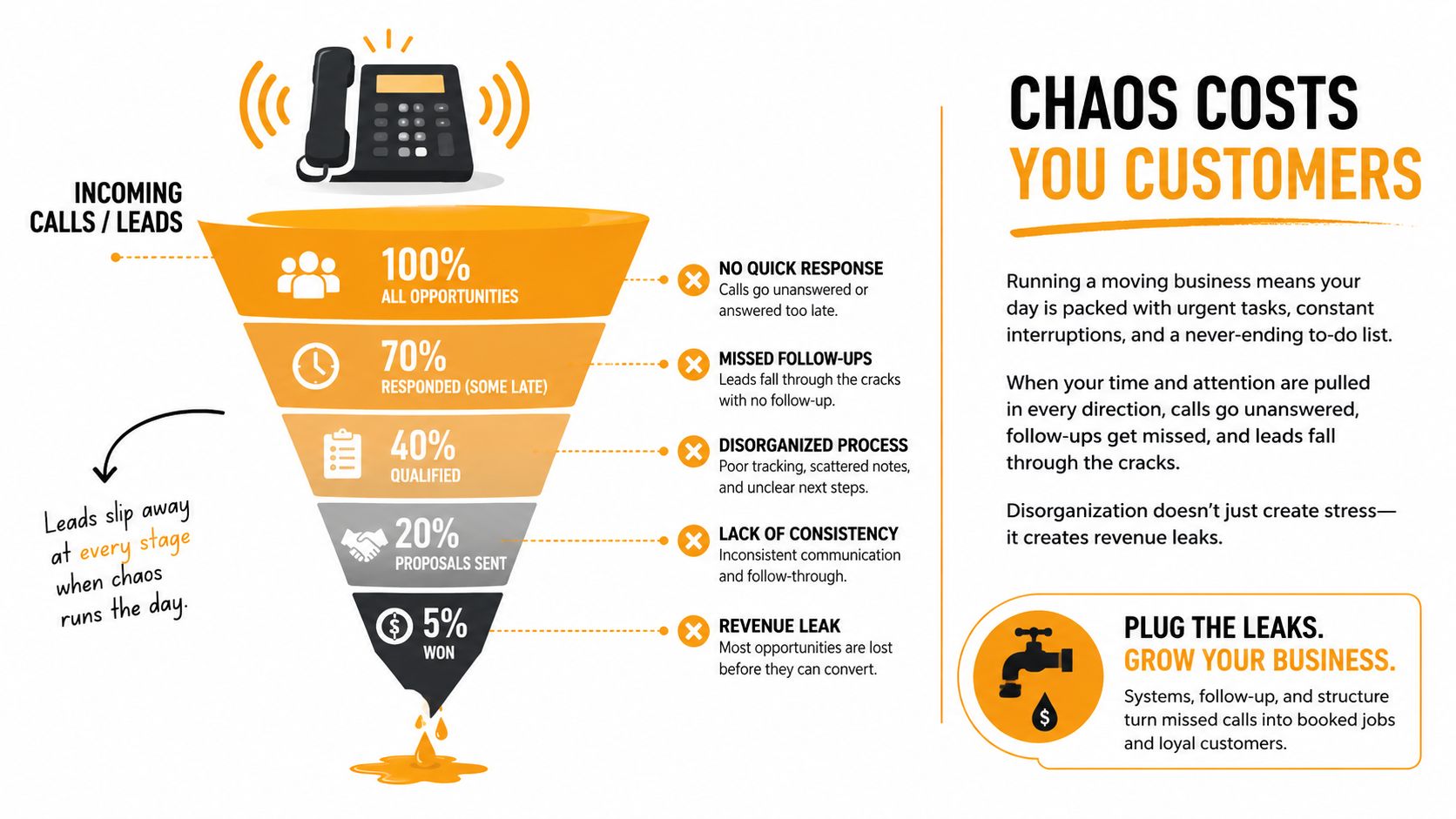
A lot of owners assume the main threat to revenue is lack of demand. Usually, it’s not. The true threat is chaos disguised as busyness.
A normal peak-season morning can look productive while money slips out the side door. The phone rings while your estimator is on another call. A web lead comes in, but nobody replies until the afternoon. A repeat customer asks for packing, but the rep forgets to offer it. None of that feels dramatic in the moment. It feels like a typical day.
What makes it dangerous is repetition. The same small misses happen over and over until they become your operating system.
Why front-end leaks matter more than owners think
The market is big enough to reward operators who tighten execution. The U.S. Moving Services industry reached a market size of $25.7 billion in 2026, with over 9,430 businesses competing for customers, according to IBISWorld’s U.S. moving services industry data. In a field that crowded, fast response and operational discipline aren’t nice extras. They decide who books the job.
The first leak is the missed call. The second is the slow quote. Together, they create a chain reaction. Dispatch gets interrupted. Sales follow-up gets delayed. Crews get scheduled around uncertainty instead of confirmed work. Revenue becomes harder to forecast because too much of your pipeline depends on who happened to answer the phone at the right moment.
Practical rule: If a lead can’t get a real answer quickly, that lead keeps shopping.
That same logic shows up in finance outside the moving industry too. Good operators shorten the time between opportunity and cash collection. If you want a useful lens on that, CFO-driven strategies for Australian SMEs from Nexist does a good job showing why tighter process control matters when cash flow depends on execution.
For movers, the cash conversion problem starts at intake. If you’re losing work before it’s even quoted, marketing can’t solve that. Better crews can’t solve that. More trucks can’t solve that. A cleaner front end does. If you want a deeper look at how missed calls affect booked work, this breakdown on missed call revenue for moving companies is worth reviewing.
Mastering Lead Capture and Missed Call Recovery
Why voicemail is not a recovery plan
Owners often tell themselves a missed caller will leave a message. Some do. Plenty don’t.
Moving customers are usually calling with urgency. They’re comparing availability, timing, and price across multiple local movers. If your line rolls to voicemail during a lunch rush, after hours, or while the office is buried, the caller often moves on before your team ever gets a second chance.
That’s why missed-call recovery has to start before the callback. The first goal is to prevent the dead end. The second is to create a system that captures enough information to keep the lead alive if a live booking doesn’t happen immediately.
The mover who responds first usually gets to control the conversation. Everyone else is trying to catch up.
Answering a call is not the same as closing a job
Many operators waste money. They buy coverage that answers calls, but they don’t solve the fundamental sales problem.
A message-taking setup can help with courtesy and basic intake. It does very little for conversion if the caller still has to wait for pricing, availability, or a follow-up call from someone who’s already overloaded. Customers don’t just want acknowledgment. They want progress.
Here’s the distinction that matters:
| Intake approach | What it does well | Where it falls short |
|---|---|---|
| Voicemail | Captures messages from motivated callers | Loses callers who won't wait |
| Human message-taking | Creates basic coverage | Rarely gives accurate pricing or books on the spot |
| CRM alone | Organizes existing leads and jobs | Doesn't solve live front-end capture by itself |
| Structured live intake with quoting logic | Captures, qualifies, prices, and advances the lead | Requires clear workflows and rate-card discipline |
A lot of moving companies don’t need more software dashboards. They need fewer dropped handoffs.
That matters because the work is there if you can capture it. The U.S. moving services industry is projected to grow, and independent operators are competing inside that expansion. The practical question isn’t whether demand exists. It’s whether your company can turn inbound interest into booked jobs consistently.
If you’re evaluating what better front-end coverage looks like, review how AI call answering for moving companies fits into lead capture, qualification, and job booking rather than stopping at message taking.
What a strong missed-call process looks like
For a 5 to 20 truck operation, a workable process is simple and strict:
- Route every inbound lead into one intake lane. Don’t let some go to a dispatcher, some to sales, and some to whoever happens to grab the office phone.
- Capture the essentials immediately. Move date, zip codes, home size, access issues, and whether the customer wants labor-only, full-service, packing, or storage.
- Set a follow-up rule. Every unbooked estimate needs a same-day next action. Not “when things slow down.”
- Protect nights and weekends. A lot of revenue leaks happen outside the hours owners think they’re “open.”
- Make accountability visible. If a quote isn’t sent or a callback isn’t made, someone should own that miss.
The biggest gain usually comes from consistency, not complexity. When every lead gets the same intake standard, your booking rate becomes easier to improve because the process stops changing from rep to rep.
Optimizing Your Quoting and Pricing for Conversion
Manual quoting creates avoidable friction
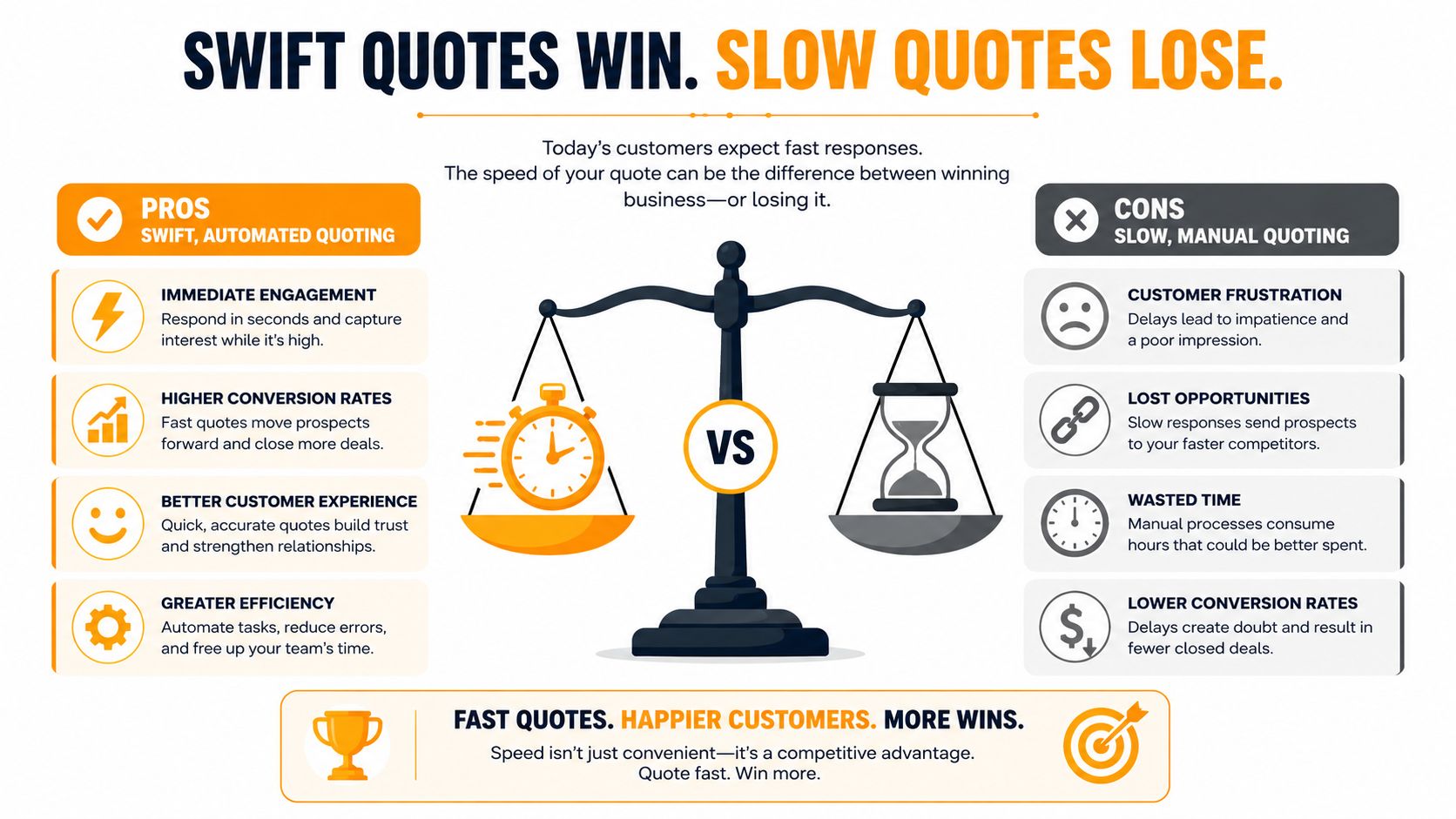
Most quote delays don’t happen because the move is unusually complex. They happen because the company’s pricing logic lives inside one person’s head, one spreadsheet, or a pile of tribal knowledge.
That creates three problems fast. First, quotes come back slowly. Second, two reps price the same job differently. Third, margin gets shaved without anyone noticing until payroll, claims, fuel, and overtime hit the P&L.
Customers have changed faster than many quoting systems have. Online quoting is becoming a baseline expectation, and the main challenge is integrating your company’s own rate card into a system that can quote instantly and accurately. That capability matters because online channel growth is expanding at a 5.28% CAGR, according to SmartMoving’s 2025 moving trends.
Your rate card should drive every quote
Fast quoting only helps if it’s accurate. A rushed bad quote is worse than a delayed careful one because it creates the illusion of growth while poisoning margin.
For movers, accurate quoting means your system reflects your actual business rules:
- Hourly vs. flat-rate logic
- Stairs, long carries, shuttle needs, and walkups
- Travel time and minimums
- Packing labor and material charges
- Date-based pricing pressure during busy periods
- Specialty items and access constraints
If your team still has to “figure it out” manually on most calls, you don’t have a quoting system. You have a quoting habit.
Owner check: If two office staff members would price the same move differently, your quote process is costing you bookings or margin, and probably both.
The fix is to centralize pricing logic so every estimate starts from the same rule set. That’s true whether the lead comes by phone, web form, text, or a partner referral. The quote should reflect your rate card, not the memory of whoever answered.
For companies tightening this process, a practical starting point is to clean up the pricing rules themselves. This guide on how to price a moving job is useful if your estimates still depend too heavily on manual judgment.
What to tighten this week
You don’t need a full rebuild to improve moving company revenue growth through quoting. Start with the friction points that hurt conversion first.
- Standardize your quote inputs. Make sure every estimate uses the same intake questions.
- Write down exceptions. If your team regularly adds fees or discounts ad hoc, document when and why.
- Audit your slowest handoffs. Find where estimates stall. Usually it’s waiting on someone to review details.
- Separate speed from sloppiness. Fast should mean rule-based, not guessed.
- Review unbooked estimates weekly. Look for patterns in delay, inconsistency, or avoidable sticker shock.
Quoting is not an admin task. It’s a sales function tied directly to conversion, capacity planning, and margin control.
Driving Higher Revenue with Strategic Upsells and Add-Ons
Offer add-ons where they solve a real problem
Once the intake and quoting process gets tighter, the next opportunity is increasing job value without making the customer feel sold to.
A lot of movers miss this because the office focuses on winning the base move and forgets to ask what else the customer needs. That leaves easy revenue on the table. It also creates service gaps. Customers often do need packing, materials, storage, or added protection. They just aren’t always going to volunteer it.
The best time to raise add-ons is during quote development, when the customer is already thinking through logistics. That’s when the offer feels useful. If you wait until the crew arrives or the confirmation email goes out, the moment has passed.
A simple upsell checklist for movers
Use add-ons as problem-solvers, not scripts. Here’s the practical version.
- Packing services: Offer this when the customer sounds rushed, overwhelmed, or unsure what will be ready by move day.
- Boxes and materials: Bring this up when the caller is early in the planning cycle or mentions they haven’t started packing.
- Short-term storage: Raise it when closings, lease timing, or renovation schedules sound uncertain.
- Enhanced valuation coverage: Ask about this when the move includes items the customer is clearly worried about.
- Special handling: Mention this when there are pianos, safes, glass, artwork, or difficult access conditions.
The key is sequencing. Don’t stack every add-on at the start of the call. First establish the move details. Then present the extras that fit the situation.
A useful pattern is:
- Confirm the move scope.
- Identify the pain point.
- Recommend one relevant add-on.
- Explain why it helps this specific move.
- Document the answer so follow-up stays consistent.
Customers respond better when an add-on removes stress from the move. They resist when it sounds like extra line items for your benefit.
This is also where automation helps operationally. Not because it “sells harder,” but because it asks the right questions every time. Human teams skip steps when they’re busy. Systems don’t. That consistency matters if you want every inbound lead to be evaluated for the same revenue opportunities.
Building a Scalable Growth Engine with Automation and Partnerships
Connect intake to the systems you already use
Revenue growth stalls when the office has to re-enter the same information three times.
The strongest operators tie front-end intake directly into the platforms that run the business. If a lead is qualified on the first interaction, that information should flow into SmartMoving, Supermove, MoveitPro, or your calendar without someone copying notes from a voicemail, then a text, then an email thread. Manual re-entry slows response, creates errors, and clogs follow-up.
This is one reason adoption is shifting. Sixty-four percent of movers now track KPIs, up from 41% last year, and improved sales follow-up ranked among the top three tactics for hitting revenue goals in 2025, based on the industry discussion in this 2025 moving operations video. The companies getting better aren’t guessing more. They’re measuring more and automating the repetitive steps that break under pressure.
Why reliable intake makes partnerships easier
Partnership channels only work when your company can respond like a professional operation every single time.
Real estate agents, apartment communities, senior move managers, and relocation contacts don’t want to wonder whether their referral sat in a voicemail queue. They want confidence that the customer will be contacted, quoted properly, and handled cleanly. If your intake is inconsistent, you become hard to recommend no matter how good your crews are.
That’s why front-end automation has a second-order effect. It doesn’t just recover missed jobs from direct callers. It makes the business more referable.
You see the same principle in other service industries where field execution depends on dispatch quality. Routelink’s dispatch solutions are a useful comparison point because they show how cleaner scheduling and job flow create a stronger operation for service businesses that live or die by coordination.
The scalable model
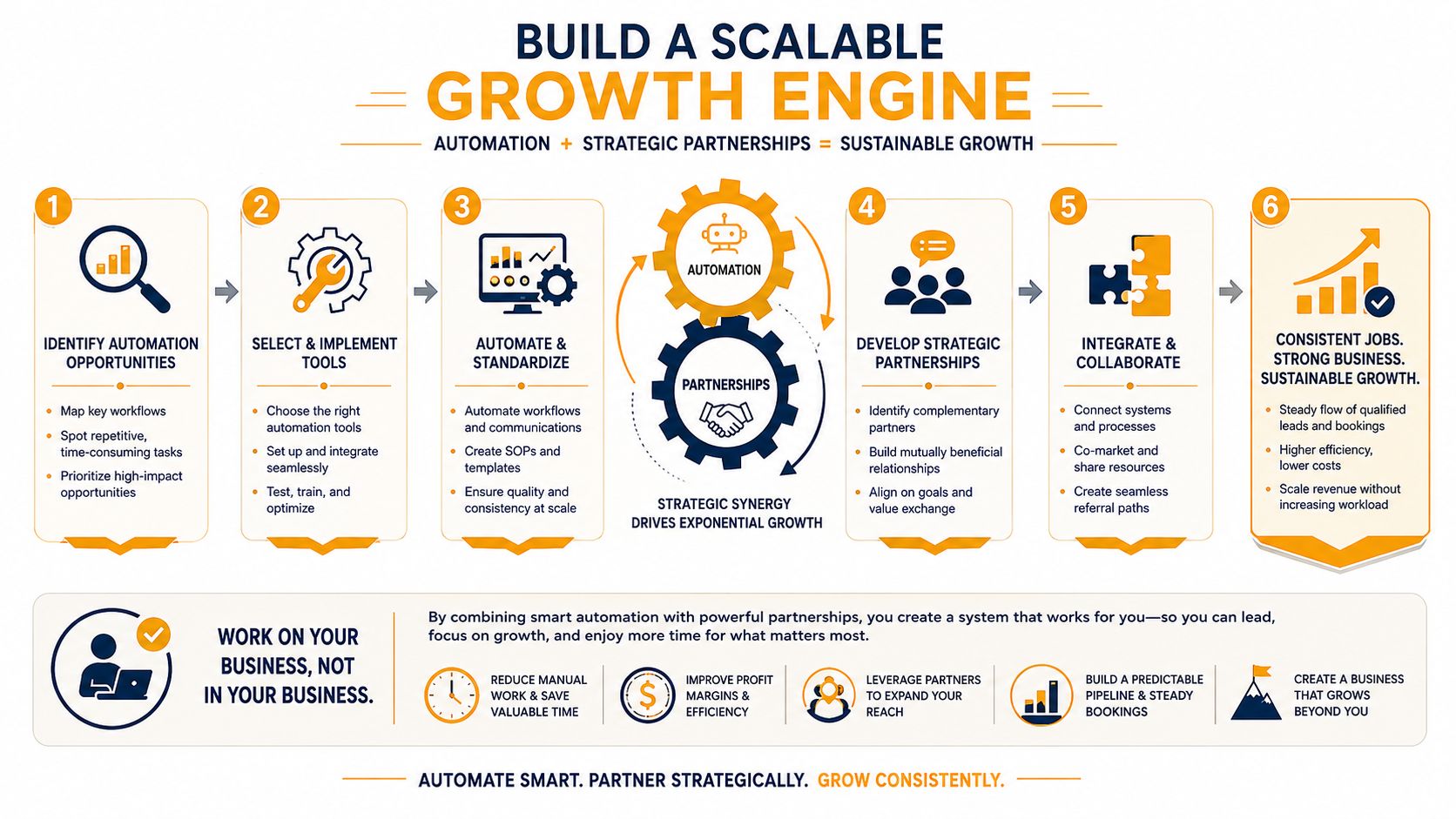
A workable growth engine for a moving company looks like this:
- Lead comes in through phone, web, or referral.
- Intake captures full job details in one structured workflow.
- Quote logic applies the company rate card instead of relying on memory.
- Booking happens immediately when the fit is right.
- Unbooked estimates trigger follow-up without the office having to remember.
- Confirmed jobs feed into dispatch and operations tools with minimal re-entry.
That’s how a company gets out of owner-dependent growth.
Without this kind of system, every busy week creates more heroics. Someone has to stay late. Someone has to search notes. Someone has to chase old estimates. With it, the business becomes easier to scale because the front end stops collapsing when call volume spikes.
Your Roadmap to Implementation and Measuring Success
The KPIs that actually matter
Most moving companies track activity they can see easily instead of outcomes that change revenue.
The basics are enough if you review them consistently:
- Lead response speed: How fast inbound opportunities get a real next step.
- Quote turnaround time: How long it takes to move from inquiry to estimate.
- Booking rate: Which leads become scheduled jobs.
- Unbooked estimate follow-up: Whether quotes are being worked after the first touch.
- Average job value: Whether add-ons and pricing discipline are improving job quality.
- Lead source quality: Which channels bring work that closes and fits your operation.
If you want a broader framework for picking growth metrics, MakeAutomation insights on growth metrics are useful because they keep the focus on measures tied to business performance rather than vanity numbers.
A practical 90-day rollout
Don’t try to fix every leak in one week. Sequence the work.
Days 1 to 30
- Audit intake: Review how calls, web leads, and quote requests are handled today.
- Map drop-off points: Identify where leads stall, get missed, or wait too long.
- Clean up pricing rules: Put your actual rate logic in writing.
Days 31 to 60
- Standardize quoting: Use one intake path and one pricing framework across the team.
- Set follow-up ownership: Every unbooked estimate needs a named next action.
- Train for add-ons: Give staff a short list of relevant services to offer based on move type.
Days 61 to 90
- Automate repetitive front-end steps: Reduce manual re-entry and callback dependence.
- Review weekly KPI trends: Look for improvement in speed, booking, and estimate follow-up.
- Build referral confidence: Start leaning into partnerships once intake is reliable.
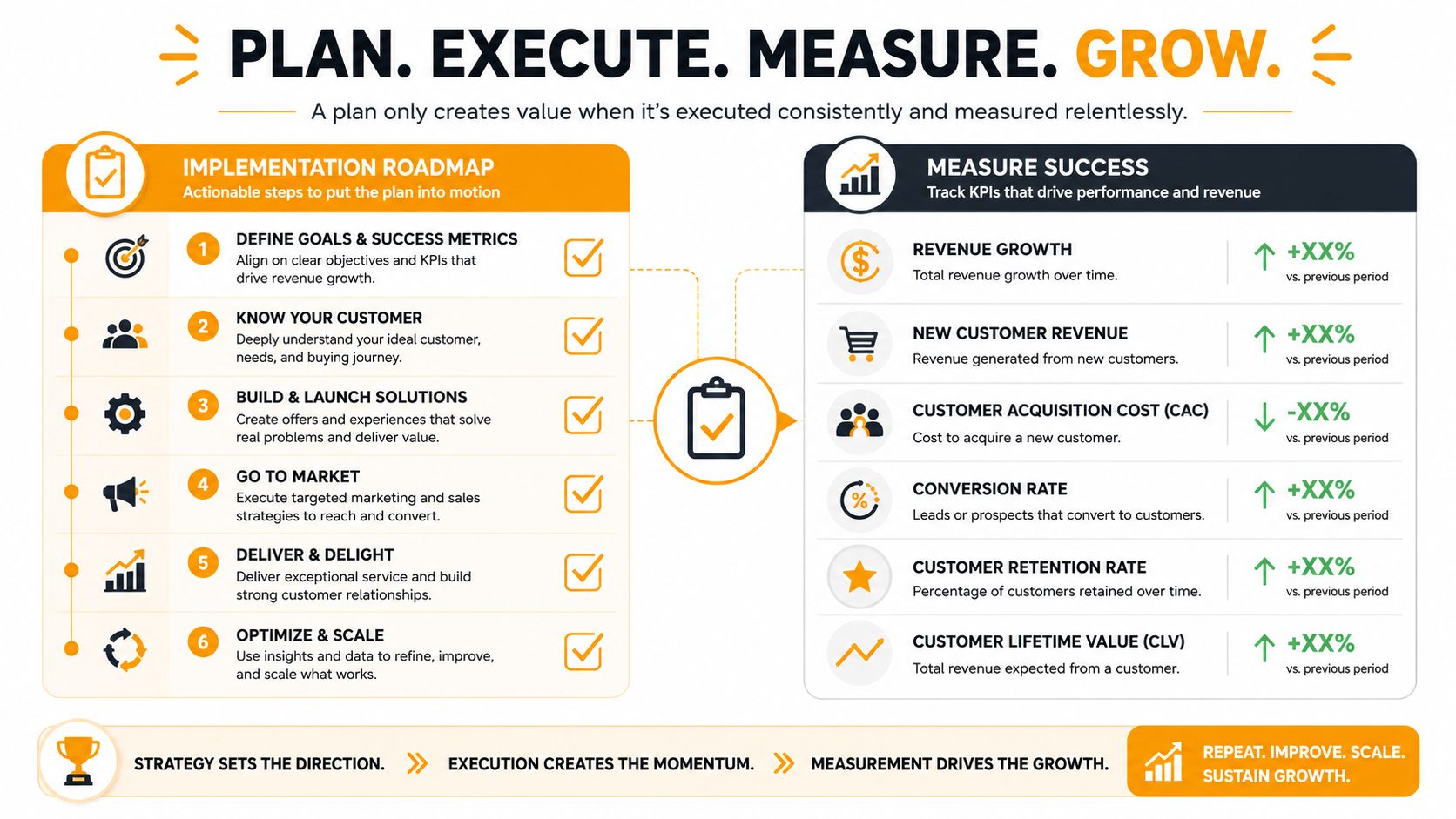
Measure what turns activity into booked jobs
The reason this matters now is simple. The opportunity is growing, but so is the need for operational discipline. The U.S. moving services market is projected to expand by USD 4.78 billion from 2026 to 2030, and Technavio’s U.S. moving services market forecast makes the implication clear. Companies that implement scalable growth systems now are better positioned to capture that demand.
You don’t need a perfect operation to grow. You need a repeatable one.
If your front end captures leads cleanly, quotes accurately, follows up automatically, and books into the systems your team already uses, revenue growth gets easier to control. If it doesn’t, every new lead source just pours more traffic into the same bottleneck.
If you’re ready to stop losing jobs to missed calls, slow quoting, and broken intake handoffs, explore MoveJoy. It’s built for moving companies that want accurate quotes, faster booking, and a front end that closes jobs instead of just capturing leads.