Stop Leaking Revenue: The Moving Company Estimate Software Every Owner Needs
If you're running a moving company, you know a ringing phone is the sound of opportunity—right up until you can't answer it. We’ve all been there: trying to quote a job on a shaky cell connection while managing a crew on-site, or getting home after a 12-hour day only to face a full voicemail box. Every one of those missed calls is a job walking right out the door to your competitor.
This isn't a small problem. It's a constant, slow leak that can cost a 1-20 truck moving company anywhere from $50,000 to $150,000 in lost revenue every year. The numbers don't lie. On average, operators like us miss 15-25% of their inbound calls. With the average local move valued at over $1,000, that adds up frighteningly fast.
You can dig into a detailed breakdown in our article about the real cost of missing just 4 calls per week.
Where Is The Money Actually Going?
The problem gets worse after 5 PM. A huge chunk of customer inquiries—often 35-40%—roll in after your office has closed. These are motivated customers, ready to book, but they land in your voicemail. By the time you call back the next morning, they’ve already booked with the company that answered their call or responded to their web form instantly.
This visual shows just how quickly those missed calls, especially after hours, translate into a serious financial drain.
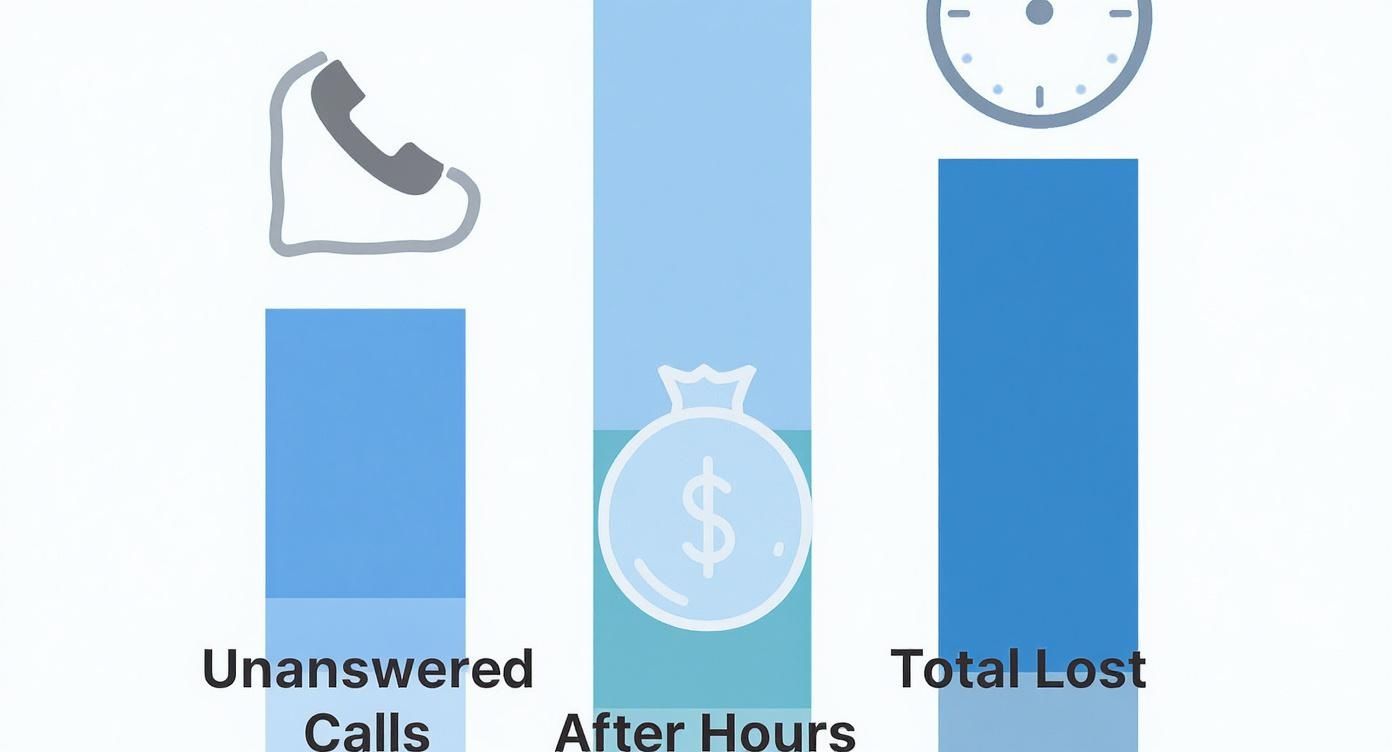
The data makes it crystal clear: relying on limited office hours and your own cell phone is not a sustainable way to grow in today's market.
The Shift Toward Automation
It’s no surprise that the moving company software market is seeing major growth, valued at roughly $2.18 billion USD in 2024 and projected to hit $5 billion by 2035. This isn't about flashy tech; it's about owners like us demanding better ways to stop leaking profit and run our businesses without burning out.
Relying on manual processes—spreadsheets, notebooks, and your own memory—is holding you back. Every minute spent creating a quote by hand is a minute you aren't focused on dispatch, crew management, or finding your next great hire. The operational drag is just as costly as the missed calls.
Here's a look at how those manual tasks bleed revenue and how software plugs the leaks.
Revenue Lost to Manual Processes vs Captured by Automation
| Operational Challenge | Annual Revenue Loss (Manual) | Revenue Recovered (with Software) |
|---|---|---|
| Missed after-hours calls | -$35,000 | +$28,000 |
| Inaccurate manual quotes | -$15,000 | +$12,000 |
| Lost leads (slow follow-up) | -$25,000 | +$20,000 |
| Admin time on manual tasks | -$10,000 | +$8,000 |
This table shows a conservative estimate of the financial impact. By automating these key areas, a moving company can not only stop the bleeding but also turn those previously lost opportunities into booked jobs, adding tens of thousands back to the bottom line each year.
How Estimate Software Works as Your 24/7 Salesperson
Let's skip the complicated tech jargon. Think of moving company estimate software as your best salesperson—the one who never sleeps, calls in sick, or takes a vacation during the busy season. It's a system built to instantly engage with every single person who contacts you, whether they call, text, or fill out a form on your website.
This isn't about replacing your team; it's about making it possible for you to be in two places at once. While you're out on a job or managing dispatch, this software is working behind the scenes to make sure no lead ever goes cold. It’s smart enough to capture a potential customer's details and ask the right questions, just like you would.

From First Call to Booked Job
The magic is in the speed. When a customer calls—especially after hours, when 35-40% of all moving inquiries come in—they don't get sent to a frustrating voicemail. Instead, they get an immediate, professional response that gathers exactly what's needed to build a quote.
The system uses your company's pricing structure to put together the estimate.
- It applies your hourly rates and job minimums.
- It calculates drive time and travel fees based on the addresses.
- It adds any costs for special items, stairs, or packing supplies.
The bottom line is this: a customer gets an accurate, professional quote within minutes, not hours or the next day. In this business, that kind of speed is what wins jobs.
Closing the Loop Automatically
The software doesn't just send a quote and stop. It connects directly to your calendar, showing customers your real-time availability and eliminating the nightmare of double-booking. When they're ready, they can book their move and put down a deposit right from the estimate you sent.
And what about the leads who aren't ready to book right away? The system can send out friendly, automated follow-up messages to keep your company top of mind. This whole process turns a leaky sales funnel into a well-oiled machine that turns callers into booked jobs, 24/7. If you're tired of losing business after 5 PM, check out our guide on how to stop losing after-hours leads without working 24/7.
At the end of the day, a system like MoveJoy simply plugs the holes where you're losing money, helping you book more jobs without having to work more hours.
The Features You Actually Need to Make More Money
When you're shopping for moving company estimate software, it's easy to get lost in a sea of features. Let's be real—what you need are tools that solve the day-to-day problems that cost you time and money. These aren't fancy add-ons; they are solutions that directly impact your ability to book more jobs.
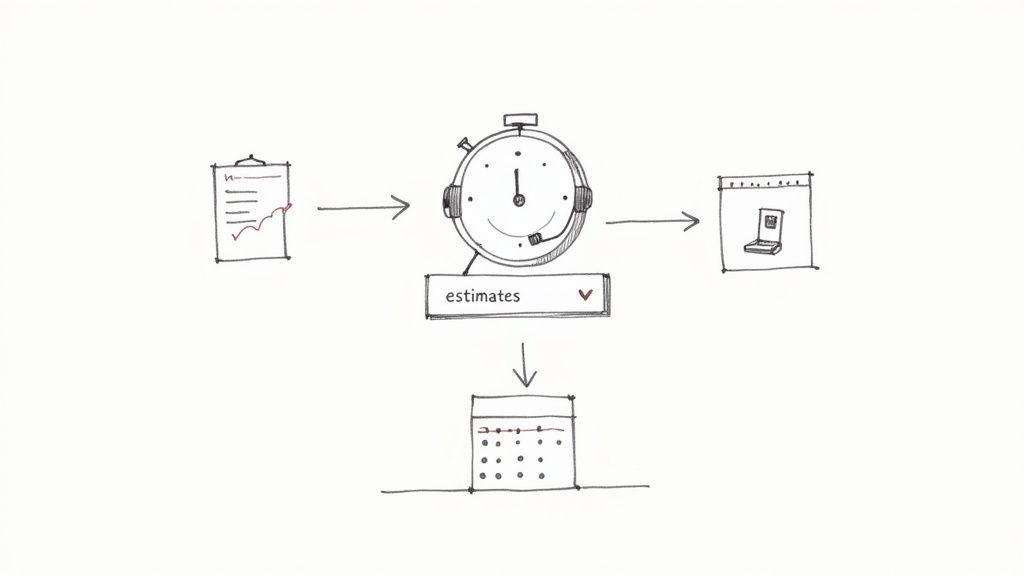
It’s no surprise that 95.6% of moving companies rely on software to run their business, with most using several tools to stay competitive. The right tech simply gives you an edge. You can dig into more industry tech trends in this moving statistics report.
Instant Lead Response
The moment a potential customer fills out your form or calls, you're in a race against your competitors. Miss that call, and they're already dialing someone else. That’s why an instant lead response is critical.
This feature immediately engages every single inquiry—day or night. It ensures you’re the first one they hear from, dramatically increasing your odds of booking the job before another mover even gets a chance to call them back.
Intelligent and Accurate Quote Generation
Nothing kills a deal faster than a vague or inaccurate quote. Good software builds precise, professional estimates in seconds, based entirely on your pricing rules. This isn't some generic online calculator; it’s a system customized to how you operate.
- Hourly Rates and Minimums: It automatically applies your specific charges for the crew and job duration.
- Travel Fees: It correctly calculates drive time and mileage costs to the job site.
- Packing and Materials: It adds the right costs for boxes, tape, bubble wrap, and anything else the customer needs.
This system ensures every quote is both profitable for you and fair to the customer, building trust from the start. If you're still building your pricing, our guide on creating a solid moving company estimate template is a great place to start.
The goal is to get away from "ballpark" numbers that lead to arguments on moving day. With automated quoting, you give the customer a reliable price based on the real scope of their move—and that’s what they’re looking for.
Calendar and Dispatch Integration
Ever accidentally double-booked a truck during peak season? It’s a painful and costly mistake. Seamless calendar integration is non-negotiable.
When a customer books a move, the software should automatically block out that time slot on your calendar and assign the necessary resources. This simple connection prevents scheduling chaos and gives you a crystal-clear picture of your availability, eliminating expensive human errors.
Automated Follow-ups
Let's face it, not every customer books on the first call. They shop around. An automated follow-up system acts like your very own salesperson who never forgets.
It sends timely, polite text or email reminders to customers who received a quote but haven't booked. This one feature works behind the scenes to nudge undecided leads over the finish line, closing deals you might have otherwise lost.
Choosing the Right Software for Your Moving Company
Picking the right moving company estimate software feels a lot like choosing a new truck. The wrong choice can break down when you need it most, creating more headaches than it solves. Not all systems are built the same, and what looks great in a sales demo might not hold up when you’re slammed during the busy season. You need a partner, not just another piece of tech.

This decision is only getting more important. The global moving software market is on track to hit $5.94 billion USD by 2033, mainly because customers now expect easy, self-service tools. You can dig into the numbers in this report on the expanding moving software market. This growth means you have more options, but it also means there's more noise to cut through.
Key Questions to Ask Before You Commit
When you’re looking at different software, think like an operator, not a tech buyer. Forget the flashy bells and whistles and focus on what will actually help you book more jobs and stop losing money.
Here’s a no-nonsense checklist:
- Can it handle my specific pricing? Your pricing is your secret sauce. The software must handle your hourly rates, travel fees, packing costs, and specialty charges. If you can't mold it to fit your business, it's a non-starter.
- Does it work with my existing tools? The last thing you need is another system that doesn't talk to your calendar or CRM. Seamless integration is non-negotiable if you want to eliminate double-bookings and manual data entry.
- Is it easy for my team and I to actually use? If the software is a pain to use, you won't use it. It should be intuitive enough for anyone in your office to manage without needing a computer science degree.
Don't Overlook the Human Element
Maybe the most critical factor is the support you get after you sign up. What happens when you hit a snag on the first of the month with a hot lead on the line? You need to be able to get a real person on the phone who understands the moving industry.
Look for a provider who has been in your shoes. Software built by people who have actually run a moving company will anticipate your challenges and speak your language. Their goal should be to solve your real-world operational problems, not just sell you a license.
Choosing the right estimate software comes down to two things: finding a reliable tool that plugs your revenue leaks and a support team that truly has your back. Don’t settle for less.
Real-World ROI from Owners Just Like You
Theory is one thing, but seeing the numbers from another owner’s books—that’s what tells the real story. Let's talk about the tangible returns you can expect from the right moving company estimate software, based on operators running fleets just like yours.
These aren't made-up scenarios; they're the wins we see every day from companies that decided to stop leaving money on the table. The point isn’t to add another piece of tech. It's about seeing a clear, measurable return on your investment, fast.
Case Study: The 5-Truck Operation Leaking After-Hours Revenue
We worked with a solid 5-truck moving company that was doing everything right during business hours. But when they took a hard look at their call logs, they found a massive hole: they were losing a staggering $75,000 in potential revenue every year.
The culprit? Every call and web lead that came in after 5 PM and over the weekend. By the time their office manager could call back, those customers had already booked with a competitor who was ready to answer.
As soon as they put a system in place to handle their after-hours inquiries, the change was almost immediate.
- Result: They recovered over 80% of that previously lost revenue within the first six months.
- How: The system automatically quoted and booked jobs overnight and on Sundays, turning missed calls into confirmed moves on their calendar.
This wasn't about asking their team to work more hours. It was about having a system to capture the business that was already trying to find them.
Case Study: The 12-Truck Company with a Conversion Problem
Here's another example: a 12-truck operation was getting plenty of leads from their website, but they couldn't turn them into booked jobs. Their sales team was so swamped with inbound calls that they couldn't follow up on online forms quickly enough. Their conversion rate from web leads was stuck at a frustrating 15%.
For them, the issue wasn't a lack of opportunity; it was a major bottleneck in their sales process. Slow response times were killing deals they should have been winning.
By bringing in a solution with automated follow-ups, they completely flipped the script. The system would instantly text every new web lead, send an initial quote, and send polite reminders to anyone who didn't book right away. The results speak for themselves: their web lead conversion rate shot up to over 40%.
That’s more than double the booked jobs, all from the exact same marketing budget.
What's Your Next Move to Stop Leaking Revenue?
We've talked a lot about the problem of missed calls and the chaos of quoting jobs by hand. We’ve also looked at how the right tools can patch those holes. But what’s your next move? This isn’t a hard sell; it’s about sharing what we’ve learned from being in your shoes. The biggest takeaway is simple: every day you rely on the old way of doing things is another day you are leaving money on the table.
The right moving company estimate software isn't just another bill. Think of it as an investment that pays for itself almost immediately—often by booking just one or two extra jobs a month that you’re currently missing. With the average job valued at over $1,000, the math adds up quick. This isn’t about overhauling your business; it’s about finally plugging the leaks that are draining your revenue.
Your next move isn’t to buy something. It’s to get a clear, honest look at exactly how much potential business you're letting slip away after hours and during your busiest times.
The real cost isn’t the price of new software. It’s the compounding loss of every unanswered call and every quote you couldn't send out fast enough. That’s the number that should keep you up at night.
We’ve seen firsthand how plugging these leaks can completely change an owner’s financial picture. Imagine waking up to new jobs already booked on your calendar instead of chasing down voicemails.
If you’re ready to see what that revenue leak actually looks like for your company, our team is here to help. No pressure, just a straightforward conversation between people who get it. Let’s figure out how much money you can put back in your pocket.
Frequently Asked Questions
We hear these questions all the time from moving company owners. Let's get right into the straight answers.
How Long Does It Take to Set Up Moving Company Estimate Software?
This is a big one. You're busy running a business, and nobody has time for a setup that drags on for months. The good news is that the best systems are designed to get you up and running in a couple of days, not weeks.
Typically, it starts with a quick kickoff call. You'll share your pricing details—your hourly rates, travel fees, packing costs, all of it. From there, the provider configures the system for you. We do the heavy lifting so you can start catching leads and booking jobs right away.
Will This Software Replace My Office Staff?
Not at all. Think of it as empowering your team, not replacing them. This software takes over the repetitive, time-sucking tasks that bog down your office staff—like answering basic inquiry calls and punching numbers for initial quotes.
This frees your people up to focus on what they do best: building relationships with high-value customers, coordinating tricky logistics, and making sure moving day goes off without a hitch. It makes your team more effective by letting them focus on activities that bring in more money, instead of just being tied to the phone.
Here's a better way to look at it: The software is your 24/7 screener, qualifying every lead. Your team then gets to spend their valuable time and energy on the most promising jobs that need that human touch.
Is This Type of Software Affordable for a Small Moving Company?
Absolutely. The key is to think about it in terms of ROI, not just as another monthly bill. If the software helps you book just one or two extra moves a month that you otherwise would have missed, it usually pays for itself several times over.
The average moving job is worth over $1,000. When you consider that many companies miss dozens of calls every month, the return on investment happens fast. Honestly, the cost of doing nothing—letting revenue leak out from missed calls and delayed quotes—is far greater than the monthly cost of the software. It’s a tool designed to make you money, not cost you money.
At MoveJoy, we help moving company owners stop leaking revenue and start booking more jobs—without having to work more hours. If you're ready for a real conversation about plugging the holes in your sales process, let's connect and see how much revenue you can recover.