How to Leave a Voicemail That Books More Moving Jobs

When a potential customer’s call goes to your voicemail, you have one last shot at winning that job. For a busy moving company owner, a well-crafted voicemail isn't just a message—it's a critical sales tool. The goal is to be quick, clear, and compelling, giving them a reason to call you back before they dial your competitor. This is your 30-second pitch to recover thousands in potential revenue.
Why Your Voicemail Strategy Is Silently Leaking Revenue

Every call that lands in your voicemail is a potential job walking straight to your competitor. For a moving company with 1–20 trucks, this isn't a small leak—it's a massive drain on your revenue, costing you thousands every single month.
Modern customers shop fast. They’re calling three or four movers back-to-back during their lunch break or after work, and the first one who answers and provides a clear quote often wins the job. It's that simple.
The second a lead hears your automated greeting, a clock starts ticking. They're in a hurry, juggling quotes, and their patience is thin. If they hang up—and most do—you've lost the upper hand and the revenue that comes with it.
The Customer Mindset on the Other End
Put yourself in their shoes. You need a mover, you make the call, and you get a machine. Do you feel confident? Or do you immediately hang up and dial the next number on your list? Most people do the latter, especially when a competitor is just one click away.
This is where the financial hit becomes painfully clear:
- Lost Opportunity: A missed call for a simple 3-bedroom local move could be a $1,500-$2,500 job gone forever.
- Competitive Disadvantage: While your team is out on a job, your competitor with a 24/7 answering service or an AI receptionist is capturing that lead and sending a quote. Speed wins the booking.
- Compounding Losses: Just a few missed calls a week can spiral into tens of thousands in lost revenue by the end of the year. To see the real numbers, check out the real cost of missing calls in our detailed analysis.
Voicemail isn't just a messaging system; it's a critical sales touchpoint. A generic or rambling greeting pushes high-value leads to the next mover on their list, directly impacting your booked jobs and bottom line.
A weak voicemail strategy doesn't just miss a message; it sends a message. It signals that you're too busy, which customers interpret as a preview of the service they can expect. They aren’t just looking for a truck; they’re looking for a reliable, responsive partner for one of life's most stressful events. Your first interaction—even an automated one—sets that critical first impression.
The Anatomy of a Voicemail That Gets Callbacks
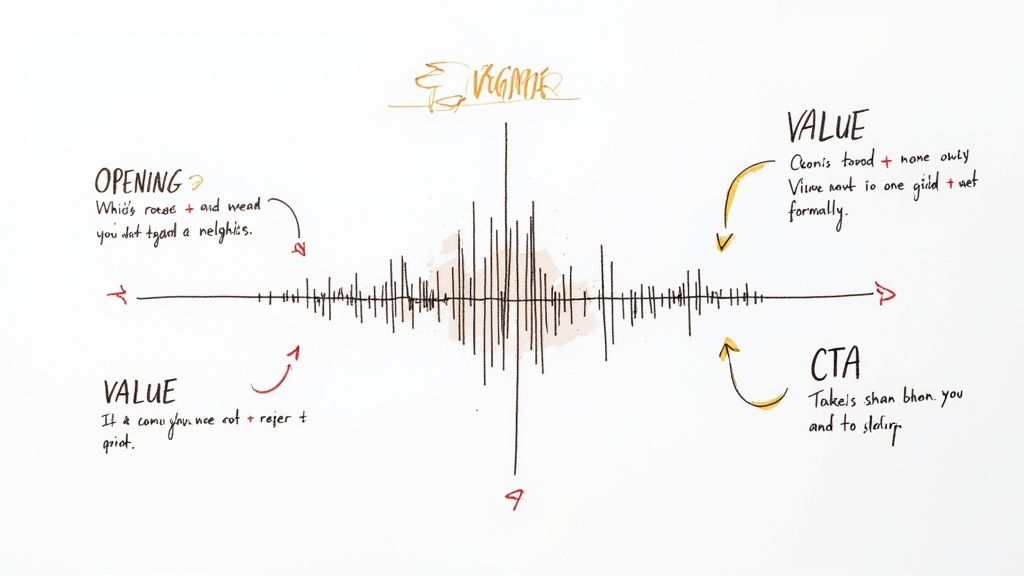
Let's be realistic: nobody likes leaving a voicemail. In the moving business, it’s often a necessary evil when playing phone tag with leads. The trick isn't talking longer; it's delivering the right information in under 30 seconds. A moving lead is impatient and already comparing you to other local movers. Your message has to cut through the noise and earn a callback.
Forget rambling. Think of it as a four-part script: a strong opening, a fast value proposition, the reason you’re calling, and a simple way for them to respond. Each piece builds on the last, guiding the listener from "who is this?" to "okay, I'll call them back" without wasting their time.
Start Strong and State Your Name Clearly
First things first: say who you are and what company you're with. Do it with confidence. Your tone of voice sets the stage for whether they see you as a professional mover or just another guy with a truck.
- Bad: "Uh, hi, this is Mike… calling about your move."
- Good: "Hi, this is Mike from All-Star Movers."
That simple, direct opening builds instant credibility and stops them from hitting delete before you get to the important part.
Drop Your Unique Value Proposition
What makes your moving company the better choice? Hit them with it right after your name. This is your hook—the one thing that makes them pause and think twice before calling another company.
It could be your reputation, your transparent pricing, or your availability during the busy season. Whatever it is, make it count.
- "We’re the top-rated mover in the area with over 500 five-star reviews."
- "We offer guaranteed, locked-in quotes so there are no surprises on move day."
- "We have next-day availability for local moves."
Explain the Purpose and Make It About Them
Quickly connect the dots. Why are you calling? Frame it around their request, not your need to book a job. This shows you’re focused on solving their problem: finding a reliable mover, fast.
A simple "I'm calling about the quote you requested on our website for your move on the 15th" does the job perfectly. It’s direct, relevant, and respects their time.
A great voicemail respects the listener's time. Get to the point, offer value, and make it incredibly easy for them to take the next step. Anything else is just noise.
This is getting even more critical. By 2025, AI-driven voicemail solutions are expected to change how businesses follow up, creating personalized messages based on a caller's history. Companies already using these systems have seen callback rates jump by as much as 40%. You can discover more about AI voicemail optimization trends and see where the industry is heading.
End with a Simple, Low-Effort Call-to-Action
Finally, tell them exactly what to do next, and make it dead simple. "Call me back when you can" is a death sentence. It’s vague and puts all the work on them. Give them a clear, low-effort option instead.
"I’ve just texted you a link to our quote. You can review it there or give me a call back at 555-123-4567." This is brilliant because it gives them two ways to engage—one passive, one active. It empowers them to respond on their own terms, which is crucial for busy customers.
Voicemail Script Component Checklist
This checklist breaks down the essential parts of a voicemail that actually converts leads into booked jobs. Use it to ensure every message your team leaves is clear, concise, and effective.
| Component | Purpose | Example Snippet |
|---|---|---|
| Clear Opening | Immediately identifies you and your moving company, establishing credibility. | "Hi, this is Mike from All-Star Movers." |
| Value Proposition | Gives them a compelling reason to listen and consider your company. | "We're the area's top-rated mover with over 500 five-star reviews." |
| Reason for Calling | Connects the call to their specific need or request, making it relevant. | "I'm calling about the quote you requested for your move on the 15th." |
| Low-Effort Call-to-Action | Provides a simple, clear next step that makes it easy for them to respond. | "I just texted you a link to the quote. Feel free to reply there or call me back at 555-123-4567." |
| Contact Information | Repeats your name and number clearly so they don't have to replay it. | "Again, this is Mike at 555-123-4567." |
By following this structure, your voicemails stop being a shot in the dark and start becoming a reliable tool for turning missed calls into booked moves.
Voicemail Scripts for Any Moving Lead Scenario

Knowing the structure is one thing, but having battle-tested scripts your team can use today is what actually books more jobs. The message you leave for a brand-new lead needs a different approach than one for a lead who’s gone silent after receiving a quote.
Here are three scripts you can adapt for your moving company right now. Each one is built for a specific moment in your sales process, ensuring you always sound prepared, professional, and ready to help.
Script 1: For a New Inbound Lead
This one is all about speed and making it simple for the lead to get what they asked for. No chasing, no phone tag. Just instant value.
The Script:
"Hi Sarah, this is Mike from Prestige Movers. I'm calling you right back about the quote you requested for your move to Austin. I’m sending a text message to this number right now with a link to your guaranteed quote. You can review it there, or just call me back at 555-123-4567. Again, this is Mike from Prestige Movers at 555-123-4567. Thanks!"
Why It Works for Movers:
This script immediately tells the caller, "We're on it." By texting the quote, you’re giving them a low-effort way to get the information they need on their own time. It completely cuts out the friction of waiting for another call or sifting through emails. This proactive follow-up shows you’re efficient and customer-focused—exactly the first impression you want to make to beat competitors.
Script 2: Following Up on a Quote
You’ve sent the quote, but it's been a day or two of silence. This voicemail is designed to be a gentle nudge that adds value and opens the door for a real conversation.
The Script:
"Hi David, this is Maria with Express Moving Co. following up on the quote we sent over for your upcoming move. I wanted to see if you had any questions about our full-service packing options or our 'no-surprise-fees' guarantee. We have two slots still open for your move date, and I'd be happy to hold one for you. You can reach me directly at 555-987-6543. Again, that's Maria at Express Moving, 555-987-6543. Hope to hear from you!"
Why It Works for Movers:
Instead of just asking, "Did you see my quote?" you’re reminding them of key benefits like your “no-surprise-fees” guarantee. This isn't just a sales pitch; it’s helpful information that addresses a common customer fear. Mentioning that you only have two slots left creates urgency without being pushy, which is especially effective during peak moving season. It encourages them to make a decision.
Script 3: Re-Engaging a Cold Lead
This lead got a quote a week ago and has gone dark. The goal here is a final, friendly, no-pressure attempt to reconnect before you move on.
The Script:
"Hi Jessica, this is Tom from Citywide Movers, just doing a final check-in on the moving quote we sent last Tuesday. I know things can get busy when planning a move. We're closing out our files for the week, so I just wanted to see if you were still looking for a mover. If so, give me a call back at 555-222-3344. If you've already booked with someone else, no problem at all—best of luck with your move! Again, this is Tom at 555-222-3344. Thanks!"
Why It Works for Movers:
The language here is casual and removes all pressure. By saying "If you've already booked, no problem at all," you show respect for their decision, which makes you seem professional. This "last chance" nudge is surprisingly effective. It can trigger a response from someone who was simply procrastinating and needed one final reminder to get their move scheduled.
Finding the Right Timing and Frequency for Your Calls
What you say in a voicemail is only half the battle. When you call matters just as much.
A perfectly worded message left at 8 PM on a Friday is dead on arrival. By Monday morning, it’s buried. In the moving business, timing is everything—not just for the move itself, but for locking in the lead when they are ready to book.
Get inside your customer's head. They’re likely at work from 9 to 5, so calling then is a surefire way to hit their office voicemail. Many moving company owners find their sweet spot in the late afternoon (4 PM – 6 PM) or on Saturday mornings. That’s when people are heading home from work or planning their week, and their upcoming move is top of mind.
Creating a Smart Follow-Up Cadence
There’s a fine line between persistence and annoyance. Crossing it is the fastest way to get your number blocked. Randomly calling every day feels desperate.
Instead, you need a simple, repeatable process. This takes the guesswork out and makes sure every lead gets the right amount of attention without feeling hounded.
Here’s a simple framework that gets results:
- Day 1 (Initial Contact): Call and leave your short, value-packed voicemail. Immediately follow up with a text referencing the call and providing a direct link to their quote.
- Day 3 (Second Attempt): Call again. This time, do not leave a voicemail. A missed call notification is a gentle, low-pressure nudge.
- Day 5 or 6 (Final Attempt): Make one last call. If it goes to voicemail, leave a friendly, no-pressure closing message like the "Re-Engaging a Cold Lead" script.
A strategic follow-up plan is your best defense against losing leads to voicemail black holes. It's not about calling more; it's about calling smarter.
This isn't just a hunch. Studies analyzing over 50,000 voicemails confirm that callback rates are directly tied to smart timing and a relevant message. You can see how this applies broadly from Nextiva's research.
If a customer is consistently unreachable during business hours, that’s a massive clue. It tells you they are the perfect candidate for after-hours engagement. Recognizing these patterns is the first step to understanding why a 24/7 solution isn't a luxury—it's a competitive necessity. For a deeper dive, check out this guide on how to stop losing after-hours leads without working around the clock.
What If You Didn’t Need Voicemail at All?
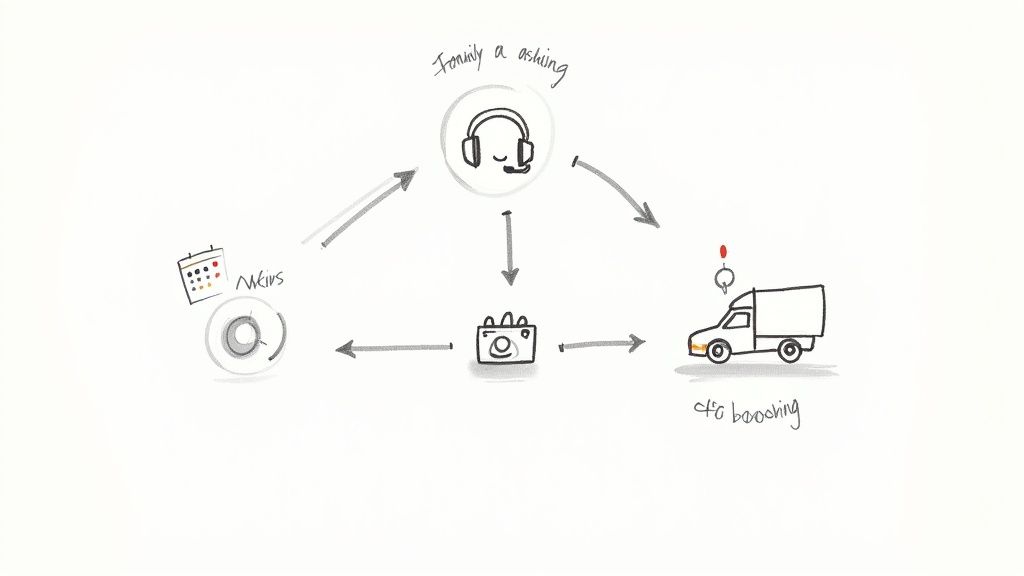
Perfecting your voicemail is a great defensive move, but the real win is never letting a valuable lead hit your voicemail in the first place. The best solution to missed calls isn't just a better message—it's building a system where every single lead is captured and engaged the moment they dial your number.
This is where smart automation built for movers comes in. Think of it as your best employee—one who never sleeps, never takes a lunch break, and never misses a call, even during the summer rush.
The Power of an Instant Answer
For a moving company, speed is everything. When a potential customer calls for a quote, they're ready to book. If they hit your voicemail, they're not waiting for a callback. They’re already dialing your competitor.
Automation flips this script.
An AI receptionist or a 24/7 automated answering service ensures every caller gets an immediate, professional interaction. This technology can:
- Answer every call instantly, even after hours, on weekends, or when your lines are busy.
- Gather essential job details like move size, date, and locations.
- Text an accurate quote to the caller in real-time.
- Integrate with your calendar and allow the customer to book the job on the spot.
The goal isn't just to stop missing calls. It's to turn every one of those calls into a booked job without you or your team having to lift a finger.
This shift from a reactive to a proactive model is already giving movers a competitive edge. The market is shifting toward cloud-based communication tools that plug right into a business's operations and automate repetitive tasks.
How You Gain a Real Competitive Edge
Picture this: It's 8 PM on a Tuesday. A hot lead finds your company online and calls for a quote.
Instead of a generic voicemail greeting, they're greeted by an intelligent assistant that texts them a quote and lets them book their move right then and there. By morning, you have a new job on the calendar—all while your competitor's lead is still sitting unheard in a voicemail box.
That's the tangible advantage automation gives you. It eliminates the need to worry about how to leave a voicemail, because there’s always an answer. It transforms your phone line from a revenue leak into your most powerful lead-capturing tool.
These are practical tools built for busy moving companies that want to grow without drowning in more admin work. For movers struggling with calls after 5 PM, exploring an after-hours answering service designed for small businesses can be a game-changer. By automating the front end of your sales process, you guarantee no lead ever slips through the cracks again.
Your Top Voicemail Questions, Answered
Even with the perfect script, you're bound to have questions. I’ve heard them all from moving company owners trying to nail down their follow-up process. Here are the most common ones, with straight-up answers you can use today.
How Long Should a Voicemail for a Moving Lead Actually Be?
Keep it quick. Aim for the sweet spot: between 20 and 30 seconds.
Go any longer, and you risk them hitting delete before you get to the point. Remember, this person is calling other movers. A long, rambling message doesn't just waste their time; it makes your company sound disorganized. Stick to the script, be professional, and give them a clear, easy next step.
Is It Better to Text a Lead Instead of Leaving a Voicemail?
Don't think of it as either/or. You should absolutely do both. The one-two punch of a quick voicemail followed immediately by a text message is the single most effective follow-up strategy for moving leads.
The voicemail adds a human touch and a layer of professionalism. The text delivers instant, easy-to-use information, like a direct link to their quote.
This combination gives the customer options. They can call you back or just tap a link, engaging on their own terms. It dramatically boosts your response rate because you’re making it as easy as possible for them. A text alone can feel cold, while a voicemail alone puts all the work on them. Together, they’re a powerhouse.
What Is the Biggest Mistake Movers Make on Voicemails?
The single biggest mistake is ending with a weak, passive call-to-action like, "Give me a call back when you get a chance." That’s a dead end.
You're putting all the work back on a customer who is already stressed out planning a move. You're asking them to stop what they're doing, find your number, and dial, hoping you'll even pick up.
A much stronger move is to flip the script and give them value. Something like, "I just texted you a link with your quote. Feel free to reply right there if you have any questions," is a game-changer. It turns a passive message into an active sales tool.
How Can I Tell If My Voicemails Are Actually Working?
It all comes down to one simple metric: your callback rate. Are people actually calling you back? If you leave ten voicemails and only hear back from one or two, your strategy isn't working.
Here’s a simple way to track it. For one week, keep a tally. How many calls went to voicemail? Of those, how many called you back within 24 hours?
If your callback rate is below 20%, it's time to tweak your approach. Your scripts might be off, or your timing might be wrong. A low callback rate is a flashing red light telling you that your messages are getting ignored and you're losing jobs.
Tired of worrying about voicemails altogether? MoveJoy answers 100% of your calls 24/7, captures lead details, and texts instant quotes. It turns every missed call into a booked job, so you can focus on running your business. Discover how MoveJoy can recover your lost revenue.