Turn High Call Volume into Booked Moving Jobs

When your phone is ringing off the hook, it feels like a good problem to have. But for a moving company owner, especially in the middle of peak season, high call volume is a double-edged sword. Every one of those rings is an opportunity, a potential job. When you can't answer, that opportunity vanishes.
It goes straight to your competitor who did pick up. Unanswered calls aren’t just a sign of a full voicemail box; they’re a direct source of lost revenue and a customer you’ll never get the chance to win over. For a moving business with 1–20 trucks, managing this influx is the key to scaling.
The Hidden Costs of High Call Volume
Picture this: It’s the middle of July, and your phone won't stop buzzing. You're on-site, supervising your crew on a tricky three-bedroom move, and every call you miss is a potential customer you just can’t get to.
By the time you finally catch a break, you see five missed calls. You try calling back, but two of them have already booked with another mover. Why? Because the other company answered right away. Speed wins the job.
This scenario is all too familiar for owners of small to mid-sized moving companies. What feels like a sign of high demand is actually a critical leak in your revenue pipeline. Your busiest days often become your most wasteful.
The Real Price of a Missed Call
The cost isn’t just the one job you didn't book. It's a domino effect of losses that quietly bleeds your bottom line.
When a potential customer can't reach you, they don’t wait. They hang up and dial the next company on their list. In the moving business, the first to respond is almost always the one who gets the job.
Let’s break down the true financial hit:
- Lost Booking Value: An average local move can be worth over $1,200. Miss just a few of those calls a week, and you’re looking at thousands in lost revenue every single month.
- Vanishing Customer Lifetime Value: A happy customer might move again in a few years, need storage, or buy packing supplies. When you miss their first call, you lose all that future business potential, too.
- Missed Referral Opportunities: That one missed call also means you lose out on the most powerful marketing you have: the word-of-mouth referrals they would have sent your way.
A single missed call isn't a one-time loss. It's a missed opportunity to build a relationship, earn repeat business, and gain valuable referrals that fuel sustainable growth for your moving business.
Without a solid system to manage this influx, you're constantly forced to choose between serving the customer right in front of you and trying to acquire a new one. This operational bottleneck is exactly where many moving companies get stuck and stop growing. The real cost of missing calls is staggering. It’s why having a scalable call handling system isn't a luxury anymore—it's essential for survival and growth in a competitive local market.
Why Your Current Phone System Is Failing You

If you're still relying on yourself or a single dispatcher to catch every call, you're not just busy—you're losing money. It’s a hard operational truth. Even the sharpest dispatcher can only be on one call at a time. Every other caller who hits a busy signal or gets dumped into voicemail is already dialing your competitor.
We all know the frustrating game of voicemail tag. You miss a call, leave a message, they call back while you're on another line, and the cycle continues until they give up and book with someone else. Today’s customers just don’t wait. They want answers now, and if they don't get them from you, they'll get them from the next company on Google.
This problem is only getting bigger. With a low barrier to entry in this industry, thousands of local movers are scrapping for the same jobs. You simply can't afford to be the company that doesn't even answer the phone.
The Real Cost of After-Hours Calls
The biggest leak in your sales bucket happens when your office is closed. A potential customer looking for a quote at 8 PM on a Tuesday isn't going to wait until morning. They’ll find a mover with an instant online quote or a system that can help them immediately.
Every after-hours call that goes to voicemail is more than a missed opportunity; it's a clear signal to the customer that your business isn't equipped to meet their modern expectations for speed and convenience.
These aren't just tire-kickers, either. After-hours callers are often high-intent customers, ready to book on the spot. By not having a 24/7 system to capture their information, you’re essentially shutting your doors to your most motivated buyers. A basic telephone tree system for business can help direct traffic, but true automation is what engages and converts them instantly.
Call Handling Methods: Old School vs. Modern Mover
Let’s be blunt: the gap between a traditional phone setup and a modern, automated one is massive. It’s the difference between actively bleeding cash and building a scalable engine for growth.
Here’s a side-by-side look at how these two approaches stack up when the phones start ringing off the hook.
| Metric | Traditional Method (Voicemail/Owner Answering) | Modern Method (AI Receptionist) |
|---|---|---|
| Response Time | Hours or even days, if ever. | Immediate, 24/7/365. |
| Lead Capture | Manual and prone to errors; often missed entirely. | Automatic and instant for every single call. |
| After-Hours Service | Non-existent; leads are lost until the next day. | Fully operational, capturing and quoting leads overnight. |
| Booking Rate | Significantly lower due to delays and missed calls. | Higher due to instant engagement and quote delivery. |
| Owner Involvement | Constant interruptions, high stress. | Minimal; focused on operations and booked jobs. |
The table makes it painfully clear. Your current setup isn’t just a little inefficient—it’s actively costing you booked jobs and putting you at a major disadvantage against competitors who have already adopted automation.
Practical Strategies to Manage Incoming Calls
Even if you don't bring in new tech tomorrow, you can build a smarter process today to handle a flood of calls and turn more of them into booked jobs. It all starts with a simple shift in mindset: treat every single call not as a task, but as a high-value lead that needs smart, immediate attention.
The first mover to respond almost always wins the job. Fine-tuning your process is a direct line to more revenue.
Triage Your Callbacks Like a Pro
Not all leads are created equal. Instead of wrestling with a chaotic "first-in, first-out" callback list, you need a simple triage system. It’s about prioritizing calls based on their potential value and how likely they are to book.
- Long-Distance vs. Local Moves: A cross-country move is a much bigger ticket than a local one-bedroom apartment job. It makes sense to prioritize these callbacks to make sure your most valuable leads get the fastest response.
- Referral Leads: Calls from past customers or trusted partners are as warm as they get. These folks are far more likely to book, so bump them to the top of your list.
- High-Intent Keywords: Listen for the magic words in voicemails. If a caller says they "need to book a mover for next Saturday," they're ready to pull the trigger. Get back to them before the person who says they're "just starting to look."
This simple act of organizing your callbacks ensures your team’s limited time is spent on the opportunities most likely to convert, directly impacting your bottom line.
Optimize Your Call Routing and Voicemail
If you have more than one person in the office, smarter call routing is a non-negotiable. Many modern phone systems let you set up rules, like ringing multiple lines at once so the first available person can grab the call. You can also explore strategies for diverting calls to another number to make sure someone is always there to answer during business hours.
Your voicemail is your last line of defense. Make it work for you, not against you.
Voicemail Script Example:
"Hi, you've reached [Your Moving Company]. We're currently assisting other customers or out on a job. For the fastest quote, please visit our website at [YourWebsite.com] to get an instant estimate. Otherwise, please leave your name, number, and move details, and we'll call you back as soon as possible. Thank you!"
This script does two critical things. First, it manages expectations about when you'll call back. Second, it points motivated customers to a self-service option, capturing their info even when you can’t pick up. This proactive communication is huge for customers who expect an answer now.
For companies dealing with a massive number of voicemails, looking into AI-powered transcription services can be a game-changer. It helps you quickly scan messages and turn all that missed call data into an actionable list.
The Power of Automation to Never Miss a Lead
Call triage and better voicemail scripts are solid first steps. But they still depend on you or your team being available. When you're out on a job or it's 10 PM on a Friday, those calls are still going unanswered.
This is where automation becomes your best employee. It works 24/7, never takes a break, and ensures you never miss another lead again.
Imagine a system built specifically for the moving industry. It doesn’t just answer the phone. It asks smart, industry-specific questions, gathers all the key details like move size and addresses, and even checks your calendar for availability in real time.
This isn’t about replacing your team. It’s about letting them focus on what they do best—handling complex quotes, talking to high-value customers, and managing crews—instead of getting bogged down with repetitive intake calls.
From Voicemail to Booked Job Overnight
Let's walk through a real-world scenario. A motivated customer finally gets the kids to bed and starts their moving research at 10:15 PM. They find your company and call. Without automation, that call goes straight to voicemail. By the time you call them back tomorrow morning, they've likely already booked with a competitor who answered.
Now, picture that same scenario with an AI receptionist:
- Instant Answer: The system picks up immediately with a professional greeting. No waiting, no voicemail.
- Intelligent Intake: It asks the right questions: "Are you moving from a house or an apartment?" "How many bedrooms?" "What are the zip codes for the pickup and drop-off locations?"
- Real-Time Quoting: Using the details provided, it sends an accurate quote directly to the customer's phone via text.
- Automated Booking: The customer reviews the quote and books the job right then and there, securing a spot on your calendar.
You wake up to a booked job in your system, not another missed call you have to chase. This is the competitive edge automation provides. To truly get a handle on incoming calls and stop letting leads slip through the cracks, implementing AI Call Assistant solutions can completely change how your front office operates.
The flow chart below shows exactly how a smart system triages every single call to maximize your booking potential.
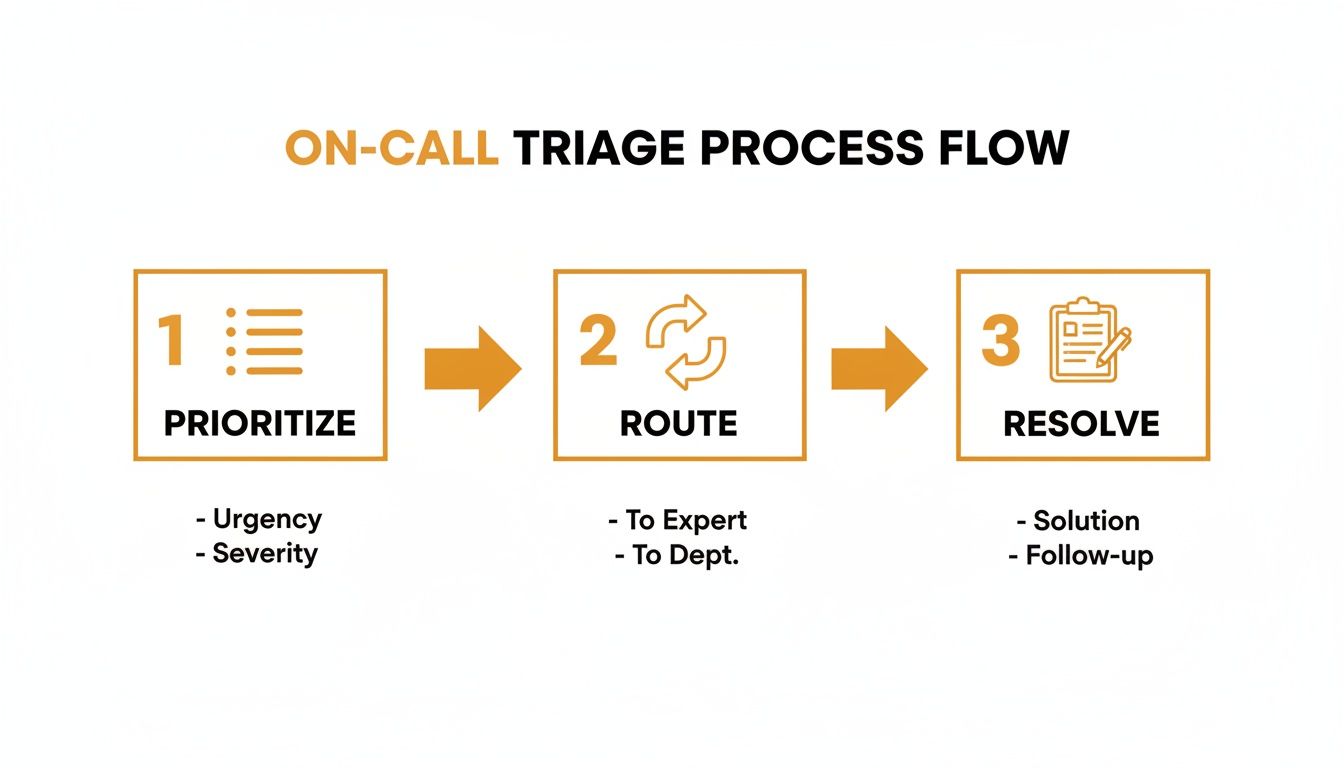
As you can see, a well-designed system doesn't just answer calls. It intelligently prioritizes, routes, and quotes to make the entire booking process seamless. This level of organization is becoming absolutely critical as the market gets more crowded.
Automation isn’t a luxury anymore. It’s the key to capturing your share of a rapidly growing market and winning against local competition.
Choosing the Right Tools for Your Moving Company
Let's be honest, looking for new software can feel like a chore. You’re already buried in dispatch logs and customer calls. The last thing you need is another complicated tool that promises to fix everything but just gives you a headache and another monthly bill.
For a moving company owner, the goal isn't to become a tech wizard. It’s to find a tool that understands the chaos of your business—the seasonal spikes in high call volume, the difference between a studio apartment and a three-bedroom house, and the fact that a lead who calls at 9 PM on a Saturday is ready to book right now.
The right system should feel like you just hired the perfect office manager, not like you have to learn a whole new piece of software.
What to Look for in a Call Automation Solution
It’s easy to get lost in a sea of flashy features and tech jargon. Forget all that. You need to focus on what actually makes you money: capturing every single lead, booking more jobs, and getting some of your time back. A tool that nails these three things is worth its weight in gold.
Look for a solution with moving industry DNA. This means it doesn't just answer the phone; it asks the right qualifying questions, understands what a "long carry" is, and can generate a solid quote without a human stepping in. That's the difference between a generic answering service and an AI receptionist that was built specifically for movers.
Another non-negotiable is how it plays with your existing setup. The tool has to plug right into your calendar (like Google Calendar) and, if you're using one, your CRM. If it doesn't, you're just signing yourself up for more manual data entry, which completely defeats the purpose.
The benchmark for a great tool is simple: it should book at least one or two extra jobs for you each month. If it can do that, it has not only paid for itself but is actively generating new revenue for your business.
A Practical Checklist for Picking a Vendor
Before you sign on the dotted line, run any potential tool through this quick list of questions. The answers will tell you whether it was built for a real-world moving company or just some generic business.
Questions to Ask Any Potential Vendor:
- Does it handle after-hours and weekend calls? If it's not working 24/7, it's not a real solution. You need something that captures those motivated late-night and weekend callers.
- How does it deliver a quote? You need a system that sends quotes instantly via text message. An email sent hours later is an email that gets ignored.
- Can it see our real-time availability? The tool must connect to your live calendar to avoid double-booking and give customers accurate scheduling slots.
- What if a customer has a complicated question? There has to be a smooth, intelligent way to hand off complex calls to a human. No customer should ever feel like they're stuck talking to a robot.
- How painful is the setup? You should be able to get this thing running in minutes. You're a mover, not an IT guy.
At the end of the day, this is about finding a reliable partner that turns the high call volume you're already getting into confirmed, profitable jobs on your calendar. Anything less is just noise.
Got Questions About Automating Your Calls? Let's Clear Things Up.
Bringing new tech into your business can feel like a huge leap, especially when you’re already juggling crews, trucks, and a phone that won't stop ringing. I get it. Let's tackle some of the real-world questions moving company owners ask when they're thinking about automating their calls.
"Will an AI Receptionist Sound Like a Robot and Scare Off Customers?"
This is probably the number one concern I hear, and it’s a valid one. The last thing you want is a potential customer getting frustrated by a clunky, robotic voice menu. We've all been there, yelling "Representative!" into our phones.
But today's AI receptionists are a completely different animal.
Good ones are built to be conversational. They understand the way real people talk—including different accents and moving-specific lingo like "long carry" or "COI." The whole point is to make it feel less like a machine and more like a super-efficient office assistant who knows exactly what to ask, in a tone that's natural and professional.
A well-built AI receptionist doesn't kill the human touch. It makes sure every single customer gets an immediate, professional answer—which is a thousand times better than the frustration of a phone that just rings and rings.
"Isn't This Kind of Thing Too Expensive for a Smaller Mover?"
Let's flip that question around: what’s the cost of a single missed job?
If your average move is worth $1,200, losing just one or two of those a month because the phone went unanswered costs you way more than an automation tool ever will. Think about it that way.
The right system isn't a cost; it's a revenue-generator. Honestly, most movers find the tool pays for itself with the very first job it saves from going to a competitor down the street. It’s an investment in plugging the leaks in your sales pipeline so that money ends up in your pocket, not someone else's. One booked job should more than pay for the cost of automation.
"How Complicated Is This to Set Up? I'm Not a Tech Guy."
You're a mover, not an IT expert. Any tool worth its salt has to respect that.
The best systems are designed to be "plug-and-play." You should be up and running in minutes, not days. The setup is usually dead simple and looks something like this:
- Connect your calendar: Sync your Google Calendar so the system knows when you’re actually free.
- Forward your number: Set your existing business line to forward calls to the new system whenever you're busy or after hours. It’s a standard feature with any phone provider.
- Tweak a few settings: Plug in your service area and basic pricing logic.
That’s pretty much it. There’s no software to install or servers to maintain. It’s built to just work in the background, grabbing leads and booking jobs while you’re out running your crews.
Ready to stop missing calls and start booking more jobs, even when you're on the truck? MoveJoy is the 24/7 AI receptionist built specifically for movers. See how it can capture every lead and turn your high call volume into a competitive advantage. Learn more about MoveJoy.