10 Fleet Management Best Practices for Moving Companies
For a moving company owner, your trucks are more than just assets; they are the engine of your revenue. But managing a fleet of one to twenty trucks introduces hidden costs and operational headaches that extend far beyond the gas pump. Every dollar wasted on inefficient routing is profit burned. Each unexpected breakdown risks a canceled job and a permanently lost customer. Poor communication between your dispatch and crews creates chaos, especially during the peak moving season when a single delay can derail an entire day's schedule.
These are not minor inconveniences. They are direct threats to your bottom line, your local reputation, and your ability to scale. A poorly managed fleet directly impacts your ability to book more jobs and deliver the five-star service that earns referrals. The constant stress of putting out fires, from vehicle maintenance issues to last-minute scheduling conflicts, prevents you from focusing on what truly matters: growing your business.
This guide cuts through the noise to deliver proven fleet management best practices specifically tailored for small and mid-sized moving companies. We will provide actionable strategies you can implement today to enhance efficiency, ensure safety and compliance, and transform your fleet from a costly liability into a powerful competitive advantage. You will learn how to optimize every aspect of your operations, from initial customer contact and intelligent scheduling to post-job follow-up and performance analytics. The goal is simple: to help you control costs, book more jobs with confidence, and deliver a flawless moving experience every single time.
1. Real-Time Lead Capture and Automated Call Answering
In the moving industry, every missed call represents a lost job. Customers seeking movers are often ready to book immediately, and if they reach your voicemail, they will simply call the next company on their list. Implementing a 24/7 automated call answering system is a critical fleet management best practice because it ensures you capture every single lead, instantly qualifying them and turning inbound interest into booked jobs, even when your team is out on a move or it's after business hours.
This technology acts as a digital front desk, ensuring no potential customer ever hears a ring without an answer. Unlike a traditional answering service, modern AI-powered systems can do more than just take a message; they can answer frequently asked questions, collect essential job details like move size and location, and even schedule a quote or book the job directly onto your calendar. This transforms your phone line from a potential liability into a reliable, automated revenue-generation tool.

Why It's a Game-Changer for Movers
For a moving company, the difference between answering on the first ring and calling back an hour later can be thousands of dollars in lost revenue each week. An AI receptionist ensures speed-to-lead is measured in seconds, not hours. This is especially vital during peak moving season when call volume surges and your crews are fully occupied with jobs. Instead of choosing between supervising a move and answering a sales call, you can do both.
How to Implement Automated Call Answering
Implementing this system is more straightforward than it sounds and is a key part of modernizing your operations. Here are actionable steps to get started:
- Customize the AI's Knowledge: Train the AI assistant with scripts based on your most common customer inquiries. Include answers to questions about insurance, truck sizes, packing services, and service areas.
- Set Clear Escalation Paths: Program the system to know when to transfer a call to a human. For instance, complex commercial moves or customers with unique, high-value items might require immediate transfer to you or your sales manager.
- Integrate With Your Calendar: Connect the system directly to your booking calendar. This allows the AI to see real-time availability and book new jobs without creating scheduling conflicts for your fleet.
- Monitor and Refine: In the first few weeks, listen to call recordings. Use these insights to tweak scripts, refine the AI's responses, and ensure it accurately reflects your company's brand and customer service standards. A tool like MoveJoy is designed specifically for movers, simplifying this entire process from setup to daily operation.
2. Intelligent Scheduling and Calendar Integration
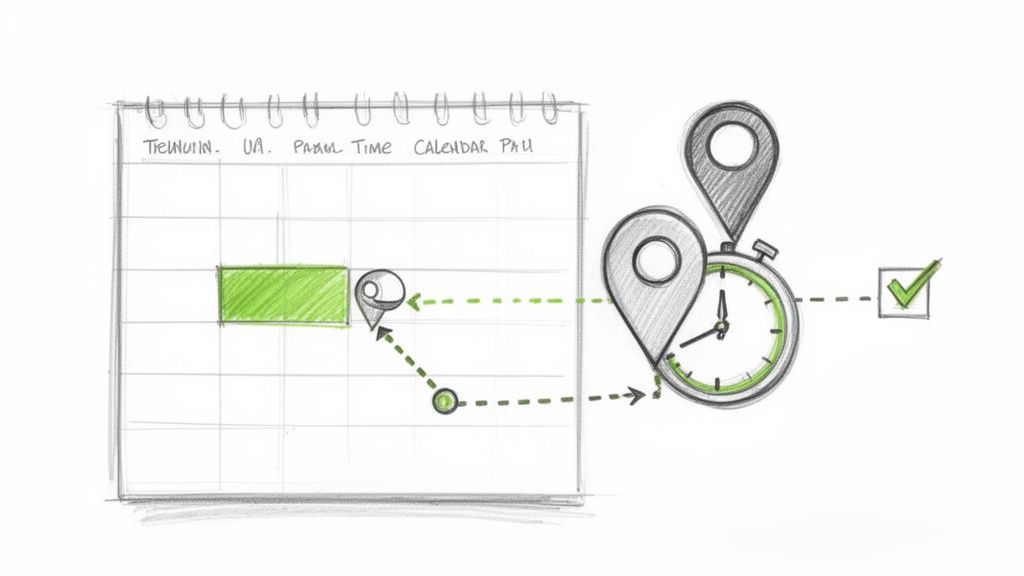
Manual scheduling is a major bottleneck for growing moving companies. Juggling phone calls, checking crew availability, and manually updating a shared calendar creates delays that often lead to lost jobs. Intelligent scheduling directly integrates your booking system with your team's live calendars, allowing you to hold availability and confirm jobs in real-time. This fleet management best practice eliminates double-bookings and the endless back-and-forth between dispatch, sales, and your crews in the field.
This automated approach transforms your scheduling from a reactive, time-consuming task into a streamlined, instant process. When a customer calls to book a move, the system automatically checks crew and truck availability, reserves the ideal time slot, and sends confirmations to both the customer and your team without any human intervention. This ensures every booked job is viable, profitable, and perfectly placed in your schedule.
Why It's a Game-Changer for Movers
For a moving company, scheduling errors mean lost revenue and damaged customer trust. Showing up late because of a routing mistake or having to cancel a job due to a double-booking is a nightmare. Integrated calendars provide a single source of truth for your entire operation, ensuring dispatch, sales, and crews are all working from the same real-time information. This is crucial for managing the unpredictable demand spikes of peak moving season, allowing you to confidently book jobs back-to-back without risking scheduling conflicts.
How to Implement Intelligent Scheduling
Automating your calendar is a foundational step in modernizing your moving business. Here’s how to get started:
- Build in Buffer Time: Program your scheduling system to automatically add buffer time between jobs. This should account for potential job overruns, traffic delays, and travel time between locations, preventing a domino effect of delays.
- Use Geographic Sequencing: Implement a system that uses location data to suggest the most efficient job order for your crews. This minimizes drive time and fuel costs, allowing you to fit more profitable jobs into each day.
- Establish Emergency Protocols: Create a clear process for how emergency or last-minute jobs are handled. Define how the system should prioritize these requests and how it communicates schedule changes to crews already assigned to other jobs.
- Review Calendar Utilization: Once a week, analyze your calendar data to spot scheduling bottlenecks or underutilized crews. Use these insights to optimize routes and availability. For those managing crews across different cities, specialized multi-location scheduling software provides the necessary visibility to coordinate complex operations efficiently.
3. Comprehensive Lead Qualification During Intake
A vague lead is a wasted opportunity. When a potential customer calls, simply getting their name and number isn't enough to secure the job. Comprehensive lead qualification during the initial intake is a crucial fleet management best practice because it arms your dispatch team with all the necessary details to provide an accurate quote and schedule the right crew and truck, minimizing back-and-forth calls and accelerating the booking process.
This practice transforms your initial customer contact from a simple message-taking exercise into a strategic data-gathering mission. Instead of just learning that someone needs to move, you’ll know their current and new addresses, the size of their home (e.g., a two-bedroom apartment vs. a four-bedroom house), any specialty items like a piano or safe, and their desired move date. This level of detail allows you to instantly determine if the job fits your capabilities and schedule, providing a professional and efficient first impression.
Why It's a Game-Changer for Movers
For moving companies, incomplete information leads to inaccurate quotes, scheduling errors, and frustrated customers. A qualified lead ensures you dispatch the right resources the first time, preventing situations where a small truck shows up for a large house move or a crew isn't prepared to handle a delicate antique. It also allows you to prioritize high-value jobs and provide fast, accurate quotes, which is often the deciding factor for customers ready to book. This structured approach is a cornerstone of effective fleet management best practices.
How to Implement Comprehensive Lead Qualification
Systematizing your intake process is key to turning every call into a well-qualified, bookable job. Here are actionable steps to get started:
- Develop Qualification Scripts: Create a clear, consistent script for anyone answering your phones. It should guide the conversation to capture key details: move-from/move-to zip codes, number of bedrooms, flights of stairs, specialty items, and packing needs.
- Ask Strategic Questions: Train your team or AI system to ask questions that reveal the job’s scope. For example, "Are there any particularly large or heavy items like a safe, piano, or oversized furniture?" This helps avoid day-of-move surprises.
- Integrate with Your Quoting Tools: The information gathered should flow directly into your quoting software. This allows you to generate and send an accurate estimate within minutes of the initial call, drastically improving your speed-to-quote.
- Automate the Process: Manually qualifying every lead is time-consuming. An AI receptionist like MoveJoy can be trained with your specific scripts to ask all the right questions 24/7, ensuring every lead is perfectly qualified before it ever reaches you or your sales team.
4. Post-Job Customer Review and Referral Automation
For a moving company, a successfully completed job is more than just closed revenue; it's the single best opportunity to generate future business. Automating post-job review and referral requests is a crucial fleet management best practice because it systematically capitalizes on peak customer satisfaction. By sending a request moments after the crew leaves, you capture positive sentiment when it's strongest, building your online reputation and generating word-of-mouth leads without any manual effort.
This strategy transforms the end of a job into the beginning of your next sales cycle. Instead of relying on your team to remember to ask for a review, an automated system sends a personalized text or email prompting the happy customer to share their experience on Google, Yelp, or your platform of choice. This consistent follow-up ensures you build a steady stream of social proof, a key decision-making factor for new customers choosing a mover.
Why It's a Game-Changer for Movers
A strong online reputation is non-negotiable in the moving industry, where trust is paramount. Potential customers are actively searching for recent, positive reviews to validate their choice. Automating this process ensures a constant flow of fresh feedback, which not only attracts new leads but also improves local SEO, making your company more visible in search results. It turns every satisfied client into a proactive salesperson for your brand.
How to Implement Post-Job Automation
Setting up an automated review and referral system is a high-impact, low-effort way to enhance your marketing strategy. Here’s how to get started:
- Time Your Requests Perfectly: Trigger the review request to be sent within 1-2 hours of the crew marking the job as complete. This timing is critical, as the positive experience is still fresh in the customer's mind.
- Make It Easy for the Customer: Provide direct links to your Google Business Profile or other review sites. The fewer clicks required, the higher the completion rate will be. Personalize the message with the customer's name and a mention of the lead mover.
- Build a Simple Referral Program: Create a clear, easy-to-understand referral program (e.g., "$50 off for you, $50 off for your friend"). Include a shareable link in your automated follow-up messages that makes it simple for customers to pass along your contact information.
- Monitor and Respond to All Feedback: Use a reputation management tool or system to track incoming reviews. Respond professionally to all reviews, both positive and negative, within 24 hours to show you value customer feedback. Platforms like MoveJoy can integrate this process, linking job completion directly to automated review requests.
5. Real-Time Dashboard Visibility and Analytics
In the moving business, what you can't measure, you can't improve. Relying on gut feelings or end-of-month reports to gauge performance means you're always looking in the rearview mirror. Implementing a real-time analytics dashboard is a crucial fleet management best practice because it provides an immediate, at-a-glance view of your company's vital signs, from call volume and booking rates to crew availability and revenue.
This centralized command center pulls data from your operations and displays it in an easy-to-understand format. Instead of digging through spreadsheets or call logs, you get instant visibility into what’s working and what’s not. This allows you to make informed, data-driven decisions on the fly, spotting bottlenecks before they cost you jobs and identifying growth opportunities as they happen.
Why It's a Game-Changer for Movers
For a moving company owner, a real-time dashboard transforms reactive problem-solving into proactive strategy. You can instantly see if an advertising campaign is driving calls, identify which crew has the highest customer satisfaction, or notice a sudden drop in your booking rate that needs immediate attention. This level of insight is a powerful competitive advantage, enabling you to optimize operations with precision.
How to Implement Real-Time Dashboards
Setting up a useful dashboard is about focusing on the metrics that directly impact your bottom line. Here are actionable steps to gain real-time visibility:
- Identify Your Key Metrics: Don't track everything. Focus on 5-7 critical numbers that define success for your moving company, such as call-to-booking conversion rate, average job value, fleet utilization, and customer acquisition cost.
- Centralize Your Data: Use a platform that integrates call handling, scheduling, and customer data. This ensures the information on your dashboard is accurate and automatically updated without manual entry.
- Set Clear Goals and Alerts: For each key metric, establish a clear target. Configure your system to send you an alert if performance drops below a certain threshold, allowing you to intervene quickly.
- Review Data with Your Team: Make the dashboard a central part of your weekly team meetings. Reviewing trends together fosters accountability and helps your team understand how their work contributes to the company's success. Platforms like MoveJoy provide this integrated analytics view, giving movers a single source of truth for their business performance.
6. Standardized Intake Processes Across Multiple Locations
For moving companies operating across multiple cities or with franchise locations, inconsistency is a silent profit killer. When a customer in one service area has a seamless booking experience while another faces confusion or delays, it erodes brand trust and complicates operations. Standardizing intake processes is a critical fleet management best practice that ensures every customer receives the same high-quality service, regardless of which location they call.
This approach involves creating a single, repeatable playbook for how your team handles every inbound lead. From the initial greeting and qualification questions to the quoting and booking procedures, standardization eliminates guesswork. It transforms your customer-facing operations from a collection of individual efforts into a cohesive, well-oiled machine, making it easier to train new staff, monitor performance, and deliver a consistently professional experience that builds a strong regional or national reputation.
Why It's a Game-Changer for Movers
A multi-location moving business thrives on its reputation. A standardized intake process ensures that your brand promise is delivered uniformly, protecting your reputation and making your business more scalable. It guarantees that a lead in Atlanta is qualified with the same efficiency as a lead in Miami, creating predictable outcomes and simplifying performance management across the entire organization. This consistency is fundamental to building a brand that customers trust for any move, anywhere.
How to Implement a Standardized Intake Process
Creating a uniform experience is a key step in professionalizing and scaling your operations. Here are the steps to make it happen:
- Develop a Master Script: Document the ideal call flow, including greeting, key qualifying questions (e.g., "What is your current and new zip code?", "Are you moving from an apartment or a house?"), and closing statements. Start with your highest-performing location as a model.
- Create a Centralized Knowledge Base: Build a single source of truth for all locations covering pricing, insurance details, service add-ons, and answers to common questions. This ensures every team member gives accurate, consistent information.
- Use Centralized Booking Technology: Implement a system that all locations use for booking and dispatch. This provides a unified view of fleet availability and performance, preventing double-bookings and operational silos.
- Train and Audit: Roll out documented procedures and conduct regular training. Use call recordings to monitor compliance and identify areas where local teams may need additional coaching. A tool like MoveJoy helps enforce this consistency by using a pre-programmed AI assistant to handle initial lead intake for all locations, guaranteeing every caller gets the same perfect first impression.
7. After-Hours and Emergency Call Capture
In the moving industry, customer needs don't always align with a 9-to-5 schedule. Last-minute moves, urgent packing requests, and weekend inquiries are high-intent leads that often go unanswered, representing a significant source of lost revenue. Implementing a system for after-hours and emergency call capture is a critical fleet management best practice because it transforms your business into a 24/7 operation without requiring round-the-clock staffing.
This approach uses automation to ensure that every call, whether at 10 PM on a Friday or 7 AM on a Sunday, is answered, qualified, and captured. An AI-powered system can differentiate between a standard quote request and an urgent, "we need to move tomorrow" emergency. It gathers essential details, communicates after-hours availability, and can even book the high-value job directly, ensuring your fleet's schedule is filled while competitors are sending callers to voicemail.
Why It's a Game-Changer for Movers
Capturing after-hours leads allows you to service a segment of the market that is often desperate and willing to pay a premium for immediate solutions. Instead of letting these valuable, time-sensitive jobs slip away, you can monetize your fleet's availability outside of standard business hours. This not only adds a new revenue stream but also builds a reputation as a reliable and responsive mover, which is a powerful competitive advantage.
How to Implement After-Hours Call Capture
Setting up an automated system to handle these calls is a key step in maximizing your profitability. Here are actionable steps to get started:
- Define "Emergency" and "After-Hours": Clearly establish what constitutes an urgent job for your business. Program your system with a separate intake script for these calls, optimized for speed and collecting only the most critical information.
- Automate Premium Pricing Communication: Train your automated assistant to clearly communicate any after-hours or emergency service premiums upfront. This transparency builds trust and properly sets customer expectations before booking.
- Establish an On-Call Protocol: Create a rotating on-call schedule for your team. Program the AI to know who to alert via text or a direct call transfer when a legitimate, high-value emergency job has been qualified and booked.
- Integrate for Immediate Dispatch: Connect the system to your dispatch calendar so it can see real-time crew and truck availability. This allows the AI to confirm and book jobs instantly, preventing double-bookings and streamlining operations for your on-call team. You can learn more about building a robust after-hours answering services system to ensure no lead is ever missed.
8. Technician-Dispatch-Customer Communication Integration
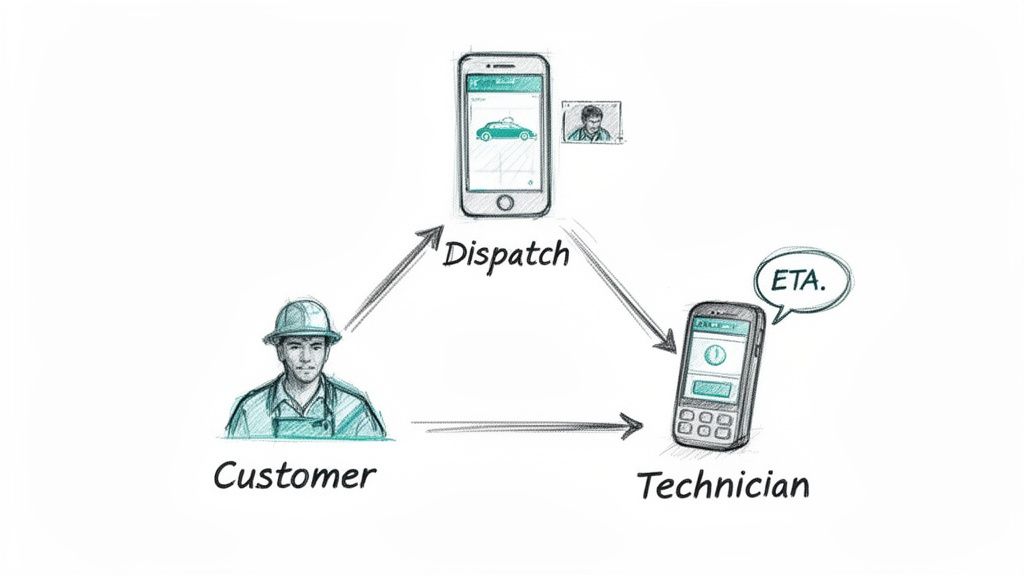
In the moving business, miscommunication between the customer, the office, and the moving crew can lead to delays, frustration, and negative reviews. A common scenario is a customer calling dispatch for an ETA, while dispatch struggles to get a clear answer from a crew busy navigating traffic. Integrating your communication channels into a single, real-time system is a fleet management best practice that eliminates these costly information gaps and ensures everyone is on the same page.
This approach creates a seamless loop where updates flow freely between all parties. The customer receives automated ETA alerts, the crew gets complete job details and special instructions on their mobile device, and dispatch can oversee the entire process without constant back-and-forth calls. It transforms a chaotic, multi-channel process into a streamlined, professional experience that builds customer confidence from start to finish.
Why It's a Game-Changer for Movers
When a customer gets a proactive "Your crew is 30 minutes away" text, their entire perception of your company improves. This level of communication reduces inbound "Where are you?" calls, freeing up your dispatch team to focus on scheduling and sales. For the crew, having all notes, inventory lists, and access instructions in one app prevents mistakes and ensures they arrive fully prepared. A crucial aspect of managing a modern fleet involves integrating technician, dispatch, and customer communication, especially when focusing on how logistics teams can centralize all driver and dispatch communication for optimal fleet operations.
How to Implement Integrated Communication
Creating this unified system is achievable with modern moving software and clear protocols. Here’s how to get started:
- Choose an Integrated Platform: Adopt a moving company software that includes a mobile app for crews and automated customer notifications (SMS/email). The goal is to have one system for dispatching, job management, and communication.
- Establish Clear Protocols: Define when and how crews should communicate. For example, require a status update upon arrival, when starting to load, and upon departure. This standardizes the information dispatch receives.
- Train Your Crews: Ensure your team knows how to use the mobile app efficiently and safely. Train them to check for job notes before arriving and to use features like photo sharing to document the condition of items or access challenges.
- Automate Customer Updates: Configure your system to send automated alerts for key job milestones, such as "Crew En Route," "Arriving Soon," and "Job Complete." This proactive approach drastically reduces customer anxiety and inbound calls.
9. Lead Scoring and Prioritization for Dispatch
Not all moving leads are created equal. A last-minute, full-service pack-and-move for a five-bedroom house is far more valuable than a single-item delivery scheduled a month out. Lead scoring is a fleet management best practice that automatically assigns a priority value to every incoming lead based on factors like potential revenue, move size, urgency, and customer history. This allows you to focus your sales efforts and dispatch resources on the jobs that will have the biggest impact on your bottom line.
This system acts as an intelligent filter, ensuring your most profitable and urgent opportunities get immediate attention. Instead of treating every ringing phone call or web form submission with the same priority, a scoring model helps you strategically allocate your team's time. For example, a high-value lead can be flagged for an instant callback from your best salesperson, while a lower-value inquiry might receive an automated quote, ensuring no lead is ignored but every minute is spent wisely.
Why It's a Game-Changer for Movers
In the moving industry, sales and dispatch teams constantly juggle multiple inquiries. A lead scoring system removes the guesswork, directing focus where it matters most. During peak season, when your team is overwhelmed with calls, it ensures that the high-revenue, multi-truck jobs don't get lost in the shuffle of smaller, less profitable requests. This is a critical component of a modern fleet management best practices framework, turning your inbound leads from a chaotic stream into a prioritized, actionable pipeline.
How to Implement Lead Scoring and Prioritization
Integrating a lead scoring model into your operations is a powerful step toward optimizing revenue and efficiency. Here are the key steps to get started:
- Define Your Scoring Criteria: Identify the attributes of a high-value lead for your business. Common factors include move size (number of bedrooms), distance (local vs. long-distance), requested services (packing, storage), and lead source. Assign points to each attribute.
- Automate the Process: Use your CRM or a specialized tool to automatically apply scores as leads come in. For instance, a lead from a repeat corporate client requesting a full-service pack and move would automatically receive a high score and be flagged for immediate follow-up. Systems that help with AI-powered sales prospecting can often handle this logic automatically.
- Create Actionable Workflows: Set up rules based on lead scores. For example, leads scoring above 90 are routed directly to your top sales rep's phone, scores from 60-89 trigger an automated quote and a follow-up task, and scores below 60 are added to a long-term nurture campaign.
- Train Your Dispatch and Sales Teams: Ensure your team understands what the scores mean and how to act on them. This builds trust in the system and ensures that high-priority leads receive the fast, personalized attention required to close the deal.
10. Security, Compliance, and Professional Data Handling
In the moving business, you handle more than just furniture; you manage sensitive customer data, including names, addresses, phone numbers, and payment details. A data breach or compliance failure can destroy customer trust and lead to severe financial penalties. Implementing robust security and professional data handling protocols is a non-negotiable fleet management best practice. It protects your customers, your reputation, and your business from catastrophic risks.
These protocols involve more than just a strong password. They encompass a comprehensive strategy for how data is collected, stored, accessed, and deleted. This ensures that a customer's gate code, credit card information, or new address is never improperly exposed. For a moving company, where trust is the foundation of your service, demonstrating this level of professionalism sets you apart and safeguards your operations for the long term.
Why It's a Game-Changer for Movers
A single security incident can ruin a moving company's reputation overnight. Proving you handle customer information with enterprise-grade care builds immense trust and is a powerful differentiator. It assures customers that from the first call to the final payment, their sensitive details are safe. This is especially critical when handling payments over the phone, as PCI DSS compliance is mandatory. A proactive approach to security is not an expense; it’s an investment in business continuity and customer confidence.
How to Implement Strong Security and Compliance
Building a secure data environment is an essential part of modernizing your operations and protecting your assets. Here are actionable steps to get started:
- Choose Secure Technology Partners: Select software and service providers that have proven security certifications like SOC 2 or ISO 27001. A platform like MoveJoy is built with enterprise-grade security from the ground up, ensuring your customer data is protected from the first interaction.
- Implement Role-Based Access: Not everyone on your team needs access to all customer data. Restrict access so that movers only see job details necessary for the move, while an office manager has access to billing information. This minimizes the risk of accidental exposure.
- Train Your Entire Team: Your security is only as strong as your weakest link. Regularly train all staff, from movers to dispatchers, on security best practices, such as identifying phishing scams, using strong passwords, and understanding proper data handling protocols.
- Establish Clear Data Policies: Document how you handle customer information, including how long you store it and how you securely delete it in alignment with legal requirements like CCPA or GDPR. For businesses handling customer payments, understanding the security rules for card data is paramount. Explore a comprehensive Practical Guide to PCI DSS Requirements to ensure you are compliant.
10-Point Fleet Management Best-Practices Comparison
| Solution | 🔄 Implementation Complexity | ⚡ Resource Requirements | 📊 Expected Outcomes | 💡 Ideal Use Cases | ⭐ Key Advantages |
|---|---|---|---|---|---|
| Real-Time Lead Capture and Automated Call Answering | Medium–High — telephony + NLP training | Medium — cloud telephony, NLP models, reliable internet | Immediate lead capture; drastically reduced missed calls and response times | Moving companies with high call volume; after-hours demand | Eliminates missed calls; scales without staff; consistent CX |
| Intelligent Scheduling and Calendar Integration | Medium — calendar & routing integrations | Medium — calendar APIs, routing data, technician adoption | Fewer double-bookings; instant confirmations; improved utilization | Multi-crew teams, same‑day booking, seasonal spikes | Reduces scheduling conflicts; optimizes routing; faster confirmations |
| Comprehensive Lead Qualification During Intake | Low–Medium — script/form design, dynamic logic | Low — form builders, CRM integration, staff training | More complete job data; fewer callbacks; accurate quotes | Movers handling complex jobs requiring detailed intake | Improves first-trip success; accurate quoting; better prioritization |
| Post-Job Customer Review and Referral Automation | Low — automated messaging and tracking setup | Low — messaging platform, review links, optional incentives | Increased reviews/referrals; improved online reputation; organic leads | Consumer-facing movers seeking reputation growth | Generates reviews at scale; low-cost lead generation |
| Real-Time Dashboard Visibility and Analytics | Medium–High — data integration & dashboarding | Medium — BI tools, data pipelines, monitoring | Immediate performance visibility; faster, data-driven decisions | Multi-location ops; managers tracking KPIs and trends | Identifies bottlenecks; measures ROI; drives accountability |
| Standardized Intake Processes Across Multiple Locations | Medium — process design + centralized systems | Medium — training, governance, centralized tech | Consistent CX; simpler training; easier scaling and oversight | Franchises and multi-location moving businesses | Ensures uniform quality; eases onboarding; centralized insights |
| After-Hours and Emergency Call Capture | Medium — 24/7 routing and escalation protocols | Medium–High — on-call staffing or robust AI + uptime guarantees | Captures off-hour revenue; faster emergency response; premium bookings | Movers offering last-minute or emergency services | 24/7 revenue capture; premium pricing; competitive advantage |
| Technician–Dispatch–Customer Communication Integration | Medium — mobile apps + real-time messaging integration | Medium — mobile connectivity, app integration, training | Reduced miscommunication; proactive customer updates; fewer callbacks | Movers needing ETA tracking and field coordination | Eliminates information gaps; improves transparency and first-trip success |
| Lead Scoring and Prioritization for Dispatch | High — scoring models, historical data & ML tuning | Medium–High — analytics platform, clean data, ongoing refinement | Prioritized dispatching; higher revenue-per-job; better crew matching | High-volume movers with varied job complexity or VIPs | Data-driven prioritization; boosts profitability and service quality |
| Security, Compliance, and Professional Data Handling | High — security frameworks, compliance processes | High — certified vendors, audits, legal/compliance resources | Reduced risk of breaches; regulatory compliance; customer trust | Movers handling sensitive data or operating across regions | Protects data and reputation; avoids penalties; enables secure scaling |
Turn Your Fleet into a Growth Engine, Not a Cost Center
Managing a fleet of trucks can feel like a constant battle against unexpected costs and logistical fires. But the most successful moving companies have shifted their perspective. They don't just see trucks; they see a powerful system for generating revenue and building a five-star reputation. The fleet management best practices we've covered are the building blocks of that system.
The core lesson is this: In today's competitive moving market, operational efficiency is the ultimate advantage. A well-managed fleet directly translates into fewer breakdowns, lower fuel costs, and safer drivers. True mastery lies in integrating these physical assets with the digital and human elements of your business. This means creating a seamless flow of information from the initial customer call all the way to the post-move review.
From Reactive Fixes to Proactive Growth
Adopting these best practices signals a fundamental shift in mindset. You stop reacting to problems like a surprise engine failure, a missed customer call, or a last-minute scheduling conflict. Instead, you begin proactively shaping your business outcomes.
- Proactive Maintenance: You're no longer fixing trucks; you're preventing downtime, which keeps your schedule intact and your customers happy.
- Proactive Hiring & Training: You're not just filling seats; you're building a team of safe, professional brand ambassadors who reduce liability and earn five-star reviews.
- Proactive Communication: You're not just answering the phone; you're using technology to ensure no lead is ever lost to voicemail, capturing revenue 24/7.
- Proactive Compliance: You're not just avoiding fines; you're establishing a reputation for professionalism and safety that attracts high-value customers.
This proactive stance is what separates market leaders from the rest of the pack. It's the difference between a business that is constantly stretched thin and one that has the operational capacity to handle seasonal spikes and scale on its own terms.
Your Actionable Path Forward
The sheer number of best practices can feel overwhelming, but progress is about taking the first step. Don't try to overhaul your entire operation overnight. Instead, identify the one area that represents your biggest bottleneck or opportunity right now.
- Identify Your Biggest Pain Point: Is it missed calls and lost leads? Unpredictable maintenance costs? Inefficient dispatching? Start there.
- Implement One Change: Choose one specific, actionable strategy from this guide. If scheduling is a mess, focus on implementing a centralized digital calendar. If fuel costs are out of control, start by tracking driver behavior with GPS telematics.
- Measure the Impact: Track the relevant Key Performance Indicators (KPIs) for 30-60 days. Did your fuel expenditure decrease? Did your booking rate from answered calls improve?
- Automate and Scale: Once you've validated the practice, look for technology to automate and solidify it. This is where tools that handle call intake, scheduling, and data analysis become invaluable, freeing you to focus on the next operational improvement.
Ultimately, mastering these fleet management best practices is about building a resilient, efficient, and customer-centric moving company. It’s about ensuring that every truck that leaves your lot is not just a vehicle, but a well-oiled, revenue-generating asset that consistently delivers on your brand promise.
Ready to automate the front-end of your fleet operations and ensure you never miss another job? MoveJoy acts as your AI-powered receptionist, capturing every call, qualifying every lead, and booking jobs directly into your calendar 24/7. See how you can turn missed calls into booked moves and streamline your entire customer intake process at MoveJoy.