
When a potential customer calls, the difference between a booked job and a lost lead often comes down to one simple action: how you transfer their call. A cold transfer is a blind handoff—the kind that forces a customer to repeat everything they just said. A warm transfer, on the other hand, is a coordinated introduction that makes them feel heard from the very first second.
That choice isn't just about being polite. For a busy moving company, it directly impacts your booking rates and your bottom line.
Your Phone Rings. Who Wins the Job?
For a moving company owner, every inbound call is a potential job worth thousands. But what happens when that call comes in during a chaotic morning dispatch, or while your team is already tied up on another line? The way you handle that first interaction is often the deciding factor between winning a customer or sending them straight to your competitor.
Think about it from the customer’s perspective. They’ve just explained all their move details—dates, addresses, inventory—only to be dumped on another person who asks, "So, how can I help you?" It immediately signals that your company is disorganized. That frustration is a huge source of lost revenue; they’ll just hang up and call the next mover on their list.
A clumsy handoff is one of the fastest ways to lose a high-intent lead. In the moving industry, speed and professionalism determine who wins the job. A cold transfer tells a potential customer you have neither.
This isn't just a minor inconvenience; it's a competitive disadvantage, especially during your peak season. Let's break down the real-world difference.
| Attribute | Cold Transfer (The Blind Handoff) | Warm Transfer (The Smart Introduction) |
|---|---|---|
| The Process | The caller is transferred with zero introduction or context. It's an abrupt "please hold." | The first person gathers key details, briefs the next person, and then connects the call. |
| Customer Experience | Frustrating and repetitive. The customer feels like a number, not a person. | Seamless and professional. The customer feels heard, valued, and in good hands. |
| First Impression | Signals your operation is disorganized, impersonal, and maybe a little chaotic. | Instantly builds trust and shows you run a well-oiled machine. |
| Impact on Booking Rate | Lower. High chance of call abandonment as frustrated leads hang up and dial a competitor. | Higher. A positive, efficient experience keeps the lead engaged and ready to book. |
| When to Use It | Almost never for new leads. Maybe for internal calls where everyone already knows the deal. | For every new lead requesting a quote or asking detailed questions. No exceptions. |
By understanding this difference, you can stop leaking leads from your sales funnel. A simple tweak to your call-handling process ensures every potential customer gets a five-star experience from the start, which is one of the easiest ways to book more jobs every single month.
Comparing Cold and Warm Transfers for Movers
To really get a handle on call flow, we need to be clear about what these terms mean inside a busy moving company.
A cold transfer is basically a blind handoff. It’s like forwarding an email without any context. Your dispatcher or a part-time receptionist just passes the caller over to a salesperson, no questions asked. It’s fast for your team member, but it forces the customer to repeat their entire story—a recipe for frustration.
A warm transfer, on the other hand, is a coordinated, professional handoff. The first person—whether it’s someone at your front desk or an AI receptionist—gathers the key details first. They find out the caller's name, the size of their move, and if they need special services like packing. Then, they brief the salesperson before connecting the call. It's a completely different experience that makes your operation look professional.
The Customer Experience Difference
From the customer's point of view, the difference is night and day. One feels chaotic and impersonal, like you don't have your act together. The other builds immediate trust. A smooth handoff isn't just a nice touch; it signals that your entire moving operation is organized and that you actually value the customer's time.
The data backs this up. A cold transfer might save a few seconds on the initial call, but it often leads to a 30% spike in repeat calls from annoyed customers. Worse yet, just one transfer can double the chance of someone leaving negative feedback. And when callers are forced to start over from scratch, call abandonment rates can shoot up to 25%. That's a quarter of your leads hanging up before you even have a chance to quote them.
This side-by-side comparison shows you exactly how the two methods stack up operationally.
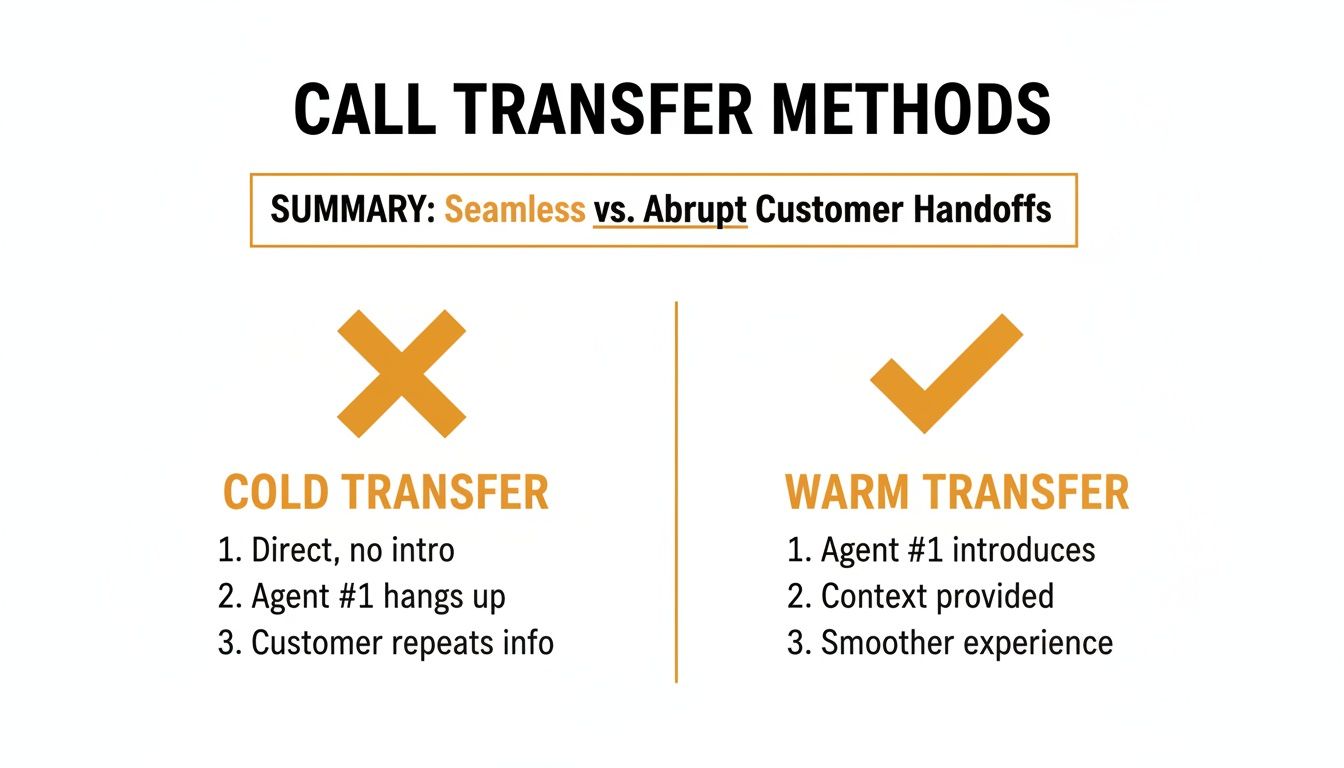
The visual makes it pretty clear: a warm transfer is all about protecting the customer experience and ensuring information flows seamlessly, which is exactly what you need to do to turn a lead into a booked job.
Cold vs. Warm Transfer: A Mover's At-a-Glance Comparison
The choice between a cold and warm transfer isn't just about being polite—it directly impacts your team's efficiency and your bottom line. It's a fundamental piece of how you manage leads. Here’s a quick breakdown.
| Attribute | Cold Transfer | Warm Transfer |
|---|---|---|
| Process | The call is immediately forwarded with zero context. | Key details are gathered, the next person is briefed, then the call is connected. |
| Customer Impression | Signals disorganization. Makes the customer feel like just another number. | Creates a professional, seamless experience that builds instant trust. |
| Salesperson's Time | Wasted asking the same questions the customer already answered. | Focused on the customer's specific needs and closing the deal. |
| Booking Rate Impact | Lower. High risk of the caller hanging up and moving on to your competitor. | Higher. Engaged callers feel valued and are much more likely to book. |
At the end of the day, the goal isn't just to answer the phone—it's to win the job. A structured approach, like the kind you get with modern business telephone answering services, ensures every caller gets a warm, professional reception that guides them smoothly from their first question to a booked move.
The Hidden Costs of Cold Transfers for Your Moving Business
On the surface, a blind transfer feels efficient. Get the caller to the right person, fast. But that quick handoff is secretly bleeding your moving business dry. When you force a potential customer to repeat their entire story—move date, addresses, inventory—it sends a clear message: we’re disorganized, and we don’t value your time.
That tiny moment of friction creates a massive ripple effect.
In the moving industry, decisions happen in minutes, not days. A frustrating call is all it takes for a stressed-out customer to hang up and dial the next company on their list. Just like that, a high-intent lead becomes a lost opportunity. This isn't just a dropped call; it's tangible revenue walking out the door.
Abandoned Calls and Lost Revenue
Every time a caller gives up in frustration, you’re not just losing a potential booking. You're losing the $500 to $5,000 that single job could have been worth. If this happens just a couple of times a week during your busy season, the losses stack up with alarming speed.
Put yourself in the customer's shoes. They’re overwhelmed, looking for a mover they can trust, and probably calling a few different companies. A cold transfer tells them:
- Your team isn’t on the same page: It screams internal chaos.
- Their time is worthless to you: Making them repeat themselves is just plain disrespectful.
- Your process is broken: If you can’t even handle a phone call smoothly, how can they trust you with their entire home?
This negative first impression is almost impossible to reverse, and it hits your bottom line directly.
Lower Booking Rates from Poor Impressions
The few seconds "saved" by a cold transfer are lost tenfold in missed jobs. A warm transfer tees up a successful sales conversation. A cold transfer forces your salesperson to start the call by apologizing, spending the first crucial minute patching up a bad experience instead of building rapport.
The real cost isn't just one lost job. It's the cumulative effect of a damaged reputation that makes it harder to win the next job, and the one after that.
A bad call experience guts your quote-to-booking conversion rate. Even if the customer doesn't hang up, their confidence is already shot, making them far less likely to commit. As you dig into the numbers behind your call operations, it’s shocking how these "small" inefficiencies create huge financial drains. You can learn more about how to calculate these expenses in our guide on understanding true call center costs.
Ultimately, cold transfers are like a hole in your sales bucket. You're losing valuable leads who are ready to book, not because of your pricing or services, but because a broken internal process valued a moment of convenience over the entire customer experience.
How Warm Transfers Directly Increase Booking Rates
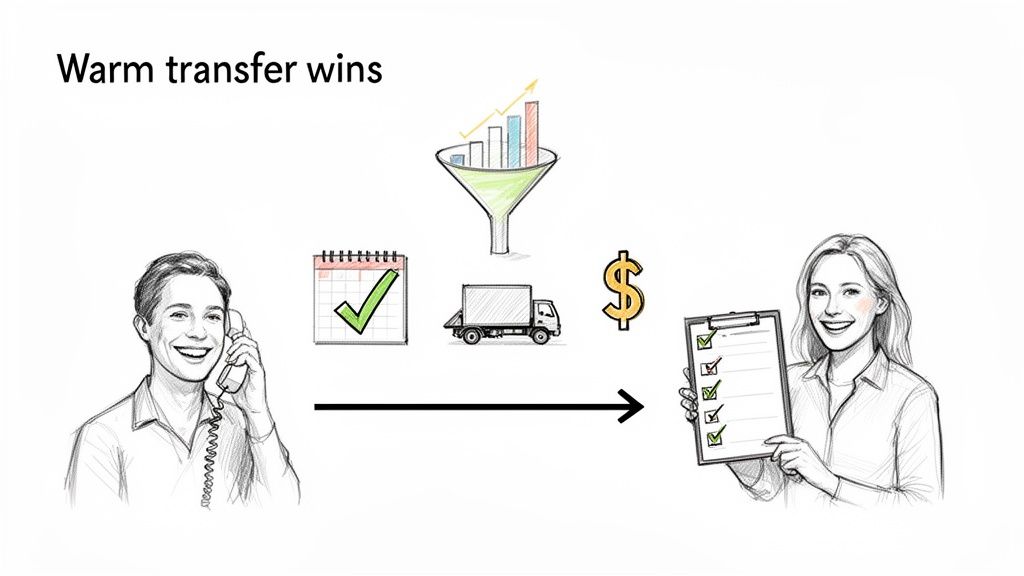
A warm transfer isn't just good manners—it's a killer sales strategy that directly translates into more booked jobs. Think about it. When a salesperson picks up the phone already knowing the customer’s name, their move details, and what they need, the whole conversation changes. It flips from a tedious data-entry chore into a high-value consultation focused on one thing: closing the deal.
This kind of seamless handoff builds instant trust. The customer feels seen and understood, not like they're just shouting into a void and getting passed around. For local movers, where your reputation is everything, that first impression is a massive competitive advantage.
From Frustration to First-Call Resolution
One of the biggest wins with a warm transfer is the spike in first-call resolution (FCR). When your sales expert gets the call with all the key info upfront, they can answer questions, tackle concerns, and give an accurate quote in a single conversation. No more "let me call you back."
Research shows that 79% of customers just want consistent, knowledgeable interactions. A warm transfer delivers exactly that. It kills the need for callbacks and stops leads from slipping through the cracks while they wait for you to get your act together. This isn't just about making customers happy; it shortens your sales cycle.
A warm transfer turns a simple phone call into a guided, reassuring experience. It tells the customer, "We are organized, we value your time, and we are ready to handle your move professionally."
This positive experience has a huge impact on your quote-to-booking conversion rate. A customer who feels heard and respected is far more likely to book on the spot instead of calling three of your competitors.
Turning Calls into a Competitive Advantage
At the end of the day, the goal is to make it as easy as possible for a customer to choose you. A warm transfer removes all the friction from the sales process and replaces it with confidence.
Here’s how that directly impacts your revenue:
- Higher Quality Conversations: Your team wastes less time asking repetitive questions and spends more time building rapport and actually selling your value.
- Increased Booking Rates: A smooth, professional process keeps the lead engaged and moves them toward a "yes" much faster.
- Improved Brand Perception: Every seamless interaction reinforces your reputation as a reliable, customer-focused mover.
In an industry where people make decisions quickly, the company that provides the clearest, most efficient experience usually wins. By building a consistent warm transfer process, you’re not just improving how you handle calls; you are actively creating a system that turns more inbound leads into profitable, booked jobs.
When to Use Each Transfer Strategy in Your Moving Company
While warm transfers are the gold standard for winning new business, you can't apply one rule to every single call. If you do, you'll slow your whole operation down. The real skill is knowing which transfer fits the situation. A warm transfer is non-negotiable for a new customer inquiry, but a quick cold transfer might be totally fine in other cases.
Think of it this way: a potential customer calling for a quote on a three-bedroom move is a high-value, fragile lead. They need the white-glove experience. On the other hand, an existing client calling to confirm their move time with a dispatcher who’s already expecting their call doesn't need that same drawn-out introduction.
Building a smart, efficient internal process means giving your team crystal-clear guidelines on when to use each method.
When a Warm Transfer Is a Must
A warm transfer should be your default for any conversation where the outcome is uncertain and the revenue potential is high. It’s your best play to convert leads into booked jobs. Period.
Use a warm transfer for:
- New Quote Requests: This is the big one. The caller is shopping around, and a professional, seamless handoff immediately sets you apart from the guys who just blindly forward calls.
- Complex Service Questions: If a customer has detailed questions about packing, storage, or moving specialty items, a warm handoff ensures they reach the right expert without the frustration of repeating themselves.
- Escalated Customer Issues: When a customer is already frustrated, a cold transfer is like pouring gasoline on a fire. A warm transfer to a manager shows you're taking their concern seriously and are in control of the situation.
When a Cold Transfer Is Acceptable
A cold transfer can be a practical tool when the call's purpose is simple and transactional, especially when the person on the other end already has the context. Using it strategically saves time for everyone without hurting the customer experience.
Consider a cold transfer for:
- Simple Scheduling Confirmations: An existing customer calling to confirm a time with a dispatcher who knows them by name and is expecting the call.
- Internal Team Calls: Your crew lead calling into the office to speak with the operations manager. No need for formalities here.
- Expected Vendor Calls: A regular supplier calling to speak with your office manager about an order they placed yesterday.
Key Takeaway: The decision between a cold transfer vs warm transfer really just comes down to context and intent. If the call involves a new lead or a sensitive customer issue, always, always choose warm. For routine, internal, or expected calls, a cold transfer is efficient and gets the job done.
Implementing a Flawless Warm Transfer System with Automation
Knowing you should use a warm transfer is one thing. Actually pulling it off when the phones are ringing off the hook during peak season is another beast entirely. It feels impossible to give every single caller that white-glove, personal touch.
This is where smart automation stops being a "nice-to-have" and becomes a game-changer for moving companies.
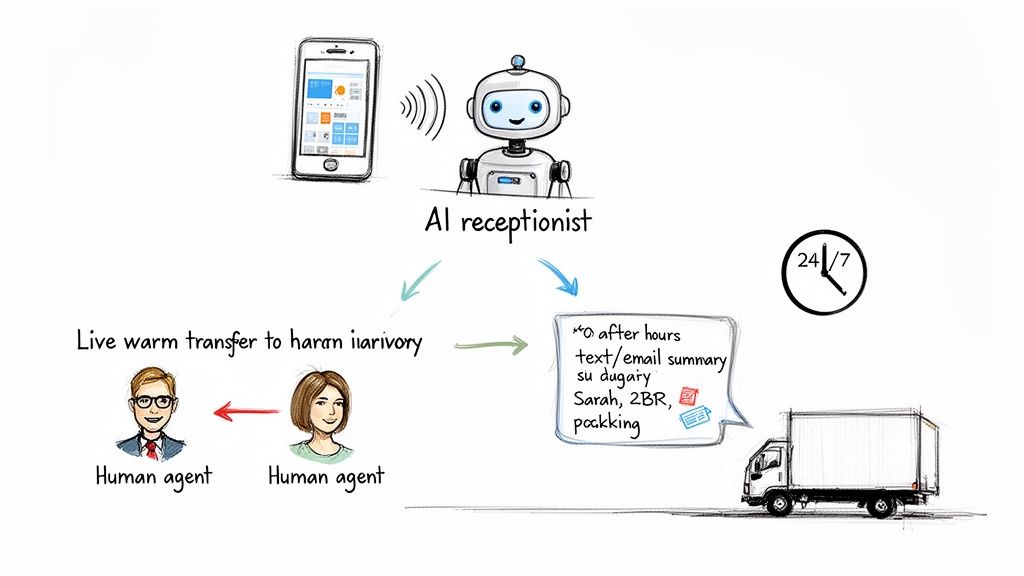
Imagine an AI-powered receptionist that answers 100% of your calls, 24/7. It professionally gathers all the critical job details—move size, addresses, special items—and then executes a perfect warm transfer to your team. It never gets overwhelmed, never misses a call, and never forgets to ask for the customer's name.
Bridging the Gap Between Calls and Bookings
During business hours, this system initiates a live call transfer with the full story. Your salesperson picks up the phone already knowing, "This is Sarah, she's moving a 2-bedroom apartment next month and needs packing help." The conversation jumps right past the boring data collection and straight into building rapport and closing the deal.
And after hours? Instead of that lead hitting your voicemail and disappearing forever, the system captures every last detail. It then sends a complete summary directly to you via text or email. You wake up to a qualified, high-intent lead ready for a warm follow-up call first thing in the morning. For a deeper dive into the mechanics, our article on the meaning of a warm transfer breaks it down even further.
This approach solves the single biggest bottleneck for most movers: inconsistent call handling. It ensures every potential customer gets a prompt, professional, and personalized response, no matter when they call or how slammed you are.
This frees up your team from being chained to their headsets. Instead of just fielding calls and scribbling notes, they can focus on the high-value conversations that actually drive revenue. You're turning your phone line from a source of constant stress into a reliable engine for booking jobs.
Your Top Questions, Answered
When you're running a moving company, how you handle your phones is how you make your money. It's no surprise that owners have a lot of questions about getting their call transfers right. Let's tackle the most common ones.
Is a Cold Transfer Really Better Than Just Missing the Call?
Honestly? Not really. Think about it: a cold transfer that makes a customer so frustrated they hang up gives you the exact same result as a missed call. A lost lead. Zero revenue.
You've just traded one way of losing a customer for another.
A much better approach is a system that can answer every single call, 24/7. An AI receptionist can grab the caller's details and give your team everything they need for a perfect warm follow-up. That way, you turn a point of failure into a bulletproof way to capture leads, ensuring you never miss an opportunity again.
How Do I Actually Train My Team to Do Warm Transfers?
Training your staff on this is simpler than you think. The key is to create a dead-simple checklist they can follow for every new lead who calls in. No guesswork.
The list just needs to cover the basics:
- Caller's full name and contact info.
- The "from" and "to" addresses.
- Move size (number of bedrooms is usually enough to start).
- Any special needs, like packing or storage.
Drill this into them: relay these key details to the salesperson before patching the customer through. This one small habit makes your entire company sound more professional and organized instantly.
Won't Warm Transfers Take Too Much Time During the Busy Season?
This is a classic myth. Yes, the initial call might take an extra 30-60 seconds, but that small investment saves a massive amount of time on the backend. Your sales team isn't wasting time asking questions the customer has already answered, and you cut down on the number of repeat calls from people who are confused or annoyed.
A warm transfer is about investing one minute up front to save ten minutes of cleanup later. That's a huge efficiency gain during the chaos of busy season, helping you book more jobs with less friction.
This simple process keeps things moving smoothly, preventing bottlenecks and letting your team focus on the conversations that actually close deals.
Ready to stop losing leads to missed calls and clumsy transfers? MoveJoy provides a 24/7 AI-powered receptionist that executes flawless warm transfers, captures every lead detail, and helps you book more jobs automatically. See how it works at https://getmovejoy.com.