
That ringing phone? It’s the sound of money. But when it goes to voicemail, especially during your busy season, it’s the sound of a job you just handed to your competition.
Think about it. If your average local move is worth $1,200, missing just one call a week means you're leaving over $60,000 on the table every single year. That’s not a rounding error. That’s a lost job, a lost customer, and a direct deposit into your competitor’s bank account.
The Real Cost of a Missed Call for Your Moving Company
For any moving company owner with 1–20 trucks, the biggest threat isn't a slow month—it's the revenue that quietly slips through the cracks every single day.
That one call that came in while you were on-site, stuck in traffic, or grabbing a quick lunch is a customer who has already dialed the next number on their list. Today’s moving customers shop fast. The first company to give a confident, professional answer almost always wins the job.

When you frame it this way, the virtual receptionist cost stops feeling like an expense. It becomes an investment—a tool designed to plug a massive, ongoing leak in your revenue. It's a direct solution to the most expensive problem you have in your front office.
Shifting from Expense to Investment
Every moving business owner I know is under pressure from high operational costs—fuel, insurance, labor. It's second nature to see any new service as just another line item on the budget. But a system designed to capture revenue you're already losing operates on a completely different level.
Let’s break it down to the basics:
- A missed call is a 100% loss. The potential customer, the booking, and any future referrals are all gone in an instant.
- A captured call is pure opportunity. Even if it doesn't book right away, you've got a lead you can follow up on. You’re in the game.
The most successful moving companies I see don't just focus on cutting costs; they invest in systems that stop revenue leakage. One booked job that would have otherwise gone to voicemail often pays for an entire month of an automated call-handling service.
To really get this, look at how other service businesses successfully grow your business without directly answering every phone call. The principle is identical: automating the front line of communication frees you up for high-value tasks, all while making sure no opportunity is ever lost.
This simple shift turns your phone system from a liability into a reliable profit center.
How Virtual Receptionist Pricing Models Work
Trying to figure out virtual receptionist costs can feel like comparing apples to oranges. Different services slice and dice their plans in ways that can either save you a fortune or sting you with surprise bills, especially when the May-to-August rush hits.
Getting a handle on the three main pricing models is the first step. It's the difference between a smart investment and a budget-busting headache. Most services bill you based on usage, but the real devil is in the details of how they measure that usage.
Let's break them down.
Pay-Per-Minute Plans
This is the old-school model. You buy a monthly bundle of minutes—say, 200 minutes—and every second the agent is on the phone counts against that total. That includes the "hello," the hold time while they look something up, and the time it takes to transfer a call.
- Who it works for: Companies with super predictable, short-and-sweet calls. If your customers are just calling to quickly confirm a time, this might work.
- The risk for movers: One good quote call can sink your budget. You know the one—where a customer walks you through their entire three-bedroom house, asks about packing supplies, and has questions about insurance. That call can easily chew up 10-15 minutes. A few of those on a busy Saturday, and you’re slammed with expensive overage fees, which are always billed at a much higher rate.
Pay-Per-Call Plans
With this model, you pay a flat fee for every single call they answer, no matter how long it lasts. You might buy a plan for 50 calls a month, with a fixed price for each call that comes in after that.
- Who it works for: Businesses where call lengths are all over the map. A two-minute call costs the same as a twenty-minute one, which gives you some predictability.
- The risk for movers: This gets expensive fast if you get a lot of short, useless calls. Wrong numbers, spam calls, or a quick follow-up—many services will count a 30-second call as a full billable event. You end up paying real money for calls that generate zero revenue.
Flat-Rate Subscription Plans
This is the most straightforward and modern approach, especially with AI-powered receptionists. You pay one fixed fee every month for a certain number of calls or, in some cases, unlimited calls. It’s the ultimate in budget predictability.
- Who it works for: Moving companies that want zero surprises on their bill and need to scale up during peak season without getting punished for it.
- The advantage for movers: A flat-rate AI receptionist means every single call gets answered 24/7. It doesn't matter if you get 10 calls on a dead-silent Tuesday or 100 calls on the last Saturday of July. You never have to sweat that a flood of good leads will trigger a massive, unexpected bill.
In the moving business, seasonal demand isn't a surprise—it's a guarantee. Any pricing model that penalizes you for being busy is working directly against your growth. You need a plan that supports your busiest days, not one that makes them more expensive.
When you boil it down, your choice really depends on your call patterns. A per-minute plan might look cheaper on paper, but a flat-rate AI solution almost always delivers better value. It completely removes the financial risk of high call volume, so you can capture every single lead without worrying about blowing up your budget.
Comparing Costs: Human Answering Service vs. AI Receptionist
It’s time for a head-to-head comparison to see where your money is actually going. When you're deciding how to handle your inbound calls, you really only have three choices: a traditional in-house receptionist, an outsourced human answering service, or a modern AI receptionist.
Looking past the monthly invoice to the total cost of ownership is where the real story unfolds. An in-house hire is a lot more than just a salary. You have to factor in benefits, training, payroll taxes, sick days, and vacation time. That can easily push the real annual cost for one full-time employee past $50,000.
A human answering service looks cheaper at first glance, but the costs are notoriously unpredictable. You’re often stuck with per-minute or per-call plans that come with brutal overage fees, which spike right when you get busy in the spring and summer. It’s a painful trap: the more leads you get, the more you pay in penalties.
The Financial Case for AI
AI receptionists run on a completely different economic engine. A huge part of understanding the pricing is knowing the difference between human and AI phone answering solutions. AI-powered systems can juggle unlimited calls at once, operate 24/7/365 without a single break, and never miss a call—all for a predictable flat monthly fee.
This breakdown shows the most common pricing models you'll run into.
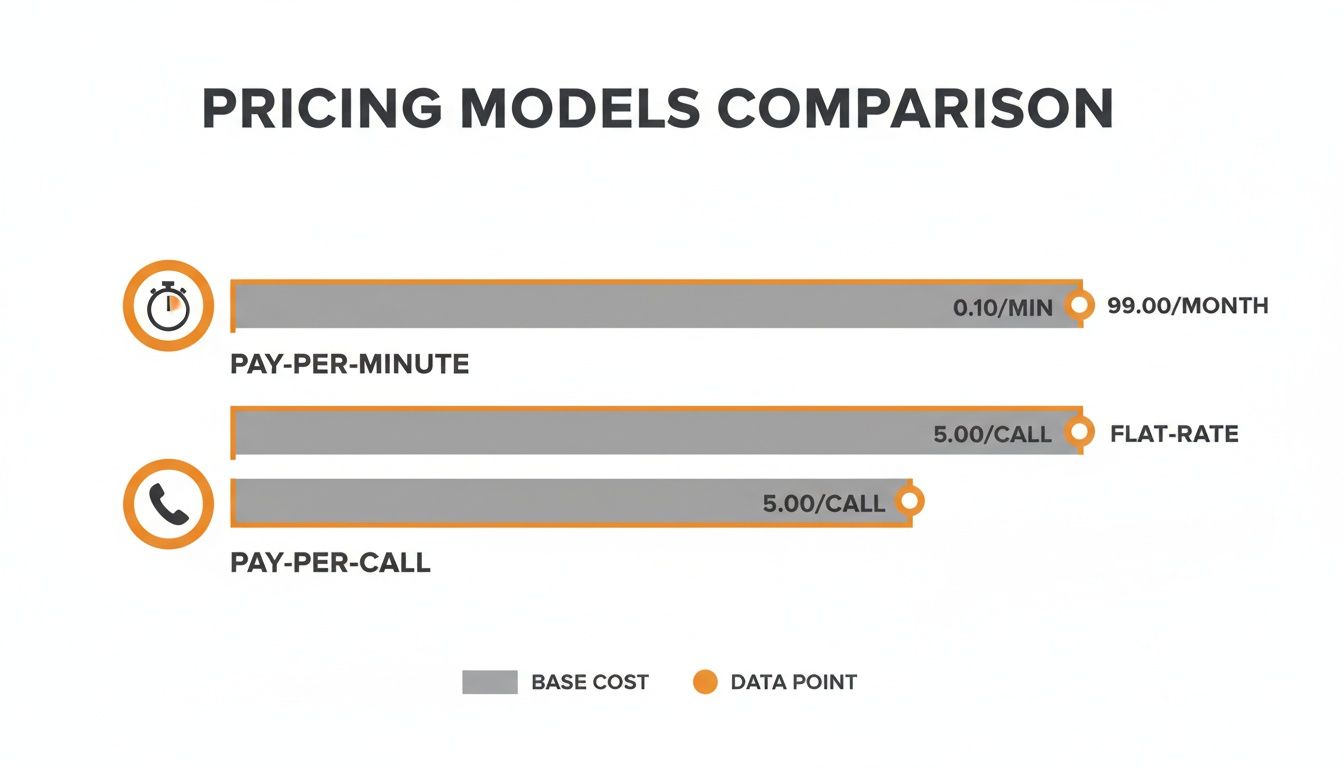
As you can see, flat-rate plans bring budget stability, which is a lifesaver for a seasonal business like moving.
This shift toward automation is changing the game. The virtual receptionist industry is on track to hit $9 billion by 2033, mostly because AI alternatives can slash front-office costs by a whopping 60-95%. For a moving company, that means thousands of dollars in annual savings while finally capturing all those leads that used to die in voicemail after 5 PM.
Total Cost and Capabilities Breakdown
To really see the difference, let’s look at what you get for your money. This table lays out the true annual cost and coverage you can expect from each option, helping you see the financial and functional trade-offs at a glance.
Cost and Coverage Comparison: Receptionist Options for Movers
| Feature | In-House Receptionist | Human Answering Service | AI Receptionist (MoveJoy) |
|---|---|---|---|
| Annual Cost | $45,000 – $60,000+ (salary, benefits, taxes) | $6,000 – $24,000+ (base fee + unpredictable overages) | $1,800 – $6,000 (predictable flat fee) |
| Coverage Hours | 40 hours/week (Mon-Fri, 9-5) | 24/7 (often with varied quality after-hours) | 24/7/365 (consistent quality, instant response) |
| Handles Call Spikes? | No. One call at a time. Others go to voicemail. | Yes, but at a high cost (overage fees). | Yes. Handles unlimited simultaneous calls instantly. |
| Books Jobs? | Yes, when trained and available. | No. Only takes messages for you to call back. | Yes. Qualifies, quotes, and books directly into your CRM. |
| Moving Expertise? | Yes, after extensive training. | No. Generic script readers, no industry knowledge. | Yes. Trained specifically on moving terminology & rates. |
The numbers don't lie. While an in-house receptionist offers dedicated support, the cost and limited hours are a major drawback. Human answering services promise 24/7 coverage but fall short on expertise and can become a financial black hole during your busy season.
An AI receptionist gives you perfect, around-the-clock coverage. It instantly answers every single call, qualifies every lead, and can even book jobs directly into your calendar, turning what was once a cost center into an automated revenue engine.
This isn't just about saving a few bucks on a salary or dodging overage fees. It’s about investing in a system that directly solves the moving industry’s biggest headaches: capturing every lead during seasonal surges, providing instant service that wins jobs, and freeing up your team to focus on the moves themselves. If you're weighing your options, getting a full picture of call center costs can put these numbers into even sharper focus.
Calculating the ROI of a Virtual Receptionist for Your Business
Let’s stop talking about cost and start talking about profit. How fast does a virtual receptionist actually pay for itself? A quick, back-of-the-napkin calculation is all you need to see the real return.
Think about it this way: the right service doesn't cost you money—it makes you money. It turns every missed call into a potential booking.
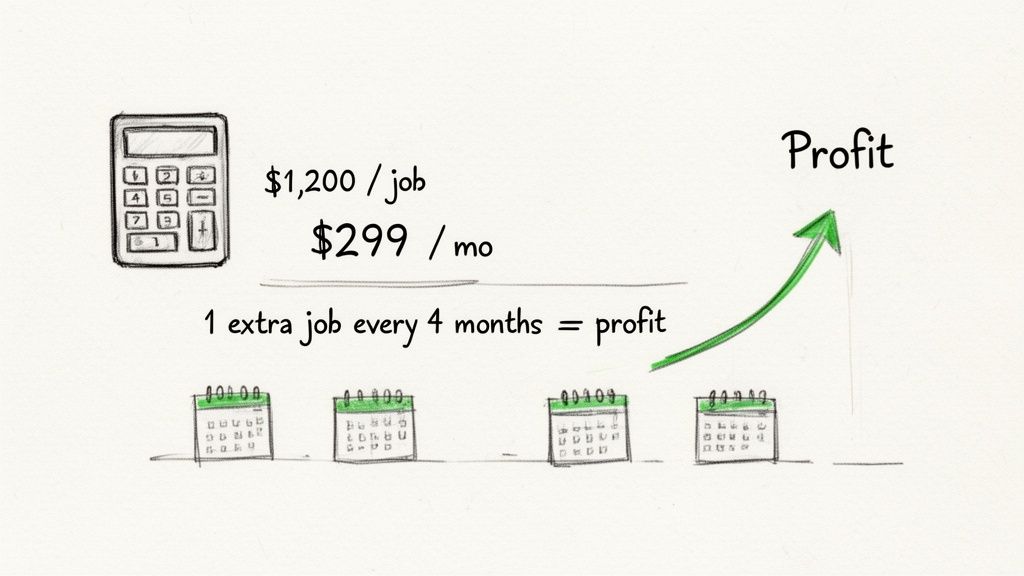
A Simple Break-Even Scenario
Let's use some real-world numbers every moving company owner knows by heart.
- Average Job Value: $1,200
- AI Receptionist Cost: $299/month
To break even, you only need to book one extra job every four months that you would have otherwise missed. That’s it. Just one.
Anything after that first job is pure profit. If your new system grabs just two after-hours calls a month that used to hit your voicemail, you’re not just covering the cost—you’re adding $2,101 in fresh revenue every single month.
Finding Your Profit Zone
To figure out your own ROI, you first have to get brutally honest about the revenue you're losing right now.
- After-Hours Calls: How many calls go to voicemail between 5 PM and 9 AM?
- Weekend Calls: How many customers do you lose on Saturdays and Sundays because no one's in the office?
- Overflow Calls: How many calls get missed when you're on the other line or out on a job site?
Even if you only capture a small fraction of these lost leads, it can completely change your bottom line. An AI-powered service gives you unlimited 24/7 coverage for a flat fee, which means every one of those calls becomes a new chance to book a job.
For a clearer picture, use our simple tool to calculate your moving company's ROI and see the numbers for yourself.
One of the biggest mistakes movers make is viewing call handling as an administrative expense. The top-performing companies see it for what it is: a powerful revenue-generating activity.
The True Value Beyond the Numbers
The ROI isn't just about dollars and cents. It’s also about buying back your time and ditching the operational headaches.
Think about the cost of a full-time, in-house receptionist. When you add up salary, benefits, and taxes, you're easily looking at over $4,500 per month. In stark contrast, AI-powered options typically run between $50 and $300 a month, offering a much smarter, more scalable way to catch every call.
This makes advanced technology a no-brainer for movers who can't afford to miss calls but also can't justify a full-time hire. By automating your call answering, you stop having to constantly check your phone. You're free to focus on what really matters—managing your crews, handling logistics, and actually growing your business.
That reclaimed focus is just as valuable as the new jobs you'll book.
Key Features a Moving Company Should Demand
A cheap price tag doesn't mean a thing if the service doesn't actually solve your biggest problems. When you're looking at virtual receptionist costs, you have to look past simple call answering and focus on the features that put more jobs on your schedule. The right tech can turn your front office from a cost center into a money-maker.
A basic service just takes a message. That leaves you stuck in the same game of phone tag you were trying to escape in the first place. A smart, modern platform, on the other hand, actively works to fill your calendar and lock in revenue.
Moving Beyond Basic Call Answering
For a moving company, some features aren't just "nice-to-haves"—they're critical. They're what separate a profitable business from one that's constantly scrambling. Without them, you're just paying for a more expensive voicemail service.
Here are the non-negotiable capabilities you should demand from any virtual receptionist you consider:
- Direct Calendar Integration: This is the big one. The absolute must-have. The system has to see your crew's availability in real-time and book jobs directly onto your calendar without you lifting a finger. This one feature kills the back-and-forth phone tag that loses deals and wipes out the risk of double-booking a crew on a busy Saturday.
- Intelligent Lead Qualification: Your receptionist—whether it's AI or human—needs to ask the right questions. It should gather crucial details like the move size ("a two-bedroom apartment"), both addresses, and the customer's ideal move date. This gives you everything you need for an accurate quote without a bunch of follow-up calls.
- Automated Quote Follow-Up: Let's be honest, most customers shop around. A system that automatically sends a text or email with their quote keeps your company top-of-mind while they make their decision. That little bit of persistence is often what wins you the job over a competitor who never bothered to follow up.
The difference is simple. A basic answering service tells you that someone called. A true front-office automation platform tells you a new, qualified job is officially on your schedule for next Tuesday.
Features That Drive Profitability
At the end of the day, it's all about increasing your booking rate. Advanced, AI-driven platforms are built from the ground up to solve the specific bottlenecks that cost movers money every single day. They make the customer experience better with instant, professional answers, which directly leads to more secured jobs.
These are the capabilities that make a service a smart investment, not just another monthly expense. They ensure that the virtual receptionist cost is quickly covered by the new revenue it brings in—often from the very first job it books that would have otherwise been lost to voicemail.
Your Checklist for Choosing the Right Virtual Receptionist
Alright, you've seen the pricing models, you know the potential ROI, and you're ready to make a move. This is the final step.
Let's cut through the marketing fluff. Here are the tough questions you need to ask any potential provider to make sure you’re choosing a partner that actually helps you book more jobs, not just a glorified answering machine.
Core Service and Coverage
- Do you offer true 24/7 coverage? I mean nights, weekends, and holidays. Missed calls don’t just happen from 9 to 5. You need a solution that grabs every single lead, no matter when they decide to call.
- Are there limits on call volume? We both know seasonal spikes are a reality in this business. A service that slaps you with high overage fees for getting busy is working against your growth, not for it.
- What happens with spam or wrong numbers? You shouldn't be paying a dime for calls that have zero chance of turning into revenue. Get clarity on how they handle and bill for these.
Functionality for Movers
This is where the rubber meets the road. Generic services won't cut it.
- Can you integrate directly with my scheduling software? This is a deal-breaker. If it can't plug right into your calendar, you're just paying for an expensive message-taking service that creates more manual follow-up for your team.
- Does your system qualify leads and gather key move details? A valuable service knows to ask the right questions—like move size, addresses, and special items—to tee up an accurate quote.
- Do you offer automated quote follow-ups? Staying top-of-mind is everything. Automated texts or emails to follow up on a quote can be the difference between a booked job and a lost lead.
Look, if a provider can’t give you a clear "yes" to these questions, they probably aren't built to solve the real-world headaches of a moving company. The goal isn't just to answer the phone; it's to book the job.
Asking these questions will help you accurately compare your options and find the best virtual receptionist service that truly fits your operations and helps you grow.
Got Questions? We’ve Got Answers.
Here are the straight-up answers to the questions I hear most often from moving company owners who are on the fence about using an AI receptionist.
Can an AI Receptionist Actually Handle a Complex Moving Quote?
No, not from start to finish—and that's by design. A smart AI receptionist isn't there to replace your sales manager's expertise. Its job is to handle the most critical, and honestly, most repetitive part of the process: getting all the key details upfront.
It will ask about the move size, both addresses, the customer's ideal dates, and flag any specialty items like pianos or safes. All that information gets neatly packaged and sent straight to your team. This means you never, ever miss a lead, but you're not stuck asking the same five questions a dozen times a day. You get to focus on the high-value part: closing the deal.
Seriously, How Long Does It Take to Get This Set Up?
Forget about calling in an IT guy and waiting weeks. Modern AI systems are built for busy owners like you, not tech wizards. The whole setup process is surprisingly fast—most owners I've talked to are up and running in less than an hour.
You can literally sign up in the morning and have your AI answering calls that same afternoon. It's an immediate fix for the missed calls that are costing you jobs right now.
Will an AI Sound Professional Enough for My Customers?
Absolutely. We're not talking about those clunky, robotic phone trees from a decade ago that made everyone want to smash their phone. Today's conversational AI is incredibly advanced.
These systems are trained to sound friendly, clear, and professional, giving your customers a consistent, high-quality experience every single time they call. Honestly, providing an instant, helpful response 24/7 often builds more trust than a crackly voicemail ever could. It ensures your moving company always sounds like you've got it together.
Ready to stop losing jobs to your voicemail and see how automation can pay for itself with just one booked move? MoveJoy provides a 24/7 AI-powered receptionist specifically trained for the moving industry. It captures and qualifies every lead, books jobs directly into your calendar, and helps you grow your revenue without hiring more staff.
See exactly how it works at https://getmovejoy.com.