
You’re on a job. One crew is asking about access at delivery. A customer wants to know if the piano is included. Your phone rings with a fresh lead.
That’s where most small moving companies lose money.
If you answer fast and wing the quote, you risk underpricing the job. If you let it hit voicemail, you may never get that customer back. For owners running small to medium-sized moving companies, quoting isn’t just a sales task. It’s a margin task, a scheduling task, and a reputation task.
A lot of advice on how to quote a moving job assumes you can always send someone out for a survey. In real life, that’s not how small operators work. A big share of leads still come in by phone, often when you’re driving, on-site, or trying to get through the day without another fire drill. So the goal isn’t just to learn how to price moves. It’s to build a quoting system you can repeat, train, and trust even when you can’t see the job in person.
Why Inaccurate Moving Quotes Are Costing You Thousands
The problem usually starts with good intentions.
A caller says it’s “just a small two-bedroom.” You ask a few quick questions, throw out a number, and tell yourself you’ll sort it out later. Then moving day shows up with stairs, a long carry, extra boxes in the garage, and a customer who swears they “mentioned everything.”
That’s how profitable jobs turn into cleanup work.
For independent U.S. movers with 1 to 20 trucks, quoting inefficiency and missed calls during peak season and after-hours can translate into $50K to $150K in annual revenue loss, according to SmartMoving’s discussion of estimate accuracy and lead conversion.
Cost goes beyond the missed call
Most owners think about lost quotes as lost jobs. That’s only half of it.
Bad quotes also create:
- Unprofitable routes when labor runs long
- Crew frustration when the scope is wrong
- Dispatch problems because the truck was sized off bad intake
- Customer disputes when the final bill doesn’t match expectations
- Review damage because the customer feels misled, even if the mistake was accidental
A rushed quote can hurt you in two directions at once. You either price too low and eat the job, or price too high without explaining the scope and lose the lead.
Practical rule: If the quote was built from weak intake, the price is only a guess with formatting.
Why manual quoting breaks under pressure
Manual quoting works when the phone is quiet, the customer is clear, and the job is simple. That’s not most days.
Owners often build estimates from memory, old notes, spreadsheet shortcuts, and verbal assumptions. That creates gaps. One missed detail like a walk-up, long carry, or packing request can change the economics of the whole move.
The companies that grow don’t rely on memory. They turn quoting into an intake process with defined questions, defined pricing logic, and defined follow-up. That’s the difference between being busy and being in control.
The Pre-Quote Checklist What to Ask Every Customer
A good moving quote starts before you talk price.
You need a clean intake. Not a casual conversation. Not a rough idea. A structured record that gives you enough detail to price the move without guessing.
Most content about how to quote a moving job pushes in-person surveys, but it leaves a major operational gap. 70% of initial leads are phone-based, and many guides still don’t explain how to quote those calls accurately, as noted by FreshBooks in its moving estimate guide.
Start with the essentials
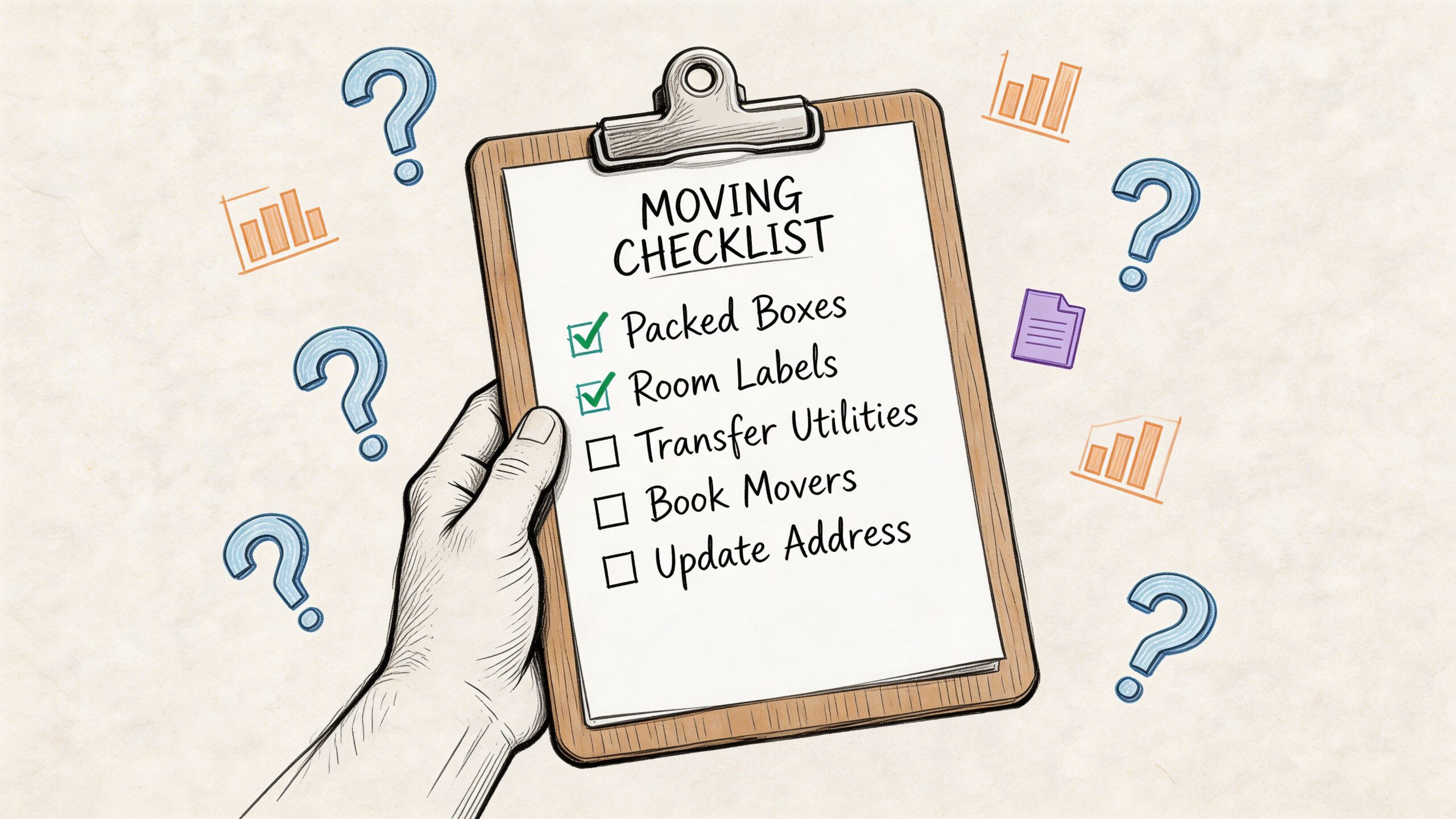
Before you discuss rates, lock down the basics:
- Move addresses. Get full origin and destination addresses, not just city names.
- Move date window. Ask for preferred date, flexibility, and whether the customer is shopping multiple dates.
- Service type. Clarify local, long-distance, labor-only, packing, storage, or full-service.
- Contact details. Get the best callback number and email before the call gets messy.
If you skip these, the rest of the quote gets shaky fast.
Ask about access, not just inventory
A lot of underquoted jobs happen because the furniture list sounded normal, but the building access wasn’t.
Ask these clearly:
- Stairs at pickup. How many flights. Any landings or tight turns.
- Stairs at delivery. Don’t assume the destination is easier.
- Elevator access. Is there one. Does it require scheduling.
- Long carry. How far is the truck from the door.
- Parking restrictions. Gated communities, loading docks, permit zones, narrow streets.
- Truck limitations. Any place where a full-size truck can’t get close.
These details often matter more than one extra dresser.
If the customer says, “It’s an easy move,” keep asking questions. Customers describe stress. Movers price scope.
Get the operational details that change labor time
Many phone quotes fall apart at this stage. Owners ask what’s being moved, but not what has to happen to move it.
Use a checklist like this:
| Intake area | What to ask |
|---|---|
| Packing | Are you packing yourself or do you want packing service |
| Furniture prep | Any beds, tables, or sectionals that need disassembly or reassembly |
| Specialty items | Piano, safe, antiques, artwork, glass tops, gym equipment |
| Storage | Any stop in storage, overnight hold, or split delivery |
| Timing | Is there a building time window or same-day possession issue |
| Customer readiness | Will everything be boxed before crew arrival |
A phone script that works better than freestyle
Don’t ask, “What do you have?”
Ask room by room.
Try this flow:
- Start at the origin. “Tell me the home type and what floor you’re on.”
- Go room by room. “Let’s start with the living room.”
- Pause for hidden areas. “Anything in closets, patio, garage, or storage?”
- Ask what won’t move. This catches confusion early.
- Confirm services. “Do you need packing, supplies, or disassembly?”
- Repeat back the scope. Customers often correct you here.
That final recap matters. It gives the customer confidence and gives you one last chance to catch the stuff they forgot.
Mastering the Inventory and Calculating Job Volume
The inventory is where quoting gets real.
If your intake is loose, your quote is loose. A customer can say “standard one-bedroom” and still leave out patio furniture, packed storage bins, a treadmill, or an overloaded walk-in closet. That’s why the inventory has to be structured the same way every time.
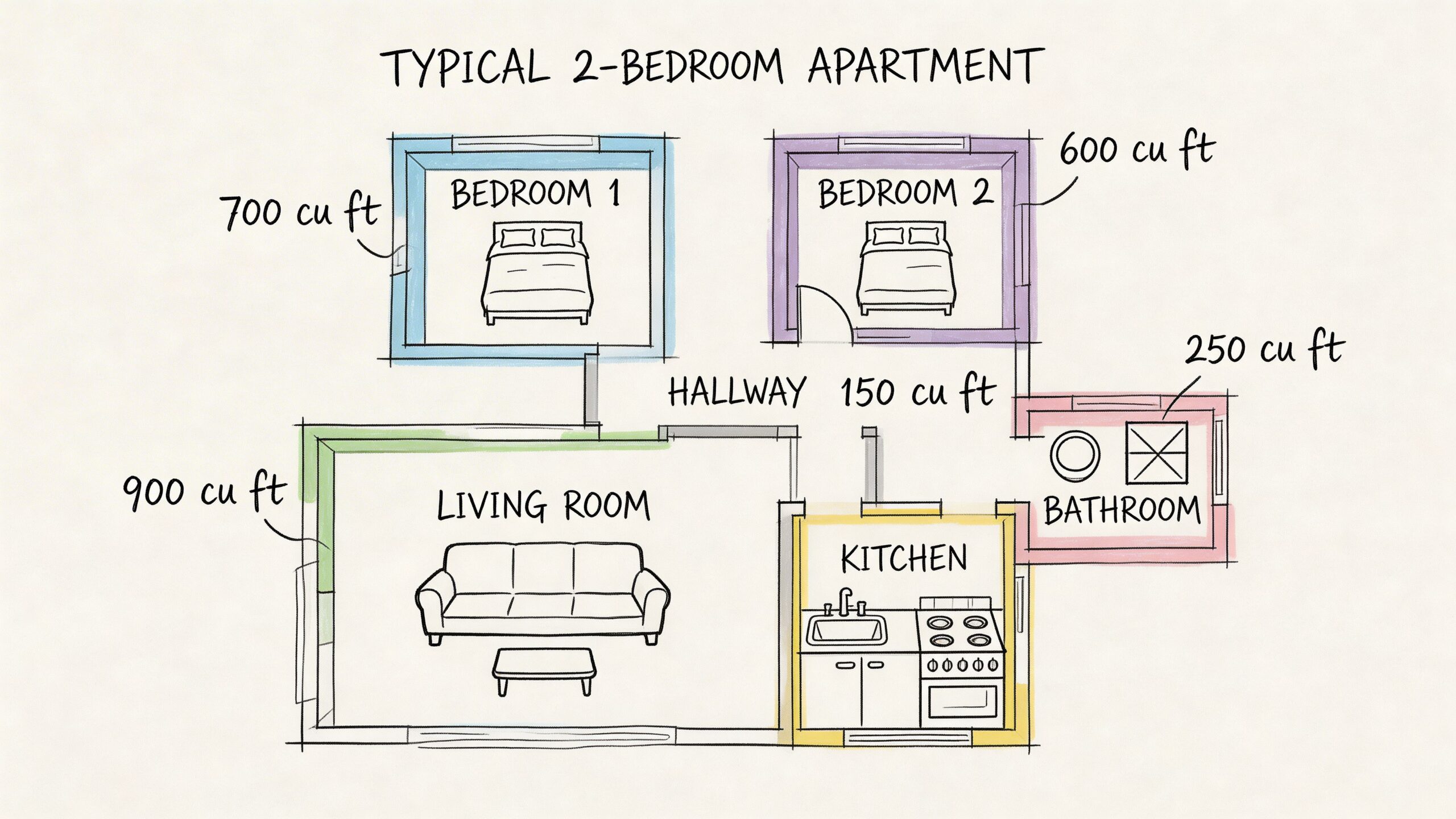
Using standardized inventory templates helps because they tie the conversation to actual capacity ranges. Typical 1-bedroom and 2-bedroom apartments have distinct cubic footage requirements, with larger homes naturally requiring more volume. Just as important, incomplete inventories account for 25% of customer disputes, according to Velocity OS on faster, more accurate moving quotes.
Build inventory room by room
The cleanest way to do this over the phone is to guide the customer through the home in a fixed order.
Use a sequence like:
- Living room. Sofa, loveseat, chairs, coffee table, TV, stand, lamps, rugs, boxes
- Dining area. Table, chairs, leaf, buffet, bar cart
- Kitchen. Boxes, small appliances, pantry overflow, stools
- Primary bedroom. Bed size, dresser, mirror, nightstands, TV, boxes
- Other bedrooms. Beds, desks, toys, shelving, boxed clothes
- Closets. Always ask separately
- Garage or storage. Tools, bins, bikes, yard equipment
- Outdoor items. Grill, planters, patio set
Customers rarely volunteer the forgotten zones unless you ask directly.
Don’t let “normal” replace item counts
When you hear phrases like “just the usual furniture,” slow the call down.
You need counts, not summaries. A quote breaks when broad descriptions stand in for real scope. Even if you’re using a CRM or estimate template, the system is only as good as the details entered.
If you want a starting point for standardizing your intake and estimate layout, this moving company estimate template is a useful reference for what should be captured consistently.
Use visual aids when the customer is unsure
Some customers don’t know how to describe their space. When that happens, ask a few framing questions:
- Is the dining table round or rectangular
- Is the sectional two pieces or more
- How many full bookshelves
- Is the bed platform, frame, or adjustable base
- How many packed boxes are already done
For larger homes or confusing layouts, basic room measurement techniques can help the customer describe what they have, especially when they’re trying to estimate room size, furniture fit, and access constraints during a remote quote.
A remote quote gets better when you stop asking customers to think like movers and start guiding them like a dispatcher.
Common inventory misses that wreck a quote
These show up again and again:
| Common miss | Why it matters |
|---|---|
| Closet contents | Adds box count and labor time |
| Garage items | Often bulky, awkward, and dirty-pack heavy |
| Patio furniture | Weathered items can be harder to stack and wrap |
| Exercise equipment | Often requires disassembly or extra handling |
| Appliances not disclosed | Changes crew plan and truck loading |
| Storage stops | Adds route time and complexity |
If you want to know how to quote a moving job well, this is the part you can’t shortcut. Inventory discipline protects revenue before the truck ever leaves the yard.
Calculating Costs and Choosing Your Pricing Model
Once the inventory is solid, then you can price the job.
Many movers still rely too much on instinct at this stage. Experience helps, but experience without structure usually creates inconsistency. Two different staff members quote the same move two different ways. That’s a process problem, not a talent problem.
Know when to use hourly, flat-rate, or mileage logic
Most small movers work from three basic models.
Hourly pricing
This works best for local moves where scope may shift a bit, and where labor time is the biggest driver.
Hourly pricing is usually the cleanest option when:
- access conditions are still flexible
- the move is local
- the customer may add or remove items
- the job includes packing or light extras
It protects you from underestimating variable labor.
Flat-rate pricing
Flat-rate pricing works when the scope is well-defined and you’ve gathered strong intake.
It’s useful when:
- the inventory is complete
- access conditions are clear
- both sides want price certainty
- you have enough history to know your real labor pattern
Flat-rate can win jobs, but only if the scope is nailed down. If the intake is sloppy, flat-rate turns into a gift to the customer.
Mileage-based logic for long-distance
For long-distance moves over 50 miles, quotes commonly include $0.75 per mile to cover fuel and vehicle maintenance, according to OnRamp Solutions on quote accuracy and real-job data.
That mileage charge isn’t the whole quote. It’s one part of transportation cost. You still need to account for labor, materials, and handling conditions.
Break every quote into cost buckets
A profitable quote should show you where the money goes before you present the customer price.
Use these buckets internally:
- Labor time. Loading, driving, unloading, setup, and any return implications.
- Truck and travel. Mileage, drive time, tolls, and wear.
- Materials. Boxes, tape, paper, mattress bags, shrink, pads.
- Access charges. Stairs, elevators, long carries, shuttle constraints.
- Special handling. Pianos, safes, fragile items, disassembly.
- Risk buffer. Small protection against normal surprises.
This doesn’t have to be fancy. It just has to be consistent.
Price the extras before they price you
The biggest quote mistakes usually come from extras that weren’t treated as real labor.
Examples include:
- Stairs. More trips, slower pace, more fatigue
- Long carries. More walking means longer clock time
- Tight elevators. Delays, batching, and awkward handling
- Disassembly and reassembly. Skilled labor, tools, and time
- Packing add-ons. Material cost plus labor cost
Failing to account for extras like stair charges can create significant monetary losses on a job. Every mover learns that lesson at least once. The smart move is to turn the lesson into pricing policy.
The quote should reflect the work your crew will do, not the version of the job the customer hopes it is.
A simple decision table for small movers
| Job type | Usually the safer model | Why |
|---|---|---|
| Small local apartment move | Hourly | Scope can change, access often decides labor |
| Well-documented local house move | Flat-rate | Better for price certainty when intake is complete |
| Long-distance household move | Mileage plus full cost build | Travel cost matters alongside labor and handling |
| Packing-heavy move | Hourly or carefully built flat-rate | Materials and time can swing fast |
If your quotes feel inconsistent, don’t start by changing your prices. Start by tightening the logic that decides which pricing model you use.
Advanced Quoting From Defensive Pricing to Peak Season Rates
A basic quote tells the customer what the move might cost.
An advanced quote protects your margin when the job gets complicated.
Experienced operators separate themselves here. They don’t just estimate labor and travel. They price risk, timing, and uncertainty. They also know when a “customer-friendly” quote structure helps close the job and when it exposes the company.
Pick the estimate type that matches the job
Not every move should be priced the same way on paper.
In practice, you’ll usually lean on some version of these approaches:
Binding estimate
Use this when the inventory is well documented and the scope is controlled. It gives the customer certainty, but it also puts pressure on your intake process. If the intake is weak, you’re the one absorbing the mistake.
Non-binding estimate
This gives more flexibility when the job still has moving parts. It can be appropriate, but it also needs clear communication. If the customer hears one number and later sees another, you’ve created friction whether you were technically right or not.
Binding not-to-exceed style
This can be a strong middle ground when you want to reduce customer fear without giving away all your upside. It works best when your scope is reliable and your operations are disciplined.
The lesson is simple. The estimate format is part pricing strategy, part trust strategy.
Build defensive pricing into messy jobs
Defensive pricing doesn’t mean bloating the quote. It means pricing known risk instead of pretending it won’t show up.
Examples of risk worth addressing:
- Buildings with uncertain access rules
- Customers who are still packing
- Last-minute booking windows
- Rural or awkward drive approaches
- Jobs with multiple stops
- Moves scheduled in weather-sensitive periods
When owners skip this, they usually say the same thing later. “We should have charged for that.”
Peak season should have its own rules
Busy season breaks static pricing.
Top-performing movers build risk-adjusted buffers into quotes and add a 20% premium for peak season from March through September. The same source notes that dynamic rate cards can improve win rates by 28% compared with manual methods, according to Vonigo’s guidance on profitable moving quotes.
That matters because peak season changes the whole operating environment. Crews are stretched. schedules tighten. callback speed matters more. Reschedules hurt more. A quote that works in a slow month may not protect you in summer.
What to change during high-pressure periods
Instead of one flat policy all year, tighten your quoting system during rush periods.
Use adjustments like these:
| Condition | What to review |
|---|---|
| Peak season dates | Apply your seasonal premium and stricter quote validity |
| Weekend requests | Check whether your labor model still holds |
| Last-minute moves | Charge for disruption and compressed planning |
| Access uncertainty | Increase caution on flat-rate commitments |
| Heavy add-on potential | Reconfirm packing, storage, and specialty handling |
The strongest quotes don’t just win the job. They make sure the job is still worth doing when the day arrives.
What advanced operators do differently
They document assumptions.
If a quote depends on “customer packed and ready,” write that down. If the price assumes elevator access or no additional storage stop, make that visible. A lot of quote disputes happen because the mover knew the assumptions, but the customer never saw them clearly.
That’s also why advanced quoting isn’t just a math exercise. It’s part operations control and part customer communication.
How to Automate the Entire Quoting Process
The biggest weakness in manual quoting isn’t just speed. It’s inconsistency.
One person asks the right questions. Another forgets the long carry. Someone else promises to call back after the current job and never gets to it. The process depends too much on who answered and how busy they were.
That’s why the strongest quoting systems move from people-dependent to process-dependent.
What automation should handle
A quoting workflow can be automated from first contact through booking.
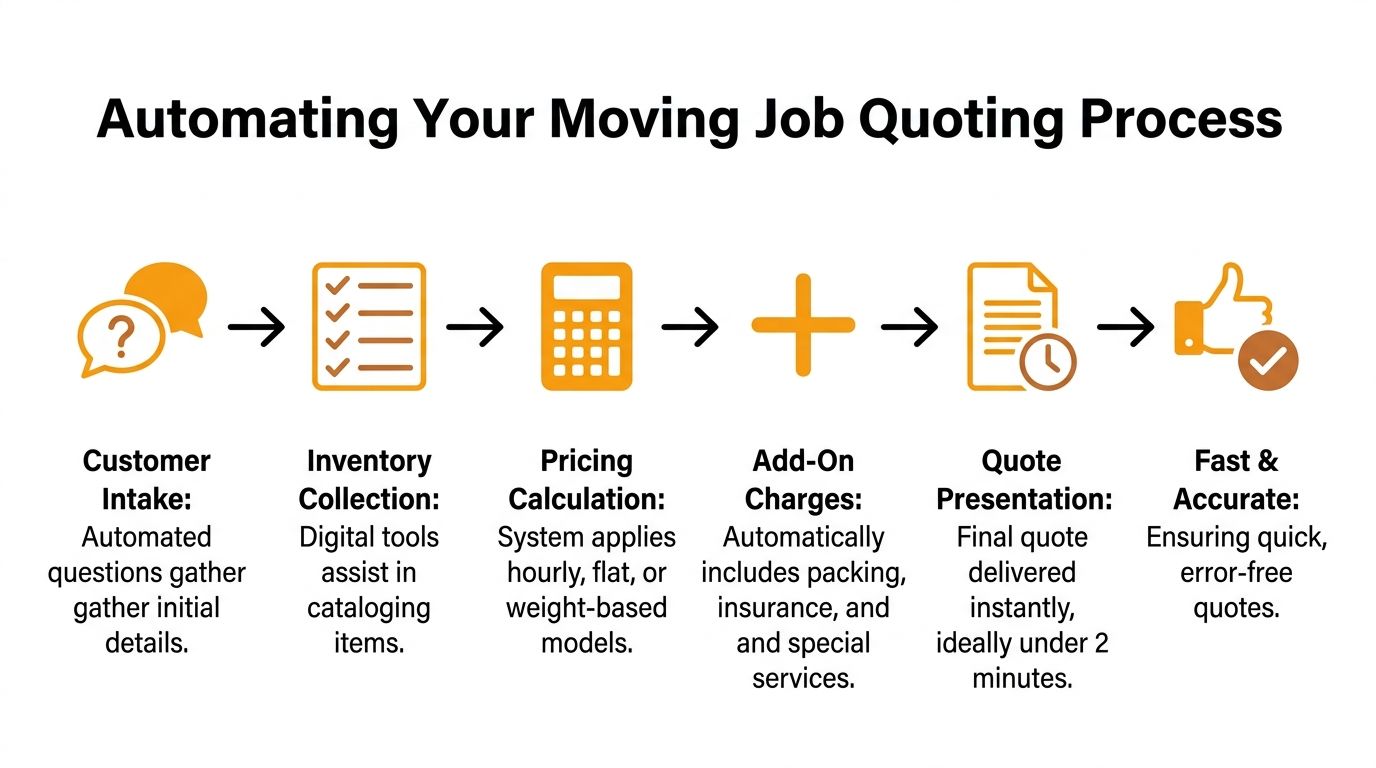
That means the system should be able to:
- Collect intake details in the right order
- Guide inventory capture room by room
- Apply your pricing model based on your own rate card
- Add access and service charges consistently
- Generate a clear estimate fast
- Trigger next actions like follow-up, booking, or CRM updates
If you’re still building parts of this with paper notes, callbacks, and memory, you don’t have a system yet. You have a habit.
Even a basic digital workflow beats ad hoc quoting
You don’t need to overcomplicate it.
Some movers start by standardizing forms, using CRM workflows, and tightening estimate templates. If you’re still building your front-end process, it helps to look at simple ways to create an order form that capture the same information every time, especially for intake consistency across calls, web leads, and after-hours inquiries.
A stronger next step is using software built for estimate automation and front-end lead handling. For example, this overview of moving company estimate software shows how movers are replacing manual quoting steps with connected workflows.
Automate this process
For owners who can’t always answer because they’re on-site, driving, or dealing with crews, this is the gap that matters most.
A quoting engine built for movers can handle the same steps covered above automatically:
Customer intake
It asks for addresses, dates, service type, and contact info in a structured flow.Inventory collection
It walks the caller through a room-by-room list instead of relying on vague descriptions.Access and add-ons
It captures stairs, elevators, long carries, packing, storage, and specialty items.Pricing logic
It uses the company’s own rate card instead of generic scripts.Quote delivery
It sends a professional estimate immediately instead of waiting on a callback.Booking and sync
It can push the job into tools like SmartMoving, Supermove, MoveitPro, or a calendar workflow.
One example is MoveJoy, which is built around accurate quoting on the call using the mover’s own rate card, then booking directly into the company’s CRM or calendar. That matters because there’s a big difference between capturing a lead and closing the job.
If your current process only takes a message, you’re still leaving the hard part for later.
Automation doesn’t replace judgment. It replaces repetition, delay, and inconsistency. That’s what helps small movers stop losing leads when nobody is free to answer properly.
Stop Quoting Manually and Start Booking More Jobs
Manual quoting made sense when lead volume was lower and customers were willing to wait. That’s not the market now.
Today, the company that responds cleanly and prices clearly usually gets the next shot at the booking. If your process still depends on catching the phone live, scribbling notes, and building estimates between jobs, you’re making growth harder than it needs to be.
A repeatable quoting system changes that. You ask the same questions every time. You price from real inputs. You protect labor, access, and margin. You follow up faster. And when you’re ready, you automate the parts that don’t need human guesswork.
If you want a practical next step after tightening your quoting process, this guide on how to close sale is worth reading because quoting and closing are part of the same front-end system.
If you want to stop losing jobs to missed calls and delayed estimates, take a look at MoveJoy. It’s built for moving companies that need accurate quotes and booked jobs, not just another way to answer the phone.