
If you’re running a moving company with multiple crews on the road, you already know the pattern. The phone rings while dispatch is buried, an estimator is out on appointments, and a new lead hits voicemail. By the time someone calls back, that customer has already talked to two other movers and probably booked with the one who gave a clear answer first.
That isn’t just a customer service problem. It’s a front-end revenue problem. In this business, customer experience starts before the move starts. It begins with how fast you answer, how clearly you quote, how reliably you confirm, and whether the job gets booked without friction. If you want to know how to improve customer experience, start there.
For moving company owners, especially operators managing 5 to 20 trucks, the fastest gains usually don’t come from polishing branding or rewriting email templates. They come from fixing missed calls, quote delays, manual handoffs, and inconsistent communication. Those are the leaks that cost jobs during busy season.
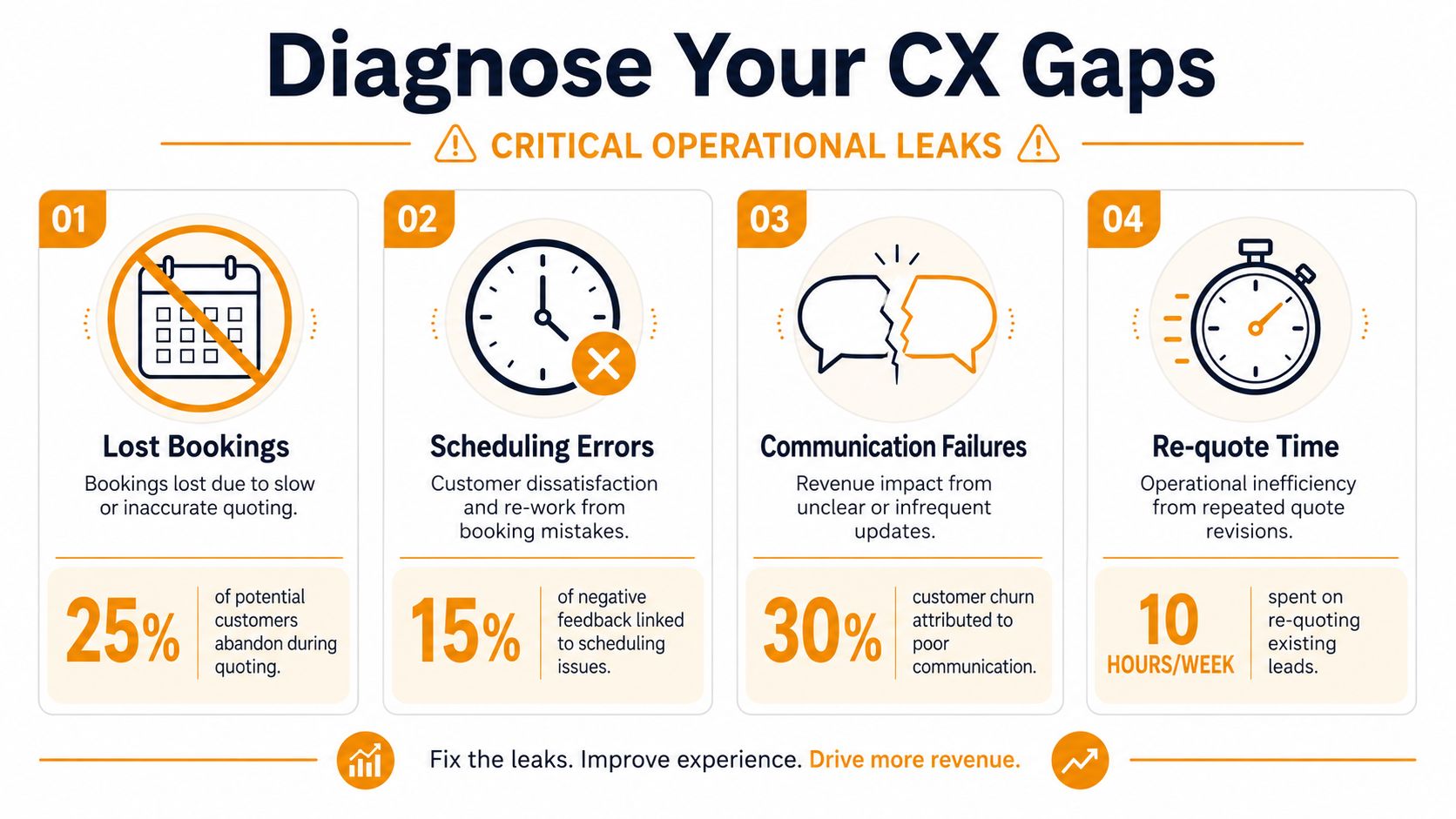
Diagnose Your CX Gaps Before They Cost You Peak Season
It is 6:40 p.m. on a Thursday in June. A family calls after work because they need a mover for the last weekend of the month. The phone rolls to voicemail. They submit a form. No one replies until the next morning. By then, they have already booked someone else.
That is a customer experience problem. It is also a revenue problem.
For moving companies running 5 to 20 trucks, the front-end usually breaks in predictable places. Calls come in faster than the office can handle. Quotes sit too long. Notes get lost between sales, dispatch, and the crew. Customers do not complain about your internal process. They feel it as slow replies, unclear pricing, and surprises on move day.
If you want to improve customer experience, start by auditing the points where revenue slips out before a job is ever booked. A practical way to do that is to map the customer path from first contact to signed move. Olvy has a useful guide on how to map customer experiences so friction is easier to spot.
Start with the leaks that cost real money
The first leak is call coverage. If your phones are reliably answered only during ideal office hours, you are leaving parts of the buying window uncovered. In moving, that costs jobs fast during evenings, weekends, and peak-season spikes.
The second leak is quote speed. Many movers still run on a callback model that made sense years ago but drags down conversion now. A prospect asks for pricing, gets told someone will follow up, and then keeps shopping. If your team cannot produce a clear next step quickly, the customer reads that as uncertainty.
The third leak is estimate accuracy. Fast does not help if the number falls apart later. Missed stair carries, elevators, packing scope, shuttle needs, or long walks from truck to door are the kinds of details that create change orders, refunds, and bad reviews. If you are tightening up this part of the process, it helps to review what a stronger instant moving estimate workflow requires.
A simple self-audit for moving company owners
Run this check on a normal week, not your best week.
- Missed call check: Pull recent inbound calls and count how many went unanswered, hit voicemail, or were returned after the prospect had time to call competitors.
- Quote delay check: Measure the time from first inquiry to first usable estimate, not just first response.
- Booking friction check: Review leads that received a quote but never got a direct booking prompt or follow-up.
- Data handoff check: Compare what the sales rep captured with what dispatch and the crew received.
- Expectation check: Read recent reviews and isolate complaints tied to timing, communication, pricing surprises, or scope confusion.
I have seen this pattern in dozens of smaller moving companies. The team usually cares. The office is usually working hard. The main issue is that the front-end process cannot hold up once lead volume rises.
Use this table as a quick scorecard:
| Touchpoint | What to check | Warning sign |
|---|---|---|
| First call | Was it answered promptly and professionally? | Voicemail or message-taking only |
| Quote | Was it clear, timely, and based on real job details? | Generic range or delayed callback |
| Booking | Was the next step easy? | Customer had to chase the office |
| Pre-move communication | Did the customer know what happens next? | Confusion about arrival, pricing, or scope |
A clean diagnosis saves more than frustration. It shows you where booked revenue is getting blocked before peak season puts more pressure on a weak system.
Master the First Impression with Instant and Accurate Quoting
The first call is where a lot of moving companies either win the job or just lose it. Customers aren’t calling to admire your process. They want to know whether you’re available, whether you sound reliable, and whether you can give them a quote they can trust.

Why voicemail loses jobs
Old-school intake says, “Take the message and call them back.” That used to be survivable. It isn’t a strong operating model now. In a PwC study on the future of customer experience, 86% of buyers said they’d pay more for a better experience, and customers who received a top-tier experience spent 140% more and remained loyal up to six times longer.
For movers, “better experience” doesn’t mean fancy. It means responsive, accurate, and easy to do business with.
The first impression in moving isn’t your truck wrap. It’s whether the customer gets a usable answer when they call.
A human answering service can keep the line from ringing out, but it usually stops at message capture. Generic voice tools do something similar. They may collect contact info, but they don’t understand the quoting logic that closes the job. They can’t reliably work through rate cards, stairs, long carries, walkups, packing add-ons, or hourly versus flat-rate logic the way your office needs.
What accurate quoting looks like in practice
Accurate quoting on the call changes the conversation. Instead of saying, “We’ll get back to you,” you’re giving the customer a real path to book. That’s the difference between capturing a lead and closing a job.
A strong front-end quoting process should do four things well:
Ask the right intake questions
Bedrooms, inventory size, access conditions, elevator use, stairs, distance, preferred date, and any special handling should be part of the quote logic.Use your actual rate card
Don’t rely on rep memory or rough pricing ranges. If your team prices inconsistently, customers feel it.Offer immediate next steps
Every quote should lead directly to booking, deposit collection if needed, or a scheduled follow-up.Write the details somewhere operational
If the quote lives only in someone’s notes, you’ll recreate the same mistakes later.
For teams that want this handled automatically, tools built for movers can now quote based on the company’s own pricing rules and push bookings into the systems the office already uses. If you’re evaluating that route, this page on instant moving estimates shows what that workflow looks like in practice. MoveJoy is one example of that category. It uses the mover’s own rate card, qualifies the caller, generates an accurate quote, and books into tools like SmartMoving, Supermove, MoveitPro, or Google Calendar.
What doesn’t work is pretending speed and accuracy are separate decisions. The mover who can do both usually gets the call back, the booking, and the repeat business.
Build a Reliable Booking and Scheduling Workflow
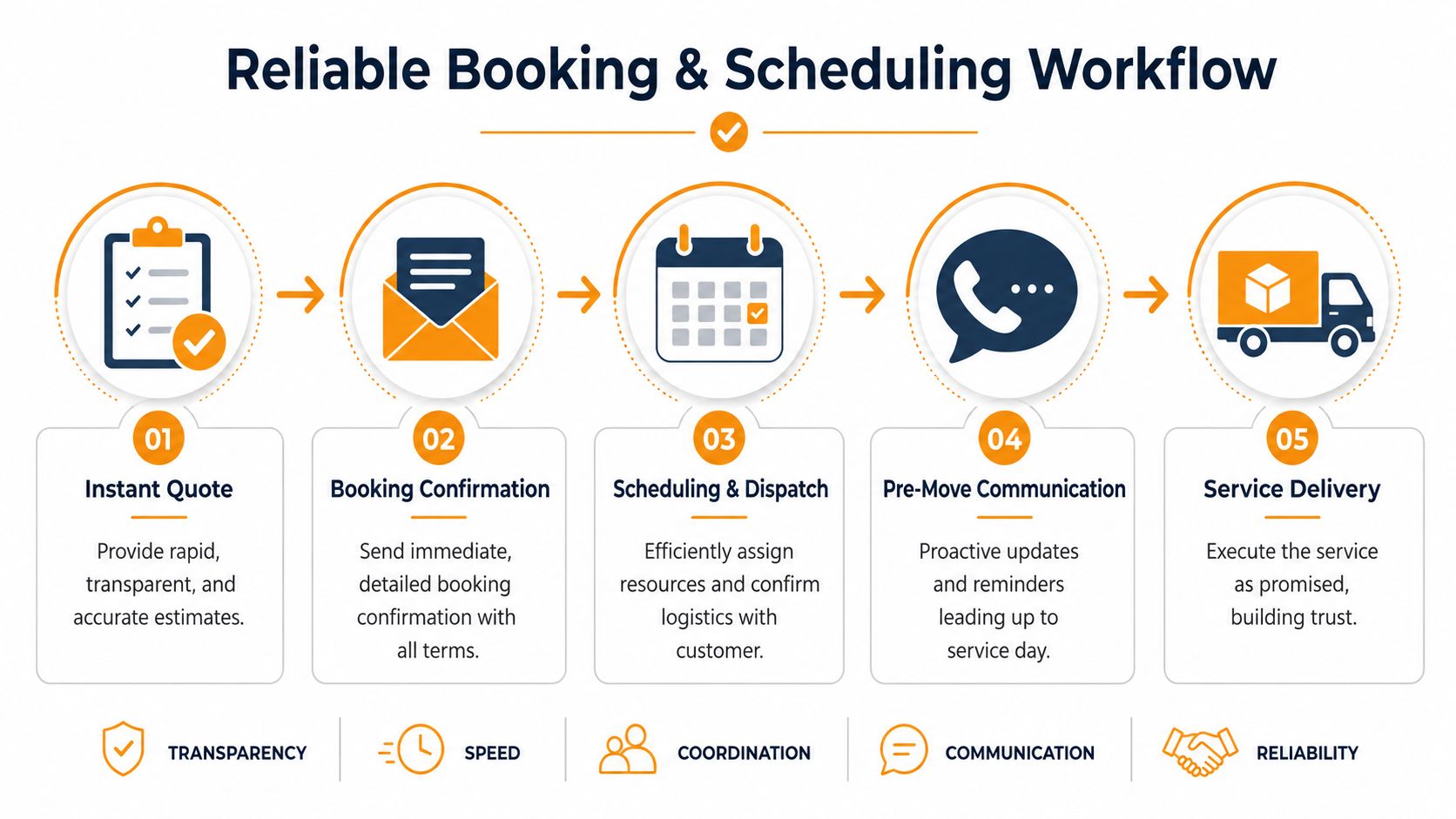
A quote isn’t the finish line. It’s the handoff point. Once the customer says yes, your workflow has to move cleanly from sales to scheduling to dispatch without dropped details, double entry, or confusion.
Create one path from quote to calendar
When companies map the full customer journey, they operate more efficiently. Oracle’s overview of customer experience reports that organizations mapping the end-to-end journey see a 19% reduction in service costs, and U.S. moving firms using real-time journey integration recover 30% more missed bookings during peak hours.
In plain terms, that means fewer preventable errors and more jobs that make it onto the schedule.
The operational fix is simple to describe and harder to enforce. Your business needs one source of truth for each booked job. Not a text thread plus a whiteboard plus a CRM note plus a sticky note at dispatch.
The workflow your office should follow every time
For small and mid-sized moving companies, a reliable workflow usually looks like this:
- Quote gets approved: The customer accepts the estimate and any key terms are documented.
- Booking enters the system once: The job is created directly in your CRM or calendar, not retyped later from memory.
- Confirmation goes out immediately: The customer gets date, time window, service details, and what to expect next.
- Dispatch sees the same information: Crew notes, access details, and special items carry through without manual re-entry.
- Pre-move reminders happen automatically: Customers don’t need to call you for basic status updates.
If your dispatcher and your salesperson are looking at different versions of the job, the customer will eventually notice.
A lot of office stress comes from patching together broken handoffs. That’s why appointment and booking automation matters. Instead of relying on a coordinator to manually transfer every accepted estimate, a connected appointment booking system for movers can route the job details straight into the operational tools your team already uses.
Watch for these failure points:
- Duplicate entry: Staff retypes customer details into multiple systems.
- Loose confirmations: The customer never gets a firm recap in writing.
- Crew blind spots: Movers arrive without accurate access notes or service scope.
- Last-minute scrambling: Office staff discovers conflicts only when the customer calls to confirm.
Reliable scheduling doesn’t feel flashy to the customer. That’s exactly why it works. It creates confidence because nothing feels improvised.
Train Your Team for Five-Star Communication
Technology can cover speed and consistency, but your people still shape the experience. Customers remember how your office handled uncertainty, how clearly the estimator explained charges, and how the crew communicated when something changed.
A McKinsey analysis of customer satisfaction found that for every 10-percentage-point increase in customer satisfaction scores, companies can achieve a 2% to 3% higher revenue growth rate. That matters in moving because communication quality affects whether customers trust your quote, accept day-of adjustments, and recommend you later.
Set expectations before customers have to ask
Strong communication isn’t about sounding polished. It’s about reducing uncertainty.
Your office team should confirm the basics before the customer has to wonder:
- Arrival window: Give the expected timing and explain what could affect it.
- Scope of work: Confirm what’s included, what’s excluded, and what triggers added charges.
- Access details: Repeat back stairs, elevators, long carries, and parking constraints.
- Next touchpoint: Tell the customer when they’ll hear from you again and from whom.
Field teams need their own version of this discipline. When crews arrive, they should quickly align on the plan, point out any visible changes in scope, and explain them in plain language before work starts.
Communication do’s and don’ts for office and field teams
A short checklist works better than a long script.
Do:
- Use the customer’s words back to them: If they said “third-floor walkup” or “freight elevator closes at 4,” repeat that detail so they know you heard it.
- Explain charges early: Customers don’t get upset because fees exist. They get upset when fees appear late.
- Own delays directly: If the truck is running behind, call before the customer calls you.
- Document verbal changes: If the scope changes on the phone or on-site, record it so the office and crew stay aligned.
Don’t:
- Don’t rely on internal shorthand: Customers don’t know your abbreviations, and new staff may misunderstand them too.
- Don’t overpromise the schedule: A tight arrival promise that slips creates more frustration than a realistic window.
- Don’t leave crews to improvise pricing conversations alone: They need clear rules and escalation paths.
- Don’t make customers repeat themselves across departments: Repetition feels disorganized fast.
Good communication in moving is simple: confirm, explain, update.
Train this into the routine. A five-star experience usually comes from predictable behavior, not charismatic employees.
Implement Feedback Loops and Metrics That Matter
Peak season exposes weak operators fast. The phones are busy, estimates are stacked up, and jobs are moving through the office too quickly for anyone to stop and ask why accepted quotes are dropping or why reviews keep mentioning the same surprise charge. By the time an owner notices the pattern, the revenue is already gone.
Feedback matters because it shows where money is leaking out of the front end. A customer complaint about a missed arrival window is not just a service issue. It often points to a scheduling process that creates avoidable cancellations, refund pressure, and fewer referrals.
Track the numbers that connect CX to booked jobs
A moving company does not need a fancy dashboard. It needs a short list of numbers that show where customers get stuck between first contact and signed job.
Start with these:
| Metric | Why it matters | What it usually reveals |
|---|---|---|
| Missed call rate | Shows how many leads never reached a real conversation | Thin staffing, weak overflow coverage, slow callbacks |
| Quote-to-book ratio | Shows whether estimates build enough trust to win the job | Delayed quoting, unclear pricing, poor follow-up |
| Revenue per booked job | Shows whether the team is closing the right work at the right value | Over-discounting, weak qualification, inconsistent scope capture |
| Review themes | Shows which problems customers bring up repeatedly | Billing confusion, crew communication issues, day-of surprises |
These numbers work together. A low quote-to-book ratio with strong lead volume usually means the problem is not marketing. It is the handoff between inquiry, estimate, and booking. I have seen plenty of 10-truck movers blame lead quality when the actual issue was a slow quote process and vague pricing language.
Post-job feedback should stay short enough that customers answer it. One rating question and one open text question is enough to spot patterns. If your office team is running call reviews or short customer interviews, a documented note-taking habit helps turn those conversations into training material. This guide to a workflow for interview transcription is useful if managers need a cleaner way to capture patterns from calls, complaints, and review follow-up.
Close the loop while the issue is still fixable
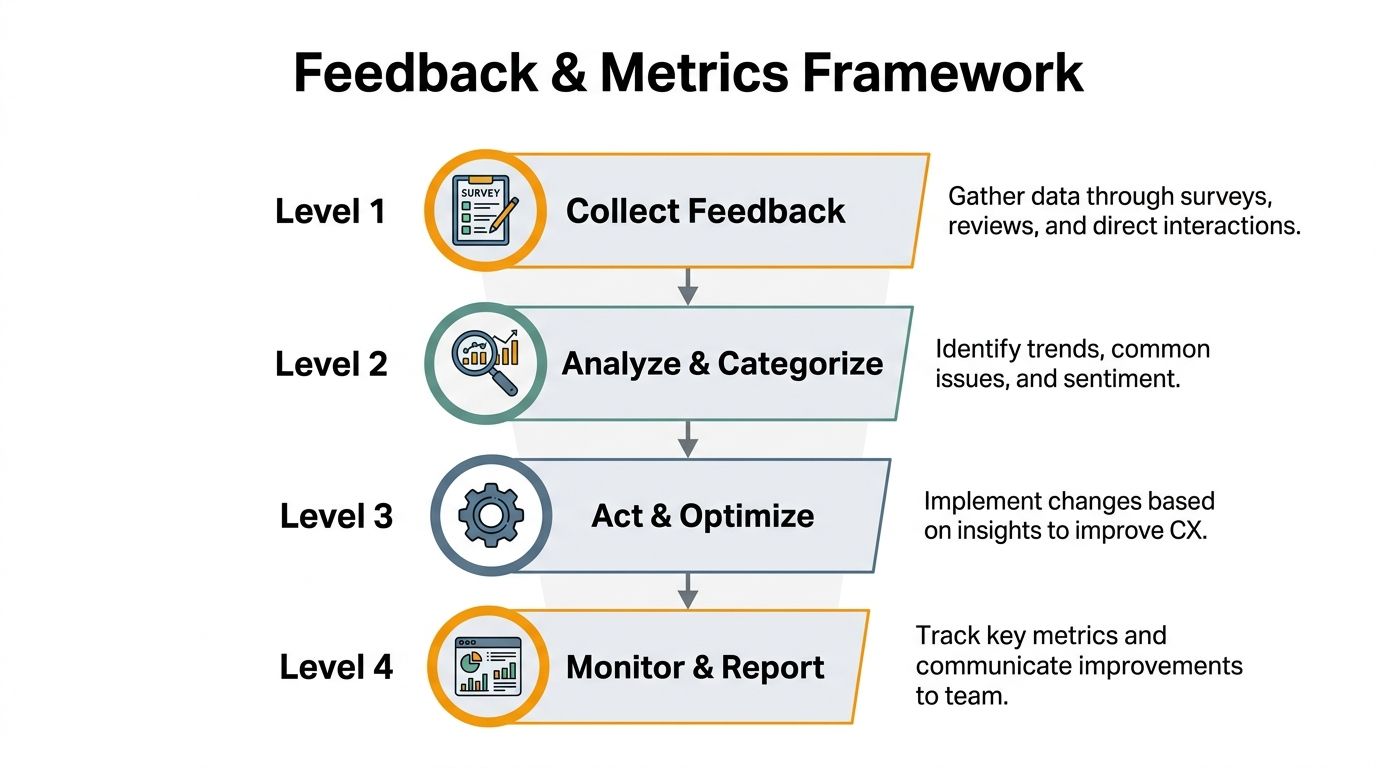
Collecting feedback without changing the process wastes time. The value comes from speed and ownership.
Use a basic loop:
- Request feedback quickly after the estimate, booking, or completed move.
- Tag the issue by category, such as quoting, scheduling, communication, billing, or damage concern.
- Assign one owner to follow up internally and with the customer.
- Respond with specifics so the customer knows what happens next.
- Review patterns every week and decide what process change gets tested.
That weekly review is where smaller movers usually slip. They talk about complaints one by one, but they do not group them into repeatable operational problems. If three customers mention surprise stair fees in one week, that is not random noise. The estimator script, quote template, or confirmation process needs work.
Customer satisfaction scores still have a place, but they are only useful if they lead to operational fixes. This guide on how to improve CSAT for service teams is a good reference because it keeps the focus on what the team should change, not just what score got reported.
A handled complaint can save a customer relationship. A repeated complaint points to a broken system.
Your Blueprint for a Better Customer Experience
What growing movers do differently
The movers who improve customer experience most successfully don't treat it like a branding exercise. They build a system around speed, accuracy, and reliability.
They answer quickly. They quote clearly. They move accepted jobs straight into scheduling. They confirm details before customers have to ask. They train crews and office staff to communicate the same way. Then they measure what happened and fix the recurring breakdowns.
This is why customer experience has such a direct impact on growth for moving companies. Better CX isn't softer service. It's fewer missed calls, fewer abandoned estimates, fewer booking mistakes, and fewer day-of surprises. It means more booked jobs and less revenue leaking out of the front office.
If you're tightening operations, it's also worth reviewing the tools around your broader workflow. For example, if you're managing storage, supplies, or equipment alongside moves, a practical breakdown like Vorby's inventory software comparison can help you think through where disconnected systems are creating extra work.
The biggest mistake I see is owners trying to solve this with more hustle. They tell the team to answer faster, follow up harder, and stay more organized. That works for a week. Then busy season hits, the call volume rises, and the same gaps reappear.
The better answer is a process that holds up when the office gets slammed. That means fewer manual steps, fewer handoffs, and fewer places where a lead can stall out between first contact and booked job. When that front-end works, your crews can focus on service instead of cleaning up preventable office mistakes.
If you want to stop losing jobs to missed calls, delayed estimates, and broken handoffs, take a look at MoveJoy. It's built for moving companies that need every inbound lead answered, quoted using their own rate card, and booked into the tools they already use, without adding more front-office chaos.