That first call is everything. It's where rapport is born, and for moving companies with 1-20 trucks, it's a connection built on speed, empathy, and efficiency. A missed call isn't just a missed call—it's lost revenue and a customer dialing your competitor.
You have about 30 seconds to show a stressed-out customer you get it, you can solve their problem, and you're not going to let them down. Nail that, and you've turned a price shopper into a booked job.
Winning the First 30 Seconds of Every Customer Call
For a local moving company, the fight for a new job is won or lost in the first half-minute of that initial phone call. This is the moment a potential customer—usually overwhelmed by the logistics of their move—decides if you’re the company they can trust with their entire life packed in boxes.
Miss that call or sound distracted during peak season? They're already dialing the next mover on their list. It’s that simple. Speed to answer determines who wins the job.
Building trust right out of the gate isn't about a rigid script. It’s about making a real, human connection. It doesn't matter if it's you, a dispatcher, or an AI receptionist answering the phone; the mission is always the same: make the customer feel heard and confident.
Listen for the Anxiety Behind the Question
Customers rarely just ask about price. Their questions are windows into their biggest worries, and if you listen closely, you can pinpoint the real anxieties that drive their decisions.
When they ask: "Do you wrap furniture?"
What they're really saying: "I have an expensive dining set that's a family heirloom. Can I trust your crew not to damage it?"When they ask: "How long will the move take?"
What they're really saying: "My apartment building has a strict 5 PM move-out deadline, and I'll get hit with a massive fine if we go over."
This is where you turn simple listening into a connection that wins the job.
This simple flow—Listen, Uncover, Connect—is the foundation of every single successful customer interaction. It's the fastest way I know to build genuine trust and get ahead of your competition.
Opening Lines That Build Instant Connection
Instead of the standard, "How can I help you?", try opening lines that immediately position you as an expert problem-solver. These kinds of questions uncover a customer's real needs without feeling like an interrogation.
We've put together a whole bunch of ideas in our guide on the perfect moving company call-in script.
A warm, efficient, and empathetic first touchpoint transforms a price shopper into a loyal customer. They become less likely to call anyone else because you’ve already solved their biggest problem—finding a mover they can trust.
This is where automation becomes a competitive advantage. An AI receptionist ensures that every single call—even the one that comes in at 2 AM on a Saturday—is answered with the same professional consistency that starts building rapport instantly. It never sounds rushed, never misses a key detail, and always follows the best practices for making a caller feel valued, freeing your team to focus on dispatch and crew management.
Let's look at how a typical manual call stacks up against an automated one when it comes to those critical first moments.
Manual vs Automated First Call Comparison
| Key Rapport Element | Manual Process (Typical Mover) | Automated Process (With AI Receptionist) |
|---|---|---|
| Response Time | Varies. Goes to voicemail if on another call, leading to lost revenue. | Instant. Under 2 seconds, 24/7. Never misses a call. |
| Initial Tone | Dependent on dispatcher's mood, stress level, or distractions. | Consistently calm, professional, and empathetic. |
| Info Gathering | Can feel rushed. May miss key details if juggling multiple tasks. | Follows a perfect, conversational script every time. Captures all key info. |
| Empathy Cues | Relies on the employee's training and emotional state. | Programmed with empathetic phrases ("Moving can be stressful, I can help"). |
| After-Hours | Goes to voicemail. Most leads are lost. | Full service. Qualifies, quotes, and books the job on the spot. |
The difference is stark. While a great dispatcher is invaluable, they can't be perfect on every call, 24/7. Automation handles the initial rapport-building flawlessly, ensuring you never fumble that critical first impression and turning missed calls into booked jobs.
Turning a Quote Request Into a Relationship
Real rapport isn’t just about being friendly on the phone. It’s about making a customer feel like you actually get their situation. Any mover can ask about the number of bedrooms, but the companies that win the best jobs know how to turn a simple quote request into a conversation that builds unbreakable trust.
This starts when you stop asking generic questions. When a customer feels like you're trying to solve their unique moving puzzle—not just calculating cubic feet—they stop seeing you as a commodity. They start seeing you as a partner.
Questions That Uncover the Real Needs
To make that connection, you have to dig deeper with open-ended questions. You're looking for their priorities and, more importantly, their anxieties. This isn’t just about getting info for a more accurate quote; it's about proving you care.
Instead of just asking, "What's your address?" try this: "Are there any access challenges at either location I should know about, like tight stairwells or long walks from the truck?" This immediately shows you’re thinking like a pro, anticipating problems they haven't even considered.
Don't just ask, "Any specialty items?" Get specific: "What's the one item you're most concerned about us handling carefully during this move?" This zeroes in on their emotional anchor—whether it's a piano or a family heirloom—and gives you the perfect chance to reassure them.
Here's a powerful one: "Looking ahead to moving day, what does a perfect, stress-free experience look like for you?" Their answer tells you everything. You'll learn if they value speed, extreme care, or just constant communication.
These kinds of questions shift the whole dynamic. You’re no longer just talking about price; you're having a value-focused consultation.
The goal is to prove you're listening so intently that they feel confident you won't miss a single detail on moving day. This confidence is what justifies a premium price.
Confirm and Validate Their Concerns
After you’ve asked these insightful questions, the next move is crucial: summarize their needs right back to them. It’s a classic active listening technique that confirms you absorbed every detail.
For example, you could say, "Okay, just to confirm, the top priorities are protecting your grandfather clock, making sure the crew wears floor runners on the new hardwood, and being completely finished by 5 PM to meet your building's deadline. Is that right?"
That simple act of repetition is incredibly powerful. It tells the customer, "I heard you, I understand what matters, and I have a plan."
This is also a process you can build into your systems. A well-designed AI receptionist can be trained to ask these exact rapport-building questions 24/7. This ensures you have a complete picture of the customer's needs before your team even speaks to them, letting you start every conversation from a place of trust. By mastering this initial conversation, you can learn how to turn every prospect into a customer far more consistently.
How On-Site Professionalism Builds Unbreakable Trust
The rapport you’ve built over the phone is only half the battle. The real test happens on moving day, right inside the customer's home.
This is where your crew’s professionalism can either lock in that trust for a five-star review and a lifetime of referrals, or shatter it completely.
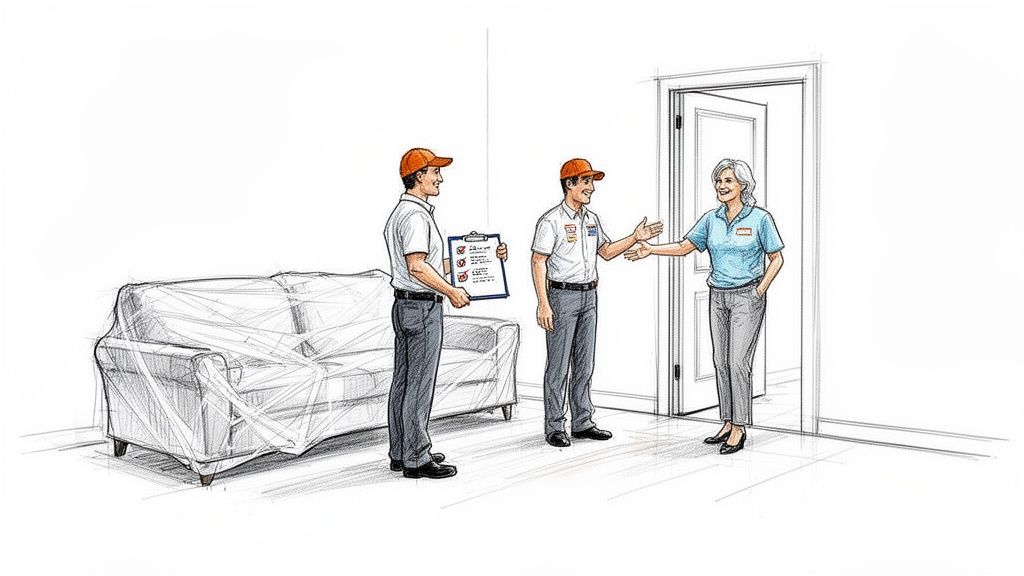
Think about it: when your front office is running smoothly—perhaps thanks to automated lead capture and booking—you buy back precious time. That time is best spent training your crews on the kind of on-site soft skills that directly lead to higher tips and more five-star reviews.
The On-Site Rapport Checklist
Your team’s behavior inside a customer’s home sends a powerful message. It shows you respect not just their belongings, but the stressful situation they’re in. Here’s what every crew member needs to master.
The Professional Greeting: Start with a firm handshake, solid eye contact, and a clear introduction. "Hi, I'm Mike, the crew lead. We're here to make today as smooth as possible for you." This sets a confident, professional tone.
The Initial Walk-Through: Before touching a single box, do a walk-through of the house with the customer. Confirm the scope of work and ask: "Is there anything you're particularly concerned about today?" This prevents misunderstandings and shows you value their input.
Constant, Clear Communication: Keep the customer in the loop. Simple updates like, "We're starting with the upstairs bedrooms now," or "We've finished loading the kitchen; next is the living room," kill anxiety and make them feel in control.
A customer's home is their sanctuary. Every action your crew takes, from laying down floor runners to proactively communicating, reinforces the message that you are a respectful partner in their move, not just hired labor.
Turning Problems Into Trust-Building Moments
Every mover knows that things go wrong. A sofa won’t fit through a doorway. An unmarked box is fragile. How your crew handles these moments is what separates average movers from exceptional ones.
Instead of just stating the problem—"This couch won't fit"—train your crew to present solutions. "This is a tight squeeze. We can try removing the door from its hinges, or see if it will fit through the back patio. What would you prefer?"
That one shift in language transforms a high-stress moment into a demonstration of your expertise. The customer’s anxiety drops, and their confidence in you skyrockets. They know they hired the right moving company.
Using Smart Follow-Ups to Create Customers for Life
The job isn't over when the last box is unloaded. For smart moving company owners, this is where the most profitable part of the relationship begins. The follow-up is where you turn a one-time customer into a repeat client and a referral machine.
Most movers drop the ball here. They’re so focused on the next job that they forget the customer they just served. This is a massive missed opportunity, especially when a few simple, automated touches can keep you top-of-mind.
A Simple, Powerful Follow-Up Sequence
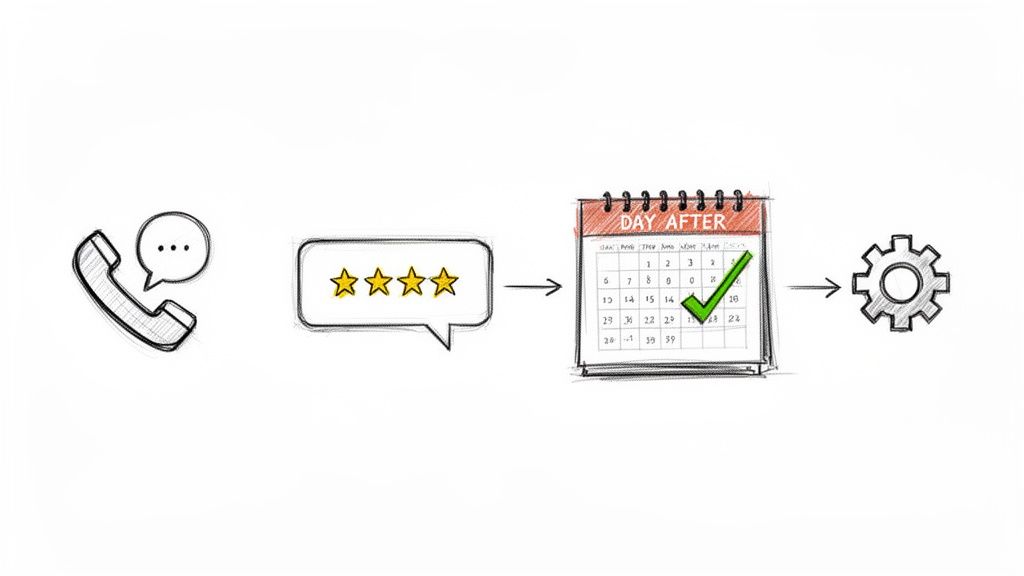
A great follow-up strategy doesn't have to be complicated. Consistency is far more important than complexity. Here’s a simple sequence that builds lasting rapport and drives future business with minimal effort.
The Day-After Check-In: A quick text or email the day after the move is powerful. "Hi [Customer Name], just checking in to make sure everything went smoothly with your move yesterday. Hope you're settling in well!"
The Review Request (3 Days Later): Once they've had a moment to breathe, send a direct link to your Google page. "So glad we could help you get moved into your new home! If you have a moment, a review of your experience would mean the world to our team."
The Semi-Annual Check-In: Twice a year, send a simple, non-salesy email. This could be a seasonal tip ("Tips for organizing your garage for the winter") or just a friendly hello. The goal is simple: stay on their radar.
This steady communication ensures that when their friend mentions they're moving, your company is the first one they think of.
Personalization Is Your Secret Weapon
The real magic happens when you log key details from your interactions. Did they mention they were moving to be closer to their grandkids? Note it down. Did they have a prized piano your crew handled with extra care? That goes in their file.
Keeping a record of every interaction is the foundation of a strong client relationship. Building rapport with customers this way can dramatically boost retention, and repeat customers spend 67% more on average than new ones. You can discover more insights about customer relationship management from Fortune Business Insights.
This is what allows for truly personal future interactions. Imagine sending an email a year later that says, "Hope you're enjoying the new home and getting lots of time with the grandkids!" That’s how you build a connection a national van line could never replicate.
This is where automation becomes a moving company's best friend. A system that automatically handles post-job review requests and schedules these long-term follow-ups ensures no opportunity is ever missed. It takes the manual work off your plate, letting you consistently deepen rapport and drive future business without lifting a finger.
Turning Your Company Into a Trusted Partner
Generic service is forgettable. In the moving business, being forgettable is the fastest way to lose out on repeat jobs and valuable referrals. Personalization is what turns your company from just another mover into a trusted partner a customer remembers for years.
This is how small and mid-sized movers consistently beat the big national chains. You can’t compete on fleet size, but you can absolutely win by delivering a superior, personalized experience that the giants just can't replicate.
It's All About Remembering the Details
Personalization isn’t a complex marketing strategy. It’s about showing the customer you remember them as a person, not just as a job number on a spreadsheet.
Here’s what this looks like for a local mover:
- For a repeat customer: "Hey Sarah, good to hear from you again! Last time we moved that antique piano, we used extra padding for the legs. Should we plan for that again?"
- During a new quote: "I see from your notes you mentioned a really narrow driveway. No problem. We'll make sure to send one of our smaller trucks that can navigate that easily for you."
That level of detail instantly tells the customer you're competent and you care. It says, "We were paying attention, and your specific needs are our priority."
You Need One Central Place for Customer Knowledge
To pull this off consistently, especially as your moving business grows, you need a single source of truth for customer data. A system that centralizes this information is non-negotiable if you want to scale.
When your team can quickly pull up notes from previous calls or jobs, personalization stops being a guessing game. It becomes a standard part of your service.
For a customer, feeling remembered is a powerful driver of loyalty and trust. It’s the difference between being a one-time service provider and becoming their go-to mover for life.
Personalizing every interaction is the bedrock of building real rapport. In fact, loyal customers generate referrals that are basically free, high-powered marketing, which is why over 50% of businesses now prioritize this kind of exceptional service. An AI assistant can even greet a past client with, "Hi John, ready for another move? I see we helped you with a 3-bedroom last summer." You can find more customer service benchmarks in this helpful guide.
If you're serious about making your company that trusted partner, digging into a practical guide on personalization in digital marketing can give you deeper strategies. This is how you build a brand that people enthusiastically tell their friends about.
Using Customer Feedback to Strengthen Relationships
Real rapport isn’t just about the initial phone call. It’s about what happens next—especially when the feedback is tough to hear. Customer sentiment, whether it’s in an online review or a post-job survey, is a powerful tool for building a bulletproof reputation.
When a customer takes the time to give you feedback, positive or negative, they're handing you an opportunity. Ignoring it sends a clear message that you don't value their business.
Turn Complaints Into Opportunities
Here’s something counterintuitive: a negative experience, if you handle it right, can create a more loyal customer than if everything had gone perfectly.
Why? Because it gives you a chance to prove you stand by your work. When you proactively jump on a concern, you’re not just a service provider anymore. You become a problem-solver who genuinely cares about getting it right.
This means keeping a close eye on your feedback channels—Google, Yelp, your own inbox—to catch small issues before they blow up into one-star reviews. It's critical to understand how to respond to a Google review, because turning a public complaint into a public resolution is one of the best marketing moves you can make.
A fast, empathetic response to a negative review can turn a detractor into your biggest advocate. It shows every potential customer reading that review that you are accountable and dedicated to getting it right.
Listen for Cues in Every Interaction
Feedback isn't always a formal review. It’s the slight hesitation in a customer’s voice when you give them the quote. It’s the frustrated tone they use when trying to reschedule. These are early warning signs.
This is where technology gives small operators a huge advantage. An AI system can now help you pick up on customer sentiment automatically, flagging keywords or tones in calls that signal a problem brewing. This lets you jump in and smooth things over before the relationship sours.
By tracking and acting on these subtle signals, you don’t just fix one-off problems. You start gathering the data you need to improve your overall customer satisfaction scores. This kind of proactive approach doesn't just protect your brand—it turns customer feedback into your most valuable asset for growth.
A Few Final Questions
Straight answers to the questions I hear most often from moving company owners trying to get a handle on customer relationships.
How Can I Get My Team to Build Rapport Consistently?
It starts with training and simple role-playing. In your weekly team meetings, walk through common calls: handling a price shopper, calming down a customer whose move date just changed, or explaining your insurance coverage.
Give them a basic script for opening calls, but hammer this point home: listening is always more important than reading from a script.
The most important part is connecting the dots for your crew. Show them exactly how that friendly, confident tone on the phone leads directly to more booked jobs, better tips, and the kind of 5-star reviews that make your phone ring off the hook.
Can an AI System Really Build Rapport?
Yes, because it masters the first, most critical step: a perfect first impression. A modern AI receptionist isn't a clunky robot; it's designed to be professional and empathetic, and it never has a bad day. It’s available 24/7.
The AI uses natural language, remembers details from previous calls, and asks the smart qualifying questions that make a customer feel heard. A calm, perfect, and instant response is often miles better than getting a rushed dispatcher who's juggling three other things. The AI does the initial rapport-building, so when your team speaks to the customer, you’re stepping into a conversation that’s already warm.
What's the Single Biggest Mistake That Kills Rapport?
Being unresponsive. It’s not even close.
Nothing destroys trust faster than a customer calling you during a stressful time and getting voicemail. It sends an immediate message: you're either too busy for them or you just don't care. Either way, they're already dialing your competitor. Every missed call is lost revenue.
Answering every single call—whether with a person or a dedicated AI receptionist—is critical. Speed signals reliability, and in the moving business, the company that answers first usually gets the job.
Ready to answer every call and build trust 24/7? See how MoveJoy's AI receptionist can capture and book more jobs for your moving company, even when you're on-site or after hours. Explore MoveJoy today.