After Hours Answering Service Cost: A Mover’s Guide 2026
After hours answering service cost usually lands between $100 and $1,000+ per month, with entry plans often around $75 to $200, mid-range plans around $200 to $600, and premium 24/7 coverage reaching $600 to $1,000+. For moving company owners, the number that matters more is the cost per booked job, because a cheap service that only takes messages can be far more expensive than a higher-priced solution that helps close work.
If you run a 5 to 20 truck operation, you’ve probably had this moment already. You look at the invoice from your after-hours provider, see a monthly fee that didn’t seem too bad when you signed up, then realize the service mostly captured names, phone numbers, and “customer wants a quote tomorrow.”
That’s where moving companies get fooled.
In this business, nights and weekends aren’t just “after-hours support.” They’re when stressed homeowners are calling three movers in a row, trying to lock down a date before someone else does. If your service answers but can’t quote, can’t qualify properly, and can’t book into your workflow, you didn’t buy coverage. You bought a more expensive version of voicemail.
Table of Contents
- The Real Question What Are You Paying For?
- How Answering Services Charge Your Moving Company
- The Hidden Fees That Inflate Your Answering Service Bill
- Scenario Comparing Cost vs ROI for a 10-Truck Mover
- AI vs Human Services Which Is Right for Booking Moves?
- Your Checklist for Choosing a Revenue-Driving Solution
The Real Question What Are You Paying For?
Friday at 6:12 p.m., your coordinator has gone home, crews are finishing late jobs, and a customer with a profitable local move calls ready to make a decision. An after-hours service answers, takes a message, and promises a callback in the morning. By then, that caller has usually contacted two or three other movers.
That is where owners lose the thread on after hours answering service cost. The bill looks small enough to approve, but the wrong service turns a bookable call into a cold lead. For a moving company, that is not a phone expense. It is a sales conversion expense.
Practical rule: Judge after-hours coverage by cost per booked job, not cost per minute.
I have seen plenty of movers pay for polite call coverage that never produces booked work. The provider answered quickly. The notes were clean. The monthly invoice looked reasonable. None of that matters if the caller still leaves without a quote, an appointment, or a scheduled move.
Message-taking does not protect revenue
After-hours callers are often near a decision. They usually want a ballpark price, some sign that their date is workable, and a clear next step before they hang up. If your service cannot handle those moments, the lower monthly fee is misleading.
Cheap message-taking creates three common losses:
- Wasted marketing spend because paid leads still go unconverted
- Lower close rates because the customer keeps shopping overnight
- Office drag the next morning because staff has to chase half-warm leads instead of closing fresh ones
That trade-off gets expensive fast. A service that costs less on paper can cost more per booked job if it only captures names and numbers.
Movers should buy outcomes, not activity
There is a big difference between these service levels:
- Call coverage
- Lead capture
- Appointment setting
- Quote delivery
- Booked work
Most generic answering services stop at the first or second step. That is why many moving companies start comparing basic reception coverage with moving company call handling workflows built to qualify callers and push them toward a scheduled job.
Some owners also bolt on follow-up tools after the call ends. The pricing for those tools varies, and SMS and voice broadcasting rates show how extra communication layers can add cost without fixing the main problem. If the first conversation does not move the customer closer to yes, more follow-up volume rarely solves it.
The best after-hours option is not the one with the lowest monthly line item. It is the one that turns more of your missed-night and weekend calls into revenue.
How Answering Services Charge Your Moving Company
At 8:40 p.m., a customer calls for a move next Friday. Your office is closed, the caller wants pricing, and they are calling three companies. The billing model behind your answering service decides whether that lead turns into a booked job, a padded invoice, or both.
Most owners look at after-hours answering service cost as a line item. I tell them to look at cost per booked job. A service that charges less per minute can still be the expensive option if it drags out calls, misses qualification, or stops at taking a message instead of getting the customer to the next step.
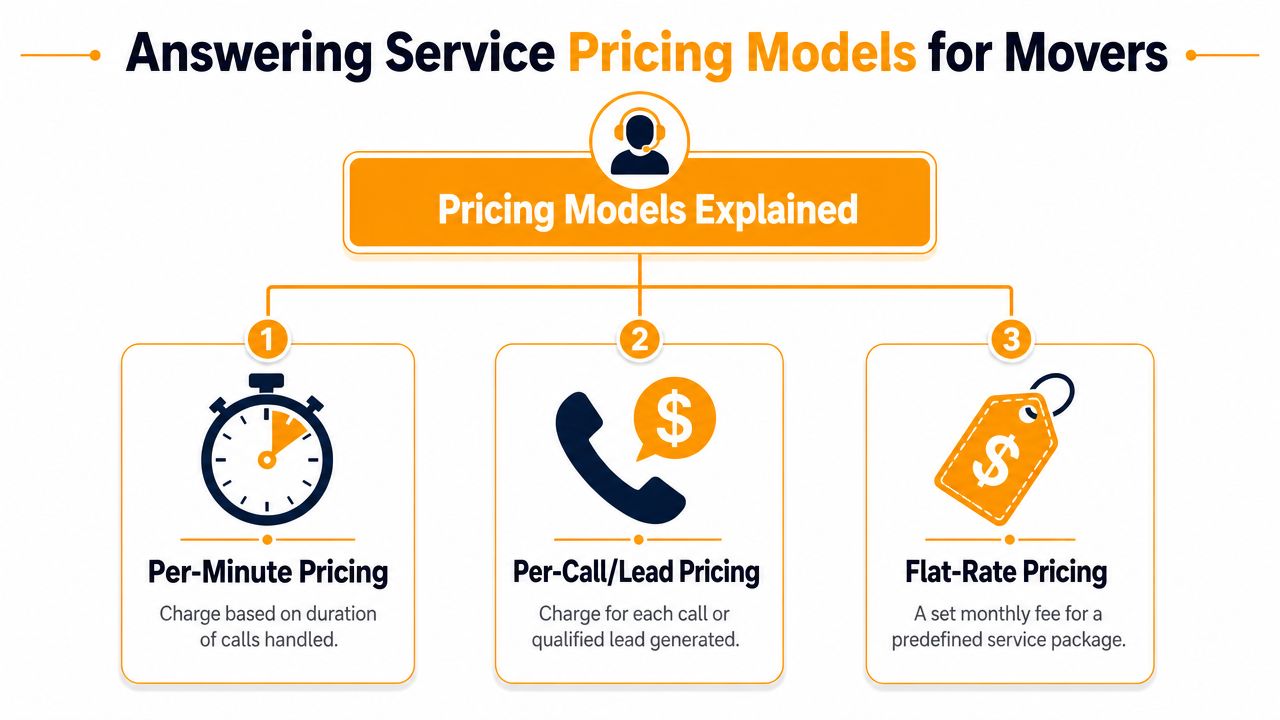
Per-minute pricing
Per-minute plans are common because they are easy to quote and easy to sell.
They can also punish moving companies fast. Moving calls are rarely neat, one-minute interactions. A real prospect asks about dates, inventory, stairs, packing, valuation, and timing. If the person answering cannot guide that call efficiently, every extra minute raises your cost without raising your odds of booking.
That is the core trade-off. Longer calls are not a problem if they produce qualified estimates or booked surveys. Longer calls are a problem when the provider is reading a generic script, repeating questions, or handing off weak notes for your team to sort out in the morning.
Busy season makes this worse. Call volume rises at the same time quote complexity rises, so your bill grows right when margin discipline matters most.
Per-call or lead pricing
Per-call pricing sounds safer until you ask what counts as a billable call.
For movers, that definition matters. A new local move lead, a storage customer, a repeat caller checking on arrival time, and a wrong number do not carry the same revenue value. If the service bills them the same way, you are paying a sales rate for non-sales traffic.
Lead-based plans have the same issue. Some vendors call it a lead if they captured a name and number. That may satisfy the contract, but it does not help your close rate much. A moving lead has more value when the caller is qualified, the service level is identified, and the next step is already set.
I have seen cheap lead pricing create expensive mornings. Office staff comes in to a stack of vague callbacks, then spends prime selling hours figuring out which ones are real opportunities.
Flat-rate monthly pricing
Flat-rate pricing gives owners breathing room because the monthly number is easier to forecast.
That said, flat-rate only works if the service scope matches how your phones behave. Many plans are flat until call volume spikes, after-hours transfers increase, scheduling starts, or bilingual support is needed. Then the clean monthly price starts collecting exceptions.
For a mover, the question is simple. Does the flat fee cover the work that produces revenue, or does it only cover basic reception? If quoting, appointment setting, or CRM entry sits outside the package, the plan may be predictable on paper and expensive in practice.
Some companies also add outbound follow-up tools to patch weak intake. If that is part of your stack, review SMS and voice broadcasting rates as a separate cost category, not as proof that inbound conversion is handled.
What billing model usually fits movers best
The better model is the one that matches your call pattern and gets callers closer to a booked move.
- Use per-minute pricing carefully when calls tend to be simple and tightly scripted
- Use per-call or lead pricing only after reviewing billable definitions line by line
- Use flat-rate pricing when the package includes the sales actions your team would otherwise have to finish later
For a fair comparison, stack each model against internal labor, missed-call risk, and booking rate. This breakdown of call center cost comparisons for growing moving companies is a useful starting point. Then map each option against your real call flow, your average job value, and how many after-hours callers need more than a message to say yes.
The Hidden Fees That Inflate Your Answering Service Bill
The advertised monthly fee is usually the least important number on the page.
What changes your real after hours answering service cost is everything wrapped around that fee. Consequently, many moving companies discover they didn’t buy a simple plan. They bought a base layer, then got charged for every useful function they assumed was included.

Most pricing pages under-explain add-on charges for setup, call transfers, appointment booking, bilingual support, and holiday coverage, and that matters even more for movers because after-hours leads often require rate-card quoting and CRM booking, which can push a plan out of the cheap tier, as noted in this analysis of answering service pricing add-ons.
The advertised price is rarely the full price
Moving companies usually need more than message-taking. They need a process that handles the messy reality of inbound sales calls.
That includes things like:
- Transfers to on-call staff when the lead is urgent or high value
- Appointment booking for surveys, callbacks, or estimate slots
- Bilingual handling in markets where language access affects close rate
- Holiday and weekend coverage when your office is thin and competitors are still answering
- CRM entry or calendar updates so nobody has to re-key information later
Any one of those can change the bill. Several together can make a “budget” plan look expensive by month-end.
What movers should ask before signing
A moving lead has operational complexity that many generic services don’t understand. The caller may need an hourly quote versus a flat-rate move, details on stairs, long carry issues, timing windows, or building requirements. If the service can’t handle that directly, it usually falls back to notes and callbacks.
That delay is a hidden cost even when it doesn’t show up on the invoice.
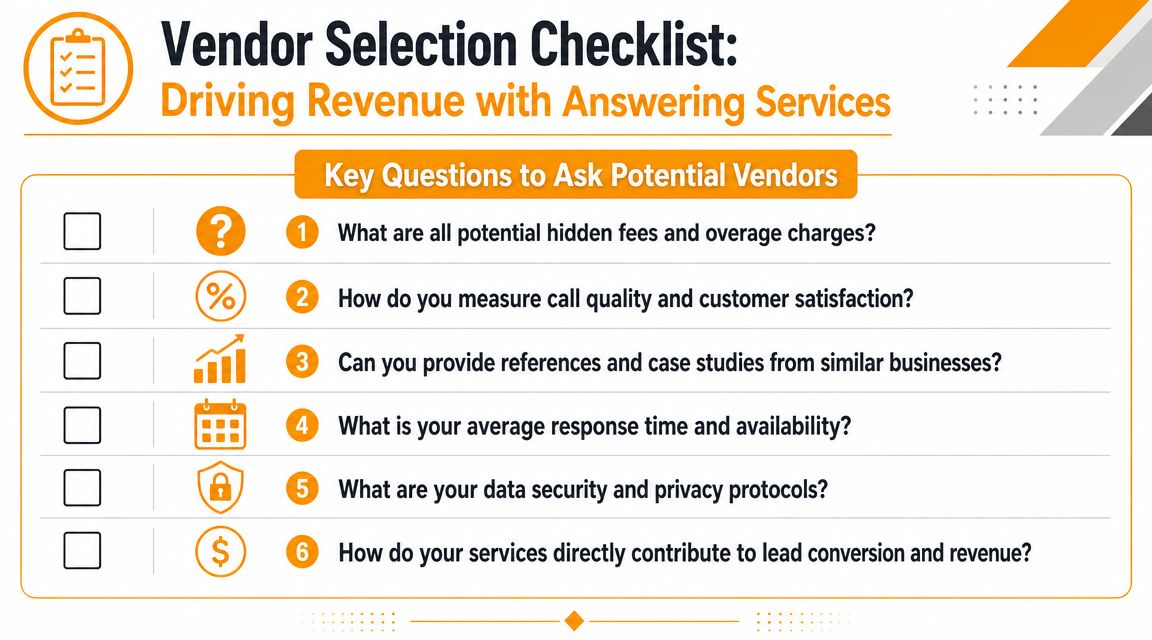
Ask these questions before you sign:
- What exactly is included in the base price? Get it in writing.
- What triggers overage charges? Minutes, calls, transfers, bookings, or all of them.
- Is booking just scheduling a callback, or is it true appointment placement?
- Can the service work from our rate card, or only take messages?
- What changes on holidays, nights, and weekends?
A moving company doesn’t need a low headline price. It needs a provider whose bill still makes sense after the calls get complicated.
One more operational note. If your dispatch side is also struggling with wasted drive time, don’t treat phone handling in isolation. Better intake only pays fully when your field operation is efficient too. That’s why many operators pair front-office improvements with routing upgrades that cut costs with intelligent routing, especially when multiple crews are running across a wide service area.
Scenario Comparing Cost vs ROI for a 10-Truck Mover
Let’s use a realistic example.
A 10-truck moving company hits a busy month. The office team is stretched, weekends are active, and after-hours calls are coming in when no estimator is available. The owner has three choices. Buy a basic message-taking service, pay more for a human service that sets appointments, or use an automated workflow that can qualify, quote, and book.
The mistake most owners make is comparing only the monthly service fee.
A realistic after-hours decision
Recent guidance on answering-service economics points out that after-hours or weekend handling can raise live-service rates by 10% to 25%, and in some cases more, but the key ROI question is whether the spend is covered by the value of even a single recovered move booking, as explained in this breakdown of answering service ROI for high-missed-call businesses.
That framing matters because moving revenue doesn’t disappear in tiny increments. It disappears one unbooked call at a time.
Here’s how I’d compare the options operationally.
| Metric | Option A Basic Message-Taking | Option B Human Appointment Setter | Option C Automated Quoting & Booking |
|---|---|---|---|
| What the caller gets | Answered call and message | Answered call and scheduled follow-up | Answered call with qualification, quote path, and booking path |
| Strength | Lowest apparent complexity | Better handoff than voicemail | Closest to actual sales completion |
| Weakness | The caller still waits for sales | Still depends on later callback and estimator follow-through | Requires correct setup around rates and workflow |
| Best fit | Very low urgency calls | Teams with disciplined follow-up staff | Movers focused on speed-to-quote and booking coverage |
| Revenue risk | High | Moderate | Lower |
| Cost lens that matters | Cheap per invoice, expensive per lost booking | Better conversion support, but labor still limits scale | Higher functional value if it closes jobs instead of creating tasks |
What actually produces return
Option A looks cheapest because it limits the service scope. But for a mover, that often means the customer hangs up without a real answer, shops another company, or forgets to call back after hearing “someone will contact you tomorrow.”
Option B is better. A trained human can create a warmer interaction and set a callback or estimate slot. That can work if your sales process is disciplined and your team calls back fast. If not, you’ve added another handoff.
Option C changes the economics because it cuts handoffs. When a system can use your own rate card, collect the right move details, and place the job into your workflow, the monthly cost becomes easier to justify. The service isn’t just protecting the phones. It’s protecting the booking window.
If one option answers 100% of calls but books almost nothing, and another answers fewer calls but closes real jobs, the second one is cheaper where it counts.
For moving companies, the highest return usually comes from reducing delay between inquiry and quote. That doesn’t mean every caller should be hard-closed at night. It means the service should do as much of the selling work as possible while the customer is still on the line.
I’ve seen plenty of operators spend weeks shaving dollars off office expenses while ignoring after-hours leakage that destroys far more value. Don’t optimize the invoice and ignore the conversion path.
AI vs Human Services Which Is Right for Booking Moves?
This choice gets framed badly all the time.
The primary comparison isn’t human versus AI in the abstract. It’s whether the system you buy can handle the actual sales motion of a moving lead. A warm voice helps. Availability helps. But after-hours success usually comes down to speed, consistency, and whether the caller gets far enough in the process to stay with you.
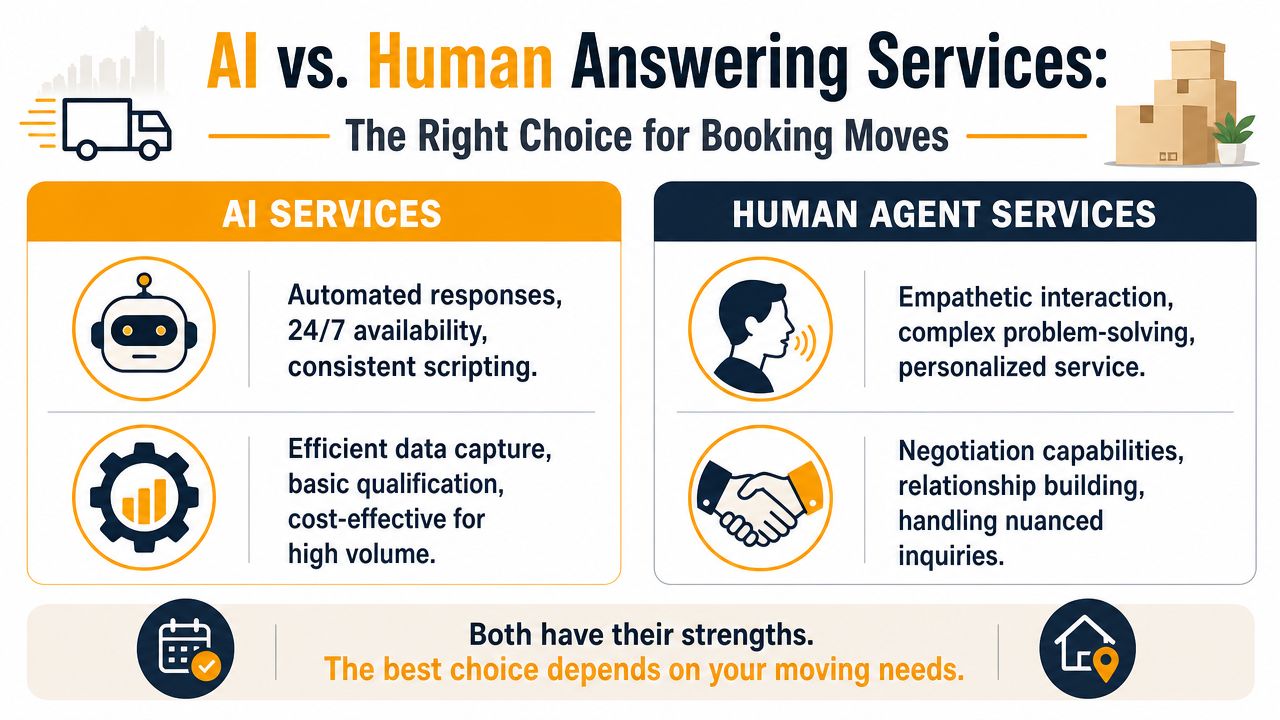
Benchmarks show a meaningful price gap between live agents and AI services. Traditional human-operated answering services commonly run $1 to $3 per minute, while AI answering services are typically $0.25 to $1.00 per minute after setup, with some providers advertising pricing up to 90% less than live operators, according to this after-hours service cost comparison.
Where human services still help
Human teams still have a place.
They can help when the call is unusual, emotional, or operationally messy. Think complaints, reschedules, claims tension, or a customer with a complicated service issue that doesn’t follow a script. In those situations, judgment matters.
For brand-new after-hours sales leads, though, many calls are repetitive. The caller wants to know if you service their route, what information you need, what the move may cost, and how soon they can get on the schedule. That pattern rewards consistency more than personality.
Why specialized automation fits after-hours lead flow
Operators need to separate generic automation from useful automation.
A generic tool may answer calls and capture contact details. That’s not enough for movers. If it can’t understand your pricing logic, collect the right move data, and push the next step into SmartMoving, Supermove, MoveitPro, or Google Calendar, you still have a gap between the call and the booking.
That gap is where jobs get lost.
There’s also a practical telecom detail many owners miss during setup. If you’re forwarding inbound calls offsite, caller identity handling matters for continuity and reporting. This guide to AI agent caller ID forwarding gives a useful overview of that part of the stack.
For moving companies evaluating specialized options, one approach in the market is AI call handling built for moving workflows that uses the company’s own rate card and books directly into existing systems rather than stopping at lead capture. That matters because the operational goal isn’t to answer the phone more elegantly. It’s to turn inquiries into scheduled work.
A human service can sound better and still perform worse if it creates one more callback instead of one more booked job.
If your after-hours traffic is mostly inbound sales and quote requests, automation usually wins when it can do the quoting and booking work accurately. If your after-hours traffic is mostly exceptions, escalations, and special situations, human support still earns its keep.
Your Checklist for Choosing a Revenue-Driving Solution
Most vendors can tell you how they answer calls. Far fewer can tell you how they help a moving company book jobs.
That’s the line to draw during evaluation. Don’t ask only what the plan costs. Ask what operational work it removes, what selling work it completes, and what handoffs it leaves behind for your staff.
Full 24/7 live coverage often runs around $800 to $1,500+ per month because overnight and weekend staffing are expensive, while AI-based systems can handle simultaneous calls with a more fixed fee structure, which reduces volatility during bursty after-hours periods, according to this review of after-hours coverage economics.
Questions that expose a cost center
Ask these first. They reveal whether the provider is mostly selling labor coverage.
- What fees sit outside the monthly plan? You want setup, transfer, booking, bilingual, holiday, and overage rules spelled out clearly.
- What happens when calls come in bunches? A mover with several trucks can’t afford a system that bottlenecks during evening bursts.
- How do you define a completed call? An answered call isn’t the same as a qualified lead.
- What exactly does appointment booking mean? Some services mean “we emailed your office.” That isn’t booking.
Questions that reveal booking power
These get closer to what drives revenue.
Can you quote using my real pricing logic?
If your business charges based on truck count, crew size, travel time, stairs, long carry, packing, or flat-rate logic, the provider should explain how that works on the call.Can you book directly into our operating tools?
If your team lives in SmartMoving, Supermove, MoveitPro, or Google Calendar, don’t accept another disconnected inbox.What does the caller experience after hours?
Ask for the exact flow. Does the system qualify? Quote? Offer scheduling? Route urgent cases?How do you report results?
You want visibility into booked jobs, not just answered volume.How much work comes back to my staff the next morning?
This is one of the cleanest tests. A service that creates a pile of callbacks may reduce ringing but still increase workload.
Bottom line: The right solution lowers missed-call leakage and lowers office rework at the same time.
A practical buying checklist for movers looks like this:
- Map your real after-hours calls by type before you shop
- List every handoff from first ring to booked job
- Identify where quotes stall
- Check whether the provider can work inside your current systems
- Measure success by booked revenue, not answered volume
Most growing movers don’t need more software tabs. They need a workflow that answers, qualifies, prices, and schedules without creating another cleanup job for the office.
If you’re looking at after hours answering service cost and want to compare options based on booked jobs instead of message volume, MoveJoy is worth a look. It’s built for moving companies to answer inbound calls, generate accurate quotes from your rate card, and book work directly into your CRM or calendar so after-hours leads don’t stop at “we took a message.”