Knowing how to transfer a call seems simple enough. It’s just moving a call from one person to another, right? But for a moving company owner, one fumbled transfer during the busy season can mean losing a job worth thousands.
The True Cost of a Fumbled Call Transfer
Let's be honest. "Transferring a call" sounds like a basic office task. But when you're on-site managing a crew and a hot lead calls in, a dropped transfer isn't just a technical glitch. It's a lost job. It's a scene that plays out way too often in the moving industry.

Picture this: It’s a Tuesday in May. A customer who found you on Google is on the line, ready for a quote. You're trying to direct a truck and quickly transfer them to your office manager. The line rings… and rings… and goes to voicemail. The customer hangs up.
What happens next? That customer isn't waiting around. They're already dialing the next mover on their list.
The hard truth for local movers is that speed wins the job. A potential customer who hits your voicemail will almost always move on to a competitor who actually answers the phone.
This isn't just a missed call; it's a real leak in your revenue pipeline. Every single one of these bungled handoffs represents:
- Lost Revenue: A single local move can be worth anywhere from $800 to over $5,000. Losing just a couple of these a month adds up fast and hits your bottom line directly.
- Damaged Reputation: A clunky, disorganized call experience makes your entire operation look amateur. In a business built on trust, that first impression is everything.
- Wasted Marketing Spend: You paid good money for that lead—through Google Ads, SEO, or referral partners—only to lose them at the most critical moment.
Getting call handoffs right is the first step to plugging these leaks. But the real goal isn't just to answer every call; it's to book every possible job. Plenty of tools can answer a phone, but very few can give an accurate quote on the spot using your own rate card and secure the booking directly into your calendar or CRM.
This guide will show you the practical steps for transferring calls, but more importantly, it will show you how to build a system that reduces the need for manual handoffs and turns more calls into booked revenue.
Mastering Call Transfers on Your Mobile Phone
You’re on-site, supervising a crew on a tricky piano move, and your business line rings. It's a new lead. You can’t talk, but your office manager can. Fumbling with your phone to transfer the call is not an option—by the time you figure it out, that lead has already called the next mover on their list.
Your smartphone is your command center, but it’s not a real business phone system. Knowing the workarounds for both iPhone and Android is a critical skill for any moving company owner who finds themselves out in the field.
The process is a little clunky on both platforms, but it gets the job done. It’s basically a “conference and drop” maneuver.
The iPhone Handoff
When you get a call on your iPhone that needs to go to someone else, here's the drill:
- First, tell the caller you're going to connect them. Then, tap the "Add Call" button. This puts them on hold.
- Dial up the person you're transferring to—your dispatcher or sales manager.
- Once they pick up, you give them the quick rundown. This is the warm transfer. "Hey, I've got Sarah on the line. She needs a quote for a 3-bedroom move in two weeks."
- Now, tap "Merge Calls." All three of you are on the line together.
- Make the introduction: "Sarah, I've got our booking manager on the line, they'll take great care of you." Then, you can just hang up. The call will continue between your customer and your team member.
The Android Handoff
Android’s process is almost identical. It’s all about adding a second call and then merging them into one.
- While you're on the line with the customer, find and tap the "Add Call" icon (it usually looks like a plus sign). Your first caller is now on hold.
- Call your team member.
- When they answer, give them the context. Give them the details they need to sound like they've been expecting the call all along.
- Tap the "Merge" or "Conference" icon. It often looks like two arrows joining into one. Now you're all in a three-way call.
- Once you’ve made the introduction, just hit the end call button. You'll drop off, but the other two will stay connected.
The Hidden Flaw in Mobile Call Logs
This manual system has a huge vulnerability that costs movers money. Did you know that Android devices often limit call history to the most recent 500 entries by default? As you can learn from detailed guides on managing Android call history, once you hit that cap, the oldest call records are deleted forever. During your busy season, that means potential leads from just a few weeks ago can vanish before you even get a chance to follow up.
Choosing the Right Call Transfer for Each Situation
Not all call transfers are the same. Using the wrong one can absolutely cost you a moving job—sometimes before your salesperson even gets a chance to quote it. This isn't just a feature on your phone system; it's about the first impression you make.
When a potential customer calls, how you move them from one person to another sends a powerful message. It tells them if you're a well-oiled machine or a chaotic mess. There are three ways to do it, and only one of them consistently makes you money.
Blind, Warm, and Attended Transfers
Let's break down the options. Think of these as three distinct plays in your customer service playbook.
Blind Transfer: This is the riskiest move you can make with a new lead. You're essentially tossing the call over to another line without checking if anyone's there to catch it. It’s a direct path to voicemail, which is a dead end for a customer ready to book. Don't do it. The only time this is remotely acceptable is for internal calls. For a customer? Never.
Warm Transfer: This is your money-maker. Before you connect the customer, you get the right person on the line first—your sales manager or dispatcher. You give them a quick, essential brief: "Hey Maria, I've got David on the line. He's looking for a quote on a 4-bedroom house move for the 15th." This is a game-changer. Your team member takes the call armed with context, sounding professional and prepared. We break this down even further in our guide on the differences between a warm transfer vs a cold transfer.
Attended Transfer: This is a warm transfer with a VIP touch. It works the same way, but you stay on the line to make a personal introduction. "David, I've got our booking specialist, Maria, here with me. I've given her your details, and she's ready to get that quote started for you." It takes an extra ten seconds and makes the customer feel valued, not passed around.
To make it even clearer, here's a simple table comparing how these transfers stack up for a moving business.
Call Transfer Methods for Moving Companies
| Transfer Type | Best For | Customer Experience | Risk of Losing the Lead |
|---|---|---|---|
| Blind | Internal calls only | Poor. Feels like being dumped into a black hole. | Very High |
| Warm | New leads, complex quotes | Good. The customer feels expected and prepared for. | Low |
| Attended | High-value leads, VIPs | Excellent. Creates a seamless, personal handoff. | Very Low |
The takeaway is clear: A blind transfer is a gamble you can't afford to take with new business. The warm or attended transfer shows you have your act together.
This decision tree gives you a visual guide for how your team should handle incoming calls.
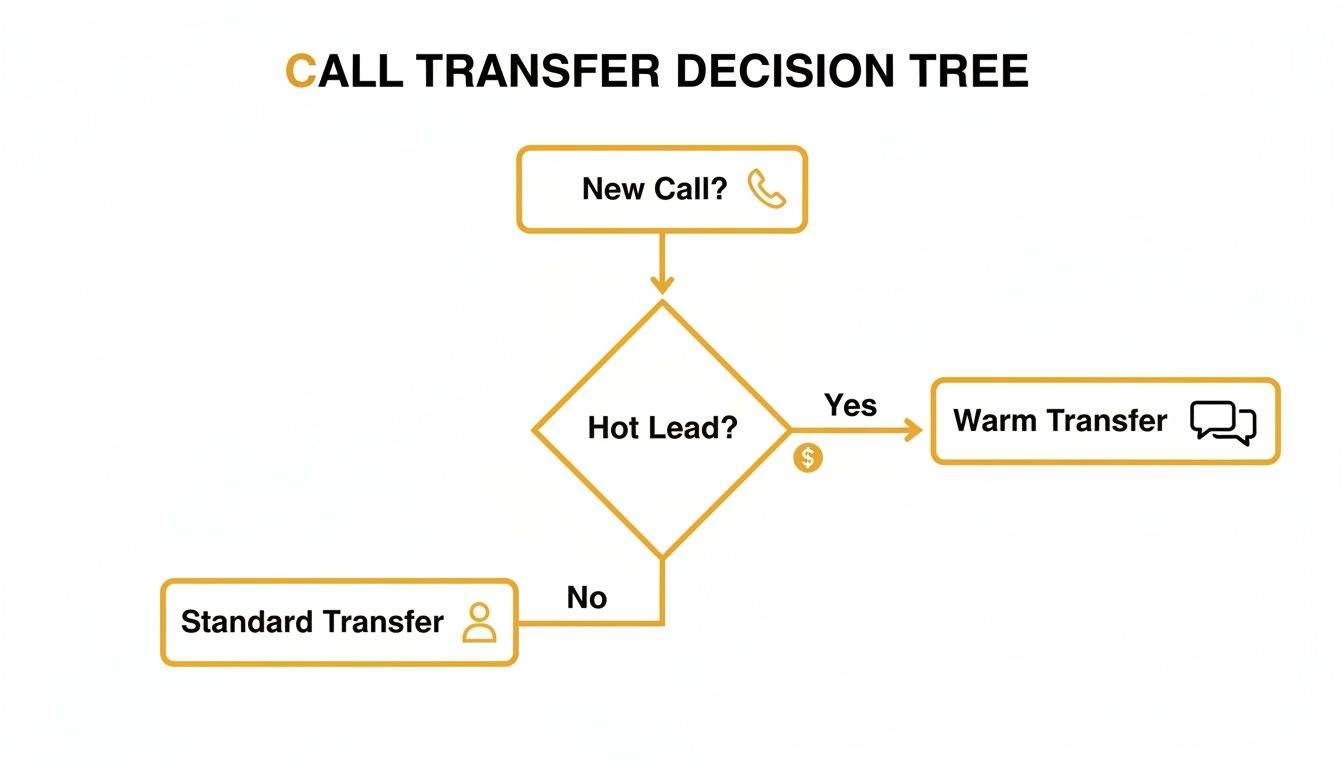
The lifeblood of your company is hot leads. Every single one of them deserves a warm transfer to give you the best shot at booking the job. Period.
The goal is to make the customer feel valued, not like they're being passed around. A warm transfer shows you’re an organized, customer-focused operation, while a blind transfer screams chaos. One books jobs, the other loses them.
For really complex moves or sensitive customer issues, sometimes a phone call isn't enough. In those rare cases, looking into video escalation strategies can be a powerful way to build trust and solve problems face-to-face.
But for the 99% of new leads calling for a quote, the warm handoff is your best and most reliable play for turning that first call into a booked job.
Call Handoff Scripts That Help Close the Deal
How your team hands off a call tells a potential customer everything they need to know about your company. A clumsy “Hang on…” followed by dead air doesn't just sound bad; it makes you sound disorganized and unreliable before they've even gotten a quote.
Professionalism wins jobs. It’s that simple. And the easiest way to sound professional every single time is to use simple, effective scripts for every handoff. This small change transforms the customer's experience from feeling like they're being passed around to feeling like they're being taken care of.
What to Say When You Hand Off a Lead
The goal here is to project confidence. The customer needs to know exactly what’s happening, why it’s happening, and how it helps them. No confusion, no awkward silence.
Here are a few scripts you can steal and use today:
- For the owner on-site: "That's a great question. Our booking specialist has the most up-to-date schedule and pricing. Can I put you on a brief hold while I get them on the line for you?"
- For your office receptionist: "Absolutely, I can get you that quote. Let me connect you with John, our lead estimator. He’ll be able to build a precise quote for your move. Just one moment."
- To confirm the warm transfer: "Thanks for holding. I've got John on the line now and have already filled him in on your move from Austin to Dallas. I'll let him take it from here."
These scripts are short, professional, and set the stage for a warm transfer. The customer knows they’re being sent to an expert, not just being dumped on the next available person. For more ideas on handling that initial call, check out our guide on the perfect moving company call-in script.
The Don'ts of Call Handoffs
What you don’t do is just as critical as what you do. Avoiding these common mistakes will stop you from fumbling leads you’ve already paid to get.
A potential customer who gets blind-transferred to voicemail doesn't wait for a callback. They hang up and dial your competitor. This isn't a guess; it's a reality in the fast-paced local moving market.
Here’s what to avoid at all costs:
- NEVER blind transfer a new lead. This is the number one way moving companies lose jobs from a fumbled handoff. Always, always confirm the person you're transferring to is actually available to talk.
- DON'T leave the customer in dead silence. Nothing makes a customer feel more abandoned. Use the hold time to play professional music or a short message about your 5-star Google rating.
- DON'T make them repeat everything. The entire point of a warm transfer is to brief your teammate before they get on the line. Making a customer repeat their move details is just lazy.
These manual scripts and processes work fine… until they don’t. The friction starts when you’re driving, your dispatcher is on another call, or it’s 8 PM on a Saturday.
This is where a manual-only system breaks down. It exposes the real need for a process that doesn't depend on every single person being available at the exact right moment.
When to Stop Transferring Calls and Start Automating
So you've mastered the warm transfer. Your team knows how to pass a call from the front desk to a senior dispatcher without dropping it. That’s a good defensive move. But it's still just defense.
It doesn’t solve the real problems that are secretly draining your bank account: the calls you miss after 5 PM, the fumbled handoffs during the spring rush, and your best people getting stuck answering the same basic questions all day.
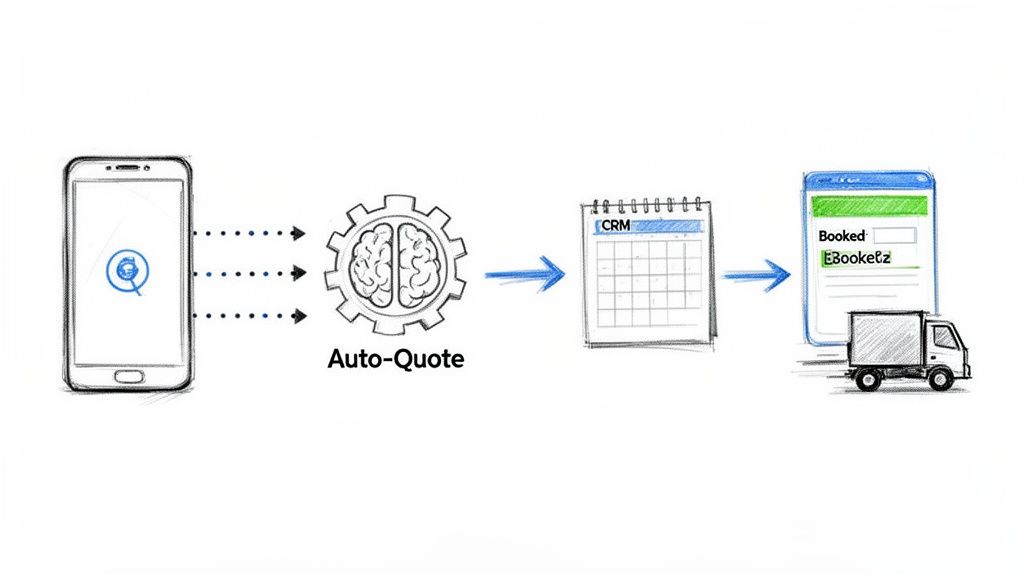
This is the moment you have to decide: keep patching holes in a leaky system, or build something that actually scales. The goal isn’t just to answer every call; it’s to book every possible job.
The Real Cost of Being Human
Here's the hard truth: when you rely only on people to answer the phone, your booking capacity is capped by their schedules. Every time a hot lead calls while your team is on another line, at lunch, or home for the night, you’re gambling with that revenue.
And the cost is staggering. We see independent movers losing anywhere from $50K to $150K a year from missed calls alone. That’s not a rounding error. That’s a new truck.
This is why automation isn't a luxury anymore. It’s a survival tool for small and mid-sized moving companies.
The difference between a simple answering service and a real automation platform is the difference between capturing a lead and closing a job. One takes a message; the other makes you money.
Instead of a call getting transferred, put on hold, and maybe even dropped, a smart system can handle the entire conversation from hello to booked. For a deeper dive into this shift, it's worth checking out this practical guide to automated customer support.
Where Automation Beats a Perfect Manual Transfer
Think about these everyday scenarios for a mover. A warm transfer is good, but automation is better.
- After-Hours and Weekend Calls: A customer who's ready to book on a Saturday morning isn't going to leave a message and wait for your Monday call-back. They're going to call the next company on the list. An AI booking system works 24/7, grabbing these high-intent leads and turning them into booked jobs while your competition is asleep.
- Peak Season Overload: During the spring and summer chaos, your phone lines are a warzone. Automation handles unlimited calls at once, so no lead ever gets a busy signal or voicemail. This frees up your human team to manage the complex jobs and give white-glove service to existing customers.
- Instant, Accurate Quotes: This is where the game really changes. Powerful AI like MoveJoy doesn't just answer the phone. It generates a precise quote on the spot, using your company's actual rate card, and then books the job directly into your CRM like SmartMoving or Supermove. It completely eliminates the "let me call you back with a price" delay that kills so many deals. You can see exactly how an automatic answering service for movers manages this entire workflow from start to finish.
This isn’t just about answering the phone; it’s about changing how your business operates. A smarter approach is having an AI that pipes every booked job directly into your CRM, creating a perfect, permanent record without anyone lifting a finger.
Your Questions About Call Handling Answered
As a moving company owner, you’re constantly juggling operations, sales, and customer service. How you handle your phones is a critical piece of that puzzle. We hear the same questions over and over from movers trying to plug the leaks in their sales process.
Here’s what you need to know.
What is the biggest mistake movers make with call transfers?
The most common and costly mistake we see is the blind transfer, especially with a new sales lead. This is when you just forward a call to another line without talking to the person on the other end first.
You know what happens next. The call inevitably gets dumped into voicemail. In this industry, a new customer who hits voicemail is a lost job over 90% of the time. They don't wait around for you to call back; they just hang up and dial the next mover on their list.
The rule is simple: Always use a warm transfer for new customers. It's a seamless handoff that makes you look professional and dramatically increases your odds of booking the job right then and there. A blind transfer is a gamble you just can't afford to take.
Is a complicated VoIP system the answer for a small team?
Honestly? Not usually. For a 1-5 truck operation, sinking thousands into a complex VoIP system is often overkill. Worse, it doesn't even solve the real problem.
The bottleneck isn't your phone hardware; it's the fact that you're completely reliant on a human being to be available at all times. During peak season, that system always breaks. Your dispatcher is on another line, your estimator is out to lunch, and your hottest leads are slipping right through the cracks.
Instead of buying more complicated tech, focus on building a smarter process. An automation layer that can qualify leads, provide accurate quotes 24/7, and book the job for you is far more effective.
How should a moving company handle calls after hours and on weekends?
This is the biggest, most consistent revenue leak for almost every moving company. For years, the options were all terrible:
- Let it go to voicemail: A guaranteed lost lead. The customer has already called two of your competitors by the time you see the message.
- Use a human answering service: They just take a message. This only delays the quote and gives the customer more time to shop around and book with someone else who can quote them on the spot.
- Forward calls to your cell phone: This destroys any chance of having a personal life and still doesn't guarantee you can answer every single call.
Today, there’s a much better way. The modern solution is an AI system built specifically for the moving industry. It doesn’t just answer 100% of your calls; it provides an instant, accurate quote using your specific rates and can book the job directly into your CRM or calendar.
This approach transforms your after-hours calls from a source of stress into a powerful, consistent revenue stream. You start booking jobs while your competitors are asleep. The goal shifts from just answering the call to actually booking the job, no matter when it comes in.
Ready to stop worrying about missed calls and start automatically booking more jobs? MoveJoy is the AI revenue engine that answers, quotes, and books moves for you 24/7, turning every call into an opportunity. See how it works at getmovejoy.com.