
Let's be blunt: for a moving company owner, "screening phone calls" is about spotting a profitable 4-bedroom job in your service area and politely telling the guy who wants to move a single couch across town that you're not the right fit. It’s about protecting your time and maximizing the revenue from every ring.
But if you’re doing it manually, you’re already behind.
Why Your Current Call Screening Is Costing You Jobs
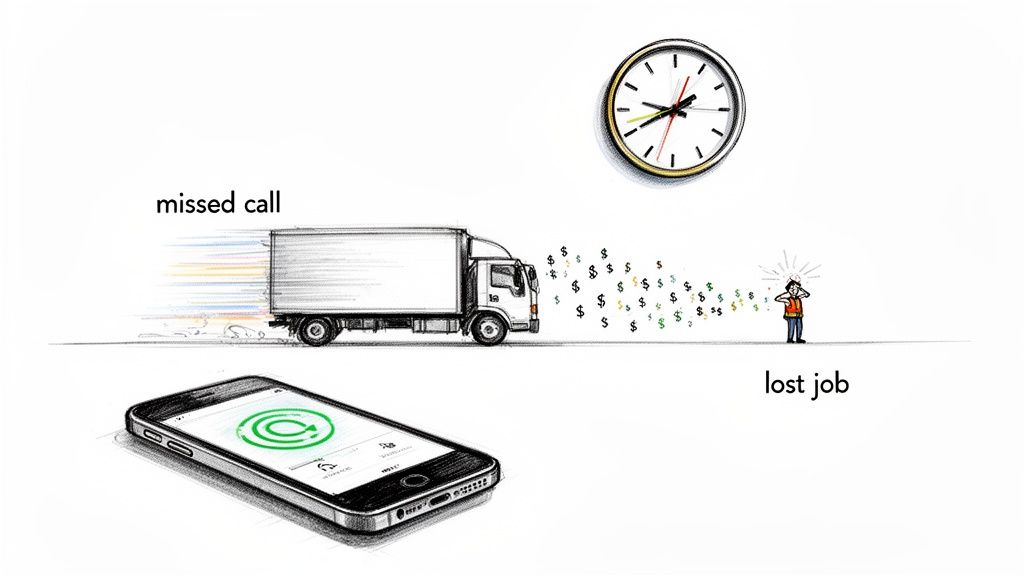
Every unanswered ring is revenue walking out the door. The same goes for every minute you spend on the phone with a tire-kicker. For a busy moving company with 1-20 trucks, trying to manually filter calls is a huge bottleneck that directly tanks your bottom line, especially during peak season.
Picture this: you're on-site coordinating a crew, and a hot lead calls. You're distracted, rush the conversation, and miss key details. Meanwhile, your competitor answers their phone on the first ring with a professional system and books the job. This happens all day, every day. Missed calls equal lost revenue, period.
The Hidden Costs of Fumbling Your Calls
Manually screening calls isn't just inefficient; it's expensive. The true cost shows up in a few painful ways for your moving business operations:
- Lost Revenue from Missed Calls: When a potential customer hits your voicemail, they don't wait around. Over 80% of callers sent to voicemail hang up without leaving a message. They just move on to the next mover on their list.
- Wasted Hours on Bad Leads: Spending 15 minutes on the phone with someone outside your service area or who just wants to move one item is time you'll never get back. That's time you could have spent booking a profitable job.
- Slow Quotes and Lost Bookings: The longer it takes you to qualify a caller and give them a quote, the lower your chances of winning the job. Moving customers shop fast; speed determines who wins.
The hard reality is that most moving businesses lose 3–7 jobs every single month from missed calls or slow follow-ups. Just one of those booked jobs would likely pay for an entire month of an automated solution.
The Old Way Just Doesn't Work Anymore
Years ago, you could get by with an office phone and an answering machine. But customer expectations have changed. People want instant answers and a smooth, professional process.
That’s why a well-implemented virtual receptionist can be a game-changer, helping you capture leads you'd otherwise miss. But it's about more than just having someone—or something—answer the phone. It's about having a system.
Having a real, systematic approach to screening calls isn't a luxury anymore; it's essential for survival. Without one, you're not just missing calls; you're actively handing jobs to your competition.
If you're curious about how to structure your call flow from the ground up, we have a whole guide on building a smart telephone tree system.
Defining Your High-Value Job Criteria
Before you can screen calls better, you need to know exactly what a "perfect" job looks like for your business. If you don't have clear criteria, you’re just winging it. And that guesswork is costing you time and money.
It's time to build a filter that weeds out the dead-end leads before you or your team waste a single second on them.
Think about it: which jobs consistently bring in the best profit? And which calls always end up feeling like a waste of time? The answers are the bedrock of your screening process. This isn’t about being picky. It’s about being profitable.
Establish Your Ideal Job Profile
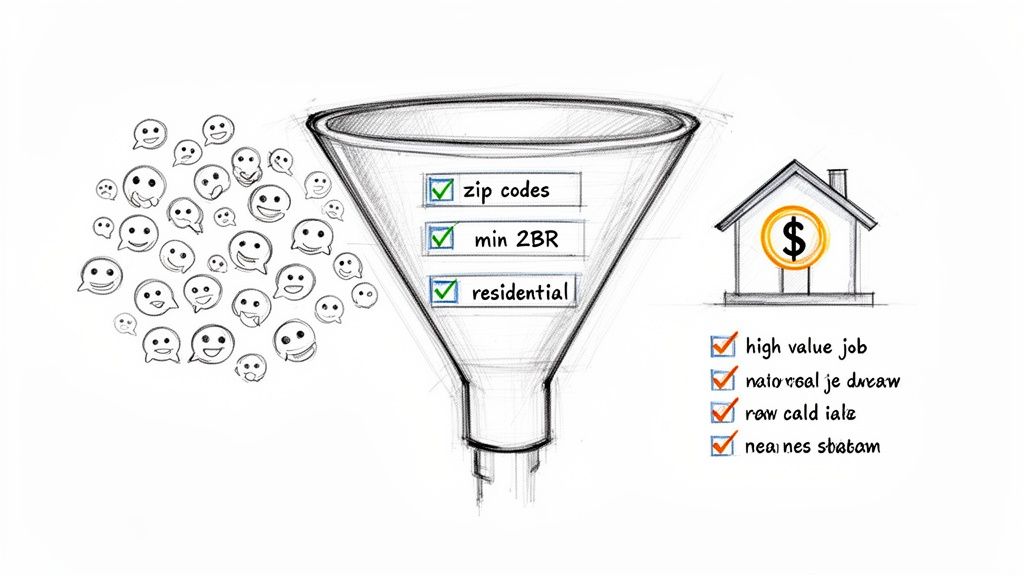
First, let’s define the non-negotiables that make a job worth your crew's time. Having a rock-solid set of criteria gives you a repeatable system for qualifying every inbound call, turning your front office into a predictable machine.
Your ideal job profile should nail down a few key things:
- Primary Service Area: List the exact zip codes or towns you serve profitably. If a job is 40 miles outside that zone, it should be an automatic "no."
- Minimum Job Size: What's your floor? Maybe it’s a 2-bedroom apartment minimum, or a certain number of hours. This instantly filters out the "single-item" moves that kill your schedule for pennies.
- Preferred Move Types: Decide where you make your money. Are you focused on residential, commercial, local, or long-distance moves? If you don't have the gear for a piano move, it needs to be an immediate disqualifier.
The goal here isn't to turn away business. It's to point your resources at the jobs that actually grow your revenue. One well-defined, profitable job is worth more than five tiny, low-margin distractions.
Figuring out what an ideal lead looks like is also the first step toward understanding what it costs to get them. You can dive deeper by calculating your cost per lead.
Why This Matters More Than Ever
Defining these criteria is critical because customer expectations have completely changed. People want answers now.
With an estimated 4.69 billion smartphone users globally, nobody is willing to wait. The average person spends hours a day on their phone, and when they decide they need a mover, they expect to connect instantly. A slow response or unanswered call means they’re already dialing your competitor. You can see more on this trend by exploring the latest data on smartphone usage and customer behavior.
Once you have these rules written down, you can apply them to every call. This is the foundation for building an automated system that can enforce these filters 24/7, making sure you only spend your valuable time on the leads actually worth chasing.
Alright, you've figured out which jobs make you the most money. Now comes the hard part: building a system to handle every single call the same way, every single time.
This isn't about turning your team into robots. It's about creating a consistent, professional front door for your business. This is what separates the guys running a real operation from the ones who feel like they're just winging it.
A smart script isn't a long, boring monologue. It's a tool for one thing: getting the info you need to qualify a lead and move them to a quote, fast.
Scripts for the Leads You Actually Want
When a caller is a perfect fit, your script has one job: get them to the next step. Don't waste their time—or yours. The goal is to grab the core details and get them a quote before they can call someone else.
Here’s a simple script that works:
"Thanks for calling [Your Company Name]! Sounds like we can definitely help with that. To get you an accurate quote, I just need a few quick details. What’s your target move date, the pickup and drop-off addresses, and roughly how many bedrooms are you moving?"
This works because it's fast and confident.
- It immediately tells them they called the right place.
- It sets a clear expectation: "Give me this info, and I'll give you a price."
- It asks for the exact data points you need for quoting.
From there, your dispatcher can plug the details straight into your quoting software. Or, even better, an AI receptionist can text the caller a link to your online booking form so they can finish the process themselves.
How to Say "No" to the Wrong Jobs
Saying "no" is just as critical as saying "yes." How you turn down a job says a lot about your brand. You need to be polite and helpful, even if they aren't a customer today. They might have a friend who’s a perfect fit for your services. Don’t burn bridges.
Here's how to handle a caller who's out of your service area:
"Thanks so much for reaching out. Based on your location, you're a bit outside our main service area, and honestly, you'll probably get a better rate from a team that's closer to you. I'd recommend searching for movers in your specific neighborhood. We really appreciate you thinking of us!"
This response is professional and respectful. You haven't wasted their time, and you've protected your reputation.
This is precisely the kind of logic that powers a 24/7 call answering system. An AI assistant can run through these scripts perfectly, ensuring every caller—qualified or not—gets an instant, professional response, even at 2 AM on a Saturday. Your team is left to focus only on the calls that turn into booked jobs.
A well-defined qualification process is the engine behind effective call screening. To make it easier, here's a simple framework you can use to categorize callers and decide what to do next.
Caller Qualification Framework For Movers
| Caller Type | Key Identifiers | Primary Goal | Recommended Action |
|---|---|---|---|
| Hot Lead | Needs to move soon, within your service area, job size fits your model (e.g., 2+ bedrooms). | Get a quote and book the job now. | Immediately collect move details (date, addresses, size) and provide a quote. Send a booking link via text to close. |
| Price Shopper | Asks for price first, vague about details, mentions getting other quotes. | Get a ballpark estimate and compare. | Give a realistic price range. Highlight your value (e.g., "Our rates include…") and offer to send a detailed quote. |
| Out-of-Area | Pickup or drop-off location is outside your defined service radius. | Find a mover who can help them. | Politely decline, explaining they are outside your service area. Suggest they search for a local provider. |
| Wrong Fit | Job is too small (e.g., single item) or requires services you don't offer (e.g., international shipping). | See if you can handle their specific, niche request. | Professionally decline and, if possible, refer them to a partner who handles that type of work. |
| Existing Customer | Mentions a scheduled move date or asks about a past job. | Get a status update, reschedule, or resolve an issue. | Route directly to your operations manager or the dispatcher handling their move. Do not make them repeat their story. |
This framework removes the guesswork. Whether it's a human dispatcher or an AI assistant handling the call, the rules are clear, ensuring every potential customer gets the right response in seconds.
How to Automate Your Call Screening 24/7
Let's be honest: manually screening every call is a surefire way to burn out your team. If you're running a moving company with anywhere from 1-20 trucks, you know the drill. Every minute you spend on the phone with a tire-kicker is a minute you're not quoting a profitable job or managing your crew. This is where you stop the bleeding—reclaiming your time and plugging revenue leaks.
The answer isn't just hiring another person. It's about putting smart automation to work that never clocks out. Imagine a world where every single call gets answered instantly—day or night, weekend or holiday. That's what an AI front-office assistant does.
Let Automation Handle the Repetitive Work
An AI receptionist is your screening strategy, executed flawlessly, every single time. Forget complicated tech jargon; this is about the outcome.
The AI instantly asks the make-or-break qualifying questions you’ve already defined:
- Is the caller in your service area?
- Does the move meet your minimum job size?
- Are you available on their requested move date?
If it's a perfect match, the AI captures their info and can even text them a booking link on the spot. If they aren’t a fit, they get a polite and professional "no," protecting your brand. This entire exchange happens in seconds.
This is how it works. The system makes a clear-cut decision on every call, pushing qualified leads toward a quote and filtering out everyone else.
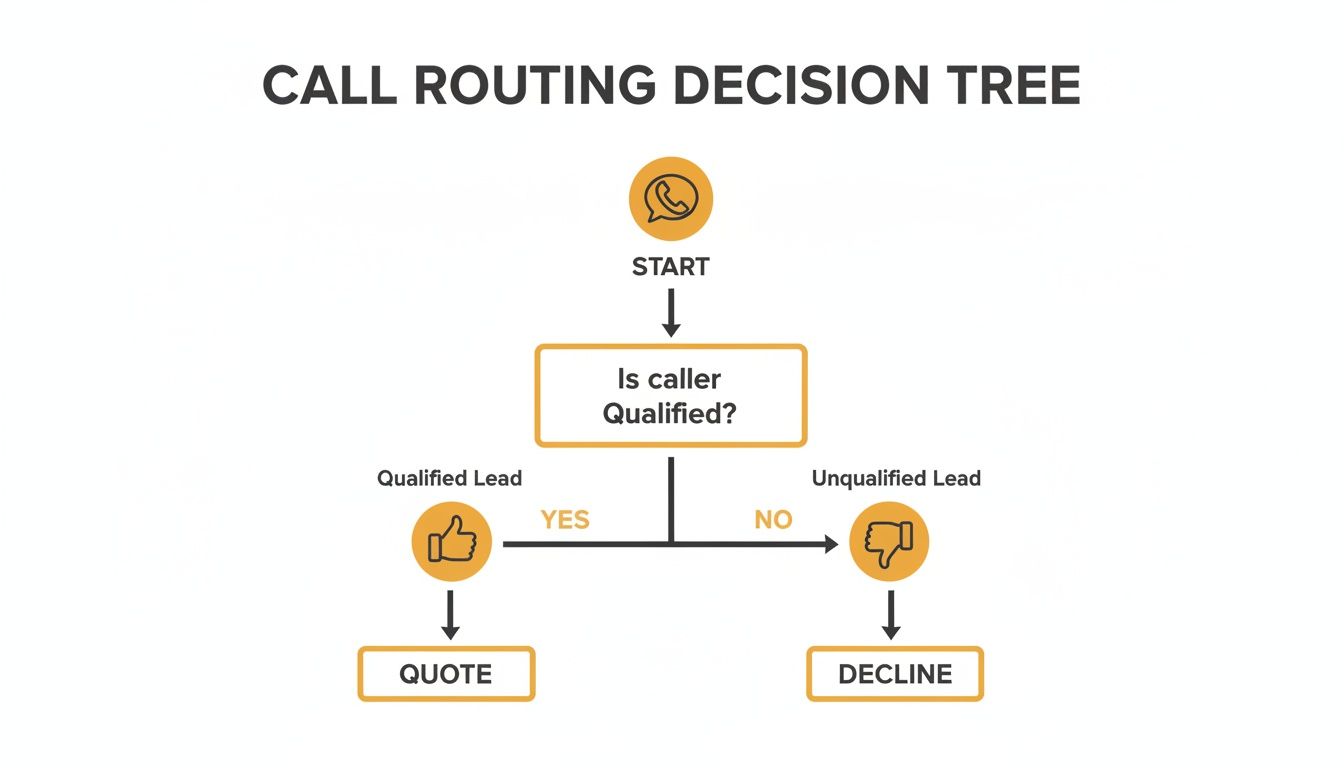
This kind of decisive process means your team only ever talks to pre-vetted, high-intent customers. Automation is becoming a serious competitive advantage, and your booking rates will prove it.
Beyond Answering Calls to Booking Jobs
Today’s automation goes way past just answering and filtering. The best tools plug directly into your live calendar to check crew availability in real-time. This one connection wipes out the endless phone tag and accidental double-bookings that drive so many moving business owners crazy. For a truly hands-off approach, you can implement intelligent systems like AI Customer Support Agents that manage and filter your calls around the clock.
This instant, multi-channel communication is table stakes now. Customers expect an immediate response, whether by call or text—especially since 96% of global internet users are on mobile devices. If you don't give them that instant connection, they're already dialing your competitor.
The big takeaway is simple: let automation handle the repetitive, low-value screening. This frees up your human team to do what they do best—closing high-value jobs and delivering five-star service.
An AI receptionist for your moving business isn't a fancy answering machine; it's a revenue-generating tool that ensures you never miss a good lead again. By automating the top of your sales funnel, you build a system that can scale with you, whether you're in the slow season or the chaos of a summer rush.
Measuring and Optimizing Your Screening Process
Look, a call screening process isn't something you set and forget. Your business changes, market conditions shift, and your screening rules need to adapt.
The only way to stay ahead is to stop guessing and start measuring. By tracking a few key numbers, you can see exactly what’s working, make smart decisions based on real data, and turn your front office into a profit center.
The Numbers That Actually Matter
You don’t need a complicated analytics dashboard. A simple spreadsheet updated weekly will tell you most of what you need to know about your moving company operations.
Here are the three metrics every moving company owner should watch:
Lead Qualification Rate: What percentage of your inbound calls are actually the kinds of jobs you want? If you get 100 calls and only 40 are a good fit, your qualification rate is 40%. If this is low, it’s a red flag that your marketing is attracting the wrong crowd, and you're wasting money on ads that don't convert.
Time-to-Quote: How fast are you getting a price into a qualified lead's hands? For movers, the first quote in the door often wins the job. We're talking minutes, not hours. Cutting this down is one of the fastest ways to boost your booking rate.
Booking Rate from Qualified Leads: This is the big one. Of all the callers you identified as a perfect fit, how many actually booked a job? If this number is low, something is wrong after the initial call. It could be your pricing, your follow-up, or the quoting process itself.
Here’s a real-world example: You might see that qualified leads from a specific zip code almost never book after getting a quote. That’s a signal to either rethink your pricing for that area or stop servicing it altogether.
Turning Numbers into More Booked Jobs
This isn’t about creating spreadsheets for the sake of it. It’s about building a feedback loop: you measure what's happening, figure out why, and then adjust your screening rules to get a better result.
This constant tweaking is no longer optional. When you see stats showing that 99.8% of some teams now use AI agents for their high-volume communications, you realize the old ways don't cut it. Relying on a personal cell phone makes you look unprofessional when customers expect an instant, polished response. The market is shifting quickly, and you can see more on how mobile trends are shaping customer engagement to understand the new standard.
This is where modern automation tools really shine. They give you a simple dashboard that tracks these KPIs automatically. You can see at a glance which marketing channels are sending you home-run leads and where your process is dropping the ball.
It turns "optimization" from a chore you never get to into a simple, profitable habit. Your screening strategy should be a living part of your business—constantly adapting to what the market is telling you.
A Few Common Questions From Movers
As a moving company owner, I know you're constantly balancing efficiency with the personal touch your customers expect. Bringing in any new system, especially one with AI, is bound to raise some questions. Let's tackle the ones I hear most often from local movers.
"Won't an AI answering the phone feel cold and impersonal?"
This is the #1 concern I hear from owners, especially those who built their business on great service. It's a fair question. But the goal isn’t to replace human connection—it’s to provide instant, real help so you can book more moving jobs.
Think about it. A potential customer calls at 9 PM. What's a better experience? Getting an immediate, clear answer to "Do you handle moves to my zip code?" or hitting voicemail and hoping for a call back tomorrow? The AI isn't a wall; it's a super-efficient filter. It knocks out the simple questions fast, which customers appreciate.
The truth is, a well-designed AI is about being faster and more efficient at the start. It lets your team skip the repetitive screening and jump straight into high-value conversations with leads who are already a good fit. It ends up being a better experience for everyone.
"How long does it actually take to set this up?"
This depends on your approach. The old-school manual route—writing down service area zip codes, job rules, and phone scripts—could be done in an afternoon. The real cost isn't the setup; it's the daily grind of enforcing it and training your team.
If you go with an automated tool like an AI receptionist, the setup is surprisingly fast. These platforms are built for busy owners, not tech gurus. You can have a system up and running in less than an hour.
You just tell it your rules:
- Your exact service areas
- The minimum job sizes you’re willing to take
- The key qualifying questions you need asked
- Your business hours
These tools are designed to save you time from day one, not add another project to your list. The whole point is to set it up and let it run, catching leads while you focus on running the business.
"What's the single most important detail to get when screening a call?"
For a mover, every detail feels critical. But if I had to pick just one, the most important piece of information to get right away is the customer's desired move date.
Seriously, think about it. All the other details—inventory lists, addresses, special requests—don't matter one bit if you're already booked solid on the only day they can move. Spending ten minutes discussing a job you can't even take is a complete waste of everyone's time.
An effective screening process, especially an automated one, should check for scheduling conflicts first. By integrating with your calendar, an AI system can instantly qualify or disqualify a lead based on your availability. This one step ensures your team only spends precious time on customers you can actually help, which massively boosts your efficiency. It's the fastest way to know if you're talking to a real job or a dead end.
Ready to stop missing calls and start booking more profitable jobs on autopilot? MoveJoy is the AI front-office assistant that answers 100% of your calls, qualifies leads based on your rules, and integrates with your calendar to book jobs 24/7. See how MoveJoy works and reclaim your time.