Building rapport isn't just a sales tactic. For a moving company owner, it's the difference between being seen as a commodity and being chosen as a trusted partner. It's about making a potential customer feel heard and understood from the very first call, especially during one of the most stressful times of their life.
When you get this right, you stop competing on price and start winning on trust. You listen more than you talk, show genuine empathy for their situation, and prove you're the reliable expert they can count on. This is how you book more jobs without lowering your rates.
Why Trust Is Your Most Valuable Asset
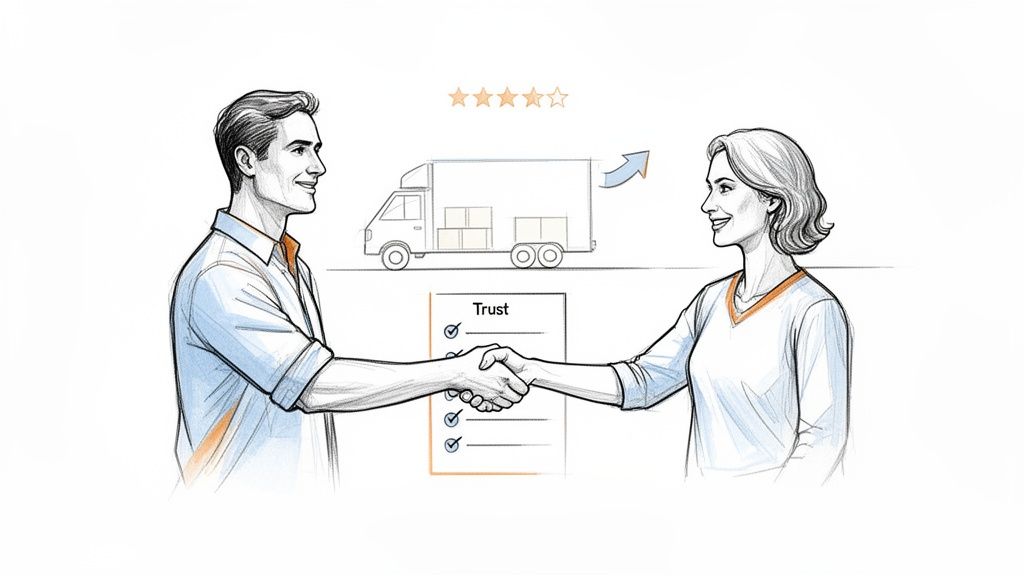
If you own a moving company with 1-20 trucks, trust is your single biggest competitive advantage. In a crowded local market, the mover who builds that connection first almost always wins the business. Speed and trust determine who gets the job, not just the hourly rate.
Think about the last call you took. Was it a quick back-and-forth about truck fees and your hourly rate? That’s a transactional call, and it immediately puts you in the commodity bucket. The customer sees you as just a price, forcing you to compete with every other mover in town on that one number.
Now, imagine a different conversation. A stressed-out customer calls, worried about moving their grandmother's antique piano. Instead of just blurting out a price, you ask about the piano. You ask about its story. Then you reassure them your crew has handled dozens of specialty items just like it.
You just shifted the entire conversation from price to value. That’s how you build rapport.
From Price Shopper to Confident Client
That small shift—that initial connection—has a massive impact on your bottom line. A customer who trusts you is far more likely to:
- Book the job right away, without feeling the need to shop around for three more quotes.
- Leave a glowing five-star review, which is pure gold for your online reputation and local SEO.
- Refer you to their friends and family, sending you high-quality leads for free.
Making a caller feel like you're actually listening is your secret weapon. It turns a price inquiry into a real relationship, and that relationship turns more of your calls into profitable, booked jobs.
In an industry where people are literally handing over everything they own, the moving company that feels the most reliable and empathetic will win the job—even if they aren't the cheapest option.
This is exactly why every phone call is a make-or-break moment. A missed call isn't just a missed lead; it's a missed chance to build the trust that fuels your company's growth. That person who gets your voicemail isn't going to wait. They're just going to call the next mover on their list, and you've lost the job before you even had a chance to compete.
Your First Impression on the Phone
The moment your phone rings, the clock starts ticking. That first call is your one shot to earn a customer’s trust. In the moving business, speed and a professional attitude are the deciding factors. A rushed "Hello, movers?" won’t cut it when a stressed-out customer is on the line, just looking for someone reliable.
Every time a call goes to voicemail, you’re not just missing one job. You’re handing that revenue directly to your competitor who actually picked up the phone. For a small moving company, losing 3-7 jobs a month this way adds up fast.
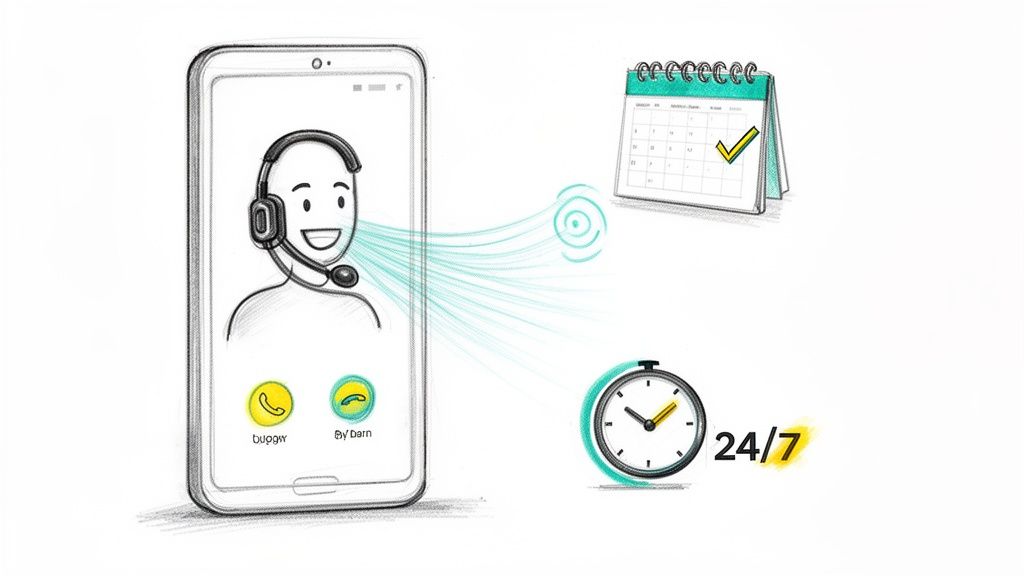
You can't overstate how much a quick response matters. Research shows that a staggering 77% of customers feel that valuing their time is the most critical part of good service. On top of that, 83% of customers expect to speak with someone immediately when they reach out.
When someone calls for a moving quote, they’re looking for reassurance that their life's belongings are in good hands. A fast, professional answer is the very first step in providing that.
Crafting the Perfect Opening
Forget the generic greetings. Your opening line should immediately signal that you're a professional ready to help. This simple shift in language sets a positive tone and starts building that crucial connection right away.
Weak Opening: "Hello, movers."
- This sounds rushed and unprofessional. It makes the customer do all the work.
Strong Opening: "Thank you for calling [Your Company Name], this is [Your Name]. How can I help with your move today?"
- This is a night-and-day difference. It’s professional, confirms who you are, and puts the focus squarely on their needs from the get-go.
Of course, how you say it is just as important as what you say. Speak clearly and calmly, with a friendly but confident tone. If the caller sounds anxious, match their energy for a moment, then gradually slow the pace down. This subtle mirroring technique shows them you’re listening and helps put them at ease.
First Call Do's and Don'ts for Building Rapport
Handling that first call is an art. To make it easier, here's a quick cheat sheet for you and your team.
| Do ✅ | Don't ❌ |
|---|---|
| Answer with a professional, branded greeting. | Use a generic "hello" or just your company name. |
| Use the customer's name if you have it from caller ID. | Jump straight into pricing without understanding their needs. |
| Express empathy for the stress of moving. | Sound distracted or like you're multitasking. |
| Ask open-ended questions to encourage conversation. | Send callers to voicemail during business hours. |
| Maintain a positive and reassuring tone throughout the call. | Make promises you can't keep about scheduling or services. |
| Offer a clear next step, like sending a quote. | End the call without confirming you have their correct contact information. |
Following these simple rules can dramatically improve your booking rate, but there's still one big problem for small operators.
The challenge for most moving company owners is that you can’t be in two places at once. If you're on a job site, you can't give a new caller the focused attention they deserve. This is where automation becomes a game-changer.
An AI receptionist can answer every single call, 24/7, with that perfect, professional greeting. It guarantees that every lead gets an instant, helpful response, capturing their details and kicking off the rapport-building process the right way—even when you’re out on a move or it’s after hours. This kind of automation ensures you never miss a chance to make a stellar first impression. You can also dig deeper and explore our guide to developing a powerful moving company call-in script.
Listen First, Talk Second
Genuine rapport comes from understanding a customer's situation, not just spitting out your hourly rate. Most moving companies treat inbound calls like a race to the price. The customer asks, "How much?" and the mover answers. This turns your service into a commodity, forcing you to compete on price alone.
The best movers flip this script. They turn a price-shopping call into a trust-building consultation by listening first.

Uncover the Real Concerns
Every customer has a story and a source of stress behind their move. Your job is to find it. Instead of waiting for them to ask about cost, take control of the conversation with open-ended questions that dig deeper.
This proactive approach shows you care about more than just their money and gives you the information you need to provide a more accurate, valuable quote later on.
Here are some powerful questions to get the conversation started:
- "To make sure I understand everything, could you tell me a bit about your move?"
- "What's the one thing you're most concerned about with this move?"
- "Are there any particularly large, fragile, or sentimental items we should be aware of?"
- "Have you moved before? What was that experience like?"
These questions shift the dynamic from a simple transaction to a collaborative partnership. You’re no longer just a mover; you're an expert consultant helping them solve a stressful problem.
Listen for What Isn't Said
Active listening is more than just hearing words; it's about picking up on cues. When you ask about their concerns, listen for hesitation, sighs, or a change in their tone of voice. These are the moments where real rapport is built.
If a customer mentions an antique dresser and their voice gets quiet, that’s your cue. Don't just add it to the inventory list. Respond with empathy: "That sounds like a very important piece. We'll make sure our crew gives it extra care and attention."
This level of attention shows you’re truly present in the conversation, not just running through a script. It builds immense trust and sets you miles apart from competitors who are just focused on the numbers. This is a foundational skill for any service business. For a deeper dive into developing your team's abilities, check out this guide on how to improve customer service skills to keep customers coming back.
By gathering these details, you not only make the customer feel heard but also set your own crew up for success. You'll arrive on moving day with a clear understanding of the customer’s priorities, which means smoother jobs, happier clients, and fewer surprises.
Turn Your Quote Into a Promise
A quote isn't just a price tag. It's the moment you prove you were actually listening. It’s your chance to follow up on the rapport you just spent time building and show the customer their move is in good hands.
Instead of just firing off a PDF with a number on it, think of the quote as proof of your promise. It shows the customer their specific concerns were heard and are being addressed in your plan. This small step shifts you from just another moving company into a trusted partner.
Show Them You Heard Them
The best quotes reference specific things the customer mentioned during the initial call. It’s the difference between a generic template and a solution that feels custom-built for them.
It's as simple as adding a few notes directly into the quote:
- "As we discussed, I've included extra padding and specialized wrapping for your antique piano at no extra charge."
- "This plan accounts for the tricky elevator access at your apartment building to make sure everything goes smoothly."
- "We've scheduled you for a 9 AM start to get ahead of that afternoon traffic you were worried about."
This level of detail does more than just justify your price. It builds a massive amount of trust. It tells the customer, "I get it, and I've got you covered."
A personalized quote proves to the customer that calling you was the right move. It confirms that you see their job as unique, not just another slot on the schedule.
Follow Up Without Being a Pest
Okay, you've sent the quote. Now what? The follow-up is where tons of moving jobs are won or lost. Aggressive, pushy sales tactics can erase all the goodwill you just built. The goal here is to be helpful and persistent, not annoying.
Your follow-up should feel like a friendly check-in, not a demand for a signature. A simple, low-pressure text or email is perfect. For a deeper dive on closing without being pushy, our guide on how to close more moving sales has some great strategies.
Here’s a simple cadence that works:
- 24 Hours Later: Send a quick text or email. "Hi [Customer Name], just wanted to make sure you received the quote for your move. Let me know if you have any questions. Happy to help!"
- 3 Days Later: Check in again, but offer something useful. "Hi [Customer Name], just following up. As you get closer to your move date, you might find these packing tips on our blog helpful. Let me know if there's anything else I can do."
When you're in the middle of the busy season, it's almost impossible to keep track of these follow-ups manually. This is exactly where automated quote follow-up can be a lifesaver for your moving business operations.
A good system can send these perfectly timed, personalized messages on your behalf, ensuring no lead ever goes cold. It keeps your company top-of-mind and reinforces your professionalism, all without you having to live in your email inbox.
Keep Building Trust After the Booking
Booking the job is a huge win, but it’s not the finish line. Don't make the mistake of thinking the relationship is done once they're on your calendar. The connection you maintain from the day they book to the day your truck pulls away is what separates the good companies from the great ones.
This prevents buyer's remorse, cuts down on last-minute cancellations, and paves the way for a smooth, profitable job—and a great review.
Communication Before the Move
After a customer books, silence is your biggest enemy. If weeks pass before the move date and they don't hear from you, anxiety starts to build. Did you forget them? Did you write down the right date?
A little proactive communication shuts those worries down and makes them feel confident they made the right choice.
- Booking Confirmation: Right after they book, send an email or text confirming all the key details: date, time, addresses, and services.
- Reminder Message: A day or two before the move, a quick, automated reminder text works wonders. "Hi [Customer Name], just a friendly reminder that our crew is confirmed for your move tomorrow at 9 AM. We're looking forward to helping you!"
The On-Site Crew Is Your Brand
All the rapport you built on the phone is now in the hands of your crew. Their professionalism, attitude, and communication on-site are everything. A crew that's polite, careful, and keeps the customer in the loop will cement the positive impression you've already made.
Make sure your team understands: they are the face of your company. A simple introduction at the door and a quick walk-through with the customer before a single box is lifted can make a world of difference.
The Post-Move Follow-Up
The job isn't over when the last box is unloaded. That post-move follow-up is your single best shot at locking in a five-star review and sparking future business. A simple check-in call or text the next day shows you genuinely care about their experience, not just their payment.
This one small gesture opens the door to ask for honest feedback. If they had a great experience, it's the most natural time to ask for a review. A 2023 Microsoft study found that 77% of customers view brands more favorably when they proactively ask for feedback.
Don't just complete the job—complete the experience. A post-move check-in shows you're invested in their satisfaction, not just their payment. This is how you build a reputation that fuels itself.
This final step is crucial, but it's also the first thing to get forgotten during the busy season. Automating a simple message like, "Thanks for choosing us! How did everything go?" ensures this touchpoint never gets missed. It systematically turns your happy customers into a powerful marketing engine, driving the reviews and referrals that grow your business. For more strategies on this, check out our detailed advice on improving customer satisfaction scores.
Your Path to a More Profitable Moving Company
Building genuine rapport is a direct line to booking more moving jobs and building a stronger reputation in your local market. It all comes down to consistency. From the first phone call to the check-in after the job is done, every interaction proves you were the right choice.
To really make your moving company stand out, you have to nail the fundamentals. Think of it as a series of actionable customer service best practices that build on each other.
This flowchart breaks down the key moments where you build—or break—trust after a customer has already decided to book with you.
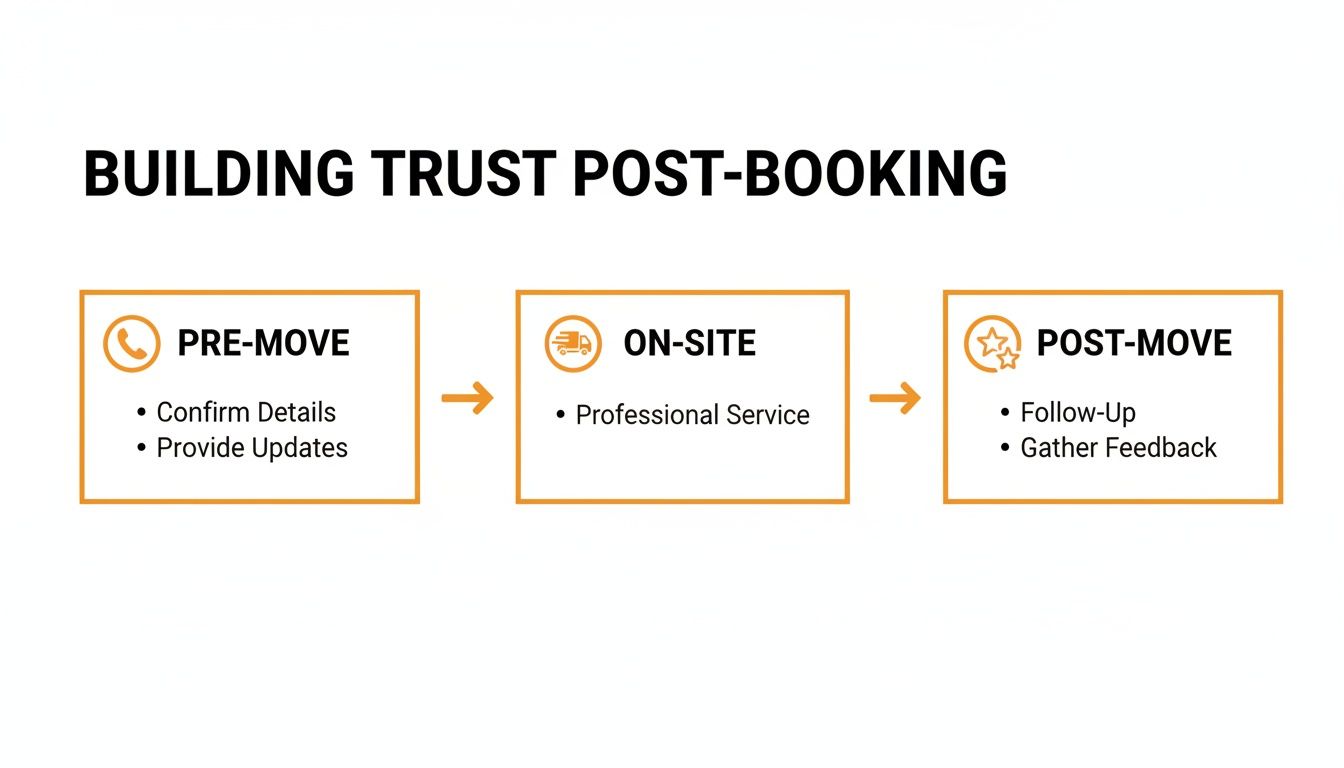
Each of these steps—the pre-move calls, your crew's on-site conduct, and that simple follow-up text—tells the customer they made a smart decision. It's what turns a one-time job into a five-star review and a handful of referrals down the line.
You can try to juggle all of this manually. But the secret to getting it right every single time, especially during a seasonal spike, is automation.
An AI-powered assistant can handle the instant call answering and the automated follow-ups, which frees you and your team up to focus on the hands-on work that actually builds your reputation.
Common Questions, Answered
Let's tackle some of the real-world questions moving company owners have about building rapport and managing customer communication.
What If I’m On-Site and Miss a Call?
This is a huge problem, especially for owners who are still out on the trucks. You're in the middle of a job, your phone rings, and you can't pick it up. That's not just a missed call—it's lost revenue. The customer doesn't leave a message; they just dial the next mover on Google.
This is exactly where something like a 24/7 AI receptionist comes in. It ensures every single call gets an instant, professional answer. It captures the lead's details and makes a perfect first impression for you, even while you’re lifting a sofa. One booked job from a recovered missed call can often pay for the technology for the entire month.
Won't Using AI Feel Cold or Impersonal?
Not if it's done right. A well-designed AI assistant is often far more professional and consistent than a distracted owner trying to answer a call while wrestling with bubble wrap. It guarantees key details are captured every time and that your follow-up is lightning-fast.
Customers don't see that as impersonal. They see it as a sign of a professional operation that won't drop the ball on their move.
The most impersonal experience you can give a customer is sending them to voicemail. An instant, helpful answer—even from an AI—is always better than silence. It's the first sign you value their time.
What's the Single Most Important Thing for Building Rapport?
It’s simple: active listening on that very first call. Moving is one of the most stressful life events. People are looking for someone to trust, not just someone to give them the lowest price.
The moment you switch from just spitting out your hourly rate to asking about their specific worries, you change the entire conversation. Are they worried about a fragile antique? Are they stressed about a tight timeline? Asking those questions proves you care about their move, not just their wallet. That one small shift will set you miles apart from your competition.
Ready to stop losing jobs to voicemail and start building rapport from the first ring? See how MoveJoy's AI Receptionist answers every call, 24/7, and captures every lead so you don't have to. Discover how MoveJoy works.