Capture Every Moving Lead With a 24/7 Call Answering Service

A missed call isn't just a dropped connection—it's a high-value job walking straight to your competitor. For a moving company owner, every unanswered ring is a customer who was ready to book, but you weren't there to pick up the phone. During the busy season, this problem multiplies, costing you thousands in lost revenue.
How Missed Calls Quietly Cost Your Moving Business Thousands
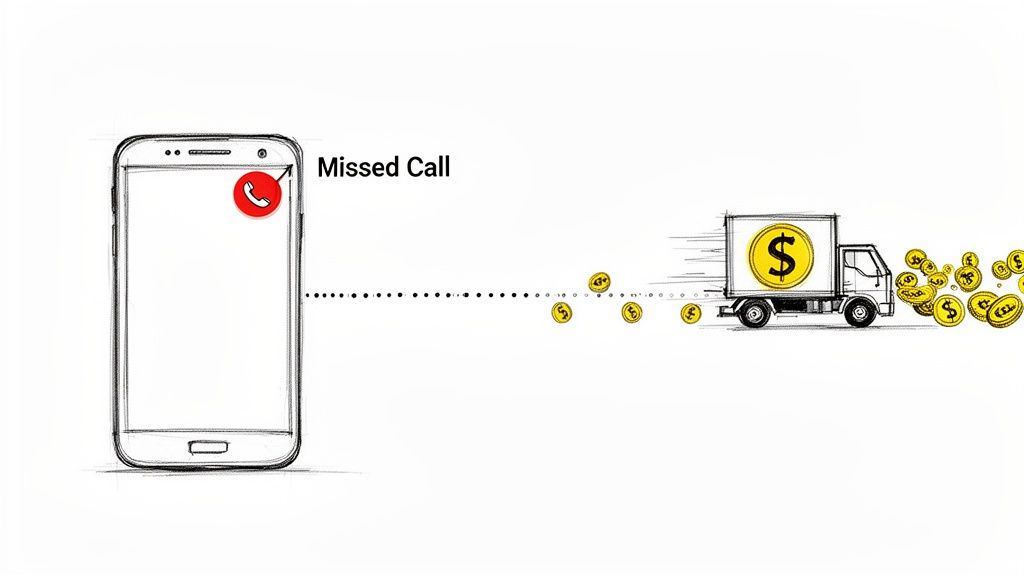
Picture this: It’s 7 PM on a Tuesday. Your crews are done for the day, and the office is empty. A homeowner, just starting their moving research after putting the kids to bed, finds your company online and calls for a quote.
The phone rings. And rings. Then, voicemail.
That homeowner doesn't leave a message. Why would they? They immediately hang up, call the next mover on their list, and get a live person. Boom. Job booked.
You just lost a potential $1,500 job, and you don't even know it happened.
The Modern Customer Doesn't Wait
Let's be blunt: today’s customers expect answers now. When they’re ready to hire a mover, they are in "buy mode" and want to get it done. They will not wait for a callback when a competitor can give them a quote and book them on the spot. This is especially true during the high-stress moving process.
The simple truth is that the first moving company to respond often wins the job. If your office is only open from 9-to-5, you’re invisible to a huge segment of potential customers who are making decisions in the evenings and on weekends.
Relying on a traditional office setup is a massive competitive disadvantage. Voicemail is like asking customers to take a number and wait in line while your competitors are rolling out the red carpet.
The financial drain is subtle but devastating. Missing just a few calls each week can easily add up to tens of thousands in lost revenue over a year. You can learn more about the real cost of missing calls per week in our detailed breakdown.
The Hidden Costs of an Unanswered Phone
The financial damage goes way beyond losing a single job. Every time that phone rings without an answer, it creates a ripple effect that hurts your entire moving business. It's a leak in your marketing budget and a dent in your local reputation.
Here’s what’s really happening:
- Wasted Marketing Spend: You pay good money for every Google ad click, every flyer, and every lead from Yelp. When that lead calls and gets no answer, you’ve just thrown that marketing dollar in the trash.
- Damaged Reputation: An unanswered phone sends a clear message: "We're either too busy to care or not professional enough to handle your business." Neither one is a good look in a competitive local market.
- Lost Referral Opportunities: That one happy customer from a captured after-hours call could have turned into three more jobs through word-of-mouth. The missed opportunity compounds over time.
Ultimately, every ring is a chance to book more moving jobs. Capturing those calls isn't just a part of the job—it's the first and most critical step to scaling your moving company.
What Exactly Is a 24/7 Call Answering Service for Movers?
Think of it less like a piece of software and more like the perfect office manager for your moving company—one who never sleeps, gets sick, or takes a vacation. The job is simple but critical: make sure every single call to your business gets answered instantly, whether it's 2 PM on a Tuesday or 2 AM on a Sunday.
This immediate response is what separates the movers who are growing from the ones who are struggling. It plugs the hole in your revenue bucket where missed calls and voicemails are leaking money.
For a moving company, this isn't just about picking up the phone. It's about kicking off the sales process the second a potential customer calls. That means capturing essential move details, answering initial questions, and booking the next step, whether that's an in-home estimate or a detailed quote call with your sales manager.
The Two Flavors of 24/7 Coverage
When you start looking into 24/7 answering services, you'll find they generally come in two different flavors. For a business running 1-20 trucks, where every single job counts, the difference between them is massive.
-
Traditional Human Call Centers: This is the old-school approach. Live agents in a remote office answer your calls. While you get a real person, they usually act as a simple message-taking service. They’ll grab a name and number, and you’re still stuck playing phone tag later. They don't plug into your daily moving operations.
-
Modern AI Receptionists: This is the newer, smarter way. An AI receptionist uses conversational AI to do way more than just take a message. It can qualify leads with move-specific questions (like move size and specialty items), check your crew’s live availability on your calendar, and even send the customer an automated text with a link to your booking form. It works like an extension of your team, not just a glorified answering machine.
The real difference? Automation. A traditional service just fields the call; a modern AI service actually pushes the sale forward.
How It Solves the Biggest Bottleneck in Your Business
Customers today expect you to be available all the time. It's not a luxury anymore; it’s the baseline. In fact, a staggering 51% of customers now expect businesses to be open and available 24/7. But for most small moving companies with limited staff, that's just not possible.
This gap creates a huge opportunity. You can be the one to capture all those after-hours leads while your competitors are sound asleep. You can learn more about this shift in customer expectations over at buildgrowscale.com.
A 24/7 service solves this problem head-on, turning your business phone into a lead-capture machine that never clocks out.
It stops a motivated customer's momentum from dying in your voicemail box. By answering instantly and gathering the right info, it keeps the sales conversation moving, even while you’re out on a job or at home with your family.
To make the distinction crystal clear, here’s a quick rundown of how the two models stack up for a moving business.
Comparing Traditional vs Modern Answering Services
When a potential customer calls your moving company, the experience they have in the first 60 seconds can be the difference between you booking the job or them calling your competitor. This table breaks down what that experience looks like with a traditional service versus a modern, AI-powered one.
| Feature | Traditional Call Center | AI-Powered Answering Service |
|---|---|---|
| Response Time | Instant human answer | Instant AI answer |
| Lead Qualification | Basic message taking | Asks detailed, move-specific questions |
| Calendar Integration | Not available | Checks live availability and can book jobs |
| Follow-Up | Relies on you to call back | Sends automated texts and emails |
| Cost | Typically higher per call | More cost-effective at scale |
| Scalability | Limited by agent availability | Infinitely scalable during busy season |
The takeaway is simple. A traditional service is a defensive move—it stops you from missing the call. An AI-powered service is an offensive move—it helps you win the job, right then and there.
Calculating the Real ROI of Answering Every Call
Let’s skip the theory and talk about what actually matters to your moving business: cold, hard cash. Figuring out the Return on Investment (ROI) of a 24/7 answering service isn't some complicated spreadsheet formula. It’s simple math that shows how plugging a single leak—missed calls—can directly fuel your growth.
When you spend money on marketing to make your phone ring, every single missed call is a sunk cost. A potential customer found you, was ready to book, and ran straight into a wall. That’s not just a lost job; it's wasted ad spend that went straight into your competitor's pocket.
A Simple Formula for Lost Revenue
Let's use a real-world example. Most moving company owners I talk to agree that a standard local move is worth at least $1,500. Now, be honest: how many calls do you miss after 5 PM or on a Saturday?
Let's say you miss just five calls a month when the office is closed. A very conservative number for a company with a few trucks.
5 Missed Calls x $1,500 Average Job Value = $7,500 in Lost Monthly Revenue
That’s $90,000 a year. Gone. That isn't monopoly money; it's real revenue from qualified leads that your competitors are happily booking while you’re off the clock.
A good 24/7 answering service is built to catch these exact leads. Even if it only converts one or two of those five missed calls into actual jobs, the numbers speak for themselves. Booking just one extra $1,500 job a month more than covers the cost of automation, turning what was once a guaranteed loss into pure profit.
The Hidden Costs Beyond the Job Value
The fallout from a missed call goes way deeper than the value of one move. The true cost bleeds into your entire operation, from your marketing budget to your reputation around town.
Here’s where it really hurts:
- Wasted Marketing Dollars: You pay for every Google click, every Yelp lead, every single inquiry. When a call from a paid ad goes to voicemail, you’ve basically paid to send a customer directly to the next mover on their list. This kills your marketing ROI.
- Reputation Damage: In a local market, your reputation is everything. An unanswered phone sends a clear message: you're either unprofessional or too swamped to handle new business. Neither of those helps you build trust.
- Lowered Team Morale: Nothing kills motivation faster than your team walking in on Monday morning to a voicemail box full of missed calls and angry hang-ups. They start the day playing catch-up on leads that have already gone cold. It's frustrating and a huge waste of time.
Knowing your cost per lead is the first step to understanding just how much money is flying out the window. This detailed guide on calculating cost per lead will help you see exactly what you're spending just to make the phone ring.
Turning Captured Revenue into Tangible Growth
So, what does an extra $3,000 or $5,000 a month in recovered revenue actually mean for a moving business with 1-20 trucks? It’s the fuel for real, tangible growth that you can see and feel.
That new cash can be pumped directly back into your company to:
- Fund a New Truck: Get another crew on the road and double your daily job capacity.
- Increase Your Marketing Budget: Double down on the ads that are already proven to work.
- Hire Another Mover: Reduce burnout on your existing crews and take on more jobs without the stress.
- Give Yourself a Raise: Finally get paid what you're actually worth for all the long hours you put in.
At the end of the day, a 24/7 call answering service isn't an expense line on your P&L. It’s a revenue-generating asset. By answering every single call, you’re not just plugging a leak—you’re opening up a brand new pipeline for consistent, predictable growth.
Streamlining Your Operations with an AI Receptionist
Answering every call is a huge first step. But it’s just the start. The real edge comes from what happens after the phone gets picked up. A modern AI receptionist doesn’t just capture leads; it plugs directly into your operations and smooths out your entire front office.
This isn't about adding another complicated piece of software to your plate. It’s about automation that "just works" to handle the repetitive tasks that bog you down, freeing up your team to focus on work that actually makes you money—like closing big jobs and keeping customers happy.
How AI Automates the Customer Journey
Let’s walk through what this actually looks like. Imagine a potential customer calls you at 9 PM on a Tuesday after a long day at work.
- Instant, Smart Engagement: Your AI receptionist answers immediately. It doesn’t just say, "We're closed, call back later." It starts a real conversation, asking the right questions: "Are you moving from a house or an apartment?" and "What's your target move date?"
- Live Calendar Integration: The AI instantly checks your crew's live calendar. It sees you’ve got a massive job booked on the 15th, so it intelligently offers the 16th or 17th as the next available slots. No guesswork, no double-booking.
- Locking in the Opportunity: Based on the customer's choice, the AI can place a temporary hold on that time slot. This creates a little urgency and gets the customer committed, all without you lifting a finger.
- Seamless Follow-Up: The second the call ends, an automated text zips over to the customer with a link to your detailed quote form or a booking confirmation.
This entire lead capture process happens automatically. No manual data entry. No sticky notes. No "I'll call them back tomorrow." You wake up not to a cold lead in your voicemail, but to a qualified prospect who’s already been engaged, scheduled, and sent the next steps. This is what a true AI receptionist for small business should do for your operations.
This infographic nails it—showing the straight line from answering a call to actually growing your business.
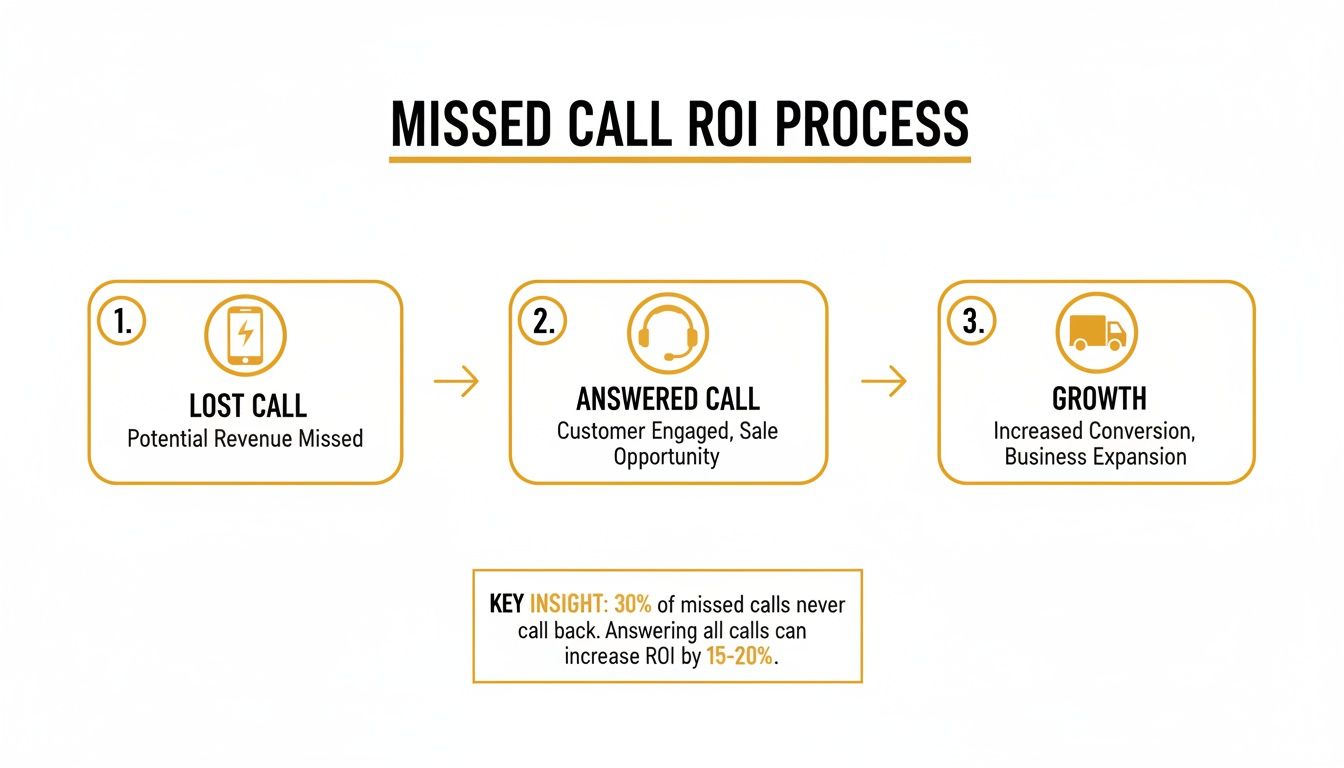
It’s pretty clear. Turning a missed call into a conversation is the first domino to fall in a chain reaction that leads directly to more revenue and a smoother operation.
Freeing Your Team from Busywork
For any moving company owner, time is your most valuable asset. Every minute your dispatcher or sales manager spends on admin is a minute they aren’t spending on the stuff that grows the business.
An AI-powered system handles the tedious front-end grind—the first calls, the basic questions, the scheduling back-and-forth—so your skilled people can focus on what they do best: building relationships and closing high-value jobs.
Think about the operational bottlenecks that drive you crazy during the busy season:
- Manual Data Entry: No more scribbling customer details on a notepad and hoping you remember to punch them into your system later.
- Phone Tag: Wipes out the endless back-and-forth of trying to schedule a quote or confirm a time.
- Repetitive Follow-Ups: Automated texts and emails make sure no lead ever goes cold because someone forgot to follow up.
When you offload these tasks, you empower your team to be more strategic. Your dispatcher can focus on optimizing routes, your sales manager can spend time on complex quotes, and you can get back to actually leading the company.
To really get a handle on how this technology can transform customer service and lead capture, check out this ultimate guide to AI chatbots for small businesses. This isn't just about answering calls; it's about building a more efficient, scalable, and profitable operation from the ground up.
Essential Features of a Mover-Focused Answering Service
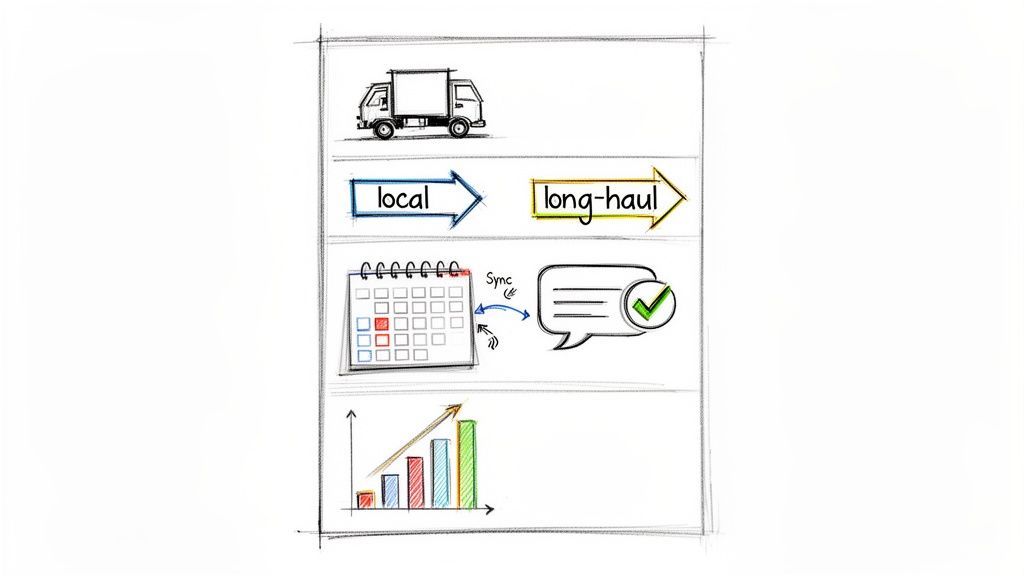
Let's be clear: not all 24/7 answering services are the same. A generic service built for a doctor's office or a law firm will completely miss the mark for a moving company. Your business has a fast-paced sales cycle and specific needs that go way beyond simple message-taking.
Choosing the right partner means finding a solution that acts like an extension of your crew. It needs to know the difference between a local move and a long-haul job—and what to do with that information. This isn’t just about having someone answer the phone; it’s about having a system that actively pushes leads toward a booked job.
To make the right call, use this as your checklist for a digital receptionist that actually gets the job done for movers.
Industry-Specific Intelligence
This is the most critical piece. A good system, especially one powered by AI, needs to be trained on real conversations from the moving industry.
This means it knows the right questions to ask to qualify a lead without wasting anyone's time:
- Move Size: Can it tell the difference between a studio apartment and a four-bedroom house to get a real sense of the job's scope?
- Move Type: Does it understand terms like "long-haul," "local," and "storage-in-transit"?
- Specialty Items: Can it flag high-value items like pianos or antiques that need special handling and a custom quote?
If a service can’t grasp these basics, it’s just going to create more work for you, not less.
The goal is simple: get a clean, qualified lead with all the key details—move date, addresses, and scope—so your team can jump straight to an accurate quote without playing 20 questions.
Seamless Calendar Integration
This is non-negotiable and a total game-changer for moving company operations. A truly effective answering service has to plug directly into your live crew calendar. Without this, you've just got a glorified voicemail service.
Live calendar integration lets the service:
- Check Real-Time Availability: It sees your schedule instantly and knows if your crews are free on the customer’s preferred move date.
- Offer Smart Scheduling: If the requested date is booked, it can intelligently offer the next open slots, stopping that customer from hanging up and calling your competitor.
- Place Tentative Holds: It can automatically pencil in a new lead on your calendar, securing the opportunity and giving you a warm lead to confirm.
This feature alone kills the endless phone tag that frustrates customers and loses deals.
Automated Follow-Up Workflows
Getting the initial call is only half the battle. The real money is in the follow-up. A top-tier service will have automated workflows that kick in the second a call ends.
This could be an instant text message to the customer with a link to your online quote form, or an email confirming the details they just discussed. That immediate, professional touch keeps the lead warm and shows the customer you’re on top of your game. This kind of lead management automation ensures no lead goes cold just because your team got tied up on another job.
Clear Performance Reporting
Finally, you need to know if you're getting your money's worth. Any service worth its salt will give you a simple, clear dashboard with the metrics that actually matter. You shouldn't have to guess if it's working.
Look for reporting that shows you:
- Total calls answered
- Number of qualified leads captured
- Jobs booked directly from the service
- Peak call times (like nights and weekends)
This data gives you a direct line of sight into your ROI. It helps you understand your customers better and makes every dollar you spend on the service completely transparent.
Stop Scaling Your Voicemail, Start Scaling Your Moving Business
In the moving business, the race for a new job is won in minutes, not hours. It’s that simple. A 24/7 call answering service takes your biggest money-waster—missed calls—and turns it into your most reliable source of booked moves.
Think about it. Every time the phone rings on a weekend, after 5 PM, or when you’re swamped during peak season, that’s a customer you paid good money to attract. When they hit your voicemail, they don’t wait. They just call the next mover on their list.
This isn’t about replacing your crew. It’s about making them more efficient. By having a system handle the initial call, you free up your best people to do what they do best: giving detailed quotes, managing logistics, and actually growing the business. Instead of playing phone tag with cold leads, they’re talking to warm prospects who are already halfway to booking.
This one change flips your business from reactive—always chasing missed opportunities—to proactive, where leads are captured and warmed up for you, automatically.
Take a hard look at how you handle calls right now. How many jobs are slipping away after hours or when your team is out on a move? An automated system is one of the fastest ways to hit your next growth target.
Maybe you want another truck on the road, a bigger service area, or just to get your evenings back. It all starts with one thing: answering the phone. Every single time.
The choice is pretty clear. You can keep letting your voicemail try to run your business after hours, or you can put a system in place that captures every single opportunity. The first mover to answer the call almost always wins the job. Make sure that’s you.
Questions We Hear All the Time from Moving Company Owners
Even when the numbers make perfect sense, bringing any new system into your operations is a big decision. We get it. Here are the straight-up answers to the most common questions and concerns we hear from moving company owners just like you.
"Will This Thing Sound Robotic to My Customers?"
This is always the first question, and it's a good one. We’ve all dealt with those infuriating, robotic phone menus from the cable company. This isn't that.
Think of it less like a robot and more like a highly-trained specialist. The best AI receptionists today use conversational AI that’s been trained on thousands of real calls from the moving industry. It understands slang, accents, and the specific things people say when they're trying to book a move ("I've got a two-bedroom walk-up," "Is there a long-carry fee?").
The goal isn’t to trick a customer into thinking they’re talking to a human. The goal is to give them a fast, professional, and genuinely helpful experience that gets their move booked without making them wait on hold.
"How Much of a Headache Is This to Set Up?"
You don't need to be a tech genius. A good 24/7 call answering service built for movers is designed to be up and running fast. Usually, the process is dead simple: you have a quick kickoff call to share your basic business info, and then you just forward your existing business line to the new service.
The whole thing often takes less than an hour. You can be live and catching after-hours calls that same day. There’s no software to install, no complicated dashboard to learn, and no steep learning curve for your team. It’s built to just work right out of the box and slide right into your existing workflow.
"Can a Small Moving Company Actually Afford This?"
Absolutely. In fact, you're probably losing more money not having it.
Think about the cost of a single missed job. If your average move is worth $1,500, and the service helps you book just one extra job a month that you otherwise would've missed, it has paid for itself many times over.
When you stack it up against hiring another full-time or even part-time person—with their salary, benefits, sick days, and training costs—an automated service delivers a much higher return. It scales with your business perfectly. You aren't paying for someone's downtime during the slow season, but you have unlimited capacity to handle the rush when things get crazy.
"What Happens If a Caller Has a Real Emergency?"
A quality service isn't just a lead-capture machine; it has protocols for urgent situations. You can set custom rules to handle specific types of calls.
For example, if a customer calls with a day-of-move emergency or a serious complaint, the AI can be programmed to recognize the urgency. It will immediately route that call straight to your cell phone or your operations manager. This way, you keep total control over the critical stuff while letting the system automate the routine booking and quoting process.
Ready to see what an AI receptionist can do for your front office? MoveJoy is a 24/7 call answering service built from the ground up for the moving industry. Stop losing jobs to your voicemail and start growing your business on autopilot.