How to Scale a Service Business Without Just Buying More Trucks
When you're trying to scale your moving company, the real goal is to increase profit, not just add more trucks and headaches. It’s about building smarter systems to handle more jobs efficiently, instead of just throwing more equipment at the problem and hoping for the best.
Why Buying More Trucks Is Not a Real Scaling Strategy
I’ve seen this happen a hundred times. Business starts booming during peak season, the schedule is packed, and the first thought is, "I need another truck."
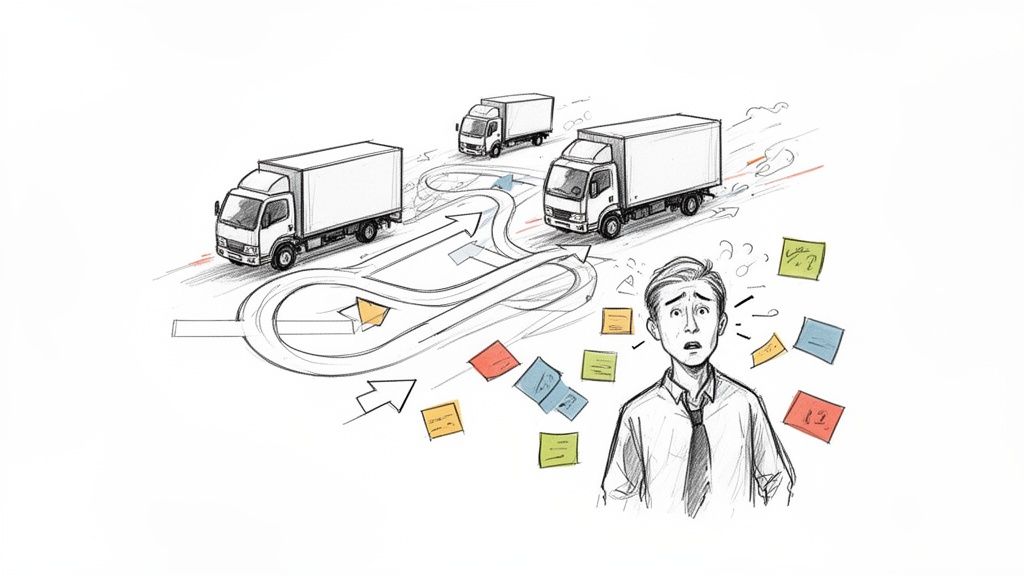
But buying another truck usually just buys you more problems. Suddenly you're juggling more frantic dispatch calls, your team is sending out inconsistent quotes under pressure, and you’re missing even more calls during the summer rush. That’s not scaling. That’s just making your life harder.
A new truck doesn’t fix a chaotic front office. It just shines a brighter spotlight on the cracks that are already there, especially when it comes to missed calls and slow follow-ups.
The Difference Between Growth and Scalability
It’s so important to get this right. Growth and scalability are not the same thing.
- Growth: This is when your revenue and your costs go up together. You spend $50,000 on a new truck and hire another crew. Your monthly revenue goes up, sure, but so do your expenses—insurance, fuel, payroll, maintenance. You're working harder, but your profit margins barely budge.
- Scalability: This is where you increase revenue while keeping costs mostly flat. It’s about creating a system that can handle 30% more jobs without needing 30% more office staff or equipment. This is where you find real profitability and freedom.
The real barrier to scaling your moving company isn't a lack of trucks. It's a lack of systems. Before you invest in more steel, you have to build a foundation that can handle more business profitably.
A Common Scenario: The 3-Truck Bottleneck
Picture a typical 3-truck moving company in the middle of peak season. The owner is taking calls while driving. The part-time office helper is giving out inconsistent quotes. Voicemails are stacking up. They decide to buy a fourth truck to keep up with demand.
Here’s what actually happens:
- More Missed Calls: The phone rings even more, but there's still no one to answer it. Every missed call is a lost job—that's easily 3-7 jobs per month that go straight to a competitor who picked up the phone.
- Dispatch Chaos: Juggling four crews instead of three, with last-minute changes and customers calling for updates, turns the schedule into a complete nightmare.
- Quality Takes a Hit: The owner is stretched thin, so pre-move communication gets sloppy, crews feel rushed, and customer satisfaction drops. That means fewer 5-star reviews and fewer referrals.
The company got bigger, but it didn't get better or more profitable. The root problem was never the number of trucks; it was the manual, maxed-out process for capturing leads, quoting, and booking jobs. A scalable moving business fixes the engine before adding more horsepower.
Building Your Operational Foundation for Growth
Before you can even think about handling more jobs, you need a playbook. Right now, that playbook is probably in your head, which makes you the bottleneck. True scaling only happens when you get the essential processes out of your brain and onto paper (or a screen), creating a repeatable system anyone on your team can follow.
This isn't about creating a massive, dusty binder of corporate rules nobody reads. It’s about building simple, clear Standard Operating Procedures (SOPs) for the handful of tasks that make or break your business every single day—especially how you handle customer communication from the first call.
When these core processes are consistent, your customer experience gets better, costly mistakes go down, and you can finally step back from personally managing every single detail.
Where to Start with SOPs
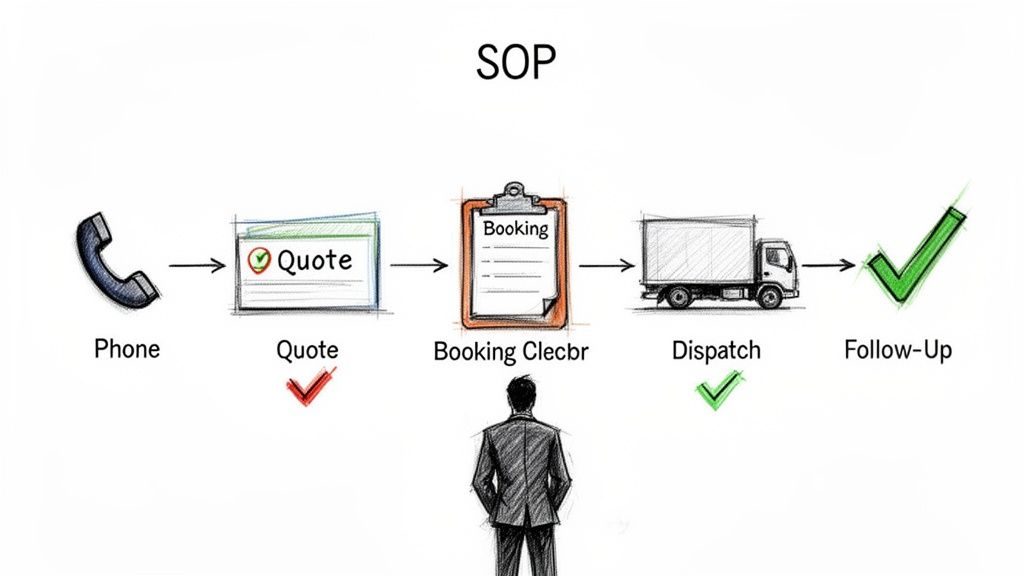
Don't try to document everything at once. You'll get overwhelmed and quit. Instead, focus on the high-impact areas where mistakes cost you the most time and money. For any moving company, that’s the customer journey—from the first call to the final follow-up.
Start with these three core areas:
- The First Call & Lead Capture: How is every single call answered? What are the non-negotiable questions you need to ask to qualify a lead and get the right job details for an accurate quote?
- The Quoting Process: How do you calculate quotes so they’re always consistent? Is everyone on your team using the same logic for stairs, long carries, and specialty items like pianos?
- The Booking & Confirmation Flow: What happens the moment a customer says "yes"? How is the job entered into the schedule, and what exactly gets sent to the customer to confirm?
The goal of an SOP is simple: if a brand-new hire reads it, they should be able to perform the task correctly 80% of the time without having to ask you a question. Consistency is the engine of a scalable moving business.
Making SOPs That Actually Get Used
The best SOPs are visual and simple. Your crew and office staff are busy; they aren’t going to read a 10-page document in the middle of a chaotic morning. Use tools they already know to create guides that are easy to follow, even under pressure.
Practical SOP Examples for Movers
- Quoting Checklist (Google Docs): A simple checklist walking through the quoting process. Include standard questions about inventory, access points (elevators vs. stairs), and potential headaches. This stops people from forgetting to ask about the long walk from the apartment to the truck, which prevents under-quoting.
- Voicemail Response Script (Text File): Write a clear, concise script for returning calls. It should immediately state who you are, reference their message, and ask for the best time to connect for a detailed quote. Speed is everything here—customers shop fast, and a quick, professional response shows you’re on top of your game.
- Dispatch Flowchart (Canva): Create a visual flowchart showing the steps for dispatching a crew. It can include things like "Confirm job details 24 hours prior," "Text crew with address and start time," and "Check in with crew lead mid-move." A visual guide for managing your crew schedule software can dramatically reduce morning chaos.
These simple documents do more than just standardize tasks. They become your training materials, your quality control, and the foundation of an operation that doesn't solely depend on you.
From Manual Systems to a Centralized Hub
At first, these SOPs might live in a shared Google Drive folder. That's a great start. The next real step in your scaling journey is to bring these processes into a centralized system where they can be automated.
Think about that quoting process. A checklist is good, but an automated system that captures lead details via phone or text and generates a perfect quote every time? That's better. It removes human error and operates 24/7, even when you’re on a job or asleep.
This is how you build a real operational foundation—by first defining your best practices and then using technology to execute them flawlessly, every single time. It's the only way to handle more jobs without creating more chaos.
Using Automation to Handle More Jobs Without the Chaos
Once your core operations are solid, it’s time to stop throwing more people at the problem and start using technology to work smarter. Automation isn’t some fancy luxury for giant corporations anymore. For a moving company with 1-20 trucks trying to scale, it’s a necessity.
The goal here is simple: plug your biggest revenue leaks. In this business, that means missed calls and slow quotes.
In the moving game, the first company to respond almost always wins. Picture a potential customer calling three local movers on their lunch break. Who do they book with? The first one that answers the phone and gives them a professional quote. If you’re out on a job or it’s after 5 PM, that lead is gone.
This is where automation completely changes the game. It turns your biggest weakness—not being available—into your greatest strength by providing 24/7 call answering and instant lead capture.
Winning the Speed-to-Lead Game
Look, the reality of growing a moving business today is that you have to embrace automation. You can't just keep hiring more office staff every time the phone rings more often. The smart operators are turning to technology like an AI receptionist to keep up without increasing payroll.
This isn't just a trend; it's a massive competitive advantage. Top-performing local service companies are already using automation to answer calls, capture leads, and book jobs instantly.
What does that mean for you? It means you can have a system that works 24/7, making sure you never lose a job just because you were busy doing another one. One booked job you would have missed easily pays for a month of automation.
How Automation Actually Works for Movers
Think of it like having the perfect office manager. One who never sleeps, never takes a day off, and nails the most repetitive tasks perfectly every single time.
This isn’t about replacing your team. It’s about freeing them up from the tyranny of the ringing phone so they can focus on high-value work: managing crews, following up with high-ticket clients, and closing complex commercial jobs.
Here’s what this looks like in the real world:
- 24/7 Call Answering: A customer calls at 8 PM on a Friday night. Instead of voicemail, an AI receptionist picks up instantly.
- Instant Lead Capture: It walks them through a natural conversation, gathering all the key details—move size, addresses, stairs, specialty items.
- Automated Quoting: Within seconds, it texts the customer an accurate, detailed quote based on the pricing rules you’ve already set.
- Seamless Booking: The customer reviews the quote on their phone, clicks to book, and the job gets added straight to your dispatch calendar. No one on your team lifted a finger.
This isn't just about being more efficient. It's a killer sales tool. A customer who gets an instant quote and a dead-simple way to book feels like they're dealing with a top-notch, professional company.
This kind of automation creates a killer first impression and a smooth customer experience from the jump. And as you streamline your operations, you can get even smarter by using tools for scaling BI dashboards with AI automation to see what's really working.
Handling Peak Season Without the Panic
Every mover gets that knot in their stomach thinking about peak season. The phone rings off the hook, quotes are rushed, and critical details inevitably get missed. This is where automation really earns its keep.
An automated system doesn't care if one person calls or one hundred. It handles unlimited call volume, ensuring every single lead during your busiest months is captured and quoted correctly.
Instead of scrambling to hire and train temporary office staff, you lean on a system that scales up and down with demand. You can book your calendar solid without burning out your core team.
Then, when the rush dies down, you’re not stuck with bloated payroll. This is how you build a lean, profitable, and truly scalable moving company that's ready for whatever the season throws at it.
Optimizing Your Pricing for Maximum Profitability
Scaling a moving business isn't just about booking more jobs—it’s about booking more profitable jobs. Too many owners get so focused on filling the calendar that they forget to protect their margins. A packed schedule with paper-thin profits is a fast track to burnout, not a sustainable business.
To really scale, you have to get past simple hourly rates and start understanding your true job profitability. This means digging into all the quiet costs that are eating away at your revenue on every single move you do.
Calculating Your True Job Profitability
A simple hourly rate just doesn't tell you the whole story. To figure out if a job is actually making you money, you need to factor in all the associated costs, not just the obvious stuff like labor and fuel.
Think about these hidden expenses for a minute:
- Customer Acquisition Cost (CAC): How much did you spend on Google Ads, Yelp, or lead services just to get that one customer on the phone?
- Administrative Overhead: What's the real cost of the time your team (or you) spent answering calls, building the quote, and chasing down the booking?
- Materials & Supplies: This goes beyond boxes and tape. Think about the wear and tear on your blankets, dollies, and straps—it all adds up.
Once you start tracking these numbers, you might get a nasty surprise and find that some of your "profitable" jobs are barely breaking even. This is where a standardized approach, like a solid moving company estimate template, becomes non-negotiable. It forces you to account for these variables every single time, protecting your margins on every quote you send out.
The image below really drives home the shift from old-school, manual work to a smarter, automated system for lead management and quoting.
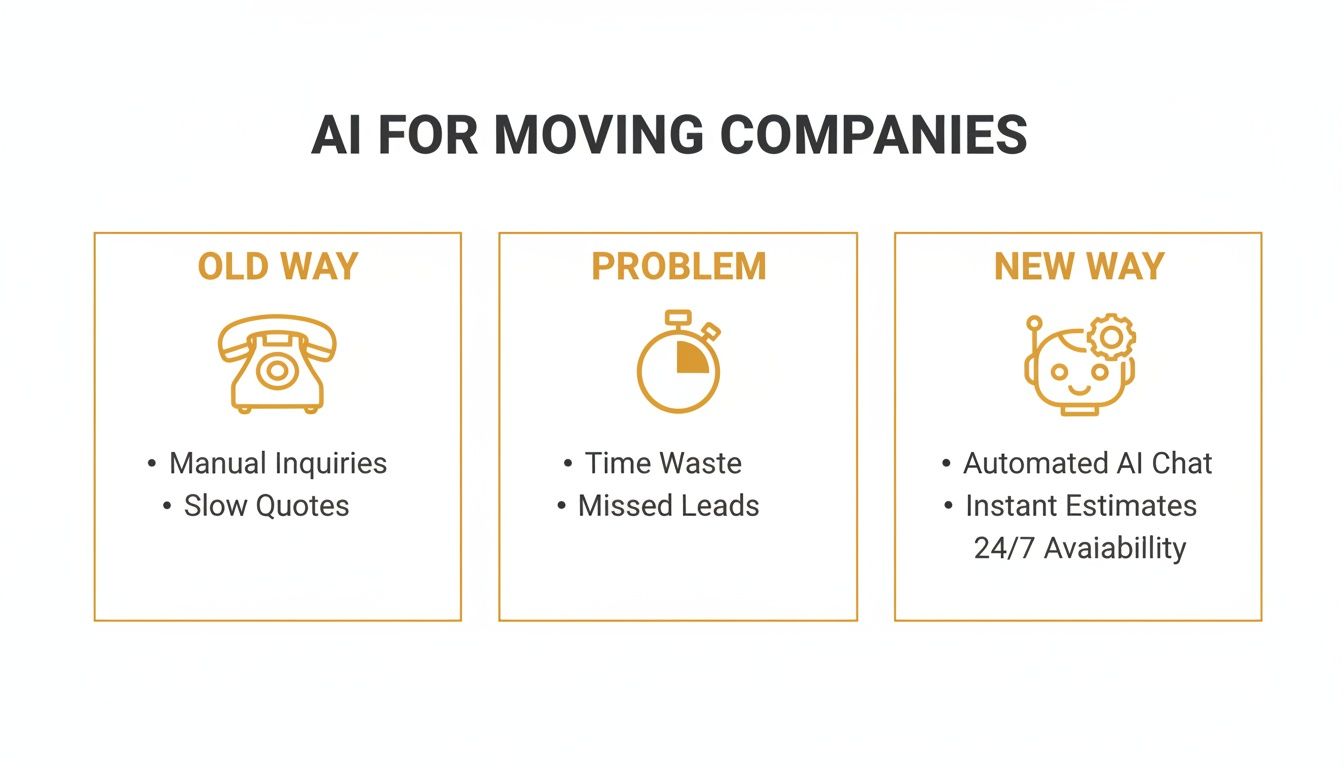
It’s all about moving from slow, manual effort to instant, AI-driven solutions that have a direct impact on your bottom line.
Upselling and Cross-Selling Your Way to Higher Margins
Once you've got your core pricing nailed down, the fastest way to squeeze more value out of every job is through strategic upselling and cross-selling. This isn't about being a pushy salesperson; it's about offering genuine value that also happens to boost your revenue.
Getting a new customer is always the most expensive part of the game. That’s why the smartest moving companies are obsessed with increasing the revenue from clients they already have.
Your best customers are the ones who already trust you enough to book a move. Offering them additional, helpful services is the lowest-hanging fruit for immediate revenue growth.
Here are a few practical add-ons you can build right into your quoting process:
- Packing Services: Offer full-pack, partial-pack, and fragile-only options.
- Box & Supply Sales: Sell moving kits with boxes, tape, and packing paper.
- Short-Term Storage: Team up with a local storage facility and offer it as a seamless add-on.
- Debris Removal: For a small fee, offer to swing back by and haul away empty boxes after they've unpacked.
The trick is presenting these options at exactly the right moment. An automated quote follow-up system handles this perfectly. For instance, when a customer gets a quote for a 3-bedroom house, the system can automatically suggest a specific packing package or the right-sized moving kit in the quote it sends. This happens organically, without a single manual touch from your team, turning a standard inquiry into a higher-value job.
This isn't just working harder; it's working smarter.
Manual vs Automated Upselling Opportunities
The difference between a manual and an automated approach to upselling is night and day. One relies on a busy dispatcher remembering to offer services, while the other makes it a consistent, foolproof part of the process.
| Process Stage | Manual Approach (The Old Way) | Automated Approach (The Scalable Way) | Revenue Impact |
|---|---|---|---|
| Initial Quote | Dispatcher forgets to mention packing services during a rushed call. | System automatically includes packing options based on home size. | +15-20% potential revenue per job. |
| Booking Confirmation | No upsell attempt. The job is booked and the conversation ends. | Automated email confirms the move and suggests buying moving kits. | Low-effort way to add $50-$150 per job. |
| Pre-Move Reminder | A simple reminder call. No additional offers are made. | Reminder text includes a link to add-on debris removal or storage. | Captures last-minute needs, adding 5-10% in revenue. |
| Post-Move Follow-up | A "thank you" email. | Thank you email includes a discount for a future move or referral bonus. | Drives repeat business and new leads. |
As you can see, automation doesn't just save time—it actively finds opportunities to increase the value of every single customer you bring in. It's a system that works for you, even when you're out on the truck.
Tracking the Right Metrics for Smart Scaling Decisions
Gut feeling can get you from one truck to five. It can't get you to ten and beyond.
To scale a moving business without running it into the ground, you have to stop guessing and start measuring. Data gives you the hard proof you need to make smart calls—where to put your marketing dollars, when it’s really time to hire another crew, and what parts of your sales process are leaking money.
This is the shift from being a crew leader who owns a business to a CEO who runs an operation. You start looking at the numbers that actually drive profit. To make sure you're making smart scaling decisions, you have to track the right essential business growth metrics. For movers, it really just boils down to a few critical indicators.
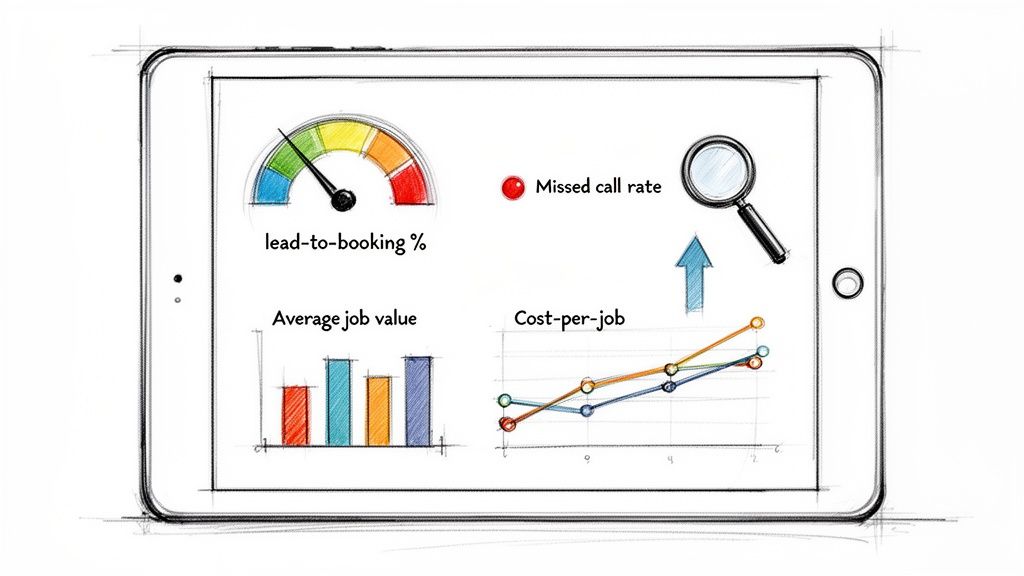
The KPIs That Really Matter for Movers
Forget about complicated spreadsheets with dozens of columns nobody looks at. You need to focus your energy on the metrics that have a direct and immediate impact on your bank account.
These are your non-negotiables:
- Lead-to-Booking Conversion Rate: This is the big one. Of all the qualified leads that call you, what percentage actually book a job? If you get 100 calls and book 25 moves, your conversion rate is 25%. This number tells you flat-out how effective your sales process is.
- Missed Call Rate: Every single call that goes to voicemail is a potential job you just handed to your competitor. If you get 200 calls in a month and miss 50 of them, your missed call rate is a painful 25%. This isn't just a percentage; it's a direct measurement of lost revenue.
- Average Job Value (AJV): Simple enough—what's the average dollar amount you make per move? Tracking this shows you if your efforts to upsell packing services or charge for COIs are actually working. If your AJV is climbing, you're not just booking more jobs—you're booking better, more profitable jobs.
- Cost Per Acquired Job (CPAJ): How much do you have to spend on marketing to get one single customer to book? If you spend $1,000 on Google Ads and book 10 jobs from it, your CPAJ is $100. This number tells you if your marketing spend is an investment or just an expense.
A low conversion rate is almost always a symptom of two problems: slow response times or inconsistent quoting. When a customer calls, the clock starts ticking. The first mover to provide a professional quote wins.
From Manual Tracking to a Real-Time Dashboard
Look, trying to track these metrics by hand is a nightmare. It means listening back to call recordings, digging through scribbled notes about lead sources, and trying to patch together data from five different places. It’s so time-consuming that most owners just… don't do it.
This is where having an integrated system changes the entire game. When your call answering, quoting, and scheduling all live in one place, these critical metrics are calculated for you. Automatically. In real time.
Imagine opening a single dashboard on your phone and seeing:
- Exactly how many calls you missed last night.
- Your booking rate for the week, updated a minute ago.
- Which lead sources are bringing in the jobs with the highest AJV.
This isn't just data; it's clarity. It gives you the power to see a problem and fix it fast.
When you notice your missed call rate spikes after 5 PM, you realize a 24/7 AI answering service isn't a cost—it's an investment in capturing revenue you’re currently throwing away. If your booking rate suddenly drops, you can immediately dive into your quote follow-up process to find the leak.
This level of insight is the bedrock of scaling a service business. It pulls emotion and guesswork out of your strategy, letting you build a more profitable, efficient, and resilient moving company.
Your Top Scaling Questions, Answered
Scaling a moving business always brings up the same tough questions. You're trying to get out of the day-to-day grind and build a company that runs without you having to touch every single job.
Let's cut through the noise and get straight to the answers for the most common hurdles movers face.
When Is the Right Time to Start Automating?
The second you can't personally answer every single phone call. That's it. That's the sign.
The trigger isn't when you have five trucks or ten crews. It's the moment you know, deep down, you're losing jobs simply because you were busy—on another call, driving to a site, or because it was 7 PM and you were having dinner.
Even if you’re a one-truck operation, a single missed call is pure lost revenue. You did all the hard work to make the phone ring, only to let a competitor who answered first grab the job.
Putting a system like an AI receptionist in place builds your scaling foundation from day one. It guarantees that 100% of your leads are captured instantly, no matter what you're doing. The one extra job you book that you would have missed pays for the entire month of the service. It stops being a cost and becomes straight-up revenue recovery.
How Do I Grow My Team Without Quality Dropping Off a Cliff?
Scaling your team successfully boils down to one thing: rock-solid Standard Operating Procedures (SOPs). You can't be everywhere at once, so your process has to be.
The trick is to document every single critical task. I mean everything—from the exact script for greeting a customer on the phone to the step-by-step process for wrapping a fragile mirror. When your processes are crystal clear and repeatable, training new hires gets dramatically faster and your service quality stays consistent across every crew.
- Lean on simple checklists: Create visual, step-by-step guides for things like pre-move prep and the final customer walkthrough. Laminated cards in each truck work wonders.
- Standardize how you talk: Have scripts ready for confirming job details and handling the top five most common customer questions. No more winging it.
- Automate the boring stuff: When tech handles the routine work like 24/7 call answering and giving initial quotes, your team can focus entirely on what they do best—delivering a killer moving experience.
This one-two punch of clear processes and smart automation lets you add crews confidently. You know they have the playbook to meet your standards from their very first day on the job.
What's the Single Biggest Mistake Movers Make When Scaling?
Confusing growth with scaling. Hands down.
Buying more trucks and hiring more movers without fixing your front-office chaos doesn't build a bigger business—it just builds bigger problems. You end up with more dispatch headaches, more wildly inconsistent quotes, and an owner who is completely burned out.
True scaling isn't about adding more trucks; it's about building systems that handle more work with less friction. Before you drop another $50,000 on a truck, invest a fraction of that into a system that maximizes the revenue from the leads and fleet you already have.
The smartest owners I know fix their front office first. They plug the leaks in their sales process—the missed calls, the slow follow-ups—long before they even think about fleet expansion. This makes sure every dollar spent on marketing and every new truck eventually added delivers a massive return, turning painful growth into real, sustainable profit.
Ready to stop losing leads and start building a truly scalable moving company? See how MoveJoy can answer 100% of your calls and automate your booking process. Learn more at https://getmovejoy.com.