The Best Moving Company Software to Grow Your Business

The best moving company software is a single tool that automates how you get leads, quote jobs, and get booked, finally killing the chaotic mix of spreadsheets and calendars that are quietly costing you revenue. Think of it as a 24/7 digital receptionist that ensures no call goes unanswered and every potential customer gets an instant, professional response.
Why Your Calendar and Spreadsheet Are Costing You Jobs
If you're running your moving company with a jumble of spreadsheets, your personal cell phone, and a basic Google Calendar, you're not alone. It's the classic startup toolkit for a reason: it's free, and it gets the job done—at first.
But as your moving business grows from a couple of jobs a week to a packed schedule, that manual system starts to break down. Each tool lives on its own island, creating operational bottlenecks that hit your bottom line directly.

The Real Cost of a Disconnected System
The fallout from this patched-together approach is more than just an administrative headache. It’s tangible lost revenue. Every owner of a small or mid-sized moving company knows the sting of these moments:
- Missed Calls During Peak Season: A hot lead calls while your crew is on a job or you're driving the truck. By the time you call back an hour later, they’ve already booked with a competitor who answered right away.
- Delayed Quotes and Follow-ups: You scribble lead details on a notepad, planning to send a quote that evening. The day gets away from you, and by morning, that lead has gone cold.
- Scheduling Conflicts: You accidentally double-book a crew because your calendar wasn't updated in real-time after a phone call. Now you’re left scrambling, which almost always leads to a poor customer experience.
Each one of these is a leak in your revenue bucket. Customers looking for movers shop fast; the company that responds first almost always wins the job. Your spreadsheet can’t answer the phone, and your calendar can’t follow up on a quote.
The painful truth for many local movers is that they lose 3–7 jobs every single month simply because they can't get to the phone in time. This isn't a reflection of their service quality—it's a bottleneck in their front-office operations.
Shifting from Expense to Investment
Thinking of modern software as just another expense is the mindset that keeps moving companies stuck. The right platform isn't a cost center; it’s a revenue protection tool. It automates the repetitive tasks that pull you away from what you do best: running great moves. To get a feel for what this looks like in practice, you can check out these practical workflow automation examples that show just how powerful streamlined processes can be.
To compete and grow, your business needs a unified system that works for you around the clock. This is especially true for calls that come in after hours—a critical time when many potential customers are planning their moves. An automated system acts as your always-on after-hours answering service, ensuring you capture every single opportunity. It’s how you build a more resilient, profitable, and scalable moving business.
The Core Features That Define the Best Moving Software
Not all "moving company software" is created equal. Some platforms are little more than a glorified digital calendar with a contact list. Others are powerful engines built to book jobs while you're on-site, driving a truck, or even sleeping. For a small or mid-sized moving company, knowing the difference is everything. The right features don't just organize your business—they actively generate revenue and give you back your time.
When you're looking at different software options, don't just skim the feature list. Ask yourself: "How does this solve a real problem that costs me money or time right now?" That’s the question that separates the nice-to-haves from the non-negotiables.
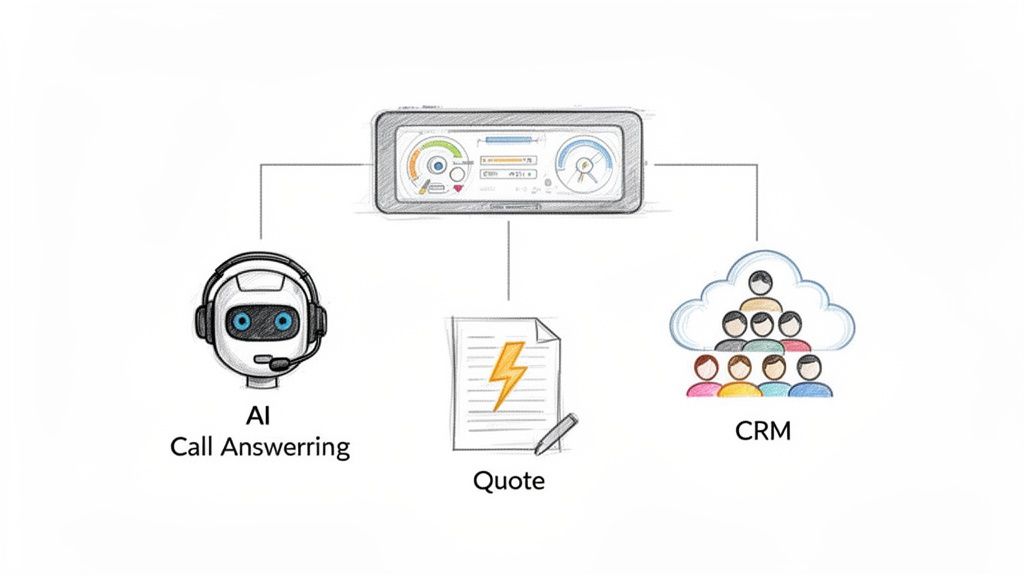
To make this crystal clear, here’s a breakdown of the features that really move the needle, what operational headaches they solve, and the direct impact they'll have on your bottom line.
Essential Software Features and Their Business Impact
| Core Feature | What It Solves | Impact on Your Moving Business |
|---|---|---|
| AI Call Answering | Missed calls after hours, during jobs, or when your dispatcher is busy. | Recovers thousands in lost revenue by ensuring every lead gets an instant, professional response. |
| Automated Quoting | The delay between a customer's inquiry and them receiving a quote. | Wins you more jobs by providing instant, accurate quotes before competitors can even call back. |
| Centralized CRM | Scattered customer info, missed follow-ups, and disorganized lead tracking. | Creates a single source of truth, ensuring no lead falls through the cracks and your team has context for every call. |
| Integrated Scheduling | Double-bookings, communication gaps between sales and operations, and inefficient dispatching. | Connects booking directly to your calendar, preventing errors and streamlining crew assignments. |
These aren't just bells and whistles; they're the foundational tools that separate struggling moving companies from the ones that are growing consistently. Let's dig into why each one is so critical for a modern moving business.
AI-Powered 24/7 Call Answering
For most moving businesses, the single biggest revenue leak is the missed call. It's that simple. Whether you're on a job, driving, or it's 9 PM on a Saturday, every unanswered call is a potential job you just handed to your competitor. This is where AI call answering becomes a total game-changer.
An AI receptionist ensures 100% of your calls are answered instantly, day or night. This isn't a clunky chatbot that frustrates callers. It’s a smart assistant trained on real moving conversations that captures lead details, asks the right questions about the move size and location, and immediately gets the customer to the next step. Booking just one job that would have gone to voicemail easily pays for the technology for months.
Automated Quoting and Instant Follow-Up
In the moving business, speed wins. A customer who has to wait hours—or worse, a full day—for a quote is already on the phone with three other local movers. The best software automates this entire headache. When a lead calls, the system gathers the info and can instantly text or email a professional, accurate quote.
This completely eliminates the delay that kills deals. A perfect example is having a dedicated moving company cost estimator built right in, giving customers what they need on the spot. But the truly powerful platforms don't stop there; they also trigger automated follow-up texts and emails to nurture that lead without you lifting a finger. If you want to go deeper, our guide on moving company estimate software breaks down exactly how this drives higher booking rates.
Centralized CRM and Lead Management
A Customer Relationship Management (CRM) tool built specifically for movers becomes your command center. Forget scattered Post-it notes, messy spreadsheets, and an overflowing inbox. A centralized CRM organizes every single lead, tracks every conversation, and shows you exactly where each customer is in your sales pipeline.
For a company running 1–20 trucks, this is non-negotiable. Here's why:
- No Lead Gets Left Behind: Every call, text, and email is logged, so your team always knows what's happening.
- Targeted Follow-Up: You can see at a glance which leads need a nudge and which ones are ready to book.
- Performance Tracking: You'll finally understand where your best leads come from, so you can stop wasting money on marketing that doesn’t work.
A smart CRM turns operational chaos into a clear, step-by-step workflow for booking more jobs.
A recent industry report revealed that movers consider technology crucial for operational efficiency. This isn't a trend; it's the new standard for running a moving business.
Integrated Scheduling and Dispatching
The second a job is booked, the operational scramble begins. The best moving company software connects that booking directly to your calendar and dispatch board. When a customer says "yes," the job is automatically added to the schedule, crews can be assigned, and everyone gets notified instantly.
This seamless flow prevents double-bookings and kills the miscommunications that drive dispatchers crazy. Your team can see crew availability in real-time, optimize routes, and manage the entire day's schedule from a single dashboard. It finally connects your front office (sales) with your back office (operations) into one smooth, efficient system. This isn't a futuristic idea; it's quickly becoming the cost of staying in the game.
How Automation Actually Books You More Jobs
Let's cut to the chase. As a moving company owner, you filter every decision through one question: "Will this help me book more jobs?" Switching to specialized software isn't about adding another fancy tool. It's about deploying an automated system that directly increases your revenue. Enough about features—let's talk about the real-world impact on your bottom line.
In the moving business, speed isn't just a nice-to-have; it's everything. The first company to answer the phone and send a quote is almost always the one that wins the job. Automation gives you that competitive edge, turning calls you would have missed into confirmed bookings.
From Voicemail to a Booked Move in Minutes
Picture this scenario—it probably happens to you every week. It’s 10 AM on a Saturday, your busiest day. You’re on-site, moving a grand piano down a tight staircase, while your dispatcher is coordinating another crew across town. A high-value lead calls, looking for a quote on a 3-bedroom house move—a potential $3,000 job.
Without automation, that call goes straight to voicemail. You finally see it an hour later, call back, and hear those dreaded words: "Thanks, but we already booked with someone else."
Now, let's rewind. With an automated system in place, the story is completely different.
- The call is answered instantly by an AI receptionist. No ringing, no hold music.
- The AI captures all the key details: name, move date, number of bedrooms, and contact info.
- Within minutes, a professional quote is automatically sent straight to their phone via text and email.
By the time you pull your phone out of your pocket, the lead isn't lost—it’s been qualified and quoted. You went from a guaranteed missed job to a highly probable booking, all without lifting a finger. This isn't just a small tweak; it's a fundamental shift in how you capture revenue.
The Secret Weapon: Automated Follow-Up
Booking more jobs isn't just about the first call. It's about what happens in the days that follow. Let's be real—most customers shop around and won't book on the first try. Manually chasing down every "quiet" lead is a massive time-suck and, during busy season, it's the first thing that gets dropped.
This is where automation becomes your secret sales weapon.
A great system doesn’t just capture the lead; it works the lead for you. Automated follow-ups via text and email can re-engage a customer days after their initial inquiry, nudging them to book when the time is right.
Imagine a lead you quoted on Tuesday goes silent. On Thursday, an automated text gently reminds them about their upcoming move and asks if they have any questions. That one simple, timely prompt is often all it takes to close the deal. You just booked another job while you were focused on the one in front of you.
Turning Your Data into Dollars
The best moving company software does more than just handle tasks; it gives you the intelligence to make smarter business decisions. When you can track where your leads are coming from, which quotes are converting, and what your busiest booking times are, you can stop guessing and start optimizing.
This transforms your business from being reactive to proactive. You’re no longer just throwing money at ads and hoping for the best; you have clear data showing you exactly what works and where to invest. Data shows that modern software can materially improve operational efficiency and lead conversion rates, with some analyses highlighting average revenue gains driven by streamlined quoting and better resource utilization. You can read a full report on the state of the moving industry to dig into these findings yourself.
At the end of the day, automation is the bridge between a potential customer and a booked job. It ensures every lead gets an answer, every quote goes out fast, and every follow-up happens right on schedule. For a small to mid-sized mover, this isn't a luxury—it's the most reliable path to increasing your revenue and building a more predictable, profitable business.
Choosing the Right Software for Your Company Size
The best moving company software isn't a one-size-fits-all solution. A nimble 2-truck operation has completely different problems than a growing 15-truck fleet. If you pick the wrong platform, you’ll either stifle your growth or get stuck paying for expensive features you'll never touch.
Making the right call means being honest about where your moving business is today and where you want it to be next year. Your software needs to fix your immediate headaches—like missed calls and slow quoting—while giving you room to grow without having to rip everything out and start over.
This flowchart says it all. It shows the massive difference between a manual booking process that loses jobs and an automated one that captures them every time.
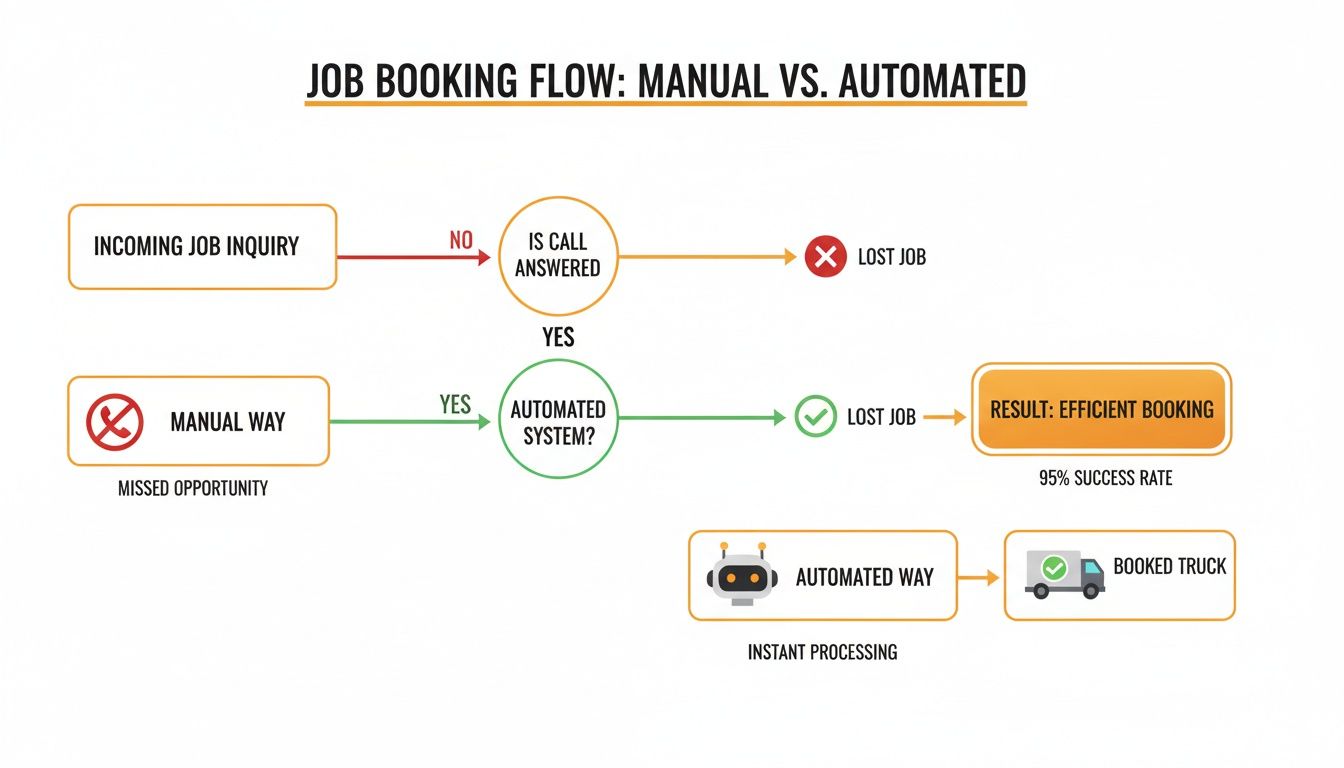
As you can see, automation turns a potential missed call directly into a booked job. For any moving company owner, that’s the name of the game.
For Companies with 1-5 Trucks
When you're running a smaller fleet, your two biggest enemies are missed calls and the mountain of administrative work. You're wearing every hat—owner, dispatcher, salesperson, and half the time, you're on the truck, too. Your time is invaluable, and every minute wasted on manual tasks is a minute you're not out there growing the company.
Your software priorities should be simple and impactful. You need an all-in-one solution that’s affordable, easy to implement, and focused on automating the front lines of your business.
Key Features for 1-5 Truck Operations:
- 24/7 AI Call Answering: This is non-negotiable. You need a system that guarantees every single call gets answered, even when you're on a job or it’s 9 PM on a Saturday. One booked job from a call you would've missed can pay for the software for months.
- Automated Quoting: Speed wins. The platform should send a professional quote via text or email the second a lead comes in, helping you secure the job before your competitors even call back.
- Simple Scheduling & Dispatch: You need a clean, easy-to-read calendar that eliminates double-bookings and gives you one clear view of your day.
For smaller movers, the right software acts like your first and best office employee—one who never sleeps, never takes a day off, and is 100% focused on turning phone calls into booked jobs.
For Companies with 6-20 Trucks
Once your operation starts growing, so does the complexity. You're not just managing jobs anymore; you're managing crews, a bigger fleet, and a much higher volume of leads. Your challenges shift from just catching every lead to managing the entire customer journey and optimizing daily efficiency.
You still need all the core features, but now your software must offer deeper control and visibility. You need tools to manage logistics, track performance, and deliver a consistent customer experience, even with a larger team. For companies adding new service areas, understanding multi-location scheduling software is a crucial step to keep operations from getting chaotic.
Key Features for 6-20 Truck Operations:
- Advanced Crew Management: The software should let you assign specific crews to jobs, see their availability at a glance, and send job details to their phones seamlessly.
- Sophisticated Dispatching Tools: Look for features like route optimization, real-time job status updates from the field, and a central dispatch board that gives your operations manager total command.
- In-Depth Reporting & Analytics: You need to know your numbers. Your software should provide reports on booking conversion rates, lead sources, revenue per truck, and job profitability so you can make decisions based on data, not guesswork.
Picking the right platform for your company size is how you get the biggest return on your investment. It solves today’s problems and sets you up for tomorrow’s growth.
A Simple Guide to a Smooth Software Transition
The idea of switching software can feel overwhelming. You’re busy running crews, booking jobs, and keeping customers happy—the last thing you need is a massive IT project that grinds your entire operation to a halt.
But here’s the good news: modern, cloud-based moving software is built for busy owners like you, not tech experts. Implementing a powerful system isn’t about technical wizardry; it’s about a simple, practical plan that gets you up and running without missing a single call.
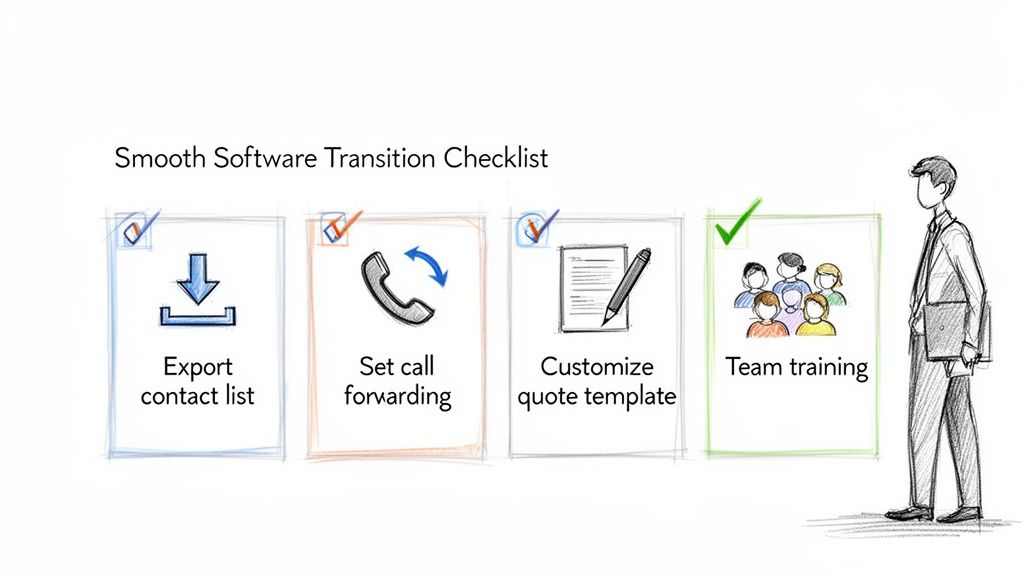
Your Step-by-Step Transition Checklist
Forget about complicated manuals. Getting a new system live boils down to a few straightforward steps. Think of it as a pre-move checklist for your own business—a little prep work to ensure a smooth transition.
Here's all it takes to make the switch seamless:
-
Export Your Existing Customer List: Your customer data is valuable. Before anything else, get that list out of your old system. Whether it’s a spreadsheet, an old CRM, or just your email contacts, export it. Most modern platforms let you upload a simple CSV file and import all your past clients in minutes.
-
Set Up Call Forwarding: This is the magic switch that activates features like 24/7 AI call answering. You’ll simply forward your main business number to the new system. It’s a one-time setup that usually takes less than five minutes but instantly ensures you never miss another lead.
-
Customize Your Quote Templates: Your quote is often a customer's first impression of your professionalism. Take a few minutes to upload your company logo and tweak the standard template to match your brand. This small step makes your automated quotes look sharp, trustworthy, and all yours.
Getting Your Team On Board
Let’s be honest: even the best software is useless if your crew doesn't use it. Fortunately, today’s platforms are incredibly intuitive. The goal isn’t to add another task to their plate; it’s to make their jobs easier.
Focus on the core functions they’ll use every day. Show your dispatcher how the new drag-and-drop calendar works and how it finally eliminates double-bookings. Walk your sales team through the centralized CRM, pointing out how it tracks every lead so nothing falls through the cracks again.
The key is to show them what's in it for them. When your crew sees that job details get sent straight to their phones automatically, or your office manager realizes they no longer have to chase down paperwork, adoption happens naturally.
For most operations with 1–20 trucks, the whole team can get comfortable with the core features in less than a day. The focus should be on practical, real-world use—book a test job, send a sample quote, and assign a crew. This hands-on approach builds confidence and makes the transition feel less like a chore and more like a long-overdue upgrade.
Why You Can't Afford to Ignore Technology Anymore
The moving industry has hit a turning point. Not long ago, you could build a solid business with a reliable truck, a phone number, and a spreadsheet to keep track of jobs. Those days are over.
Today’s customers are different. They don’t leave voicemails and wait for a callback. They expect instant answers, quotes in seconds, and the ability to book a move online. This isn’t just a trend; it’s the new reality. Technology is no longer a nice-to-have—it’s how you stay in business.
The movers winning today aren’t necessarily the ones with the biggest fleets. They’re the ones who are the most responsive. They answer the phone 24/7. They don’t say, "I'll get back to you with a quote." They deliver it on the spot. It’s all about having the sharpest front office, not just the best crews.
The New Standard for Movers Is Here
This shift is happening fast, and the numbers back it up. The global market for moving company software is already worth billions and is projected to grow significantly. This isn’t just big corporations driving the trend. It’s local movers who are tired of losing jobs to voicemail and are adopting cloud-based tools, mobile quoting, and AI to get ahead. You can dig into more stats on this growing market if you're curious.
So, what does this actually mean for your 1–20 truck operation? It means your biggest local competitor is probably already using automation to grab the leads you’re missing while you're out on a job.
Your Path to a Stronger Business
The rules for growing a modern moving company are brutally simple:
- Every call you miss is lost revenue. Automation ensures every single lead gets an immediate response.
- Automated follow-ups are your secret sales weapon. They engage quiet leads and turn them into booked jobs without you lifting a finger.
- A smooth operation gives you your life back. When administrative tasks run on their own, you can finally focus on providing great service and strategically growing the business.
Building a profitable moving company that can scale without breaking you comes down to one thing: embracing automation. It's not just about keeping up anymore. It's about getting ahead.
This isn't some futuristic fantasy. The technology exists to help you take back your time, stop leaking revenue, and build a business that runs like clockwork, even when you're not in the office. The tools are here, they’re affordable, and they pay for themselves by booking just one or two extra jobs a month. The only question is, are you ready to use them?
Got Questions? We've Got Answers.
Switching up the way you run your business always brings up some practical questions. Here are the straight-up answers to what we hear most from moving company owners.
How Much Time Does It Really Take to Set Up New Software?
The thought of a long, painful setup is a huge turn-off for any busy owner. I get it. But modern, cloud-based moving software is built to get you running fast, without needing an IT guy on speed dial.
For the core functions, you can be live in under an hour. Seriously. The main tasks are simple:
- Importing your customer list: Just upload a spreadsheet.
- Forwarding your business phone number: A one-time change that takes a few minutes.
- Customizing your quote template: Add your logo and business info, and you're good to go.
The whole point of today's software is to start making you money on day one, not to become another project you have to manage.
Is This Software Actually Affordable for a 1-3 Truck Operation?
Absolutely. But you have to stop thinking of it as a cost. It's an investment, and the return is ridiculously easy to see. The best software is priced so small operations can get in the game, and the ROI isn't some fuzzy concept.
For most movers, booking just one extra job a month that would have otherwise gone to voicemail more than pays for the entire subscription.
Think about it. When a single missed call can mean losing a $1,500 job, a system that catches that lead automatically becomes your most profitable employee. You're not adding an expense; you're plugging the biggest leak in your revenue bucket.
My Team Isn't Tech-Savvy. How Hard Is This to Learn?
This is a big concern for any hands-on business. The good news? The best platforms are designed for people who drive trucks, not sit behind a computer all day. They feel more like using a simple app on your phone than wrestling with complicated software.
Your team's daily tasks—like sending a quote, checking the dispatch calendar, or assigning a crew—are straightforward and require almost no training. Because the system automates so many of the repetitive tasks, it actually reduces the amount of clicking and typing your team has to do. Most crews get the hang of the essentials in less than an afternoon.
Ready to see how this actually works for your business? MoveJoy is your 24/7 AI receptionist that answers every call, sends instant quotes, and books jobs for you. Stop losing money to missed calls and see what it feels like to grow without the grind. Learn more at getmovejoy.com.