Mastering Multiple Business Phone Lines for Moving Companies

Running a small moving company means juggling trucks, crews, and a steady stream of customer calls. One missed call during the summer rush can translate into 3–7 lost jobs per month and thousands in missed revenue. Seasonal demand spikes and operational bottlenecks in dispatch and quoting leave a single phone line overwhelmed—sending prospects to voicemail or straight to a competitor. In this guide, we’ll show owners of 1–20 truck moving companies how to recover lost revenue, slash missed calls, and streamline front-office operations by adding multiple business phone lines, smart call routing, and automation—without adding new IT headaches.
Why Multiple Business Phone Lines Matter
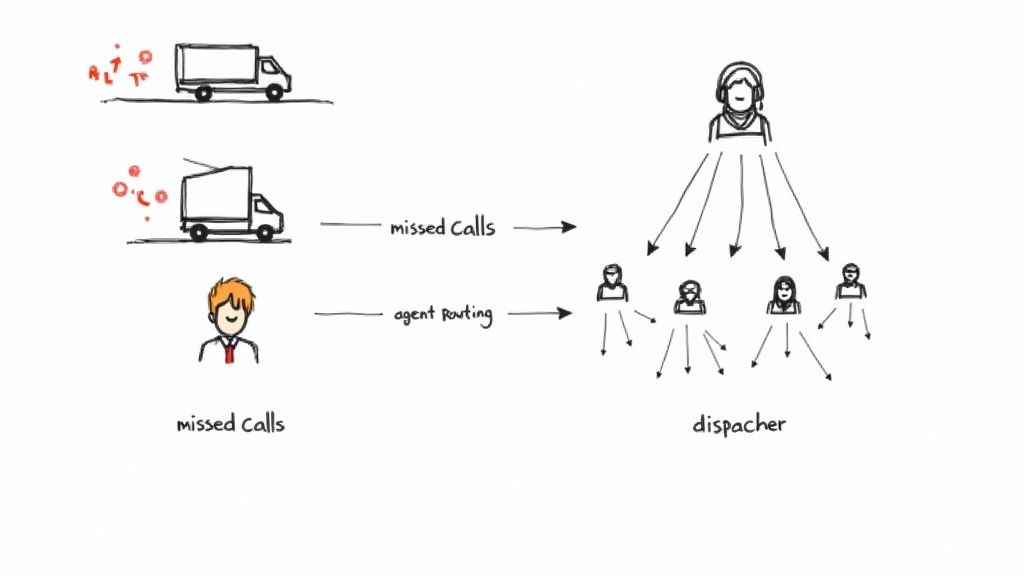
A single phone number can turn into a traffic jam the moment demand spikes. Your dispatcher toggles between calls, texts, and quotes—while prospects hit busy signals or hang up. That directly dents your booking rate and eats into your bottom line.
- Missed calls = lost jobs: movers lose 3–7 jobs per month from voicemail.
- Calls pile up on one line, leading to busy signals during crunch time.
- Priority questions slip into voicemail and never return.
- Dispatchers lose focus bouncing between call handling and scheduling.
- No overflow setup means each unanswered ring equals a lost move.
It’s like standing in an endless supermarket line—customers get impatient and move on. In the moving business, a fast answer often wins the job.
Layered Call Handling In Action
Adding extra lines is like adding lanes on a highway. Every inbound call finds an open path—to a live agent, an IVR menu, or an AI receptionist—without anyone flipping switches.
- Immediate overflow into backup lines when volume surges
- Dedicated extensions for dispatch, sales, and management
- After-hours routing to backup agents or voicemail-to-email
- Scalable setup that grows with your fleet from 1 to 20 trucks
Key Customer Experience Gains
- Faster first response lifts booking conversion by up to 15%
- Clear routing minimizes call transfers and caller frustration
- 24/7 coverage prevents prospects from slipping away
- Consistent service quality builds trust and drives referrals
- Zero busy signals—every call connects to a live voice or IVR
This layered approach also explains why VoIP lines have exploded in popularity. From around 28 million business VoIP lines in 2015 to 76.8 million by 2023, that’s a 175% increase. Small businesses are saving up to 40% on local calls and 90% on international ones. Learn more about VoIP growth statistics
A fleet with just 30 VoIP users can save $1,200 monthly and reclaim 32 call minutes per day.
See the real cost of missed calls to quantify every revenue-draining voicemail.
With multiple phone lines in place, you’ll slash missed jobs, boost customer satisfaction, and keep your front office humming. It really is the backbone of efficient moving operations.
Key Options for Multiple Business Phone Lines
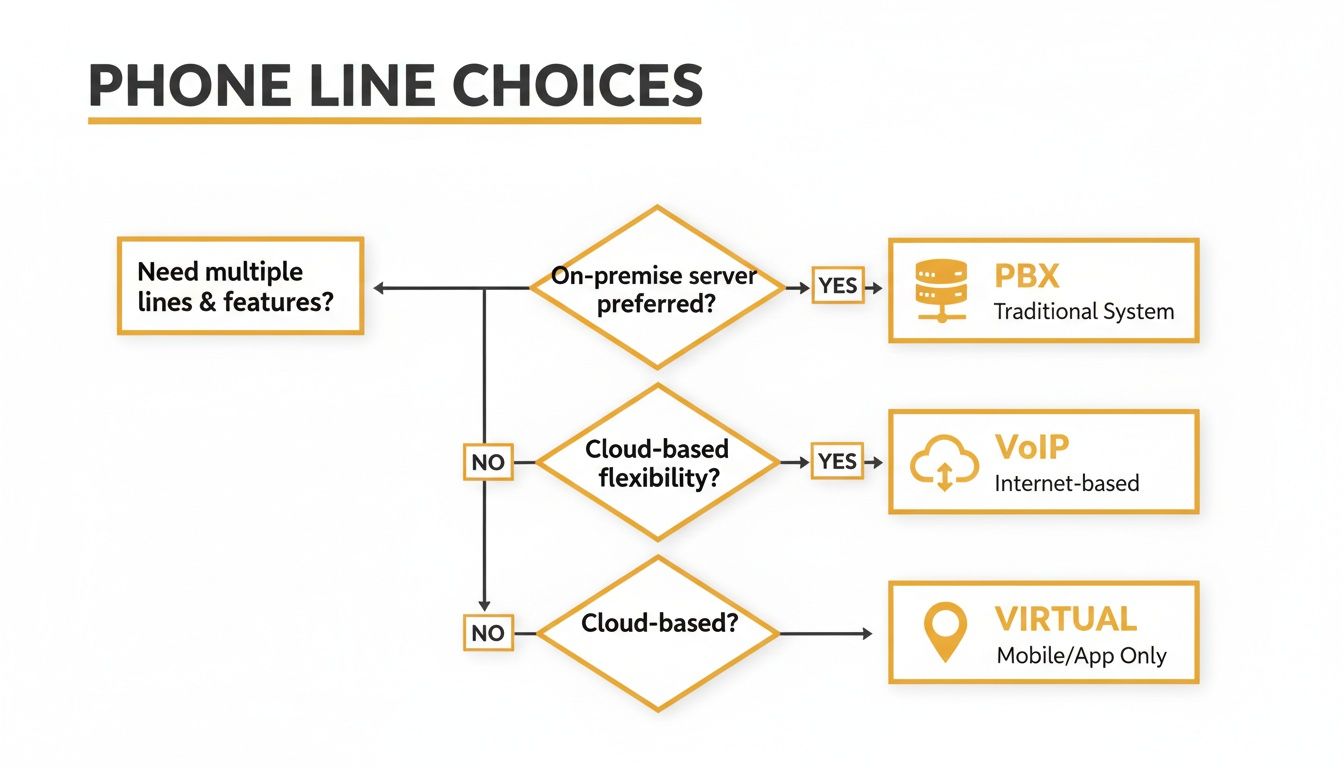
Choosing the right phone setup is like picking the right engine for your trucks. Miss a call, and you may miss revenue-driving jobs.
Traditional PBX Systems
An on-premise PBX is your own private switchboard. You buy the hardware, tuck it in a closet, and run cables out to each desk phone—like owning your building: full control, but you manage every bolt and beam.
A small, 5-truck mover can expect to invest $5,000–$10,000 in PBX hardware before installation and support. You’ll need IT support to update firmware and troubleshoot issues.
Pros and Cons:
- Pros: Reliable over dedicated network, fully customizable call flows, total ownership
- Cons: High upfront costs, aging equipment, ongoing maintenance
Setup Steps:
- Purchase server racks, SIP trunks or analog lines, and desk handsets
- Configure call routing rules and IVR menus
- Assign extensions for dispatch (Ext 100), sales (Ext 200), and management (Ext 300)
Do’s and Don’ts:
- Do forecast seasonal peaks before installing fixed hardware.
- Don’t ignore maintenance contracts—downtime costs you moves.
Cloud Based VoIP Solutions
Cloud VoIP is like leasing a fully furnished office in the sky. Users download an app or plug in a desk phone, and calls travel over your internet connection.
This option scales instantly. Need extra lines during peak season? A few clicks and you’re set. Hardware upgrades become someone else’s headache.
Global adoption has hit 3 billion users worldwide, with 70% of businesses relying on cloud phone systems. In the U.S., there are 34 million VoIP subscribers keeping teams connected anywhere. Learn more about VoIP growth from Nuacom
Cloud VoIP shines when:
- Your dispatcher needs mobile access on the road
- You want to spin up a seasonal line in minutes
- You prefer predictable monthly bills without surprise fees
Cloud VoIP helps small fleets stay on top of calls when trucks are rolling and offices are empty.
Virtual Numbers And Local Presence
Virtual numbers let you wear multiple local hats without extra hardware. Need a Miami area code for out-of-town moves? Route calls to your main dispatch or mobile app in minutes.
Key Benefits:
- Zero additional hardware
- Flexible call routing to office or mobile
- Easy porting of existing numbers
Imagine a single dispatch team appearing as a local business in five markets—all managed through one dashboard.
Managed Call Center Services
A managed call center is like having permanent front desk staff—without an office lease. Trained agents handle overflow, after-hours, and IVR routing so your team can focus on loading trucks.
What You Get:
- 24/7 live agent coverage
- Service-level agreements on response times
- Detailed performance reports and call scoring
For a 10-truck operation, expect $300–$600 per month, depending on call volume. You trade operational complexity for a per-seat or per-minute fee.
Comparing Your Choices
| Option | Setup Time | Cost Structure | Scalability | Maintenance |
|---|---|---|---|---|
| PBX | Weeks | Upfront capital | Moderate | High |
| Cloud VoIP | Hours/Days | Monthly subscription | Instant | Low |
| Virtual Numbers | Minutes | Per number / per minute | Instant | None |
| Managed Call Center | Days | Seat or volume based | On-demand | Outsourced |
PBX offers control but demands upkeep. Cloud VoIP fits 1–20 truck teams craving flexibility. Virtual numbers test new markets instantly. Managed call centers remove phone headaches—at a premium.
Match your call volume and budget—then pilot extra lines or after-hours support. Consider testing MoveJoy’s AI receptionist on a few lines to compare handling and booking performance before your next busy season.
Comparing PBX, VoIP, And Virtual Number Services
Picking the right setup often feels like juggling upfront hardware against ongoing subscriptions. Each reacts differently to seasonal spikes and support needs.
Comparison of Phone System Options
| Feature | Traditional PBX | VoIP | Virtual Number | Call Center Service |
|---|---|---|---|---|
| Setup Cost | $5,000–$10,000 hardware | $15–$35/user/month subscription | $1–$5/number/month | $300–$600/month |
| Feature Set | Custom routing, on-premise | Mobile apps, IVR, integrations | Local presence, simple routing | Live agents, SLA guarantees |
| Maintenance | High IT overhead | Vendor-managed, auto updates | None | Outsourced support |
| Scalability | Moderate, hardware limits | Instant, add lines in clicks | Instant, purchase numbers | Flexible seats on demand |
| Seasonal Behavior | Slow expansion, lead times | Spin up/down lines in minutes | Activate/deactivate instantly | Scale agents for peaks |
On-premise PBX carries hefty upfront and IT work. VoIP shines for low maintenance and rapid provisioning. Virtual numbers cost pennies per market test.
Mini Case Studies
- A five-truck operator on PBX loved call quality—but needed two weeks to add extensions. Missed bookings piled up.
- A 20-truck fleet on cloud VoIP added eight extensions overnight, handled 30% more calls, and booked more moves at peak.
Key decision factors:
- Budget Profile: One-time hardware vs recurring subscriptions
- IT Capacity: In-house upkeep or hands-off vendor management
- Seasonal Surges: Need instant scale-up/scale-down?
- Remote Access: Is mobile or work-from-anywhere essential?
Cost Savings With VoIP Lines
Switching to VoIP can cut 40% off local calling rates and 90% on international calls, while teleconferencing bills shrink by 30%, per Acefone VoIP Statistics.
Imagine rolling out 30 VoIP seats—it could save $1,200 monthly and reclaim 32 call minutes per day. Productivity often jumps 20% when crews use built-in call recording and smart routing.
Adopting multiple VoIP lines frees staff from manual call juggling so they can focus on closing moves.
Maintenance And Scalability Considerations
- PBX: firmware updates, hardware swaps, constant IT oversight.
- VoIP: provider-handled patches and auto-upgrades.
- Virtual Numbers: zero hardware—buy or cancel in your dashboard.
- Managed Call Centers: everything outsourced, billed per seat or per minute.
MoveJoy AI Answering And Booking
If multi-line complexity feels overwhelming, MoveJoy’s AI receptionist can shift the burden. It routes calls across PBX and VoIP, captures lead details, and even books moves—without adding lines.
Here’s how to get started this week:
- Evaluate current call volumes and identify peak hours
- Compare total setup costs against monthly fees
- Pilot a few VoIP lines during off-peak to test quality
- Plan extension growth around busy-season forecasts
For zero-hassle overflow handling, consider MoveJoy’s AI service to answer calls, capture leads, and book moves—no extra hardware, no complicated setups. Choose wisely to support growth and keep every revenue-driving call in your pocket.
Setting Up Multiple Business Phone Lines for Small Movers
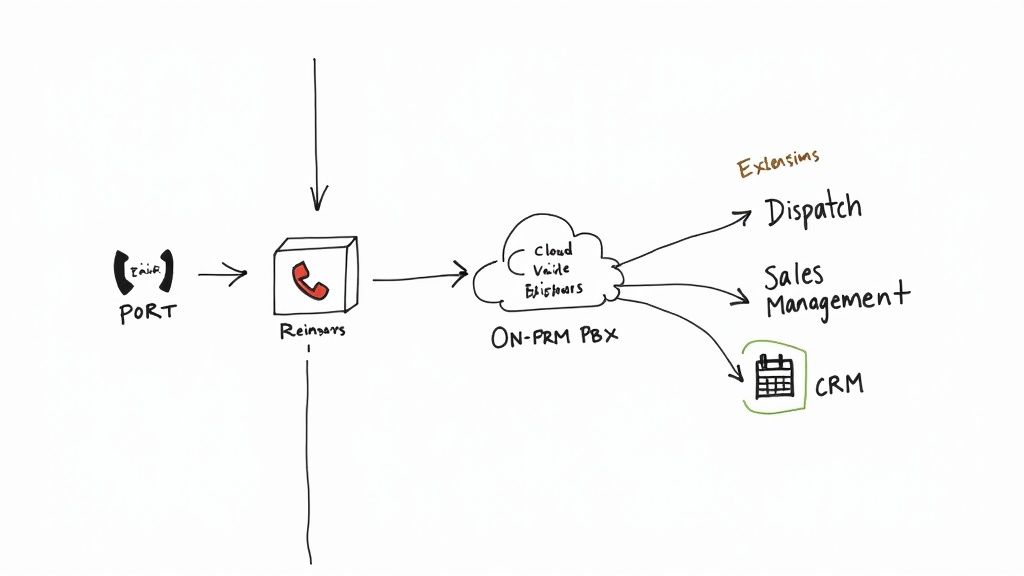
Think of your phone lines like lanes on a busy highway. Each one keeps dispatch, sales, and management calls flowing without collisions. Skip planning and you’ll see a pile-up of missed calls—especially when demand spikes.
Planning Your Call Flow
Chart exactly where every call should land:
- List local, toll-free, and mobile numbers + average calls/hour
- Map calls to dispatch vs. sales vs. support
- Define after-hours routing—voicemail, backup agents or IVR
- Set an overflow threshold (e.g., 5 simultaneous calls)
This outline becomes your blueprint for comparing providers and hardware.
Selecting Providers And Hardware
Weigh on-premise PBX vs. cloud VoIP:
- PBX: full control, higher upfront spend, ongoing IT
- Cloud VoIP: instant lines, low capital, vendor-managed
Also consider:
- Leasing virtual numbers to test new markets
- Porting existing lines—submit your carrier details early
- Confirming SIP trunk support for heavy traffic
Configuring Firewall And Network
Your network must treat voice as VIP traffic:
- Enable Quality of Service (QoS) for call priority
- Open SIP and RTP ports in your firewall
- Run a stress test to ensure clear audio under load
Mapping Extensions And Ring Groups
Create intuitive extensions:
- Ext 100: Dispatch (real-time scheduling)
- Ext 200: Sales (quotes & upsells)
- Ext 300: Management (escalations)
Use ring groups to handle overflow:
- Primary ring → dispatch (2 rings)
- Overflow → sales (3 rings)
- After 5 rings → onsite manager or IVR
Staff Training And Go Live
Launch with a soft roll-out:
- Distribute a quick reference sheet of extensions
- Simulate peak days—juggle six calls at once
- Review first-week call logs and adjust overflow triggers
- Link voicemail transcription to email and sync with dispatch calendar
Treat your phone-software integration like a GPS—it guides your team and cuts down on misdials.
Learn more about optimizing your front-office with moving company software solutions in our detailed guide.
Integrating With Calendar And CRM
Don’t stop at the handset. Tie extensions into your CRM so calls auto-populate lead records. Then:
- Auto-scale overflow to remote agents during busy hours
- Trigger SMS confirmations the moment a call ends
- Batch-deactivate seasonal extensions when demand wanes
As your fleet grows, these steps let you add lines without a hitch.
One booked move often pays for the cost of upgrading your phone system.
Schedule quarterly audits to revisit extensions, ring cadence, and routing rules so your setup stays sharp when the next busy season arrives.
Managing And Scaling Multiple Business Phone Lines
Once multiple lines are live, focus shifts to fine-tuning. Never let a caller wait and never let a sale slip. Small tweaks add up—boosting bookings and controlling costs.
“Data-driven adjustments can boost call handling efficiency by 25%.”
Key Metrics To Watch
- Average Wait Time during peak hours
- Abandonment Rate when callers hang up
- Queue Occupancy for dispatch vs. sales
- Real-Time vs. Historical Call Volume Trends
Reading Analytics Insights
Check your dashboard daily at the same time. Track peaks vs. seasonal baselines to staff just right. A one-truck operator can nail morning rush; a 20-truck fleet can spread resources across multiple windows.
Adjusting Queue And Ring Strategies
Slash waits by 30% with simple tweaks:
- Ring dispatch for two rings
- Overflow to sales desk after three
- After five rings, route to manager or IVR
Bump VIP customers or large corporate moves to the front with queue priorities.
Setting Seasonal Overflow Rules
Summer moves can spike by 40%. Plan ahead:
- Activate overflow at call thresholds
- Batch-add virtual numbers for college season
- Retire idle lines once demand cools
For example, a three-truck operator might spin up two extra lines in summer and shut them down in fall—saving $50 per line each month.
Tracking Marketing Campaigns With Number Masking
Number masking shows which ads drive calls:
- Assign a unique number to each channel (Google Ads, flyers, referrals)
- Route masked numbers into your main queues
- Track call duration and conversions per campaign
This gives clear ROI on every marketing dollar.
Integrating SMS For Faster Lead Follow-Up
SMS follow-up can lift quote engagement by 20%:
- After a missed call, trigger an automated SMS template
- Include a quick survey or booking link
- Respond manually to replies within 15 minutes
Many one-truck teams capture three extra jobs a month just by texting back within two minutes.
Cost Management And Staffing Examples
| Team Size | Monthly Lines | Overflow Setup Cost | Staff Addition Cost |
|---|---|---|---|
| 1 Truck | 3 lines | $30 | $0 (dispatcher handles) |
| 20 Trucks | 15 lines | $150 | $600 (seasonal agents) |
A 20-truck fleet spends about $750/month but often recoups $1,200 in extra bookings.
“Batch-adding lines reduces setup time from hours to minutes during your busiest season.”
Learn more about overflow and after-hours by visiting our guide on after-hours answering service for small businesses.
Monitoring Line Costs And Retiring Idle Numbers
Idle lines quietly drain your budget. Set a baseline of 10 calls per line, retire the laggards, and keep a list for easy reactivation.
Steps:
- Export monthly call counts per line
- Flag lines under threshold for retirement
- Schedule deactivation at month-end to cut costs
This routine trims phone expenses and keeps you nimble. Automate deactivation with your provider to save about $180/year per unused line.
How AI And MoveJoy Simplify Multiple Business Phone Lines
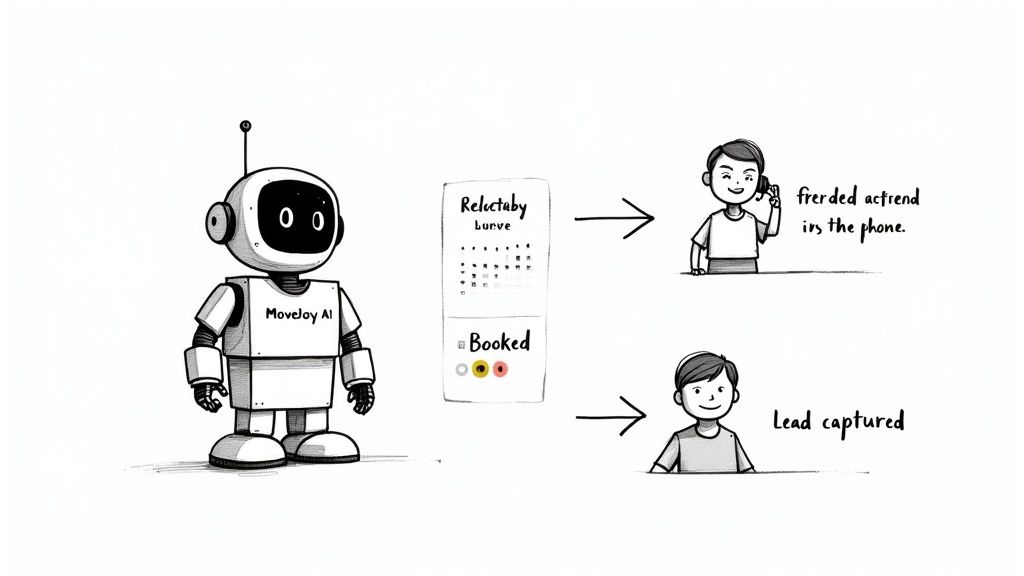
Handling several phone lines at once can feel like keeping a dozen plates spinning. Every missed ring is a lost opportunity, and by midday your team is already playing catch-up.
Enter MoveJoy’s AI receptionist—your 24/7 front-door agent. It never clocks out, answers all lines in under two seconds, captures lead details, and slots bookings straight into your calendar.
AI Front Door Receptionist
Picture a prospect dialing any of your numbers and hearing a confident, human-style voice in under two seconds. That’s MoveJoy.
Key Stats
- Answers in 2 seconds or less across all lines
- Captures and qualifies 100% of calls
- Books appointments instantly into your calendar
Top Benefits
- Zero busy signals during high volume
- Real-time lead capture logged automatically
- Automatic calendar holds eliminate double-booking
Dispatchers get to focus on scheduling, and crews stay on the road instead of swapping phone tags.
Mini Case Study
A five-truck mover added MoveJoy to three overflow lines and saw:
- Week 1: Busy signals nearly vanished
- Week 2: Average booking time shrank by 30%
- Week 3: Staff shifted focus from phones to crew management, driving higher spot rates
“Capturing one more job weekly offset the AI fee and added over $2,000 in annual revenue.”
Integration Best Practices
Link MoveJoy to your systems:
- Connect with your calendar to block slots automatically
- Sync caller profiles with your CRM for full history
- Create after-hours flows forwarding urgent calls to backups
- Enable automated SMS/email confirmations within five minutes
These moves make multiple lines feel seamless for your team.
Smart Routing And Follow-Ups
When volume spikes, smart routing reallocates lines to remote agents or different queues. As traffic ebbs, the AI scales back. Automated follow-ups keep leads warm—if someone hangs up without booking, MoveJoy sends a text with a booking link within two minutes, often turning a cold call into a confirmed move.
Conclusion
Multiple business phone lines are more than extra numbers—they’re revenue channels. By layering call handling, choosing the right mix of PBX, VoIP, virtual numbers, or managed services, and applying data-driven adjustments, small moving companies can recover 3–7 lost jobs per month and boost booking rates by up to 15%. Integrating AI receptionist tools like MoveJoy adds 24/7 coverage, instant lead capture, and automated booking—often paying for itself in the first few weeks. Start with a pilot on one or two lines this month, track your call analytics, and watch your front office transform into a growth engine.
Frequently Asked Questions
Why add extra lines during peak season?
During seasonal spikes—summer moves, college relocations—call volume can jump 40%. Additional lines prevent busy signals and keep prospects engaged, boosting bookings by up to 15%.
What’s the cost comparison for VoIP vs. PBX?
On-premise PBX often carries a $5,000 upfront tag plus annual service. Cloud VoIP turns capital into $20–$35 per user monthly, making budgeting and scaling easier.
How do virtual numbers differ from hardware lines?
Virtual numbers open new markets without hardware—activate in minutes for under $5/number per month, then cancel when demand cools.
Can AI answering really recover lost jobs?
Yes. AI receptionists handle every ring, qualify leads, and book appointments. Many movers recover 5–7 extra jobs monthly they would have missed in voicemail.
How do I keep line costs in check?
Review call counts weekly, retire lines under a 10-call threshold, and automate deactivation. This trims expenses by about $180 per unused line each year.
Start capturing every call with MoveJoy today.