Your Playbook for High-Value Long Distance Moving Leads

Chasing long distance moving leads isn't just about booking bigger jobs; it's about fundamentally changing your company's revenue profile. For a small or mid-sized moving company, these are the high-margin opportunities that can carry your business through the slow seasons. But their complexity often keeps operators with 1-20 trucks on the sidelines.
That hesitation is your biggest advantage. If you can build a system to capture and convert these leads efficiently, you can punch well above your weight class. This guide will show you how.
Why High-Value Long Distance Leads Are Worth the Effort

For a moving company owner running a handful of trucks, the difference between a local move and a cross-country one is night and day. We're not just talking about miles; we're talking about margins.
A single long-distance job can easily pull in the revenue of three or four local moves, but with a fraction of the scheduling churn and dispatch headaches. It’s about building a more resilient, profitable business one high-value job at a time.
Still, many operators with 1–20 trucks shy away from these leads. They see the logistical headaches—coordinating drivers across state lines, navigating DOT regulations, managing longer customer service cycles—and they back off.
This is where you can win.
The Opportunity in Complexity
The moving companies that crush the long-distance game aren't necessarily bigger; they're smarter. They understand you can't treat a move from Miami to Seattle the same way you treat a move across town. It requires a completely different operational mindset.
Winning in this space comes down to nailing a few critical things:
- Building Trust Instantly: A customer moving their entire life across the country is making a massive, high-stakes decision. They need to trust you from the very first interaction. That initial call has to be perfect. If it goes to voicemail, you've lost them forever.
- Responding with Speed: Long-distance customers shop fast. Once they find a mover who feels reliable, they book. I've seen it a hundred times: the first company to provide a professional, helpful response wins the job. A missed call isn't just a missed call; it's thousands in lost revenue walking out the door.
- Providing Transparent Quotes: Vague, back-of-the-napkin estimates don't fly here. Customers need clear, detailed quotes that break down costs like weight, valuation, and potential accessorial charges. Transparency builds the confidence they need to put down a deposit.
The game isn't won by having the most trucks on the road. It's won by being the most responsive and trustworthy option from the very first phone call. This is where a rock-solid system, often powered by automation, becomes your secret weapon. An AI receptionist ensures you never miss a high-value lead—even if it comes in at 9 PM on a Saturday.
Ultimately, capturing long distance moving leads is less about brute force and more about finesse. It demands a system built for speed, trust, and professionalism. The rest of this guide is your playbook for building that exact system—one that turns high-value interest into consistent, booked revenue.
Building Your Lead Generation Engine
Generating a steady flow of long distance moving leads isn’t about having a massive marketing budget. It’s about being smart and consistent. For a company running 1–20 trucks, the goal isn't to be everywhere. It’s about showing up in the right places, over and over again.
Think of your lead sources like a three-legged stool. If you’re just buying leads from an aggregator, you’re balancing on one leg—it’s wobbly and unpredictable. Building a few reliable channels gives you stability and a predictable stream of profitable jobs, even when things get slow.
Let’s walk through three proven channels you can start building out today.
Master Organic Search with SEO
When a family in California decides they're moving to Texas, what’s the very first thing they do? They Google it. They’re typing in things like "cost to move from California to Texas" or "best long-distance movers for cross-country relocation."
Being the company that shows up with a genuinely helpful answer is the single best way to get exclusive, high-quality leads. That’s what Search Engine Optimization (SEO) is all about.
- Create Route-Specific Pages: Don't just have a generic "Long Distance Moving" page. Build dedicated pages for popular routes out of your main service area. A page titled "Moving from Chicago to Austin" that details logistics, timelines, and pricing will attract people who are way past the "just looking" phase.
- Answer the Questions You Hear Daily: Turn the common questions your sales team gets on the phone into blog posts. Content like "How to Prepare for an Interstate Move" or a "Packing Checklist for a 3-Bedroom Home" builds trust and shows you know your stuff long before they ever ask for a quote.
For a deeper dive into capturing online customers, our complete guide on how to get more moving leads has a ton of other strategies you can put into action right away.
Forge Strategic Local Partnerships
Some of your best long-distance leads will never come from a Google search. They'll come from a trusted referral. Building real relationships with other local professionals who work with relocating clients is a low-cost, high-impact way to get business.
Your ideal partners are people who know about a move before anyone else:
- Real Estate Agents: Especially agents who specialize in corporate relocations. They're a goldmine.
- Corporate Relocation Managers: Get in touch with the HR departments at large companies in your town.
- Apartment Complex Managers: They know exactly who is moving in and out, often months in advance.
Sample Outreach: "Hi [Name], I'm [Your Name] with [Your Company]. I saw you helped the Miller family sell their place on Elm Street. We specialize in long-distance moves and I wanted to introduce our company as a reliable resource for any of your clients heading out of state. Could I buy you a coffee next week to chat about how we could make their moves completely seamless?"
Run Hyper-Targeted Digital Ads
SEO is a long game that builds authority over time. But sometimes, you just need the phone to ring now. That’s where paid advertising, like Google Ads, comes in. The key here isn’t to cast a wide net; it’s to use a digital speargun.
With geo-targeted ads, you can show your ads only to people in your city who are actively searching for long-distance moving services. You control every dollar of the budget, you write the message, and you pick the exact search terms you want to show up for, like "interstate movers near me."
To really make your ad spend count, it pays to follow proven PPC advertising strategies that are all about maximizing your return.
To help you decide where to focus your energy first, here’s a quick breakdown of these channels.
Lead Generation Channel Comparison for Long-Distance Movers
Choosing the right channels depends on your budget, how quickly you need results, and the quality of leads you're looking for. This table compares the top three options for a typical moving business.
| Channel | Average Cost | Time to See Results | Lead Quality | Best For |
|---|---|---|---|---|
| SEO | Low (mostly time) | 6-12 Months | Very High | Building a long-term, sustainable asset that generates exclusive leads. |
| Partnerships | Low (mostly time) | 1-3 Months | Highest | Getting high-value, trust-based referrals with very little direct cost. |
| Paid Ads | High (ongoing) | Immediate | Medium-High | Generating leads quickly and controlling volume on demand during peak season. |
Ultimately, a mix of all three is the sweet spot. SEO builds your foundation, partnerships bring in consistent high-value jobs, and paid ads fill the gaps whenever you need to turn up the volume.
As you build these channels, you’ll see more calls and emails coming in. The next problem is capturing them. When a high-value prospect calls at 8 PM after seeing your ad, they aren’t going to leave a voicemail—they’re just going to call the next mover on the list. A 24/7 call answering system becomes the key to actually getting a return on your marketing dollars.
Mastering the First Response to Convert More Leads
In the long-distance moving game, speed isn't just a nice-to-have. It's everything.
Customers planning a cross-country move are stressed and looking for someone who sounds responsive and reliable. Nine times out of ten, the first mover to provide a helpful, professional response is the one who books the job.
The second a high-value lead calls, the clock starts ticking. If they hit your voicemail, especially after hours or on a busy Saturday, they aren't leaving a message. They're just dialing the next company on their Google search results. Every one of those missed calls is thousands of dollars in revenue walking out the door.
The Anatomy of a Perfect First Call
That initial phone call is your best chance to build trust. This isn't just about grabbing their details; it's about making the customer feel heard and confident that you can handle their move. The goal is to be efficient without sounding rushed.
Your conversation should hit three key points:
- Acknowledge and Empathize: Kick things off by confirming you can handle their long-distance request. A simple, "Moving across the country is a big project, but we're here to make it as smooth as possible," goes a surprisingly long way.
- Gather the Essentials: You need just enough info for a ballpark estimate. Get the origin and destination ZIP codes, the approximate size of their home (number of bedrooms is a good start), and their ideal moving date.
- Set Clear Next Steps: Always end the call by telling them exactly what's coming next. Try something like: "Okay, I have the basics. I'm going to text you a link to our virtual survey scheduler along with a preliminary estimate in the next few minutes. How does that sound?"
The reality for most small moving companies is that the owner or a single dispatcher is fielding these calls while juggling a dozen other tasks. This operational bottleneck is where a huge number of high-value leads are lost. Simply being unable to answer every call instantly is costing you revenue.
The Immediate Follow-Up Workflow
The race doesn't stop when you hang up. A quick, well-structured follow-up via text and email cements the great impression you just made. This isn’t just a reminder—it's a professional touch that immediately puts you ahead of slower competitors.
This flow shows the common ways long-distance leads find you. Notice how different the sources are, yet the customer's expectation is always the same: a fast response.
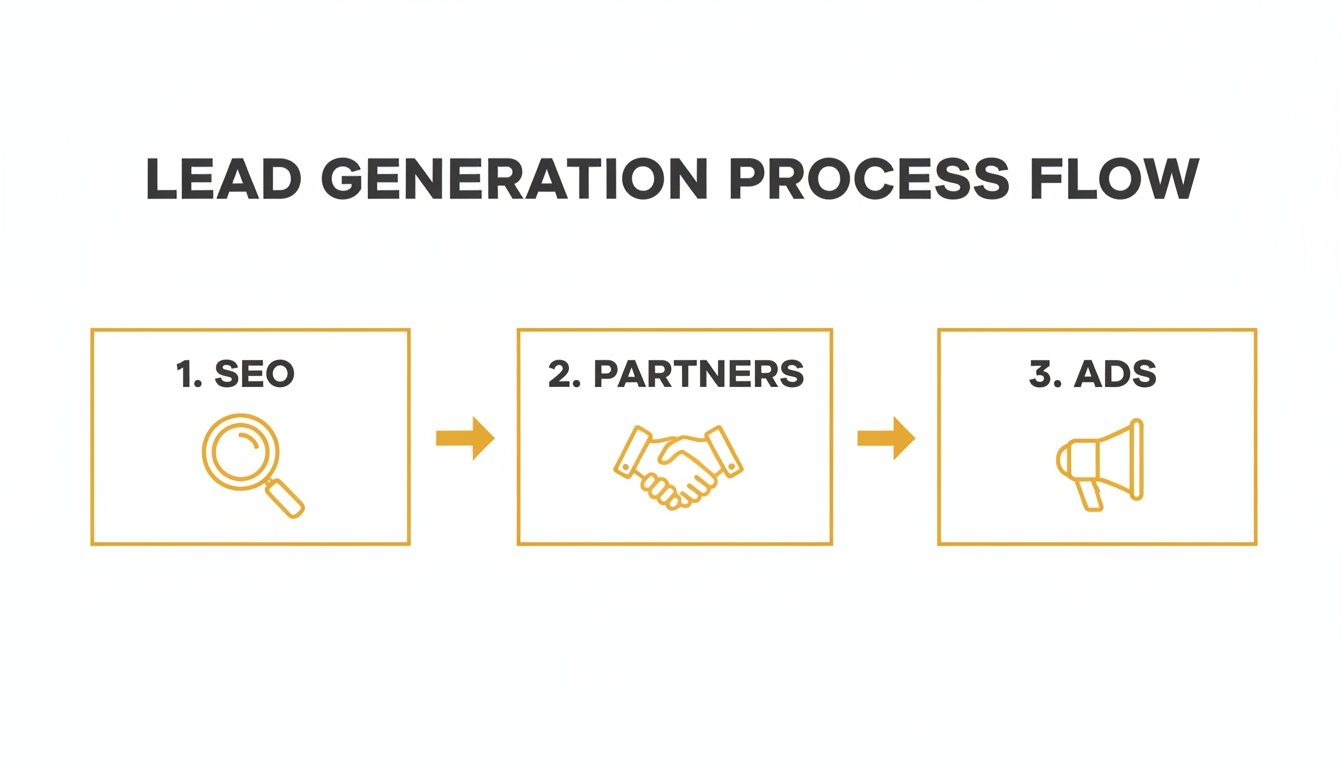
Whether a lead finds you through SEO, a partner referral, or a paid ad, your first touchpoint is what makes or breaks the deal.
A solid follow-up text should include three things:
- A quick "thanks for your time."
- The preliminary estimate you discussed.
- A clear call-to-action, like a link to schedule their in-depth virtual survey.
This one-two punch of a great initial call and an instant follow-up can dramatically boost your booking rate for long distance moving leads. It shows you're organized, professional, and ready to take their move seriously.
The Unseen Cost of Missed Opportunities
The real challenge isn't knowing what to do; it's having the bandwidth to do it consistently. Every. Single. Time.
A single prospect calling at 9 PM on a Tuesday could be worth $8,000 in revenue. If your phone isn't answered, that opportunity is gone forever. This is the exact scenario that keeps moving company owners up at night.
This is where technology gives you a serious competitive advantage. An AI receptionist can answer 24/7, capture the key details, and automatically fire off that critical follow-up text. It can even book the virtual survey right onto your calendar. This isn't about replacing your team; it's about giving them a tool that captures revenue while they focus on running the business. If you're constantly fighting with missed calls, an after-hours answering service for your small business can be a game-changer, turning every single inquiry into a potential booked job.
Creating Long Distance Quotes That Build Trust
A local quote is one thing. A long-distance quote? That’s a high-stakes document where you either win or lose a customer’s trust in an instant. This is exactly where many moving companies drop the ball, sending out vague, confusing estimates that scare off their best prospects.
Think about it from the customer's perspective. They’re moving their entire life across the country. Your quote isn't just a price tag; it's a promise. The slightest hint of ambiguity or hidden fees sends them running straight to the next mover on their list. Nailing this part of the process is one of the most critical steps in turning long distance moving leads into booked jobs.
The Anatomy of a Trustworthy Quote
Your quote needs to do more than just show a final price. It has to tell a clear, simple story of what the customer is paying for, leaving zero room for nasty surprises on moving day. Every professional long-distance estimate should be broken down into clean, easy-to-understand sections.
Here’s your essential checklist:
- Pricing Method: Be upfront. Are you charging by weight (Binding Not-to-Exceed) or cubic feet (volume)? Take a sentence to explain why you use that method and what it means for them.
- Detailed Inventory List: Don't just guess. Itemize the major furniture pieces and give an approximate box count. It shows the customer you were actually listening during the survey and it justifies your final number.
- Valuation Coverage: "Standard valuation" means nothing to most people. Spell out what the federally mandated $0.60 per pound per article coverage actually covers (and what it doesn't). Then, offer clear, simple options for Full Value Protection. This is a huge opportunity to build trust and add margin.
- Accessorial Charges: Get ahead of the "what ifs." List out potential extra costs like long carries, flights of stairs, or shuttle services, and explain when they might apply. A little transparency here prevents a massive headache and a bad review later.
A quote that leaves a customer with more questions than answers is a quote that won't get signed. The goal is to anticipate their worries and answer them right there in the document.
Explaining Price in a World of Rising Costs
Customers are watching their wallets more closely than ever. It's your job to frame your price not just as a cost, but as an investment in a stress-free move. With today’s economic realities, you have to be ready to justify your pricing with confidence.
Let’s be real—the cost of running a moving company is going up. A lot. Industry data shows that between 2020 and 2025, operators have seen costs jump by 30–80% on everything from fuel and truck maintenance to insurance and labor.
When a customer pushes back on price, explaining that your rates reflect the real cost of a safe, reliable, and fully insured long-distance service helps build serious credibility. It shows you're a professional operation, not a guy with a rental truck. Your reputation is your foundation, and you can always find powerful strategies for building trust through online reviews to back that up.
Streamlining the Quoting and Follow-Up Process
Creating detailed, professional quotes for every single long-distance lead is a massive time-suck. Following up on all of them systematically? Even harder, especially when you’re also managing crews and dispatch. This is where manual processes fall apart and good leads slip through the cracks.
Imagine a system that grabs a customer's details and instantly generates a branded, professional quote based on your specific pricing rules. That quote gets sent out immediately, followed by a series of perfectly timed, non-pushy emails and texts designed to answer common questions and nudge them toward booking.
This frees your team from hours of mind-numbing admin work. Instead of chasing down paperwork, they can focus on the high-touch conversations that actually close deals. Modern moving company estimate software is built to do exactly that, turning a huge operational bottleneck into a smooth, automated workflow that converts more leads with less effort.
How to Target Profitable Relocation Corridors
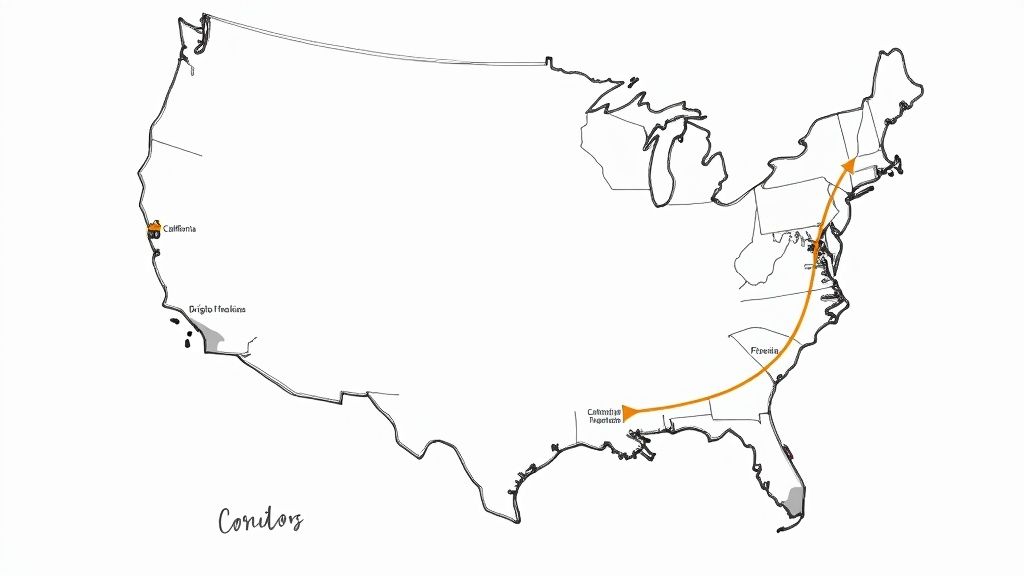
Let's be honest, not all long distance moving leads are created equal. A job from New York to New Jersey is a completely different animal than one from New York to Texas. The profit margin on the second one is huge, but too many moving companies treat every outbound lead the same. They spread their marketing budget thin and hope for the best.
That’s not a strategy. It’s a missed opportunity.
Instead of chasing every single lead that comes your way, you can get smarter by focusing on the most profitable relocation corridors—those high-volume routes people are already taking.
Follow the Data to Find the Money Routes
You don't need a crystal ball to figure out where your best jobs will come from. You just need to follow the data. People move for predictable reasons: jobs, cost of living, quality of life. These drivers create clear migration patterns.
For instance, the latest data shows a massive exodus from high-cost states into more affordable ones. Reports from 2024–2025 show that the U.S. South alone grew by nearly 1.8 million people (a 1.4% jump). This has created a flood of moves into states like Texas and Florida.
Meanwhile, places like California, New York, and Illinois are seeing a steady stream of people moving out, which means a constant supply of outbound long distance moving leads. This in-depth analysis of moving industry statistics breaks it down even further.
For a mover with a small fleet, knowing these trends is a massive competitive advantage. You can point your marketing dollars at the routes that are already hot, instead of just guessing where the next big job might come from.
By understanding these macro trends, you can position your company to intercept customers who are already planning the exact high-margin moves you want to book.
Turn Migration Data into Booked Jobs
Knowing the popular routes is one thing. Turning that knowledge into actual booked jobs is another game entirely. Here’s how you translate that data into a real marketing plan.
- Get Specific with Your Digital Ads: Ditch the generic "long distance movers" ad. If you're based in Los Angeles, run a Google Ads campaign targeting keywords like "movers from LA to Austin" or "cost to move from California to Texas." This kind of hyper-targeting hits high-intent customers who are much further along in the process.
- Build Route-Specific Content on Your Site: Create dedicated pages on your website for these cash-cow corridors. A page titled "Your Guide to Moving from Chicago to Nashville" doesn't just pull in organic search traffic; it immediately positions you as the expert for that specific route. Pack it with tips, timelines, and a big, clear call-to-action to request a quote.
- Create Partnerships in Destination Cities: Seeing a lot of your customers heading to a particular city? Start building relationships there. Connect with real estate agents or apartment complexes in that area. They can become a goldmine of referral leads for people heading into their city.
Master the Art of the Backhaul
The biggest profit-killer in long-distance moving? An empty truck on the return trip. We call it a deadhead, and it's a huge expense that eats into your margins.
Targeting popular corridors isn't just about finding outbound jobs; it makes it way easier to find profitable backhauls.
When you consistently run trucks along the same busy routes, you can build a reliable network to fill them on the way back. This turns a major expense into a second revenue stream, massively boosting the profitability of every single long-distance job.
Turning High-Value Interest Into Booked Revenue
Getting a steady stream of long distance moving leads is a great start. But turning that interest into actual, booked revenue? That's what separates the moving companies who are just getting by from the ones who are scaling, month after month.
It's not about being a master of one specific tactic. It’s about building a system where everything works together seamlessly.
Your Blueprint for Sustainable Growth
Profitable growth doesn't happen by accident. It’s built on four core pillars that must work in sync.
First, you need a diverse lead pipeline so you aren't held hostage by a single source. When you combine the long-term asset of solid SEO with immediate referrals from partnerships, you build a more stable and predictable business.
Second, you have to be fast. Incredibly fast. The first mover who provides a helpful, professional answer almost always wins the job. A missed call isn't just a blip on your radar; it's a potential $10,000 job you just handed to your competitor down the street.
The core message is simple but powerful: while all these strategies work manually, leveraging smart automation is what creates a true, lasting competitive advantage in a crowded market.
Third, your quotes need to build trust through transparency. A clear, detailed estimate that anticipates a customer's questions removes friction and makes it easy for them to say "yes." No confusion, no hesitation.
And finally, you need to use data to target profitable routes. Focusing your marketing dollars on high-demand relocation corridors doesn’t just maximize your profit per mile—it also makes finding profitable backhauls a hell of a lot easier.
From Manual Effort to Automated Success
Picture this: every call gets answered, day or night. An AI receptionist captures lead details 24/7, sends out professional quotes instantly, and schedules virtual surveys right onto your calendar. Your team is freed up from chasing voicemails and can focus on what they do best—managing crews and delivering five-star service.
This isn't some futuristic fantasy. It’s the reality for movers who’ve embraced automation. It allows you to transform your business from being chained to the phone into a streamlined engine built for growth, unlocking sustainable revenue from every high-value move you generate.
Frequently Asked Questions
Where should I start if I want more long distance moving leads?
Don't try to do everything at once. Pick one high-impact channel and master it. For most moving companies with 1-20 trucks, that means zeroing in on your website's SEO.
Specifically, target keywords like "state-to-state moving" and build out dedicated pages for the most common routes leaving your city. Think pages like 'Moving from Boston to Miami' or 'Chicago to Austin movers.'
At the same time, build a real relationship with one or two top real estate agents who deal with a lot of relocations. This combo of a solid digital footprint and a couple of key local partners gives you a strong foundation before you start dumping money into paid ads.
What's a realistic cost for a good long distance lead?
This is the million-dollar question, and the answer is: it depends entirely on the source.
You can buy leads from aggregator sites for maybe $30-$50 a pop. The catch? They're selling that same lead to five other movers. It's a brutal race to the bottom on price, and you’re lucky if you even get someone on the phone.
On the flip side, an exclusive lead you generate yourself from a targeted Google Ads campaign might cost anywhere from $75 to $200+. The sticker shock is real, but the quality is night and day. These are people who saw your truck, clicked your ad, and are specifically asking to talk to you. The conversion rates are way, way better.
Don't get hung up on the cost per lead. The only number that really matters is your cost per booked job. I'd take one high-intent, $150 exclusive lead that converts over five cheap $30 leads that just waste my dispatcher's time, any day of the week.
How can a small mover realistically compete with the big national van lines?
You compete by being faster and more personal. That's your secret weapon. The big van lines are slow, clunky, and often treat customers like a number in a spreadsheet. You can't beat them on brand recognition, but you can absolutely beat them on service and speed.
Think about it from the customer's perspective. They're stressed, they're researching movers online, and they just want answers. The first company that provides a confident, professional response is the one that wins their trust.
Your advantage is engaging that lead the second they reach out. When you have a system that can answer their call instantly—even at 9 PM on a Saturday—you can have them qualified and booked for a virtual survey before the big guys' lead even lands in some sales rep's inbox. Your personal touch, combined with modern tech that ensures you never miss a call, is how you level the playing field and win the high-value jobs.
Ready to capture every high-value lead and turn missed calls into booked revenue? MoveJoy provides a 24/7 AI-powered assistant that answers every call, provides instant estimates, and schedules jobs directly into your calendar.